10 Healthy Foods Every Pregnant Woman Should Eat 🤰❤️
🥚 Eggs – Support baby's brain and body development.
🐟 Fish – Provides omega-3 for brain and eye development.
🥛 Milk – Provides calcium for strong bones and teeth.
🫘 Beans – Rich in protein, iron and folate.
🍊 Oranges – Provide vitamin C and folate.
🥑 Avocado – Contains healthy fats and folate.
🥬 Spinach (Ugu) – Provides iron and folate.
🍠 Sweet potatoes – Provide fibre and beta-carotene.
🍌 Bananas – Provide potassium and vitamin B6.
🥜 Groundnuts – Provide protein and healthy fats.
Remember: Eat a balanced diet, drink enough clean water and attend antenatal clinics regularly.
❤️ A healthy mother is an important foundation for a healthy baby.
CALIPHATE HEALTH TALK RN FODIO TUKUR
Are eggs a regular part of your diet?
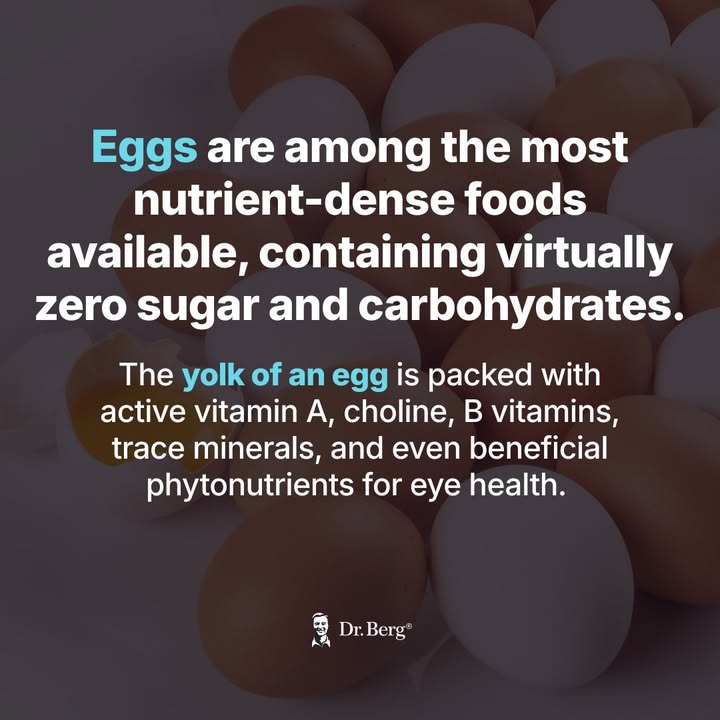
Eggs are the absolute best source of protein other than breast milk. Just one egg contains 7 grams of high-quality protein and is packed full of nutrients.
These nutrients include:
-Vitamins A, D, E, K1, and K2
-B vitamins
-Omega-3 fatty acid
-Sphingomyelin (helps prevent plaque buildup in the arteries)
-Choline (helps prevent a fatty liver, supports the brain, and helps combat high cholesterol)
-Lutein and zeaxanthin (support the eyes)
-Phospholipids (help reduce inflammation and build cell membranes)
Find out more about the 7 healthiest foods with zero carbs and zero sugar: https://t.co/w3qATY7cW3
Dr. Eric Berg, DC, not MD; information only
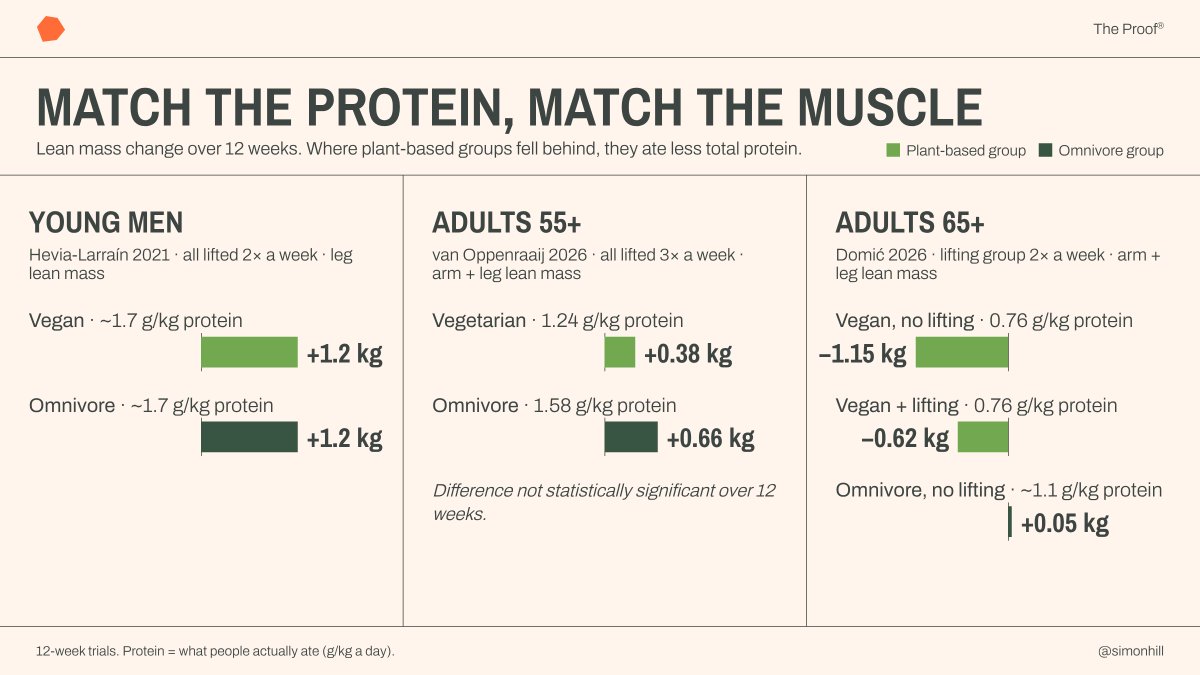
Older adults who switched to a vegan diet dropped to 0.76 g/kg of protein a day and lost 1.15 kg of arm and leg muscle in 12 weeks.
But the same research team had already shown something important. When they gave adults in their 60s and 70s all their food for 10 days, a well-planned vegan diet (~1.3 g/kg protein) produced the same daily muscle protein synthesis as an omnivorous diet (~1.2 g/kg).
So when protein was guaranteed, plants weren’t the problem. When people chose their own food, protein slipped, and so did muscle.
The same pattern shows up elsewhere: when protein was matched at about 1.7 g/kg, young vegans and omnivores built essentially the same amount of muscle.
Plant-based diets are healthy, but adopt them responsibly: lift, and focus on protein. Can’t hit it on plants? Fatty fish, eggs, and Greek yoghurt are good top-ups.
Studies below.
@naralokesh@RTIH_AP Entrepreneur in every family is the right goal. That's how poultry grew in AP, one farmer family at a time. Hope the next tranche reaches some agri and food startups too 👍
@KenDBerryMD Here in India the worry is the opposite, lotsa people don't get close to even the low end. Eggs are the easiest fix, cheap and available everywhere 😀
@ncbn Remember when Anantapur was only in the news for drought. Now a second Kia plant. Next I'd love to see food processing do the same for the farmers there 🙏
@naralokesh@upasanakonidela@CII_PS Love that health and happiness came up next to jobs at an investment summit. Happiest state by 2035 is a good target to chase, all the best 🙏
Our poultry farmers pay a lot more for feed than farmers in Brazil or the US, and India still has one of the cheapest eggs in the world. Imagine what they could do with maize and soya at world prices 😀
🥗 India vs the World: Where does our protein come from?
India's protein intake has a distinct profile, with a much higher dependence on plant-based sources than the global average.
INDIA🇮🇳
🌱 Plant protein: 73.4%
🥛 Dairy: 15.8%
🥩 Meat: 5.2%
🐟 Fish & seafood: 3.6%
🥚 Eggs: 2.0%
WORLD🌐
🌱 Plant protein: 58.9%
🥛 Dairy: 10.4%
🥩 Meat: 21.1%
🐟 Fish & seafood: 6.0%
🥚 Eggs: 3.7%
(FAO)
Farm to factory is the right way sir. Poultry already works like that, farmer, feed mill and processor all tied together. Would love to see maize and pulses get there too 🙏 https://t.co/fWdFyS9IIR
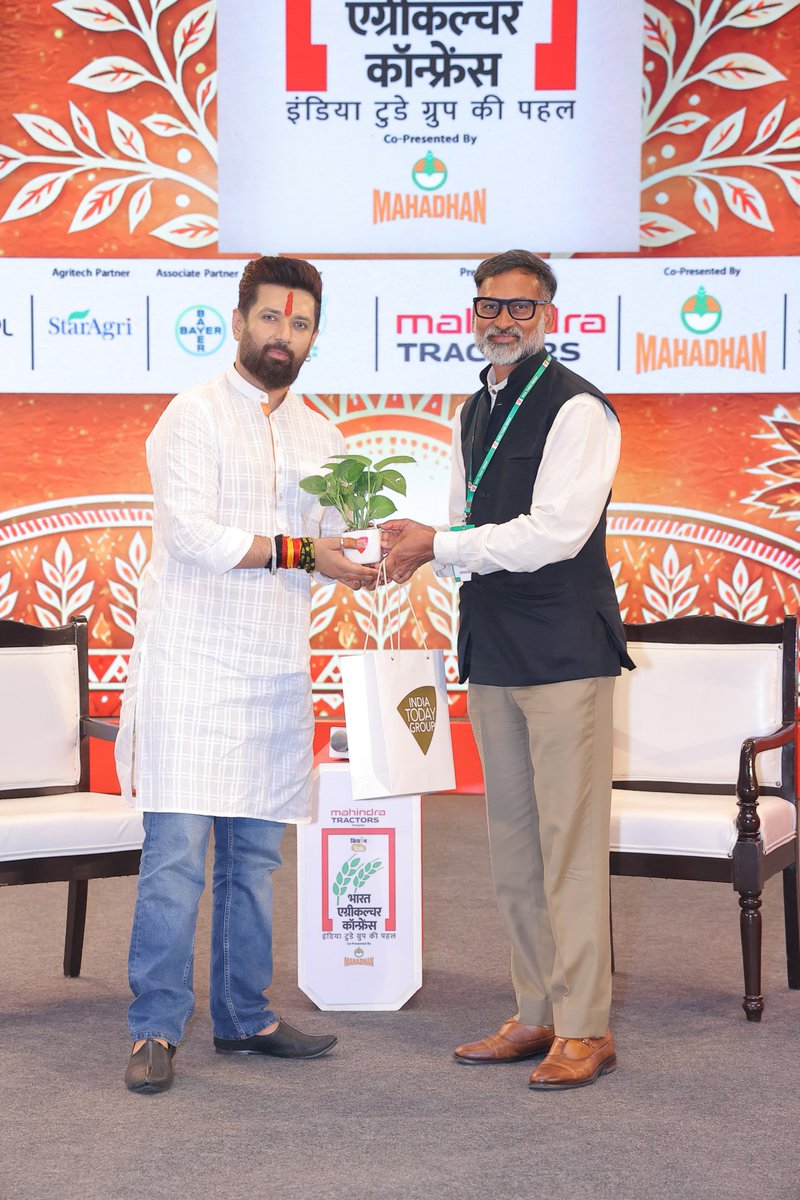
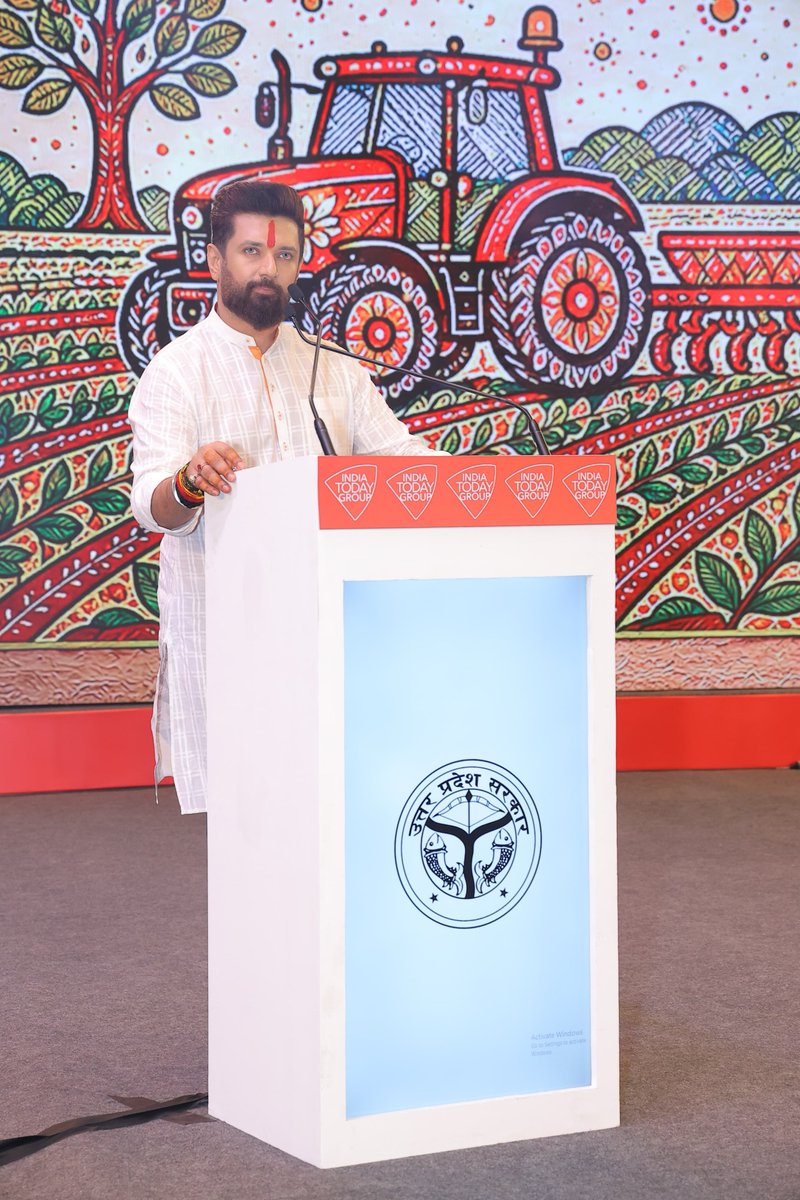
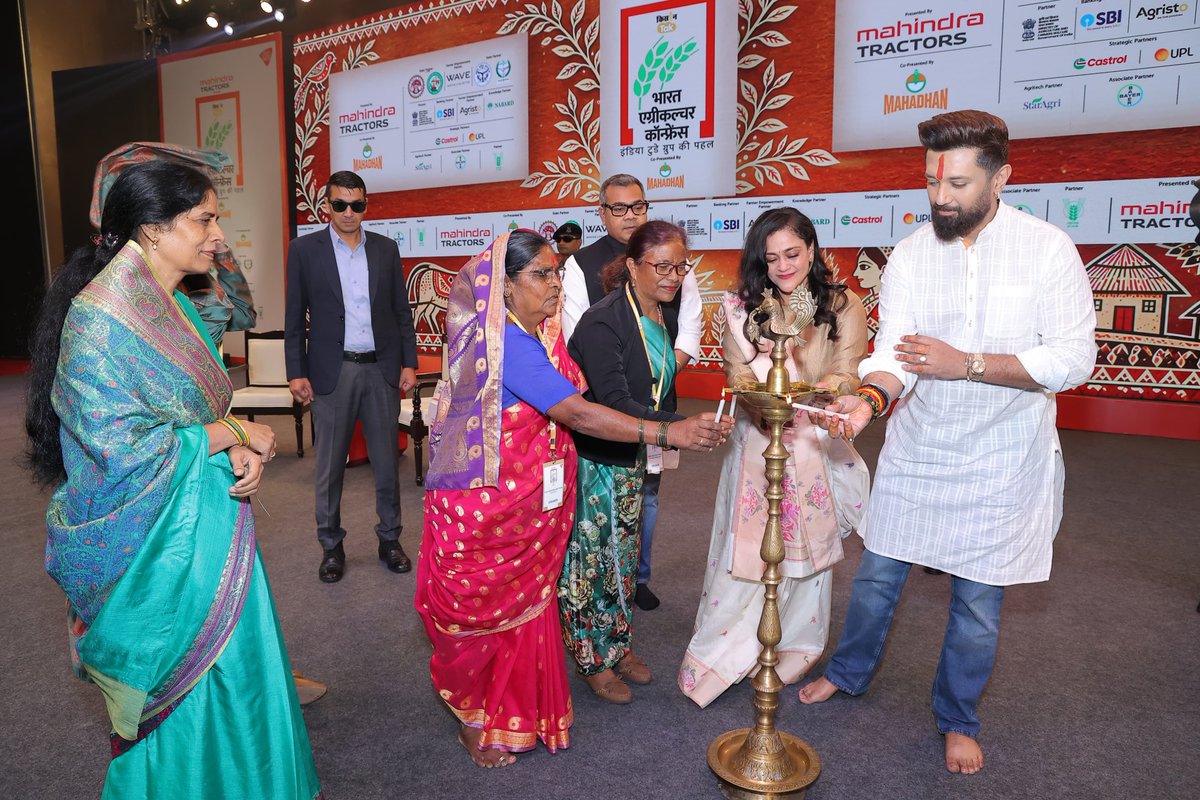
आज भारत मंडपम, नई दिल्ली में India Today Group के Kisan Tak द्वारा आयोजित Bharat Agriculture Conference 2026 में शामिल होकर कृषि एवं खाद्य प्रसंस्करण क्षेत्र के भविष्य, किसानों की आय में वृद्धि, आधुनिक तकनीक, AI आधारित खेती और वैल्यू एडिशन की संभावनाओं पर अपने विचार साझा किए।
माननीय प्रधानमंत्री श्री @narendramodi जी के नेतृत्व में सरकार Farm to Factory और Factory to Global Market की सोच के साथ भारतीय कृषि एवं खाद्य प्रसंस्करण उद्योग को वैश्विक पहचान दिलाने की दिशा में निरंतर कार्य कर रही है।
हमारा उद्देश्य केवल कृषि उत्पादन बढ़ाना नहीं, बल्कि किसानों को उनकी उपज का उचित मूल्य, बेहतर बाजार और खाद्य प्रसंस्करण के माध्यम से अधिक आर्थिक लाभ सुनिश्चित करना है।
@naralokesh@GVMC_VISAKHA Congrats Vizag 😀 Big credit to the Safai Mitras, nobody thanks them enough. Perfect timing with the whole world coming in for the summit
Getting more done on WhatsApp is the big one for India. Lotsa poultry trade here already runs on WhatsApp, daily rates, orders, payment reminders. Make that simpler and the small farmer wins 😀 https://t.co/ROqAu5MNCB
I am nearly 4+ Months In WhatsApp
I think of WhatsApp like a shared language, spoken by 3bn+ people. Sometimes we use words, and sometimes it’s a voice note to a parent, a sticker that ends an argument, or a "that was a fun dinner” at the end of the night. Language is at the heart of everything we as people do. We write letters, tell stories, get things done and make plans for the future. A WhatsApp chat is often where we start.
Like any language, the people who use it shape it. They don't wait for permission. They find new things to say, and new ways to say them. Often, our users show us what should come next based on how they’re using the app and communicating in the world.
I’ve spent the last few months listening and understanding what our users want from us and what I heard is simple: help people stay close to those who matter to them, and get more done on WhatsApp. So that's what we'll build.
First, we want to make connections richer.
Sometimes hearing someone's voice, sending a joke, agreeing on a plan or knowing they're safe is the whole point. People send over 10 billion voice messages and over 4 billion stickers on WhatsApp every day. As the way people communicate evolves, we will evolve these experiences with them. We'll make voice notes, groups, stickers and video simpler and more expressive, because how people feel close keeps changing.
Second, we want anything you do on WhatsApp to be as simple as sending a message. Too many things start in a chat and end with many more steps somewhere else: paying a bill, borrowing money, staying connected when you travel. Each handoff to another task costs time. We're working with financial services and telecom partners so that finishing something feels as easy as starting it.
Third, we want to make this all more efficient with AI. It should quietly find what you need, get things done and make sure you never miss a booking or an appointment. The best technology saves you time, so you can get back to the connections that matter.
None of this works without trust. WhatsApp handles over 100 billion messages and 2 billion calls every day. Trust takes years to earn and a moment to lose, and I don't take that lightly. Whatever we build, WhatsApp must remain simple, reliable and private. These principles we’ve had for years aren’t changing. Your personal messages and calls stay end-to-end encrypted. This and our quality bar stays the same.
What happens inside WhatsApp only matters for what it makes possible outside it: more time together, stronger communities, and fewer barriers between people and the lives they want to live.
Onwards.
Same story with the egg. For years people threw away the yolk because of the cholesterol number, never mind everything else in it 😀 https://t.co/NC98dq5k9d
Butter and cheese can provide the same amount of saturated fat and have different effects on LDL cholesterol. Why?
That question gets at something I think we’re missing in many of our debates about nutrition: the food itself.
I sat down with Dr. Dariush Mozaffarian, a cardiologist, nutrition scientist, and director of the Food is Medicine Institute at Tufts University. This is one of the most important nutrition podcasts I’ve ever recorded.
We spend so much time talking about carbs, fat, and protein. But foods also contain vitamins, minerals, fiber, polyphenols, and many other compounds whose effects we’re only beginning to understand. How those components are packaged together and what processing does to that structure can change how a food affects our bodies.
This is the “food matrix.” It helps explain why judging a food by its saturated fat content alone can be misleading, and why adding protein to an ultra-processed snack doesn’t automatically make it healthy.
One of the things I found most fascinating was how processing can change what we absorb and what reaches our gut bacteria.
We also get into seed oils, red and processed meat, what may be driving obesity, and a question that matters whenever we evaluate a dietary fat: what are we eating in its place?
I learned a lot from this conversation, including things that changed how I think about some foods that contain saturated fat. I’m excited for you to hear it.
Links to the episode on all platforms are in the comments below.
Timestamps:
0:00 - Introduction
1:46 - Medicine's nutrition gap
4:30 - Saturated fat beyond LDL
10:28 - The butter vs. cream paradox
15:44 - Butter, compared with what?
17:25 - How vitamins shaped food policy
24:15 - How three crops took over
28:10 - The single-nutrient fallacy
31:22 - The dark matter of food
41:58 - Processed vs. unprocessed meat
45:26 - Red meat's heme iron problem
49:11 - Crucifers vs. meat carcinogens
52:11 - Is regenerative meat healthier?
53:08 - TMAO as a dietary signal
54:24 - Can unsaturated fats lower LDL?
55:45 - Seafood vs. plant omega-3s
58:07 - Are omega-6s pro-inflammatory?
1:00:53 - Olive oil beyond its fat
1:03:00 - The toll of low omega-3 intake
1:04:14 - Fat as biological information
1:08:45 - Why seed oils got demonized
1:14:44 - Choosing a cooking oil
1:17:37 - Big Tobacco's food playbook
1:21:34 - How additives skip FDA review
1:24:15 - What counts as ultra-processed?
1:27:55 - Why the food matrix matters
1:34:21 - The 10:1 carb-to-fiber rule
1:37:57 - Closing the GRAS loophole
1:39:34 - States take on food additives
1:43:37 - Did refined starch drive obesity?
1:47:30 - The post-2000 obesity paradox
1:50:06 - Is metabolism cooling down?
1:54:43 - Why more brown fat isn't enough
1:57:00 - FTO, obesity's top gene
1:58:30 - Can diet preserve calorie burn?
2:02:27 - Can microbes steer fat storage?
2:03:58 - GLP-1s don't replace nutrition
2:07:00 - Can exercise lower visceral fat?
2:09:36 - Diet's role beyond weight loss
2:10:32 - New guidelines, real food first
2:16:22 - Whole vs. low-fat dairy
2:19:16 - Is plant milk better than dairy?
2:20:31 - Low-fat dairy for APOE4?
2:22:53 - How policy can fix our food
2:32:24 - Food as medicine, with limits
The Chinese have managed to duplicate or fake lotsa things, but the egg still beats them and always will. The bill of materials to make anything like an egg can never match what a chicken does. And you can't add water to an egg like people do with milk. That's the beauty of it 😀