So glad to announce that I officially received the Young Researcher Study Abroad Scholarship by the Turkish Association for the Study of Liver as I will be participating in ongoing research on immuno-biology of NASH at Mayo Clinic 🙏🏻🥳
We were honored to host visiting faculty Dr. Yujin Hoshida (@HoshidaYujin) at this week’s GIH Monday Research Conference, where he presented “Precision prevention of hepatocellular carcinoma in cirrhosis.”
Dr. Hoshida highlighted the urgent need for targeted strategies to prevent hepatocellular carcinoma in patients with advanced liver fibrosis and cirrhosis. His talk explored how hepatocarcinogenesis arises from complex interactions among liver cell types, molecular pathways, and systemic factors — and how ongoing research is paving the way for precision prevention approaches tailored to individual risk profiles.
A fascinating look at where the field is headed and the innovations shaping the future of liver cancer prevention.
🔬Grateful to present our work on bile acid signaling in cholangiocarcinoma at #AACR2026.
💚Great connecting with inspiring scientists and advocates from @curecc!
⭐️Thankful for the constant support of my mentors @SumeraIlyasMD and @RorySmoot78!
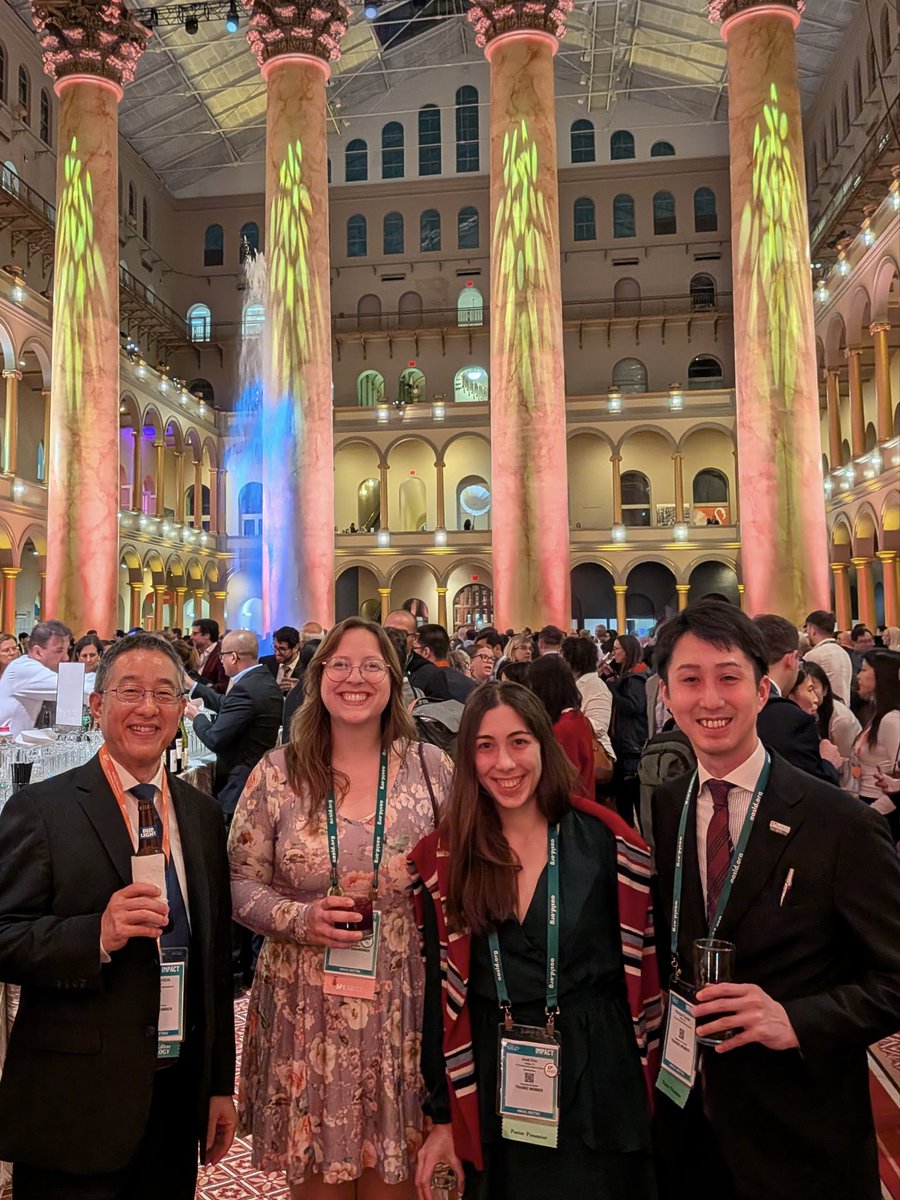
HoshidaLab has another chapter in the books! We put faces to our collabs, reunited with friends, and connected with distinguished experts at #TLM25@AASLDtweets 💚
Proud to present our multi-lab, multi-site collaboration from 3 labs across 2 @MayoClinic locations at #AASLD! Stop by today to hear about our latest work on targeted gene therapy for cholangiocarcinoma.
Here is HCC 101 video!
~30 min covering imaging, HCC management overview, approach to deciding b/w local therapies.
This video was a little longer, so I put in some pics from recent trip to India to keep folks awake 😀.
Full video link & slides in replies. 1/8
Mary Brunkow and Fred Ramsdell – who have been awarded the 2025 Nobel Prize in Physiology or Medicine – gained decisive insights into how autoimmune diseases arise.
Brunkow and Ramsdell made a key discovery in 2001, when they presented the explanation for why a specific mouse strain (named scurfy) was particularly vulnerable to autoimmune diseases.
The medicine laureates had discovered that the mice have a mutation in a gene that they named Foxp3. They also showed that mutations in the human equivalent of this gene cause a serious autoimmune disease, IPEX.
The 2025 #NobelPrize in Physiology or Medicine has been awarded to Mary E. Brunkow, Fred Ramsdell and Shimon Sakaguchi “for their discoveries concerning peripheral immune tolerance.”