Young voters are emerging as the demographic center of power in American politics, but @BIFYA_Berkeley researchers find they are fatalistic about critical problems such as economic inequality, climate change and the future of democracy. https://t.co/5JfHGq5fUI
On a positive note, we found that young people are more likely to share similar value structures than older adults, suggesting that the political divisiveness experienced in the country is driven by older age cohorts. Read more here: https://t.co/ZiGDYWHrgJ
Among our main findings, we find that young people have a fatalistic outlook that influences many facets of their lives. Anyone running for office who can address young people's fatalism with real policy solutions could win the youth vote this year.
Recently @ejheys, policy director and senior researcher for the Berkeley Institute for Young Americans (@BIFYA_Berkeley) spoke with @KQED about the issues that young voters care about in the 2024 election.
Listen to the podcast:
https://t.co/dOHZPbiExv
#goldmanschool#gspp
On this week's Cal Sun Pod @mmcphate we examine the evolving generational dynamics and impacts of millennials and Gen Z. I talk with Sarah Swanbeck @sswanbeck and Erin Heys @ejheys the leaders of the @BIFYA_Berkeley at UC Berkeley. https://t.co/1LvCajHssB
Very fun to talk about intergenerational trends and the latest research from @BIFYA_Berkeley with @jeffs2009 on the California Sun podcast @mmcphate. Thanks for having us!
Millennials and Gen Z today comprise nearly half of the U.S. electorate, but are mired in fatalism. Leaders at the @BIFYA_Berkeley say @taylorswift13 and other young icons might inspire millions to feel hope — and power. https://t.co/KiByIiG7bQ
@JosephPolitano @john_voorheis I think the age-by-age breakdown is a bit easier to interpret (and you obviously lump a lot of people together using generations). This is with the 2022 ACS tho so slightly older data.
Hoping the findings can shed light on why different states have different accountability models for schools today under ESSA (the Every Student Succeeds Act).
🚨 Publication alert! Want to know what happened to the ed accountability policy paradigm post-NCLB?
I interviewed policy elites in CA and TN to understand the policy ideas and moral narratives shaping policy under ESSA. Read in Educational Policy 👇
https://t.co/p7eln52NZb
Among the key findings, I found that people's moral views attached to policy ideas in different ways. A person's values & beliefs were so influential on policy ideas that they had the power to shift entire institutional arrangements.
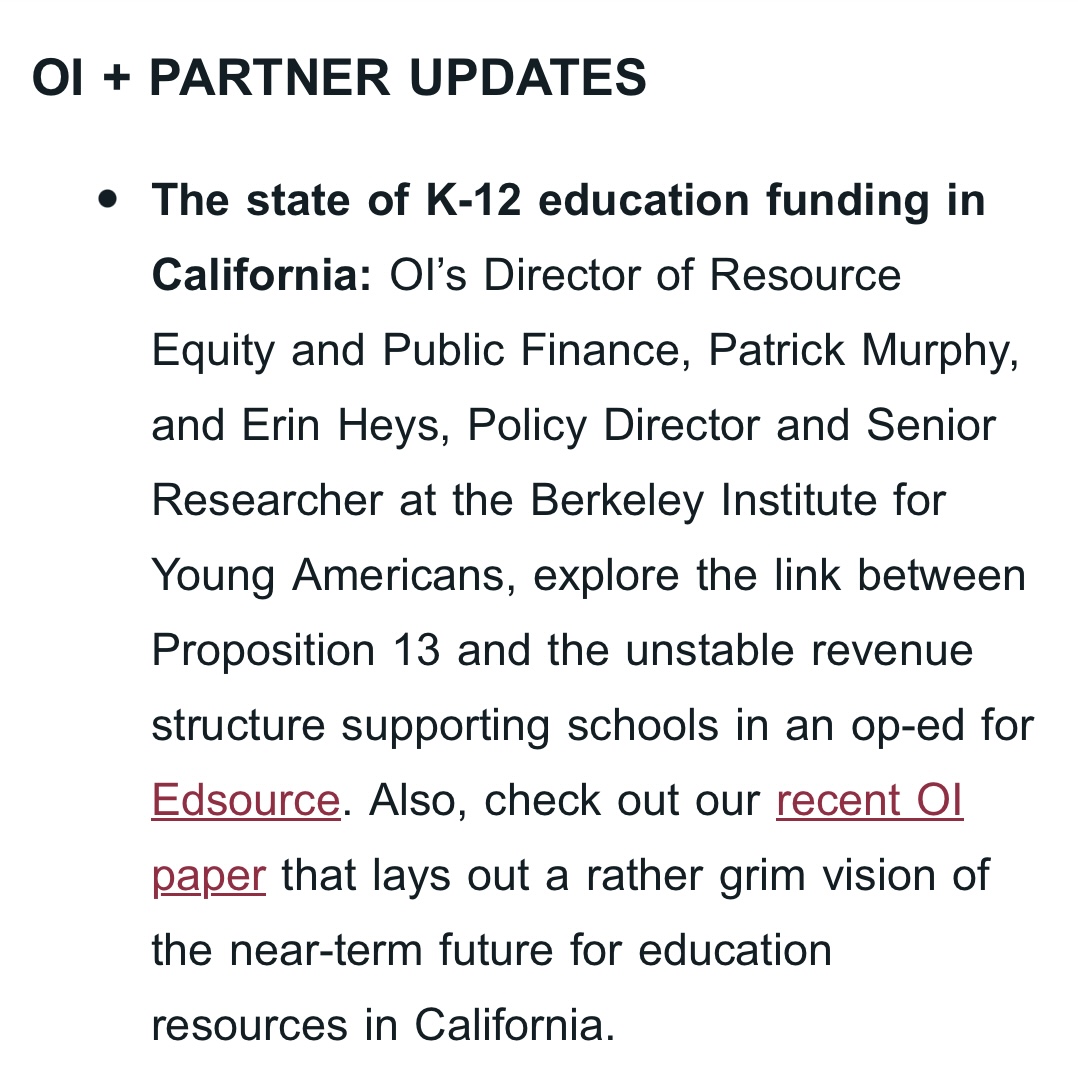
The state of #K12#education funding in California: OI’s Patrick Murphy & @ejheys @BIFYA_Berkeley explore the link btw #Prop13 & the unstable revenue structure supporting schools for @EdSource. Check it out & more in our newletter https://t.co/JXtvntbm3q #caedu
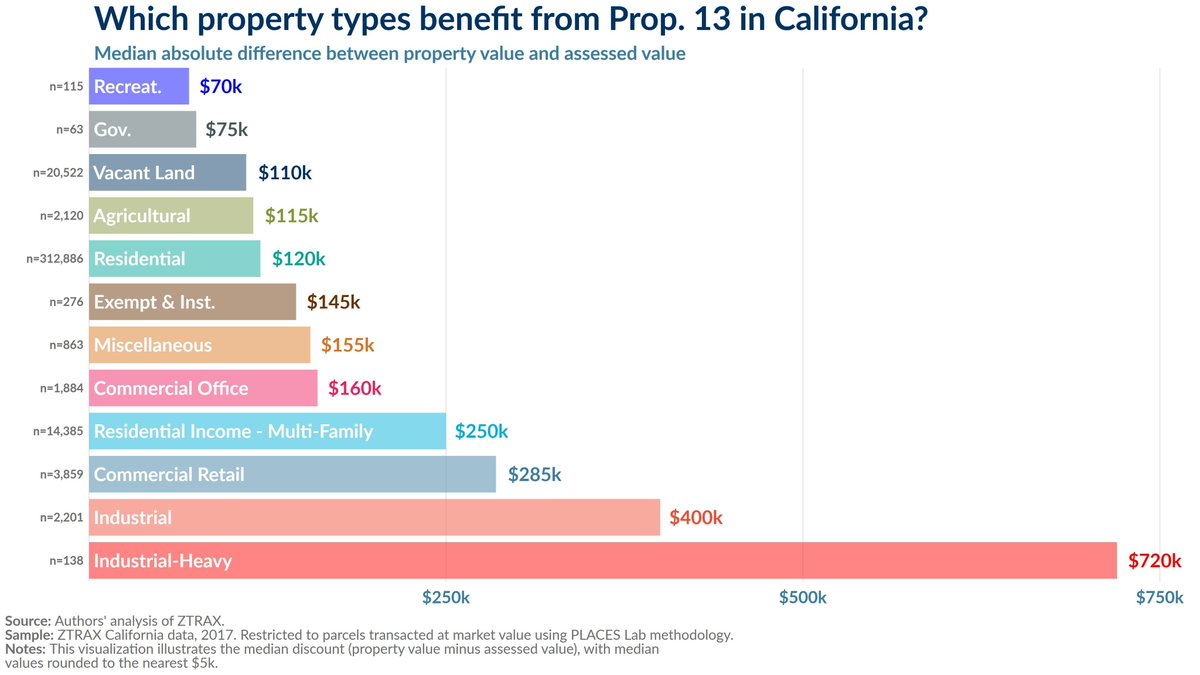
This is why we must continue to talk about reforming Prop. 13 👇
In a state where there's a housing crisis and underfunded schools, why are we giving discounts to ALL types of property? Vacant land, gov't property...really? Read more from @BIFYA_Berkeley
https://t.co/rJDhkYBWcO
OPINION by @ejheys: Unless someone in @HDatFinance has a crystal ball that we don’t know about, the future of K-12 funding is decidedly uncertain. In fact, school districts may be facing a rather dismal year — or years — from a fiscal perspective. #caleg
https://t.co/tbEHaRAMJw
W/uncertainty on the horizon, we need to have an honest conversation abt CA’s structural budget problems. In an @EdSource op-ed by OI's Patrick Murphy & @BIFYA_Berkeley's Erin Heys share their thoughts, incl. the fiscal elephant in the room, Prop 13. https://t.co/KajXYgIiSZ