Strong solvency is one thing. Underlying resilience is the real story.
Despite geopolitical conflicts, tariffs, inflation and weaker growth, Swedish life and pension companies have remained remarkably resilient...
Read more in my latest article in Pensionsnyheterna.https://t.co/ueOWh9xgxC
#pension #pensionsförvaltning #assetmanagement #solvency #ALM #risk #makroekonomi #macro
Increased USD bond issuance in Asia surged 67% YoY in April. Borrowers are diversifying and locking in dollar funding to hedge geopolitical risks, while yield premiums have tightened to record lows.
This highlights a key tension: investors show strong risk appetite with tight spreads, but issuers are clearly preparing for potential stress.
#AsiaCredit #USDBonds #EmergingMarkets #GeopoliticalRisk #DollarFunding #FixedIncome
Rates shifting: growth now dominates, but upside risk remains
The recent decline in yields reflects that growth concerns are now dominating the narrative. But as long as inflation and geopolitical risks remain, the move is unlikely to be stable.
#Treasuries#Rates#Bonds #Macro
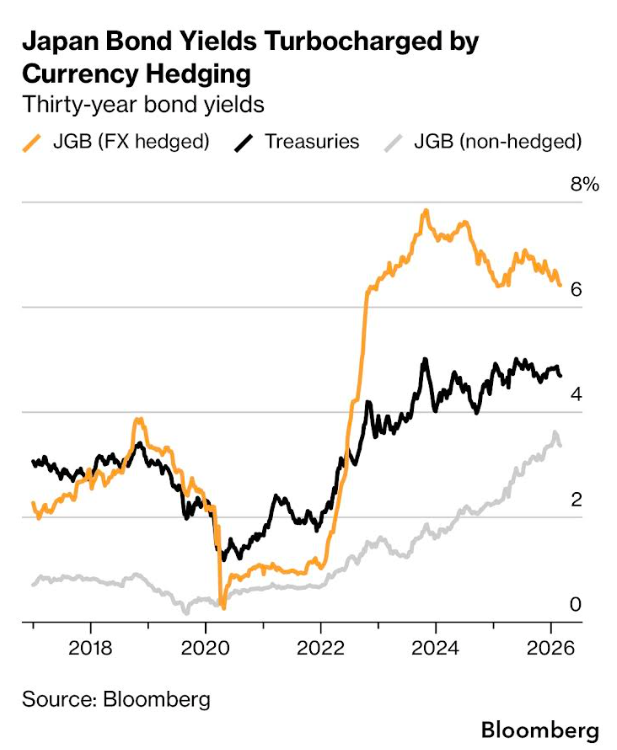
BlackRock sees a “golden era” for JGBs with ~6% hedged yields for USD investors.
But the more interesting question is macro: what happens when Japan is no longer suppressing global yields?
For decades JGBs acted as a global anchor. That anchor may now be lifting.
#FixedIncome #Japan #GlobalMacro #BondMarkets #JGBs #Rates #BOJ #FX #Dollar #Currencies
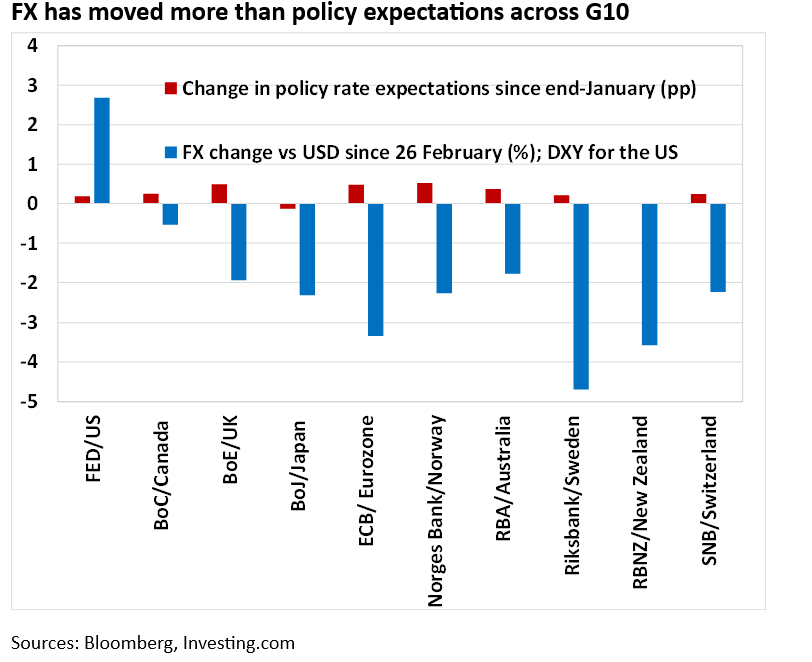
Central banks meet this week in a different macro regime than in 2022.
Energy risks, near-neutral policy and USD strength are reshaping the trade-offs.
Preview 👇
https://t.co/9ffWfiIMfj
#CentralBanks#MonetaryPolicy#Macro#FX
Cash – king or relic of the past?
Cash – king or relic of the past?
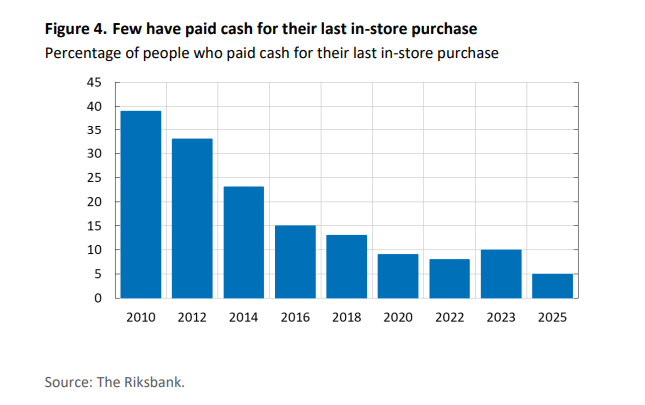
In Sweden, the share of people who paid for their last in-store purchase with cash has fallen from ~40% in 2010 to ~5% in 2025 (Riksbank data).
Yet while cash disappears as a transaction medium, its role as a resilience asset may be increasing — not unlike gold in central bank reserves.
Full comment: 👇 https://t.co/A5c6T0pHs0
#CentralBanks #Payments #Gold #Riksbank
How do swedish financial assets react to geopolitical shocks?
I ran an event study of major geopolitical crises since 2003, focusing on energy shocks, volatility and FX.
Some interesting patterns for oil, SEK and rates.
Full analysis on LinkedIn: https://t.co/oQVik4mxdT
#Macro #Geopolitics #EnergyMarkets #FX #MonetaryPolicy #USDSEK
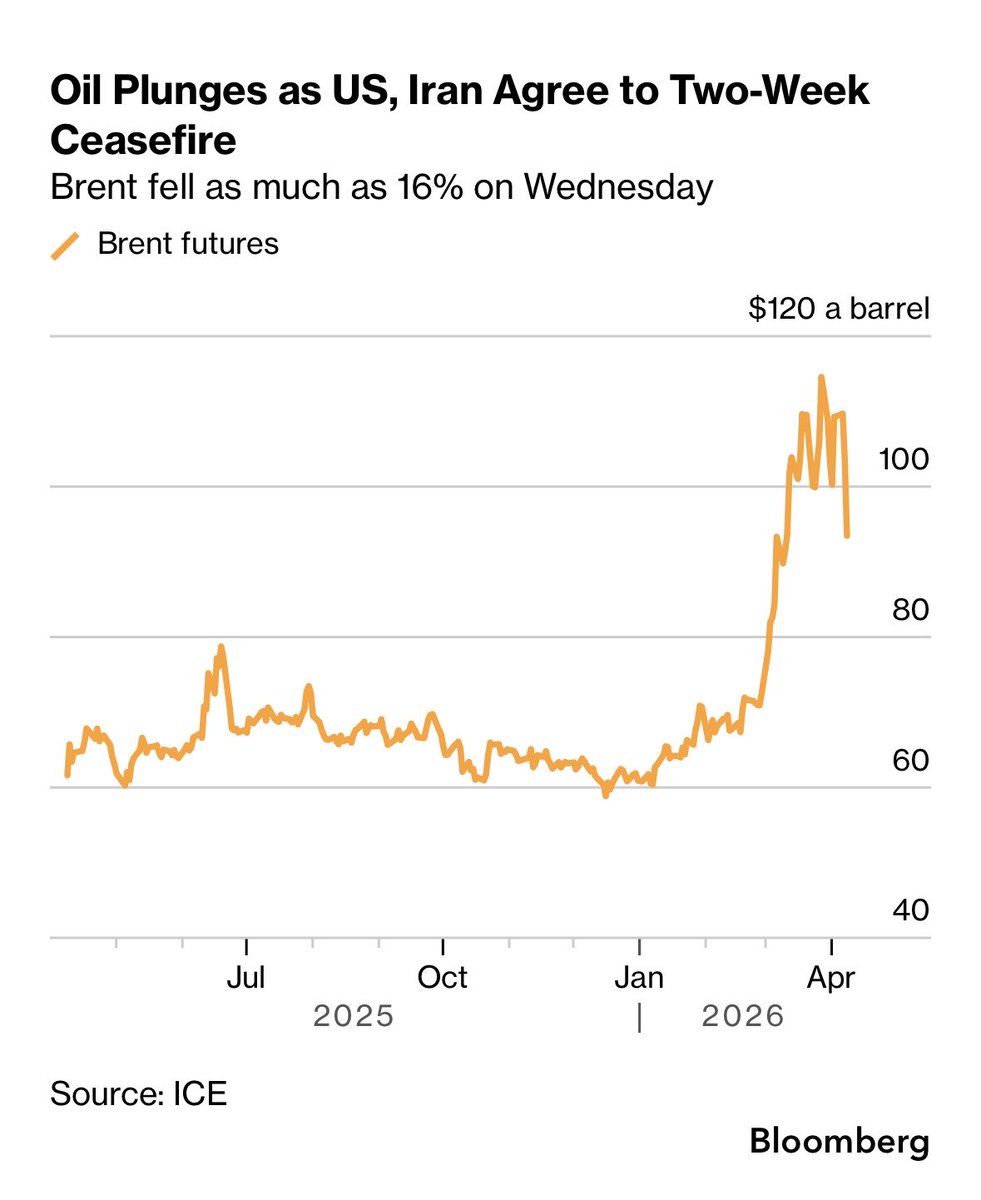
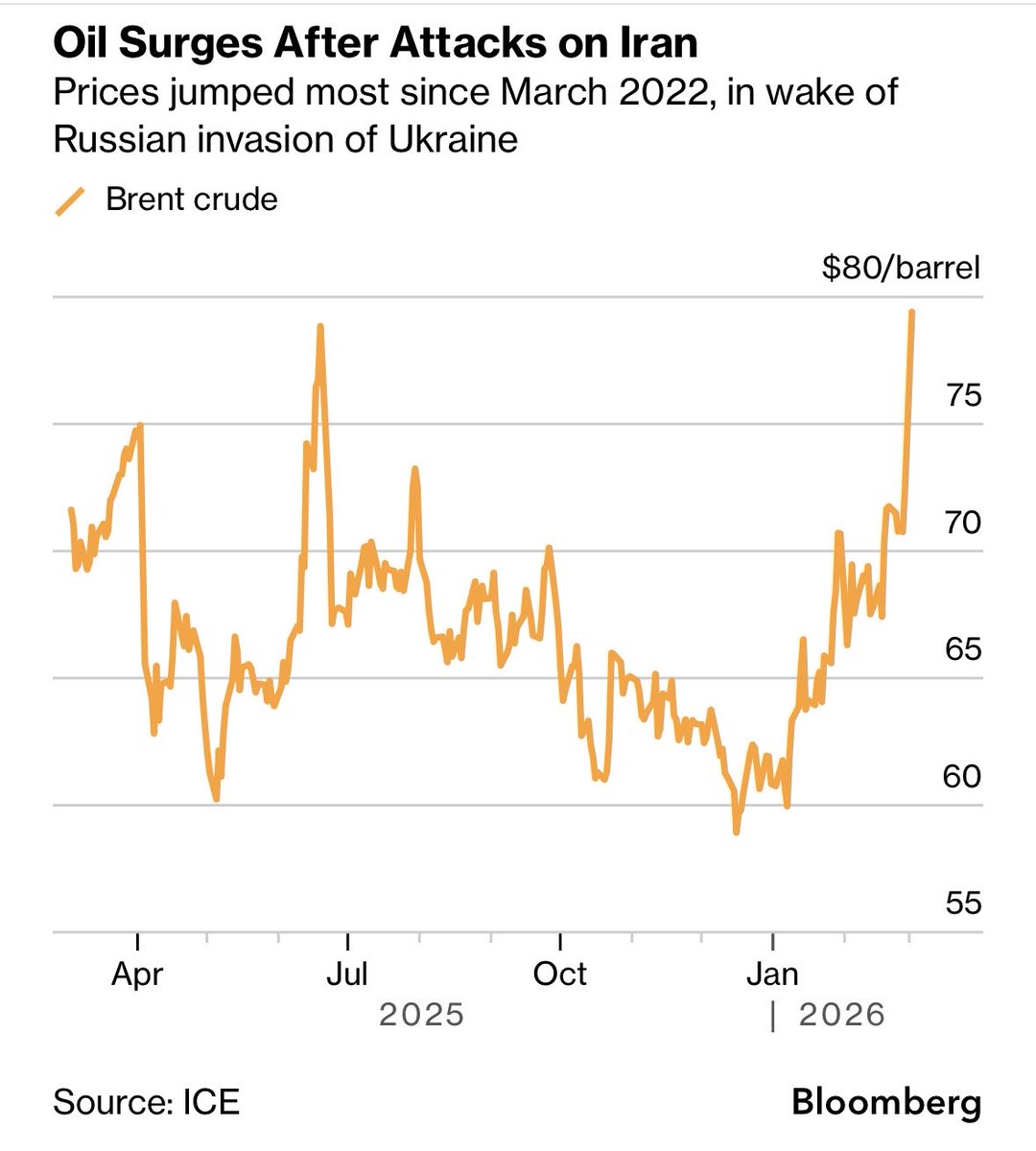
Iran escalation: price shock, not a supply shock for Sweden.
Direct energy exposure to the region is limited. The transmission channel is primarily via higher global energy prices and USD strength — not physical shortages.
Near-term: volatility. Medium-term impact of higher energy prices depends on whether FX pass-through and real income effects persist. With underlying inflation already below target, the policy implication is broadly wait-and-assess for now. A more persistent energy move affecting real incomes, consumption and the exchange rate could alter the rate path later on.
#Macro #MonetaryPolicy #FX #EnergyMarkets #USDSEK
Real rates matter more than most investors admit.
Sweden’s 60/40 portfolio shows:
• Positive equity–bond correlation
• Lower Sharpe
• Higher volatility
Diversification is regime-dependent.
Full analysis: https://t.co/JyjsvoTpQn
#Macro#Rates#Diversification#Sharpe #AssetAllocation
Japan’s election result is a domestic political event with global market implications. While the initial market reaction was predictable, the real test will come from how fiscal policy and monetary policy interact as long-term yields adjust.
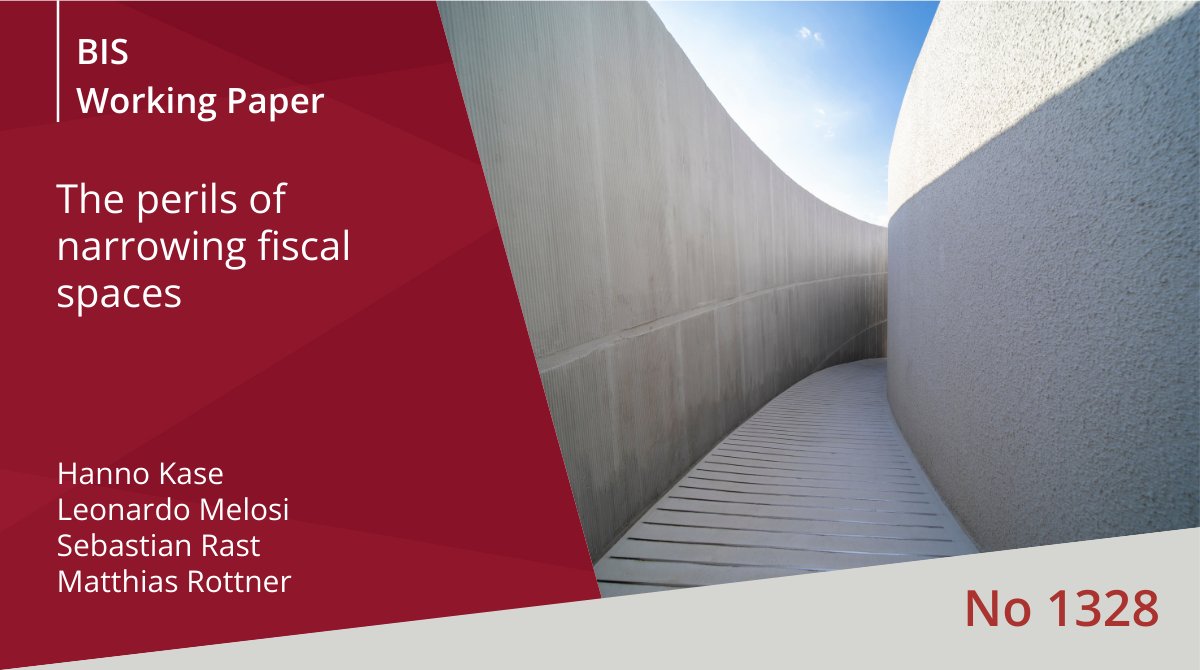
Rising government debt makes rate hikes fiscally costly and may intensify pressure on central banks. A new model with an endogenous upper bound on the interest rate coming from debt service constraints shows how an easing bias can fuel persistent inflation https://t.co/mWnEY0gvAv
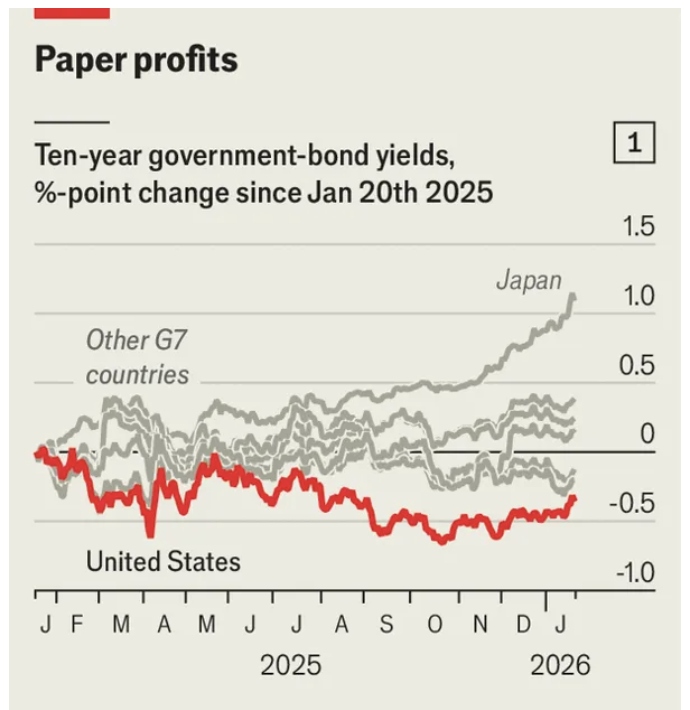
AMERICA'S ABSENT BOND VIGILANTES
Here's a remarkable fact: since last year, America's bond market has comfortably beaten all of its peers.
Soaring deficits, attacks on the Fed, trade wars and Greenlandic aggression — all shrugged off.
For @TheEconomist, I look at why ⬇️
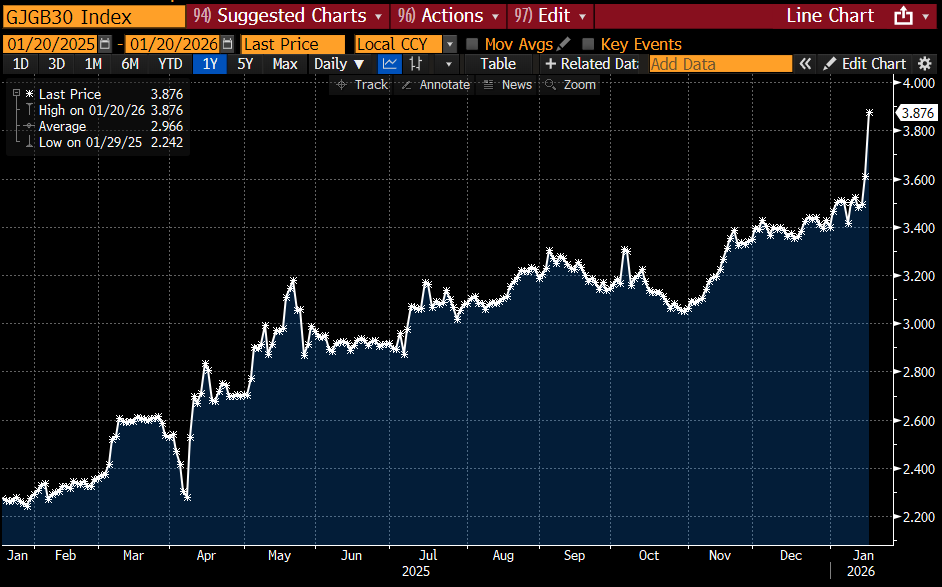
Japanese 30-year yields have risen 38bp in the past two trading sessions, the second-largest ever behind the 42bp after "Liberation Day" last April. Since the new Prime Minister Sanae Takaichi took over in October, 20- & 40-year yields have risen about 80bp.