Policymakers in polluted cities often hold back on ambitious clean air policy, worried the public will resist costs or prioritise economic growth instead.
A lot of climate mitigation advice ignores a key constraint: will people actually do it?
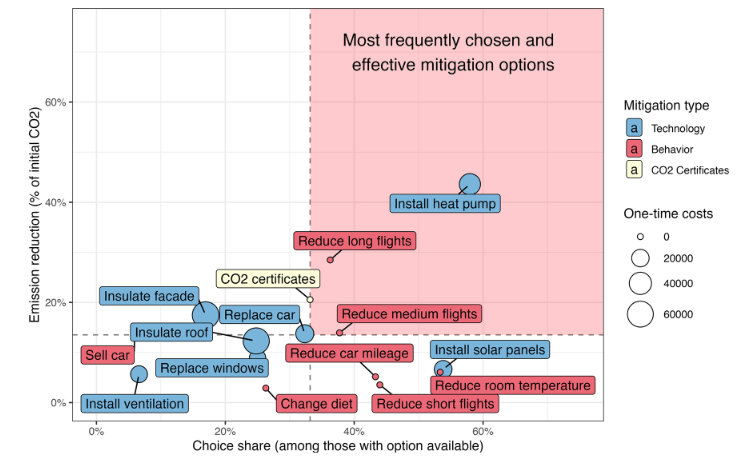
In our new @ClimateActionSN paper, we use a neat “personalised scenario testing” tool and ask people to build a plan to cut their own emissions by 30% (Swiss sample, n=2,793).
Policy takeaway: support the most accepted low-cost actions, make high-impact tech affordable for lower-income households, and don’t spend political capital on measures with little emissions payoff.
Swiss and EU climate debates often focus on the loudest camps. But our data suggest the action is in the middle. Curious what others think: what design choices most change acceptability — revenue recycling, exemptions, phase-ins?
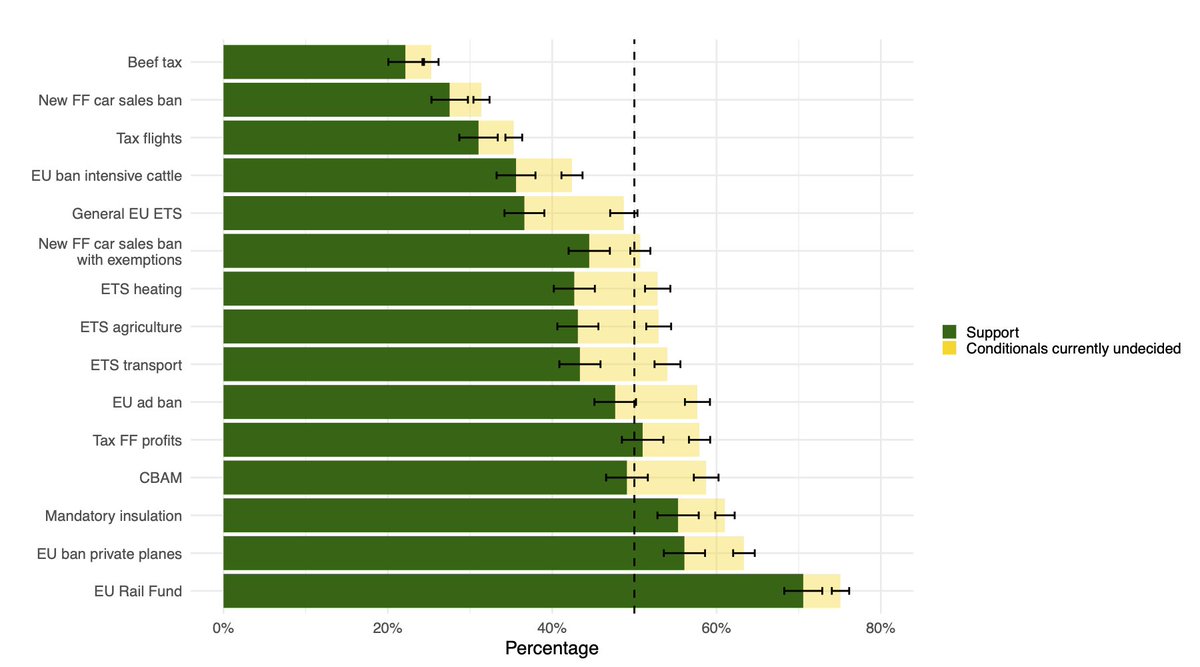
In Europe the success of climate initiatives relies on a large “conditional middle” – voters who care about the climate but judge each proposal through a personal cost–benefit lens, a new study shows. https://t.co/SeTISH0ASz
Small swings amongst the conditional middle can have a big impact on what’s politically feasible. In a simple simulation, moving only the fence-sitting slice from neutral → support raises # of majority-backed policies across Europe from 4/15 to 10/15.