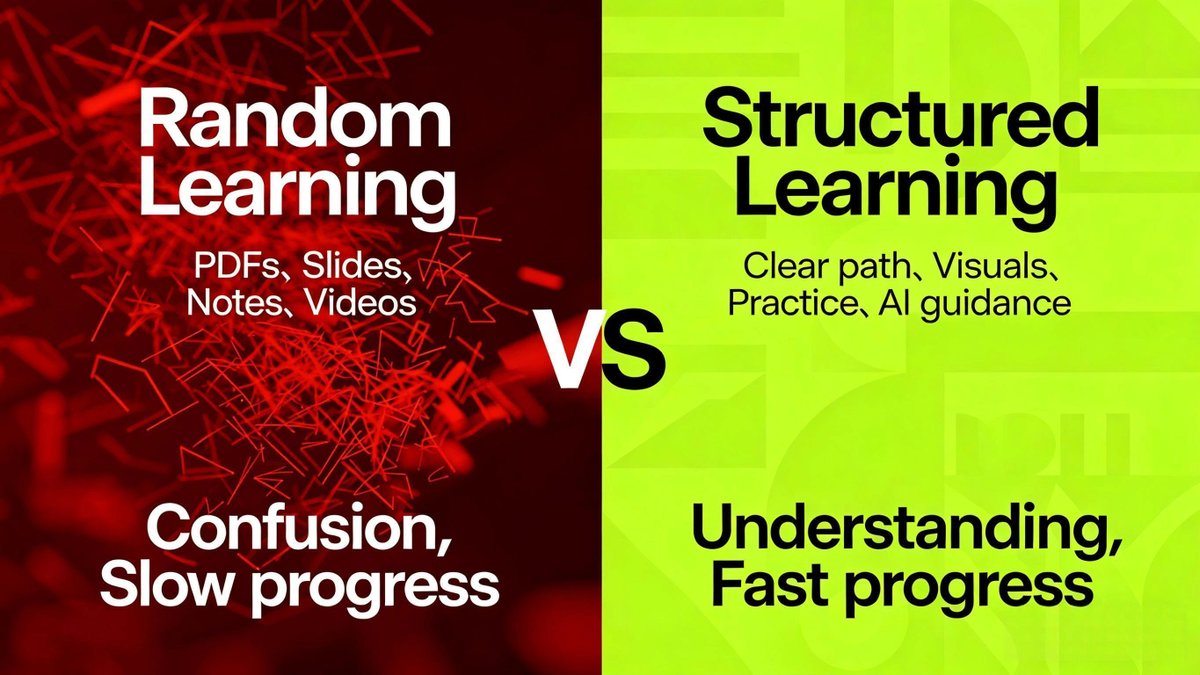
Most engineering docs were never designed for learning.
They were designed for reference.
That’s why so many engineers feel this:
“I read everything.
But I still can’t explain it clearly.”
eKnow AI turns specs, slides & docs into structured learning.
https://t.co/9fImGSBWvv
Most engineers don’t struggle because they’re “bad at learning.”
They struggle because technical information is:
* fragmented
* dense
* non-linear
The issue is often structure, not intelligence.
Most engineers don’t actually understand what they read.
They just feel like they do.
Until they try to explain it.
That’s when everything falls apart.
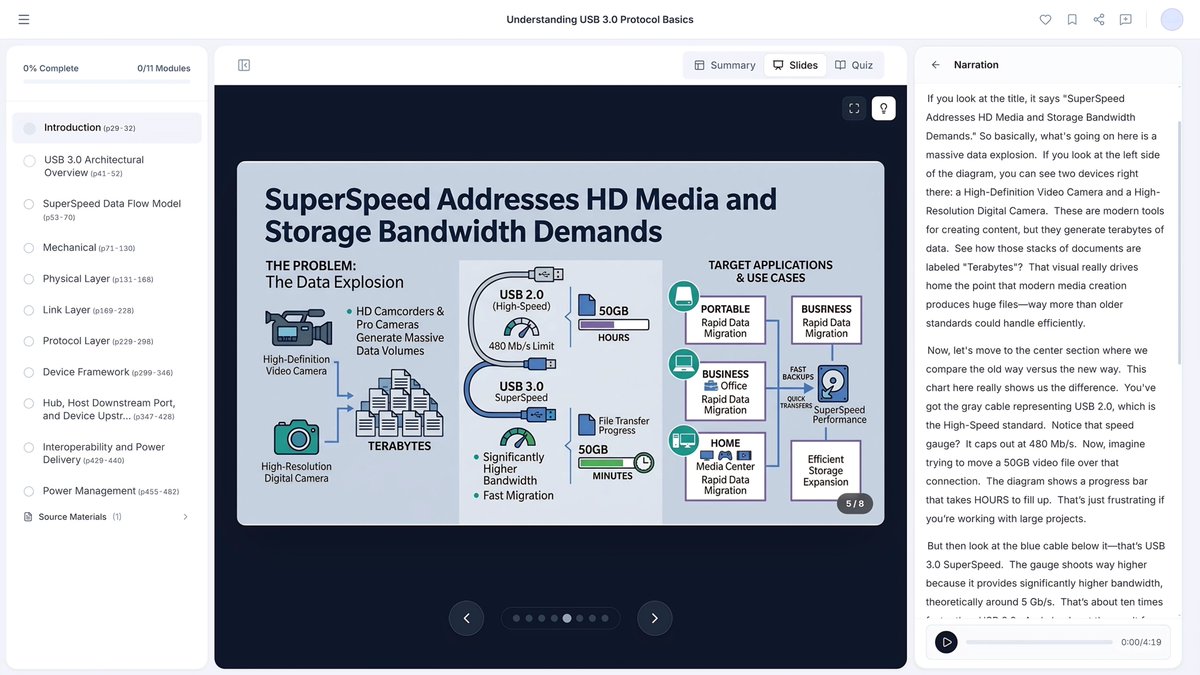
This looks like slides.
But it’s actually a structured learning path.
Each slide is designed to:
→ build intuition
→ explain system behavior
→ connect concepts step by step
That’s why it finally makes sense.
https://t.co/yPy7lu4kI2
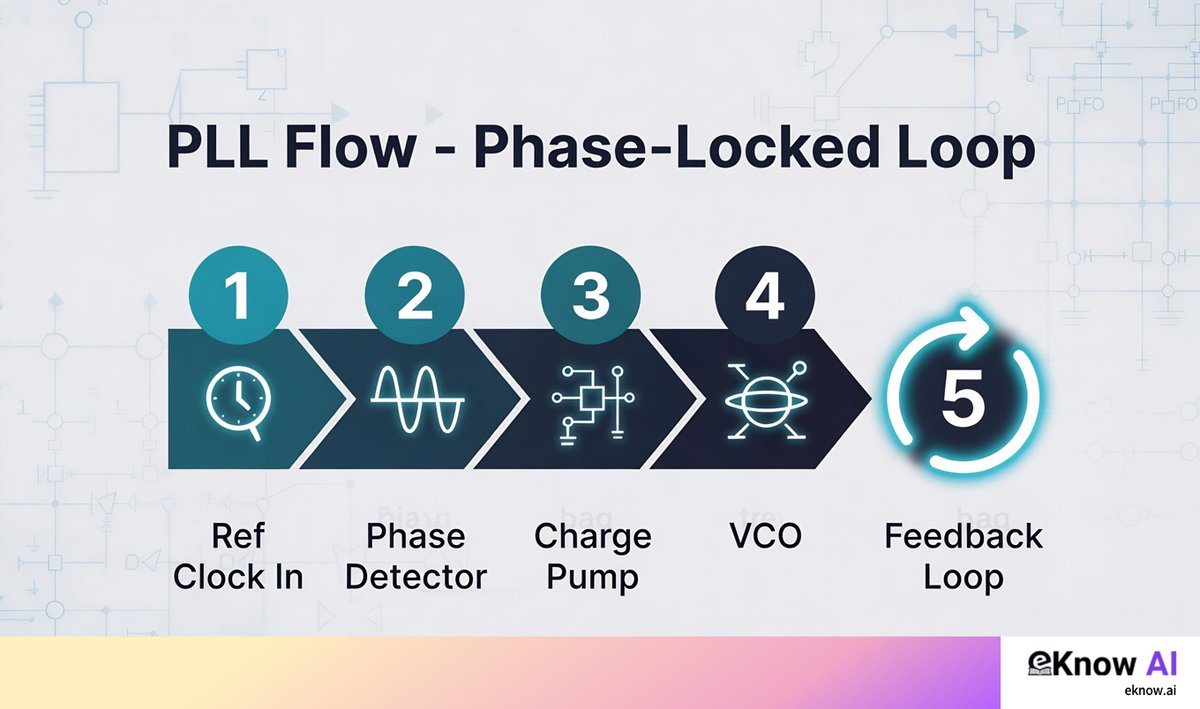
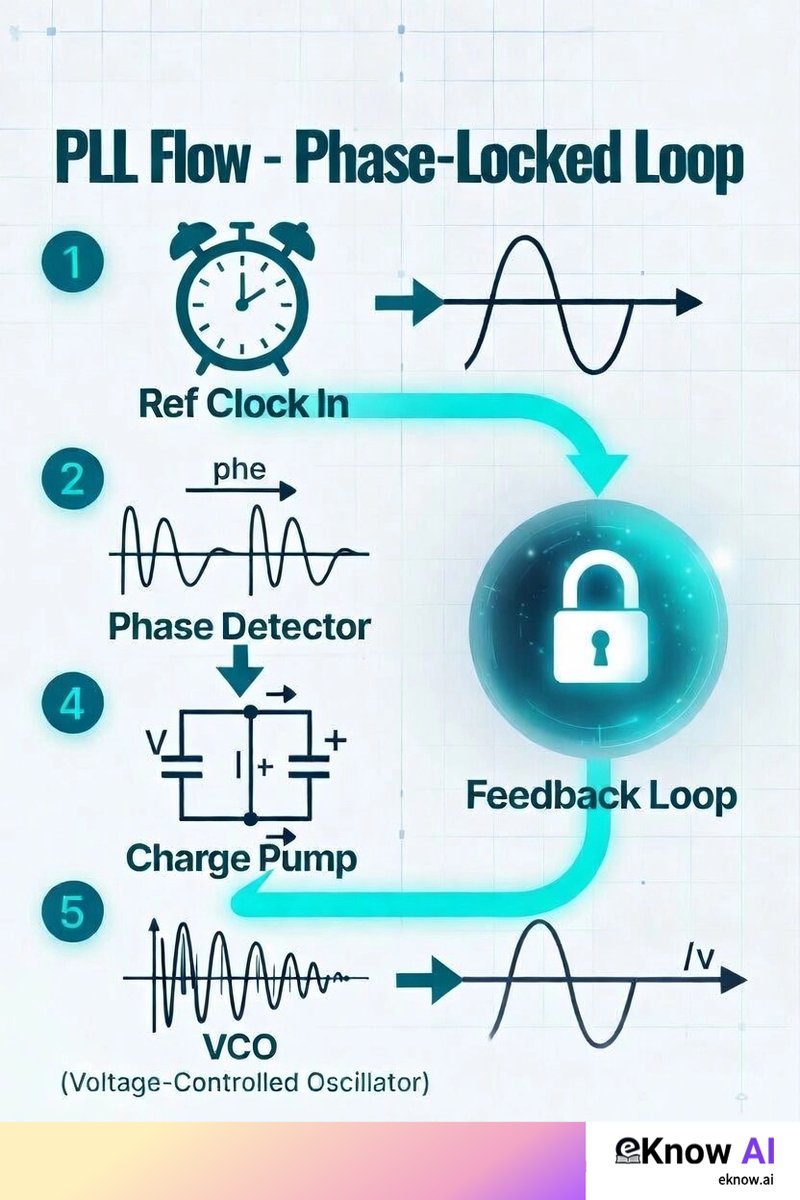
Most people think PLL matches frequency.
But it actually tracks phase.
If φout − φin stays constant → Fin = Fout.
That’s how clock sync really works.
Once you see it, it clicks.
👉 https://t.co/wIVeteRrf5
#PLL#ChipDesign#VLSI#Semiconductor#Engineering#AI
Quick question for tech learners:
What’s the ONE concept that still confuses you most?
(USB? API auth? Memory? PLL? Rate limiting?)
Reply below — we’ll turn the top ones into structured posts tomorrow.
Free trial → https://t.co/9fImGSCul3
#EdTech#API#SoftwareEngineering
What actually happens when you run a program? 👇
• Code → Compiled
• Instructions → CPU
• Data → Memory
• Execution → Output
Most explanations overcomplicate this.
📌
USB 3.0 isn’t just “faster USB”.
It’s a completely different architecture.
• Full-duplex data paths
• SuperSpeed (5 Gbps)
• Asynchronous communication
• Link power states (U0–U3)
If you’ve ever felt confused by the spec — start here ↓
https://t.co/xoeM6FWybj