After being alerted about possible misconduct, the I4R are reproducing published papers that use data from a specific NGO (GDRI). This thread releases the first 2 reports and provides more information about the work and responses/statements from authors journals and journals. 🧵
A summary of my thinking on shared prosperity, work and AI in ten bullet points.
This is partly motivated by the fact that I have received questions from several people on these issues, and I feel like it may be useful to lay out my thinking in simple terms in one place. We are also about to have a new administration in the United States, so perhaps it’s a good time to think about some aspirations (even though I view it very unlikely that the incoming administration will move us in this direction).
1. Shared prosperity is key.
By shared prosperity I mean economic growth from which most groups (e.g., men vs. women, different ethnic groups, different education groups, different regions, etc.) benefit more or less in the same way (e.g., their incomes growing at similar rates). Economic growth that just enriches one group greatly and generates only small benefits for many other groups is not shared prosperity. This is mostly an ethical precept, but it can also be justified because a peaceful, harmonious society does require shared prosperity. It is also a realistic one. It does not require that all inequalities are wiped away at one fell swoop.
2. Shared prosperity cannot be achieved just with redistribution.
It needs to be rooted in the labor market, in (good) jobs and in wage growth. The safety net and some amount of redistribution are important. But these are not sufficient to generate shared prosperity. Even in social democratic Nordic countries, where redistribution is most robust, it is not the source of shared prosperity. Wage and employment growth have been much more important historically. Redistribution-based shared prosperity doesn’t make political economic sense either: if some portion of the population is continuously impoverished, they wouldn’t have the political power to ensure that robust redistribution remains.
Moreover, even if we had a system where pre-tax inequality was growing a lot but there was enough redistribution to ensure the disposable incomes of all demographic groups grew robustly, it would have other serious problems. People without jobs and those whose pre-tax incomes were not growing wouldn’t feel that they were contributing to society. Worse, we would head towards a truly two-tier society with just some fraction of the population flourishing economically and receiving all the social status as they are the source of all earnings and tax revenues out of which others are receiving redistribution.
3. AI is here to stay and will be very impactful.
I have little doubt that AI will be a defining technology for our future. It can also deliver significant productivity benefits, though I think whether it will do so or not is contingent on how we develop it, and its full effects will take a while to be materialized. There is a lot of uncertainty about AI’s effects. In my opinion, it is also difficult to know what AGI (artificial general intelligence) would mean and when it may arrive, and this adds to the uncertainty about AI.
In sum, we cannot think of the future of work and shared prosperity without understanding AI’s impact.
4. AI��s direction can be pro-worker or anti-worker.
A basic pillar of my thinking and my research is that all technologies are malleable – meaning that they can be developed in many different ways, with very different consequences about who wins and who loses. This is doubly and triply true for AI, which is a broad, flexible technological platform. AI can be developed for prediction tasks; it could be developed for generating text and images; it can be used as an informational tool, etc. In all of these cases, AI can be more anti-worker (meaning that it focuses on automating tasks and disempowering workers) or pro-worker (meaning that it can become an information technology for enabling workers to perform their tasks better and to be able to branch into more sophisticated and new tasks). How AI will be developed is a choice.
5. Currently it is being developed as an anti-worker technology.
The main way in which companies are thinking of monetizing AI is by automation and more powerful digital ads, and neither of which would contribute to a pro-worker agenda. Moreover, the way in which foundation models are developed and trained is shaped by the expectation and desire to reach AGI. But AGI would mean more automation – if AI can achieve general intelligence and perform almost all tasks as well as most humans, then it will take away these tasks from humans. This current path will therefore lead to job displacement and lower wages, and is thus inconsistent with shared prosperity.
6. To redirect it, you need policies.
Putting the previous two points together, we can conclude that while there was a direction for AI consistent with shared prosperity, we are not pursuing it. Moreover, the industry will not suddenly change direction. Therefore, there needs to be an intervention, and this can only come from government policies (across the world) to encourage new directions and also put regulations to prevent the more harmful uses of AI (some of which are synergistic with the anti-worker direction).
7. To redirect it, you need competition.
New technologies especially radically new directions typically come from new companies, not established incumbents. This is doubly so when the incumbents we are talking about are the largest corporations humanity has ever seen. Hence, the pro-worker AI agenda should be symbiotic with agenda of increasing competition and breaking the hold of the existing powerful incumbents on the tech sector and the direction of AI.
8. To redirect it, you need different architectural choices.
Perhaps even more controversially, redirecting AI may need architectural choices. To put it simply, pro-worker AI need to be an information tool in the hands of workers. This is impossible unless AI provides reliable, understandable and real-time information to workers in a range of occupations. The current architecture of AI (partly fueled by AGI dreams) is about AI acting autonomously and has also led to a black box structure of AI. Instead, the pro-worker direction AI needs the tools to provide advice to human decision-makers (rather than make autonomous decisions), and the best autonomous decisions are not necessarily the best advice/recommendation/information to workers. Moreover, pro-worker AI needs to be understandable by human decision-makers, which is not possible with current black box structure of foundation models complemented with fine-tuning and other kinds of ex post training of pre-trained models.
Stepping back, in an ideal world government intervention should be neutral towards different technological choices. After all, entrepreneurs and innovators know which technologies to develop and how to develop them much better than bureaucrats and lawmakers. But in certain situations where different directions of technologies have major social consequences (for example, in the choice of fossil-fuel versus green technologies), then government intervention may need to impact technology and design choices as well. Nevertheless, it is important that this is done in the most minimalist possible way, so that innovation incentives and choices are not impacted beyond the extent necessary for a more socially beneficial direction to emerge.
9. All of this requires democracy.
Since the current direction is chosen and supported by the largest and most powerful corporations in the world, only robust democratic pressure can lay the foundations of a redirection.
10. The Catch-22: AI endangers democracy.
Tech choices in the past, especially those surrounding social media, have been damaging to democracy and active political participation of the citizenry. The same is likely to be true for AI, and even more so. First, AI is likely to be a very powerful technology for manipulation, and this can exacerbate platform choices that can make money while discouraging democratic citizenship. Second, the current ethos in the AI sector is quite anti-democratic, with leading technologists and entrepreneurs believing that experts (themselves) should be empowered to make all key decisions and democratic processes get in the way of the necessary AI acceleration.
This not only creates a Catch-22 (we need democracy to redirect AI, but AI has already damaged democracies) it also suggests that redirecting AI will be very difficult. But I still believe it’s not completely hopeless.
The best endorsement of the quality of work in economics that I've seen: "For example, we find that going from the most left-wing authored estimate of the taxable top income elasticity to the most right-wing authored estimate decreases the optimal tax rate from 77% to 60%."
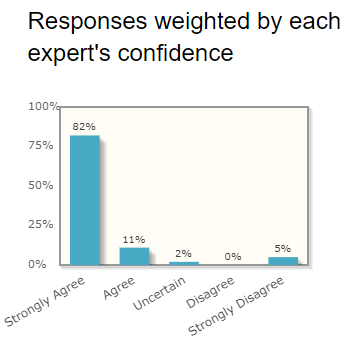
44 economists were asked 3 questions on economic policy ideas.
Q1 - Giving the President more influence over monetary policy would lead to substantially worse monetary policy decisions.
Agree = 93%
Disagree = 5%
El término de búsqueda "Qué es dictadura" en Google Trends duarente el último día.
Búsquedas relacionadas: "Qué es una república", "Qué es la reforma judicial".
OK, well I guess it's as good a time as any to announce I'm looking for a postdoc at Princeton -- areas are politics, machine learning and statistics. Please share widely!
https://t.co/DTvTIIRHFJ
A thread about what is wrong with the influence of Elon Musk and other tech billionaires. Another thread about content moderation will follow later this week.
Obviously, the problem isn’t that Musk is expressing his opinions, which is his freedom of speech. It isn’t that Musk has turned into a big supporter of Trump. It isn’t even that Musk is posting AI-generated fake images of Kamala Harris: https://t.co/1vprj7i0at
My concerns are more sociological and political economic.
My starting point is that in any society some individuals have more, much more power than others. Once upon a time, this may have been linked to physical strength or military prowess. Today, it is often related to what Simon Johnson and I called “persuasion power” in Power and Progress.
https://t.co/NtJ8Ae60qr
Persuasion power is rooted in status or prestige: those with greater status can more easily persuade others. Where status comes from and how unequally it is distributed vary greatly across societies.
In the United States, status became linked to money and wealth, and income and wealth inequality skyrocketed. This meant a very steep status hierarchy.
That is problematic for several reasons.
First, status – and relatedly persuasion power – are largely zero-sum affairs. More status for somebody means less status for another. A steeper status hierarchy makes some people happy, and others unhappy and dissatisfied. Investment in zero-sum activities is often inefficient and excessive, as compared to investment in non-zero-sum activities. Compare, for example, the social value of spending money on pure gold multi-million-dollar Rolex watches versus spending time to learn some new skills. Both may have intrinsic values for the investors (due to the beauty of the watch and the pride of acquiring new knowledge). But, on the whole, the first type of investment signals that you are richer and more able to undertake conspicuous consumption, and it can easily get out of hand – with people spending huge sums in order to edge ahead of others they see themselves in competition with. The second type of investment, on the other hand, increases your human capital also contributes to society. The first is largely zero-sum the second is largely non-zero-sum.
Second, there are evolutionary and social foundations for linking persuasion power to status and prestige – it is individually rational to learn from people who have expertise and it is reasonable to link this expertise to success. This type of learning is also good for communities, because it enables them to coordinate on certain best practices.
https://t.co/sTx2LmvJNX
But when status gets linked to wealth and wealth inequality becomes very large, this social justification is lost. Consider the following thought experiment. Who has greater expertise on carpentry? A good, master carpenter or a hedge fund billionaire? If we think about it this way, we would probably conclude the former. But when wealth becomes status, we may start attaching more and more importance to views of hedge fund billionaires on carpentry. This example was purposefully simple and sharp. Let’s take another one to see why the “wealth is status” social equilibrium is problematic. Whose views on freedom of speech you want to attach more importance to? A tech billionaire or a philosopher who has grappled with ethical questions related to the freedom of speech?
Third, even more problematic is the fact that in most societies, wealth inequality has an arbitrary dimension. Take Wilt Chamberlain and Lebron James. We may argue endlessly about which one is better, but clearly, they were both exceptionally talented basketball players. Chamberlain is estimated to have had a wealth of $10 million at the time of his death. Lebron James’s wealth today is estimated at $1.2 billion. These different outcomes are largely arbitrary. Chamberlain happened to live at a time when there were sports stars did not get compensated as much. This is partly about technology (everybody can watch Lebron James today), partly about norms (we’ve have made it much more acceptable for people to be paid hundreds of millions of dollars), and partly about taxes (if the US today had the kinds of tax rates that it had in the 1950s, it would not generate such large wealth inequality). Similarly, if the tech sector did not become so central to the economy and did not have a winner-take-all aspect (which was also partly a choice of how we organize several markets and sectors), tech billionaires would not have become so rich. Bill Gates or Elon Musk are not any wiser because they are taxed less. But they have much more wealth because they are taxed so little. But then in a “wealth is status” social equilibrium, their status and social influence multiplies because they are taxed so little.
Fourth, there is something even more pernicious which Simon Johnson and I explored in Power and Progress using the example of Ferdinand de Lesseps. In fact, we thought this was so important that we devoted the first full chapter, Chapter 2, of the book to it. Lesseps gained tremendous status in late 19th century France, coming to be identified as the “Le Grand Français” (the great Frenchman), because of his success (and luck) in successfully completing the Suez Canal. He showed great skills in convincing politicians both in Egypt and France and some foresight in seeing that maritime international trade would become very important. He was also tremendously lucky in that his hopes that technological solutions to the way that he wanted to build the canal (without locks, which was initially impossible because of the amount of digging excavation that would be necessary) were developed just-in-time to save the project. But then what did Lesseps do with this prestige? He became reckless, unhinged and cocky, pushing the Panama Canal project in an unworkable direction, which ultimately led to the deaths of more than 20,000 people and to financial ruin for many more (including his own family). Persuasion power also makes you unrestrained, which can be socially dangerous and disruptive. Simon and I thought that Lesseps’s story was relevant precisely because the same dynamics were being played out with many tech leaders today.
Fifth, some very rich people choose not to use the status conferred on them by their wealth to centrally influence critical debates (think of Warren Buffett). Some like Bill Gates or Elon Musk do. It follows as a corollary of what I have argued so far that this is not desirable, because their status is excessive, and they are now influencing key social choices beyond their expertise. It is not tech billionaires’ fault that US policy is fueling massive inequality (though they benefit from it handsomely and many of them then use their status in order to keep taxes low and regulations light). But it is their responsibility if they start misusing the huge status that this wealth inequality affords them. It is their responsibility if they turn into bullies and start punching down on people who disagree with them, because they themselves start believing that everybody should respect their opinion on every topic. It is absolutely their responsibility if they use their platform for further polarizing society.
Finally, if we are in such a situation the last thing we want is to give even bigger forums – for example, in the form of their own social network – to these people who already have excess status and influence, and this is doubly true if they have a tendency to punch down.
Hoy es un día histórico y triste para México. Morena y su coalición estarían obteniendo mayoría calificada en la Cámara de Diputados y se quedan muy cerca de tenerla también en el Senado. Así, se quedan a solo 3 senadores de poder modificar la Constitución a placer.
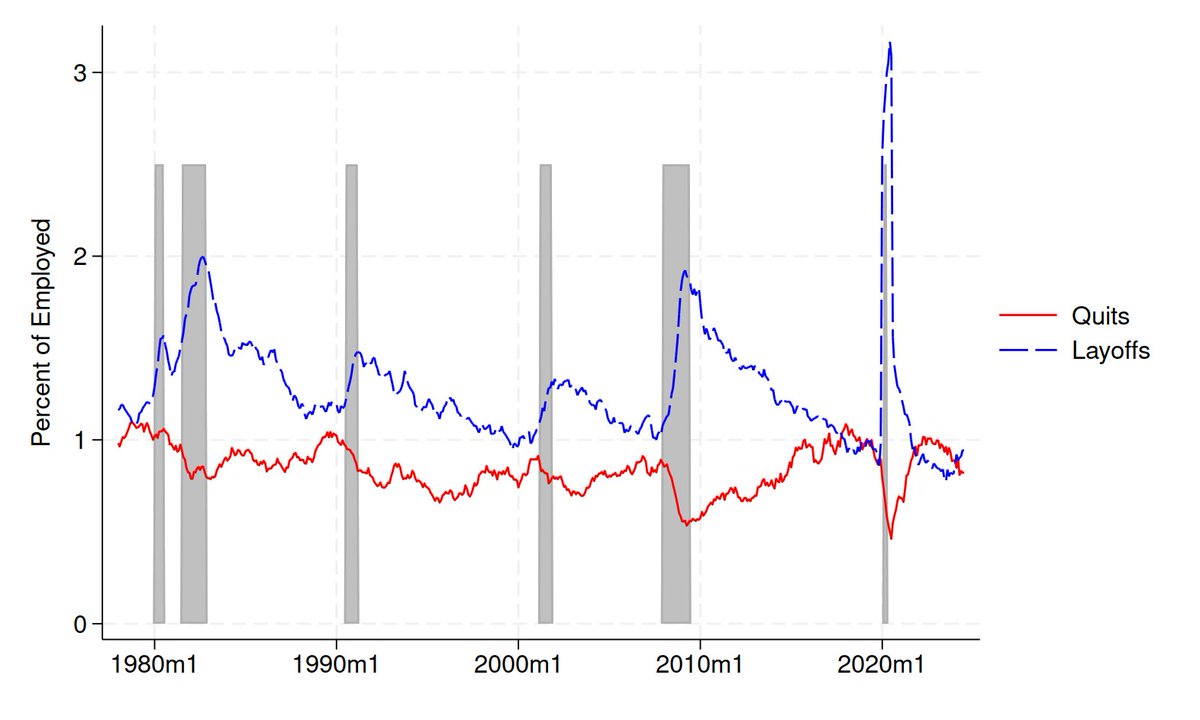
#QLmonthly update brings good news: layoffs seem to have stabilized from June to July after steady rises in the first half of the year. Falling quits have also paused. (https://t.co/g16ePyEsiv) 1/n
Llegamos! Una mente brillante. La increíble anécdota de como llegó al doctorado en Yale sin carrera de grado. Sus inicios en BCRA y una beca en Japón. Su paso por Perú y Colombia. Su desembarco en Columbia. Va hilo y link de Parte 1 de la entrevista ! Gracias Guillermo!
El @CEIColmex convoca a interesados(as) de cualquier nacionalidad al concurso para contratar tres profesores(as)-investigadores(as) de tiempo completo.
Consulta la convocatoria completa 🔎 https://t.co/Tpn92ss0Y2
❗ Cierre: 15 de septiembre de 2024
Pasa la voz ‼️🔈
Convocatoria para ocupar plaza de bibliotecólogo Académico en la #BiblioColmex
El plazo para la presentación de candidaturas inicia el 23 de mayo y concluye el 14 de junio de 2024.
Convocatoria en: 👉 https://t.co/aQJQjTju1h
@elcolmex