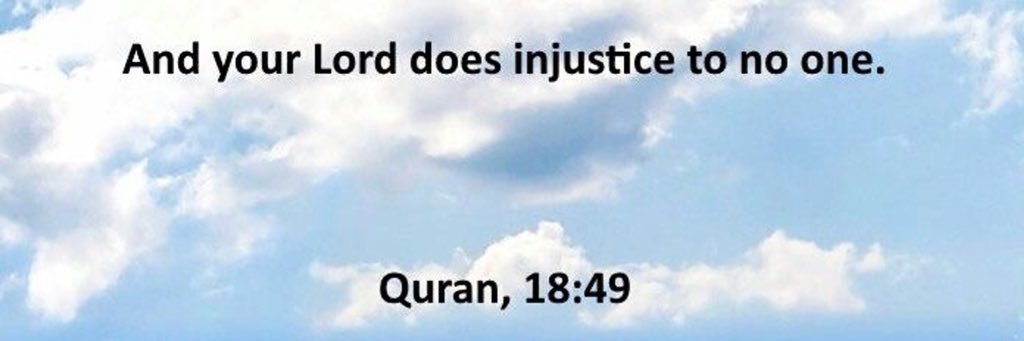
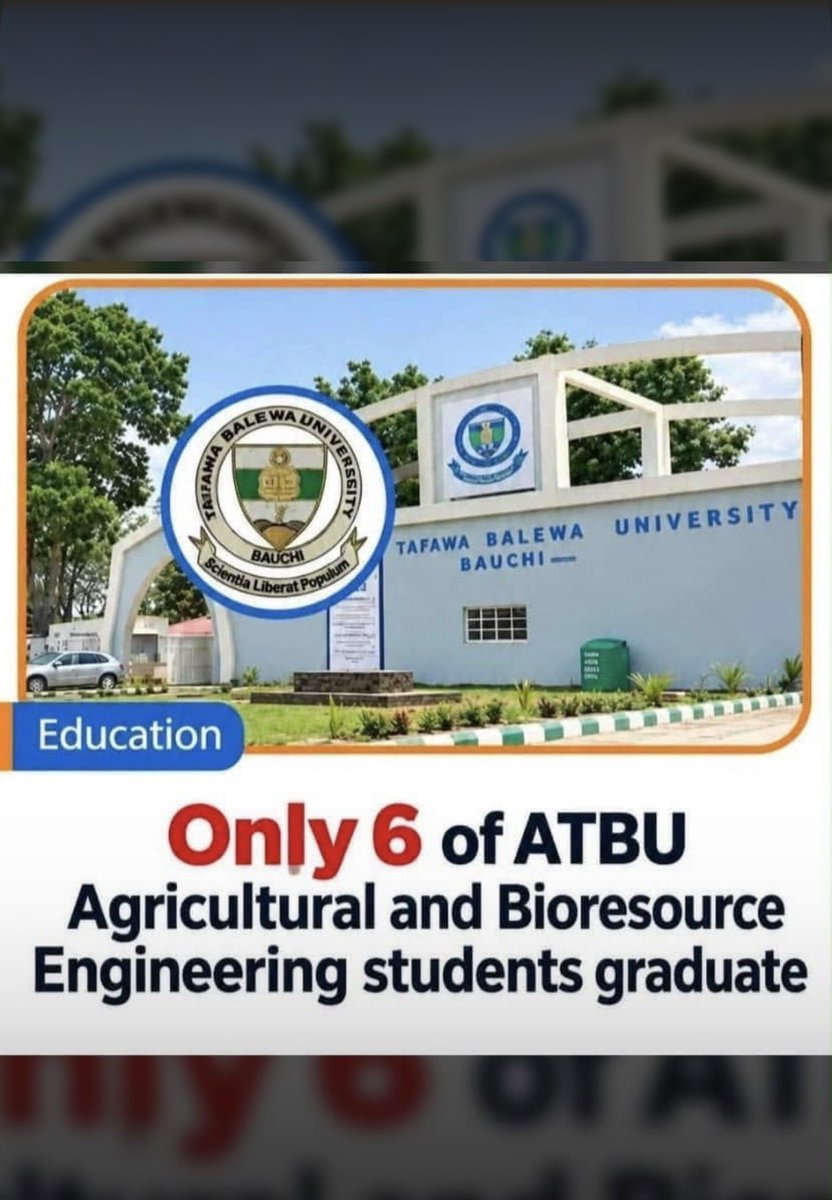
@emtukur@MA_Iliasu@UzairuMarxz You denied us the possibility of producing another Arewa expert in that field. But like you said, indeed, Allah knows best.
The average millionaire is 61. Not 21.
The average founder is 42. Not 23.
The average first-time home buyer is 40.
Not 26.
Building an impressive physique takes 3–5 years. Not 90 days.
Most businesses take 2–3 years to turn a profit, and often 7–10 to really take off.
Not 6 months.
You're not behind. You're right on time.
Lecturers have so many commitments like teaching, research, supervision, administrative work, external activities, etc., and some of them do complain about neglect and a total disconnect from their students after graduation. This is just a generalised perspective, though.
However, if you want steady, swift and good recommendation(s), make sure you develop a very good relationship with your lecturer—especially your supervisor at both undergraduate and postgraduate levels—and nurture and sustain it even after graduation through occasional greetings, friendly messages, birthday wishes, celebration of milestones, etc.
One of my former students, who is a police officer, still reaches out occasionally to greet me. Some of those pursuing postgraduate studies also keep in touch from time to time.
Do not disappear for 5–10 years only to resurface whenever you need a recommendation.
Been sending my lecturer WhatsApp messages for the past 4 weeks just so he could help me with a letter of recommendations, this man will read my messages and not reply. Decided to call him today, it rang still he dint pick. It is well.
But why would a professor who never taught you issue you a recommendation letter? How did he assess your intellectual ability, research skills, competence and other qualities through LinkedIn? Recommendations are best given by someone who taught you and interacted with you relatively well over time.
I hope this is not another case of “I scored 450/400 in JAMB” story?
Connect with lecturers from other countries on LinkedIn. I promise you won’t regret it. The professor who wrote my letters of recommendation to all grad schools I applied to was previously a Cambridge professor. The other is a professor at a uni in Qatar. Don’t limit yourself.
Look at the way these Manchester United players are playing, even before the red card. They don’t even seem to care. There is no energy, intensity or urgency whatsoever. They know full well that, whatever happens, they will still pocket their pounds every week.
They are playing like it is preseason: languid, unfit, unable to run and highly vulnerable in all departments, while Liverpool’s players are pressing ubiquitously and covering virtually every space on the pitch.
Apart from Bruno and perhaps Cunha, there is not a single world-class player in this squad who could walk straight into teams like City, Arsenal or Madrid. Sack and appoint as many managers as you like; as long as you refuse to invest in genuinely world-class players, these pedestrian lads will continue to struggle.
At this rate, they would even struggle to survive a relegation battle.
Nigerians really need to stop glorifying hardship or difficulty as a yardstick for measuring the toughness of a course or a school. As a teacher, your success should be reflected in the number of students who pass your course. Too many failures suggest that something may also be wrong from your end. This type of argument is often used to promote the my-school-is-tougher-than-your-school narrative or the my-course-is-more-difficult-than-yours analogy. There is no course a child can’t pass with the highest grade in this world. Unless you didn’t teach well.
The Amir, usually written as “Emir”, is classified as the leader of the ‘Ummah and the custodian of an institution whose historical and ideological foundations are deeply rooted in the Islamic political order established by the Sokoto Jihad under Shehu Usman Dan Fodio.
The Amir is a leader or someone entrusted with authority over a people or territory. In Islamic political history, the title was not just about an expression of royalty, social status or prestige. Rather, it represented an office of leadership with considerable responsibilities, like the administration of justice, protection of the people, maintenance of public order, promotion of religious values and provision of direction for the community under one's authority.
An Emir is, historically, an Amir, and the institution he represents ought to reflect the moral, religious and social responsibilities associated with that office.
We will ensure there is functional primary healthcare in every ward in Nigeria. We have 8,809 wards, but we have promised Nigeria 10,000 primary healthcare centers. We plan to build 40,000 primary school blocks.
- Peter Obi
🩺HOW DO SURGEONS REMOVE A BUNION? WHAT ACTUALLY HAPPENS DURING BUNIONECTOMY SURGERY?
A bunion is more than just a bump on the side of your big toe. It is a structural deformity in which the big toe gradually shifts towards the other toes, causing the joint at its base to protrude.
The condition is medically known as Hallux Valgus.
When it becomes painful, affects walking or makes wearing shoes difficult, surgery may be recommended.
But how is it corrected?
🔬 HERE IS WHAT HAPPENS DURING BUNIONECTOMY SURGERY:
1. ANAESTHESIA
The patient receives anaesthesia, which may be general or regional, to prevent pain during the operation.
2. SURGICAL INCISION
The surgeon makes an incision near the big toe joint to access the underlying bone and surrounding tissues.
3. REMOVING THE BUNION
The surgeon removes the prominent portion of bone responsible for the visible bump.
4. REALIGNING THE BONE
This is the critical step. The surgeon may cut and reposition the first metatarsal bone to correct the abnormal alignment of the big toe. This procedure is called an osteotomy.
5. FIXING THE BONE IN POSITION
Small screws, pins or plates may be used to hold the repositioned bone in place while it heals.
6. CLOSING THE INCISION
The surgeon closes the wound with stitches and applies a dressing. Sometimes a special surgical shoe or boot is provided to protect the foot.
🦶 WHAT HAPPENS AFTER SURGERY?
Recovery takes time. Patients may need:
- Elevation of the foot to reduce swelling.
- Pain medication as prescribed.
- A surgical shoe or protective boot.
- Limited weight-bearing, depending on the procedure.
- Follow-up appointments and sometimes physiotherapy.
Bone healing commonly takes around 6–8 weeks, although swelling and full recovery can take several months.
⚠️ IMPORTANT: A bunionectomy is not simply about removing a visible bump. The main objective is to correct the underlying bone alignment, relieve pain and improve foot function.
Your feet carry your body every day. Don't ignore persistent foot pain. Seek medical assessment.
#HealthEducativeContent #OrthopaedicSurgery #FootHealth #MedicalEducation
Happy birthday to Mallam Nuhu, the man who laid the foundation for many of the strides the EFCC has recorded today. The man who rejected a bribe running into millions of dollars at a time many others would have readily taken the money.
I met Mallam twice, in 2011 and 2016, and on both occasions, I found him to be very humble, and full of smiles.
May Allah bless him with good health, long life and continued service to humanity.
Making noise after just one training session. You people are part of the problem. You keep scrutinising our training sessions and raising unnecessary standards whereas other clubs don’t even do that. Allow the new manager to settle and create a style for husband without undue attention.
🚨🎥 WATCH:
The intensity, the hunger, the atmosphere at Carrington… EVERYTHING feels different under Poch! 🔥💪
Now let’s take that energy to Anfield tomorrow, get back to winning ways and FINALLY kickstart our season! ♥️
#MUFC
After almost two years (about 22 months) of endless peer-review and editorial exchanges, we are finally pleased to announce the publication of our article, “Structural Equation Modelling of ChatGPT Adoption: Testing a Modified UTAUT Model with Moderating Variables,” in the Journal of University Teaching and Learning Practice, a prestigious Australian Q1 education journal with a Scopus CiteScore of 8.9 and an Impact Factor of 5.2. It is also indexed on Web of Science.
This project, conceived in December 2023, has yielded three articles in Q1-rated journals indexed in Scopus. It is a product of collaboration with my brother, Dr. Owan, from the University of Calabar. I really admire his methodological and statistical expertise. This is our third paper together, with the fourth undergoing minor revision, following our first meeting on ResearchGate in December 2023. We also have one paper yet to be submitted, having finalised it early this year.
Drawing on data from 8,496 students across Nigerian higher education institutions, the study employs an extended UTAUT2 model and Partial Least Squares Structural Equation Modelling (PLS-SEM) to examine the factors shaping university students’ acceptance and use of ChatGPT. The findings identify performance expectancy, hedonic motivation and habit as significant predictors of behavioural intention, while facilitating conditions, hedonic motivation, habit and behavioural intention predict actual use. The study further establishes the mediating role of behavioural intention and the moderating effects of age, sex and programme of study.
These findings contribute to the growing empirical literature on generative AI adoption and offer important insights for educators, institutional leaders and policymakers seeking to promote the ethical and effective integration of AI into teaching, learning and curriculum design.
You can read it here: https://t.co/I3qwU1fmO8