AI isn’t an author, whether it’s used for drafting, analysis, or peer review. At the end of the day, it’s the humans who are responsible for what they submit, not AI.
Personally (speaking as someone very early in their research career, with no established name to carry any weight), I’d address the comments I agree with, respectfully push back on those I disagree with, and mention my concerns about the review in a confidential note to the editor. Whether AI was involved or not doesn’t really change how I’d handle it.
“Who said we had to wait until graduation?”
From having NO idea how medical research worked
No shortcuts. Plenty of mistakes. So much more to learn.
This Saturday, I’ll be sharing how it all started, what I wish I’d known sooner, and why this is still just the beginning.
📍 Medociation Club @UIRabat , Rabat | Nov 14
@TouijerKarim@epirheum
#MedicalResearch #MedTwitter #MedStudentTwitter #StudentResearch #WhyResearch
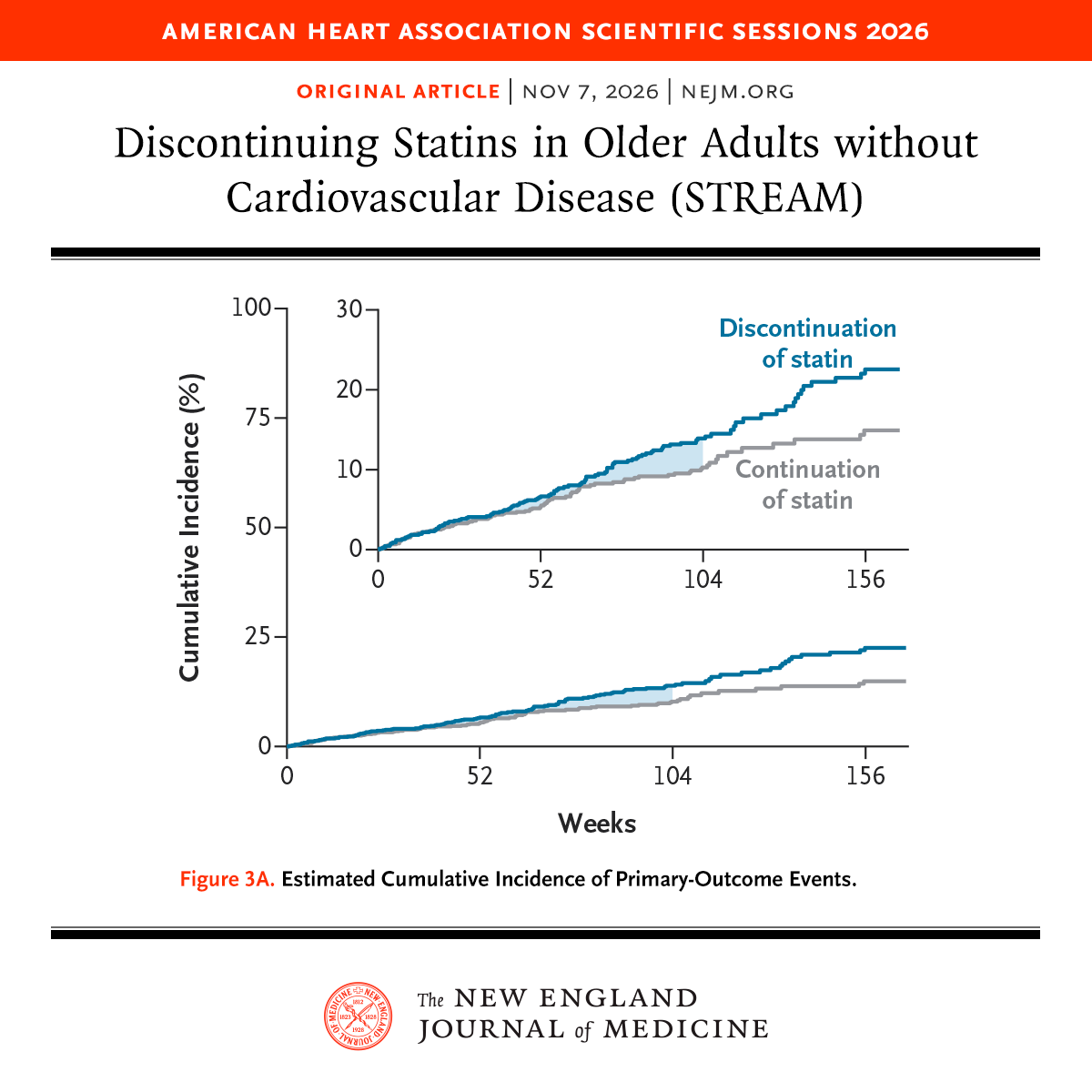
Should a noninferiority conclusion be emphasized when both the observed treatment effect and the confidence interval favor the standard treatment, particularly in the absence of demonstrated quality-of-life benefits?
Presented at #ScientificSessions26:
In older adults with at least two chronic conditions and no known atherosclerotic cardiovascular disease, statin discontinuation was noninferior to continuation for a composite of myocardial infarction, stroke, or death at 2 years. Full STREAM trial results: https://t.co/e0YZJbXGg2
@AHAScience
Our latest study on Adapted physical activity in medical curricula:
among 440 medical students surveyed, 82.7% supported its inclusion, while 37.3% reported familiarity with the concept.
#MedEd#PhysicalActivity
https://t.co/JoNXzIcb9j
Could Zika infection contribute to atrial fibrillation?
Our review in Discover Medicine examines the proposed mechanisms and limited clinical evidence. A plausible link, but causality remains unproven.
Read the review:
https://t.co/yKkC6Cs9qM
@TouijerKarim@UrologyMSK@JUrology If modifying dissection around Cloquet reduces lymphocele risk, would you broaden the indications for PLND? How would you distinguish patients likely to have positive nodes from those most likely to gain a therapeutic benefit from removing them?