Research Economist @CIDE_MX. Head of @PirceCide. I am doing research on Auctions, Antitrust Policy, Group Bargaining, Social Preferences, Telecom and Voting.
Aún puedes inscribirte al Diplomado "Innovación, Regulación y Nuevos Modelos de Negocios en Tecnología Financiera (Fintech)", que se desarrollará del 14 de agosto al 12 de diciembre de 2026
🔗 Regístrate aquí: https://t.co/ohpPhSE1Og
ℹ️ Conoce el programa: https://t.co/wuNrQkVctE
Lots of interesting stuff in this interview, including why AI may be a force for truth. Yuval Noah Harari on the Mistake Strongmen Keep Making https://t.co/Q8jGmCDxbF
¿Qué pasa en el mercado laboral cuando sube el salario mínimo?
En este estudio, El Dr. Francisco Cabrera-Hernández y Dr. R. Duval-Hernández analizan cómo el aumento salarial de 2019 en la frontera norte cambió las transiciones laborales en México. Un 🧵
#AgendaCIDE Agradecemos a los asistentes a la tertulia: "CIDEítas en el mundo empresarial" que contó con la participación de los ponentes Luis Navarro (Co-founder & CEO Digital Keeper) y Sergio Pérez (CEO Alemet) y como moderadores el Dr. Gustavo del Ángel y Alexander Elbittar.
México está más cerca de Venezuela en el ranking mundial de Estado de derecho que de los típicos países de AL con los que siempre se ha comparado.
¿Tenemos en casa las instituciones para el TMEC 2.0?
¿Pasar más tiempo en la escuela puede reducir el crimen? En este estudio, el Dr. Francisco Cabrera Hernández en colaboración con la Dra. Bárbara Zárate Tenorio analizan si ampliar la jornada escolar en México disminuyó la delincuencia juvenil. Un 🧵
#AgendaCIDE | Agradecemos su asistencia al seminario del día de hoy: “Delaying the Inevitable? U.S. Screwworm Closures and Feeder Cattle Market Dynamics”, Que contó con la participación del ponente Aleks Schaefer (Oklahoma State University).
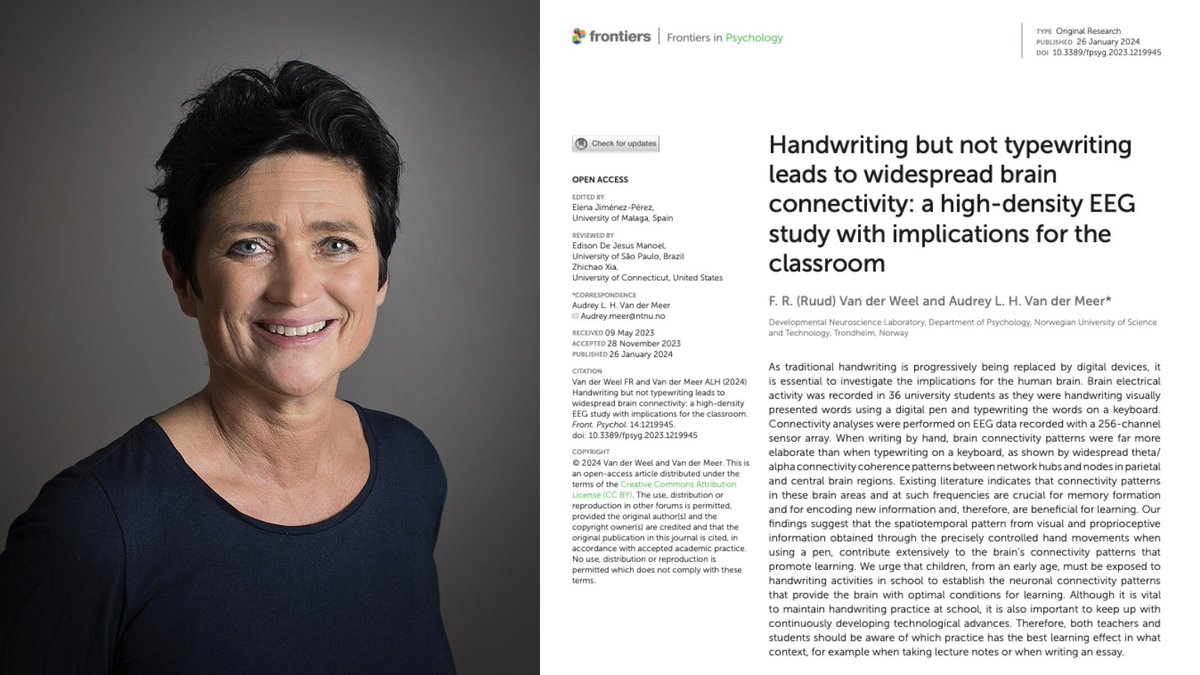
A Norwegian neuroscientist spent 20 years proving that the act of writing by hand changes the human brain in ways typing physically cannot, and almost nobody outside her field has read the paper.
Her name is Audrey van der Meer.
She runs a brain research lab in Trondheim, and the paper that closed the argument was published in 2024 in a journal called Frontiers in Psychology. The finding is brutal enough that it should have changed every classroom on Earth.
The experiment was simple. She recruited 36 university students and put each one in a cap with 256 sensors pressed against their scalp to record brain activity. Words flashed on a screen one at a time.
Sometimes the students wrote the word by hand on a touchscreen using a digital pen, and sometimes they typed the same word on a keyboard. Every neural response was recorded for the full five seconds the word stayed on screen.
Then her team looked at the part of the data most researchers had ignored for years, which is how different parts of the brain were communicating with each other during the task.
When the students wrote by hand, the brain lit up everywhere at once.
The regions responsible for memory, sensory integration, and the encoding of new information were all firing together in a coordinated pattern that spread across the entire cortex. The whole network was awake and connected.
When the same students typed the same word, that pattern collapsed almost completely.
Most of the brain went quiet, and the connections between regions that had been alive seconds earlier were nowhere to be found on the EEG.
Same word, same brain, same person, and two completely different neurological events.
The reason turned out to be something nobody had really paid attention to before her work. Writing by hand is not one motion but a sequence of thousands of tiny micro-movements coordinated with your eyes in real time, where each letter is a different shape that requires the brain to solve a slightly different spatial problem.
Your fingers, wrist, vision, and the parts of your brain that track position in space are all working together to produce one letter, then the next, then the next.
Typing throws all of that away. Every key on a keyboard requires the exact same finger motion regardless of which letter you are pressing, which means the brain has almost nothing to integrate and almost no problem to solve.
Van der Meer said it plainly in her interviews.
Pressing the same key with the same finger over and over does not stimulate the brain in any meaningful way, and she pointed out something that should scare every parent who handed their kid an iPad.
Children who learn to read and write on tablets often cannot tell letters like b and d apart, because they have never physically felt with their bodies what it takes to actually produce those letters on a page.
A decade before her, two researchers at Princeton ran the same fight using a completely different method and ended up at the same answer. Pam Mueller and Daniel Oppenheimer tested 327 students across three experiments, where half took notes on laptops with the internet disabled and half took notes by hand, before testing everyone on what they actually understood from the lectures they had watched.
The handwriting group won by a wide margin on every question that required real understanding rather than surface recall.
The reason was hiding in the transcripts of what the two groups had actually written down.
The laptop students typed almost word for word, capturing more total content but processing almost none of it as they went, while the handwriting students physically could not write fast enough to transcribe a lecture in real time, which forced them to listen carefully, decide what actually mattered, and put it in their own words on the page.
That single act of choosing what to keep was the learning itself, and the keyboard had quietly skipped the choosing and skipped the learning along with it.
Two studies. Two countries. Same answer.
Handwriting makes the brain work. Typing lets it coast.
Every note you have ever typed instead of written went into your brain through a thinner pipe. Every meeting, every book highlight, every idea you captured on your phone instead of on paper was processed at half depth.
You did not forget those things because your memory is bad. You forgot them because typing never woke the part of the brain that would have made them stick.
The fix is the thing your grandmother already knew.
Pick up a pen. Write the thing down. The slower road is the faster one.
#AgendaCIDE | Agradecemos su asistencia al seminario del día de hoy: “Wigglers and the Willing: A Within-Subject Analysis of Inequality Concerns”, Que contó con la participación de la ponente Mariana Blanco de la Università di Torino.
Terence Tao: "Previously, you needed a PhD to contribute to math research. Now a high school student can."
Dwarkesh asks the world's most famous mathematician: what's your advice for someone considering a career in math, especially in light of AI progress?
Tao is honest about uncertainty:
"We live in a time of change. A particularly unpredictable era. Things that we've taken for granted for centuries may not hold anymore. The way we do everything... not just mathematics... will change."
He admits his preference:
"In many ways, I would prefer a much more boring, quiet era where things are much the same as they were 10 or 20 years ago. But one just has to embrace this. There's going to be a lot of change. The things you study... some of them may become obsolete or revolutionized. But some things will be retained."
On new opportunities:
"Previously, you had to go through years and years of education and get a math PhD before you could contribute to the frontier of math research. But now it's quite possible at the high school level that you could get involved in a math project and actually make a real contribution... because of all these AI tools and Lean and everything else."
His advice:
"There will be a lot of non-traditional opportunities to learn. You need a very adaptable mindset. There'll be worth pursuing things just for curiosity and for playing around.
Still go through traditional education and learn math and science the old-fashioned way for a while... credentials will still be important. But you should also be open to very, very different ways of doing science. Some of which don't exist yet."
He concludes:
"It's a scary time. But also very exciting."
Durante la segunda sesión extraordinaria del Consejo Directivo del #CIDE, se realizó la aprobación de los nombramientos de la Dra. Sonia Di Giannatale como Secretaria Académica, y del Lic. César Javier Campa Campos como Coordinador de Administración y Finanzas.
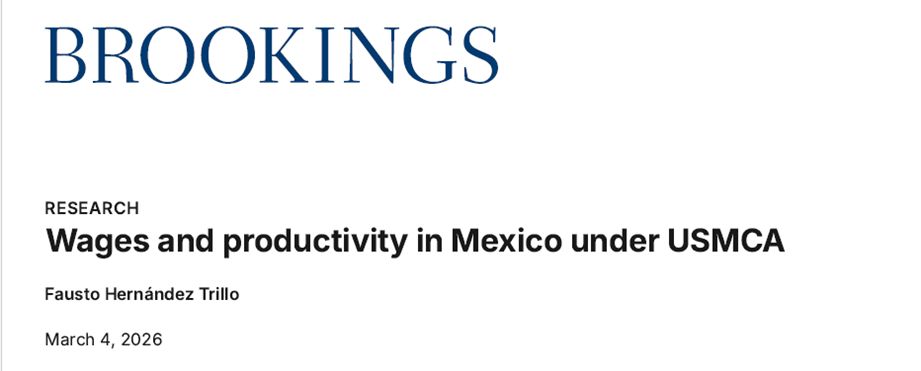
¿El T-MEC ha mejorado salarios y productividad en México?
En este estudio, el Dr. Fausto Hernández Trillo analiza la evolución de salarios, productividad y estructura económica bajo el USMCA. Un 🧵
For classical music lovers 🎼
Toccata and Fugue in D minor, BWV 565 by Johann Sebastian Bach at Riga Cathedral is pure magic.
Played by Liene Andreta Kalnciema, the cathedral’s acoustics turn every note into living sound in space.
Baroque power + sacred resonance = music you don’t just hear, you feel. ⛪🎶
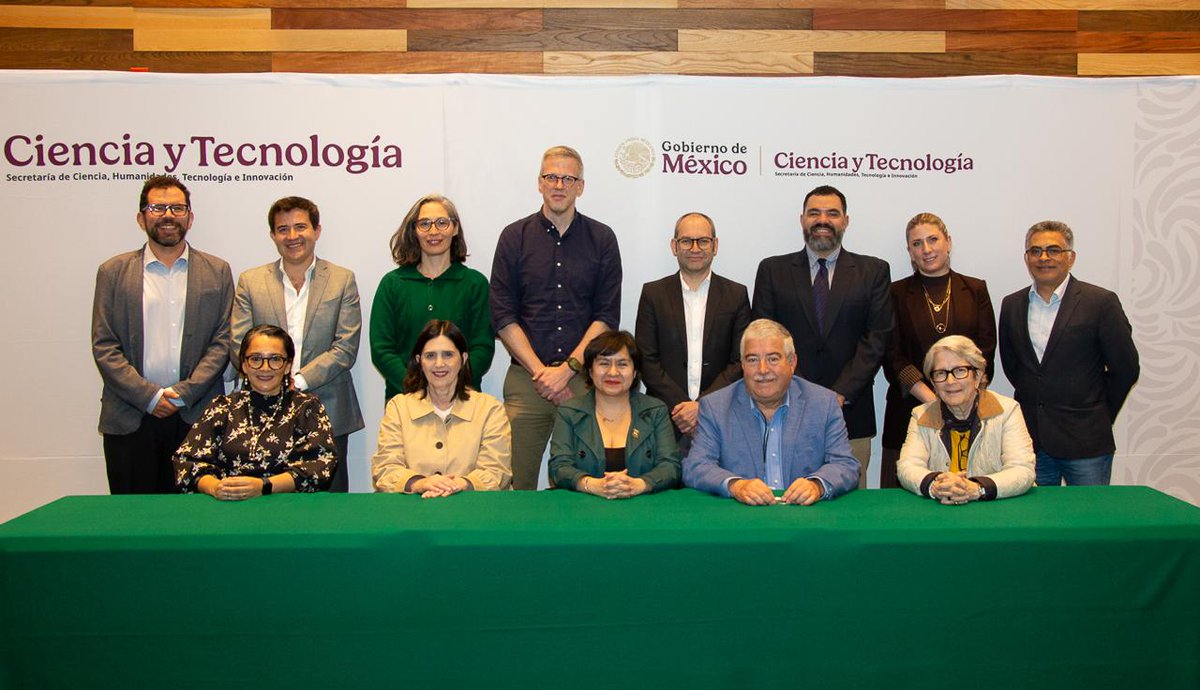
Las y los directores de las divisiones académicas del CIDE, junto con la dirección general, secretaría académica, secretaría de vinculación y dirección del @CIDE_RC participaron en el seminario “México en el nuevo entorno internacional”, evento organizado por @Secihti_Mx y #CIDE.
Umberto Eco, propietario de 50.000 libros, dijo esto sobre las bibliotecas caseras:
"Es una tontería pensar que tienes que leer cada libro que compras, porque es una tontería criticar a aquellos que compran más libros de lo que nunca podrían leer. Sería como decir que debes usar todos los cubiertos o gafas o llaves o taladros que compraste antes de comprar nuevos".
"Hay cosas en la vida que siempre necesitamos tener en abundancia, incluso si solo usamos una pequeña porción".
"Si, por ejemplo, consideramos los libros como medicina, entendemos que es bueno tener muchos en casa en lugar de algunos: cuando quieres sentirte mejor, ve al 'armario de medicamentos' y toma un libro. No al azar, sino el libro correcto para ese momento. ¡Esta es la razón por la que siempre debes tener una opción nutricional!"
"Quien compra sólo un libro, lee sólo este y luego se deshace de él. Solo aplican la mentalidad de consumidor a los libros, es decir, nos consideran un producto de consumo, un bien". "Los que aman los libros saben que un libro es todo menos una mercancía. "
Robert Trivers, a theoretical genius and likely the Einstein of evolutionary biology, passed away. His theories of reciprocal altruism, parental investment, and self deception are among the deepest and most encompassing in the social sciences. Here's a great post summarizing them by @page_eco
When Copernicus proposed heliocentrism in 1543, it was actually less accurate than Ptolemy's geocentric model - a system refined over 1,400 years with epicycles precisely tuned to match observed planetary positions.
It took another 70 years before Kepler, working from Tycho Brahe's unprecedentedly precise observations, replaced Copernicus’s circles with ellipses - finally making heliocentrism empirically superior.
Terence Tao's point is that science needs a high temperature setting. If we only fund and follow what's most state of the art today, we kill the ideas that might need decades of work to surpass some overall plateau.
#AgendaCIDE | Asiste a la sesión del seminario permanente Ética e IA: perspectivas multidisciplinarias titulado: "Estado de la IA en México".
🗓️ 24 de marzo de 2026 | 18:00 horas
👉 Registro Zoom: [email protected]