Chief Executive Officer, @mena_2050, head in the air, feet on the ground, dreamer and doer. Let's work together to bring hope and prosperity to our MENA region!
𝐋𝐚𝐮𝐧𝐜𝐡𝐢𝐧𝐠 𝐌𝐄𝐍𝐀'𝐬 𝐅𝐢𝐫𝐬𝐭 𝐑𝐞𝐠𝐢𝐨𝐧𝐚𝐥 𝐀𝐠𝐫𝐢𝐟𝐨𝐨𝐝 𝐒𝐲𝐬𝐭𝐞𝐦𝐬 𝐖𝐡𝐢𝐭𝐞 𝐏𝐚𝐩𝐞𝐫 𝐚𝐭 𝐃𝐢𝐚𝐥𝐨𝐠𝐮𝐞𝐍𝐄𝐗𝐓 𝐀𝐟𝐫𝐢𝐜𝐚
Dr. Lee Recht, Chairwomen of the MENA2050 Food Systems Committee, has unveiled the new white paper "𝐓𝐫𝐚𝐧𝐬𝐟𝐨𝐫𝐦𝐢𝐧𝐠 𝐀𝐠𝐫𝐢𝐟𝐨𝐨𝐝 𝐒𝐲𝐬𝐭𝐞𝐦𝐬 𝐢𝐧 𝐭𝐡𝐞 𝐌𝐄𝐍𝐀 𝐑𝐞𝐠𝐢𝐨𝐧: 𝐂𝐡𝐚𝐥𝐥𝐞𝐧𝐠𝐞𝐬, 𝐒𝐭𝐫𝐚𝐭𝐞𝐠𝐢𝐞𝐬 𝐚𝐧𝐝 𝐏𝐚𝐭𝐡𝐰𝐚𝐲𝐬 𝐭𝐨 𝐒𝐮𝐬𝐭𝐚𝐢𝐧𝐚𝐛𝐢𝐥𝐢𝐭𝐲" at the DialogueNEXT Africa event convened by the @WorldFoodPrize in Nairobi, Kenya.
The Middle East and North Africa region is often viewed through the lens of conflict, energy, or geopolitics, and far less often through the lens of food systems. Yet food systems sit at the very center of the region's most urgent questions of our time: water scarcity, climate resilience, import dependency, public health, economic diversification, youth opportunity, and regional stability. This white paper is a first-of-its-kind regional effort to examine agrifood systems across MENA as a shared regional challenge and shared regional opportunity.
Launching in Africa is no coincidence: Africa and MENA are bound by geography, climate, trade, and history. When we learn, invest, and build together, both regions thrive.
Thank you to the @WorldFoodPrize for your platform to speak the voice of Food Systems in the MENA region.
Read the full white paper here: https://t.co/gxvUNAXHJb
#DialogueNEXT #MENA2050 #AgrifoodSystems #FoodSecurity #WorldFoodPrize #Sustainability
Congratulations to @MENA_2050 members Dr. Ghazi Ben Ahmed @Gbaghazi and Prof. Mohsine El Ahmadi @elahmadim, and to Dr. Sabina Henneberg @sabinajh3 on this outstanding and thought-provoking paper.
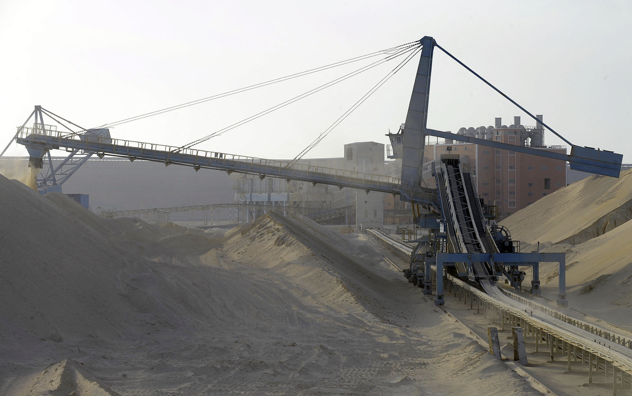
This is an eye-opening analysis that highlights how phosphate has become far more than an agricultural commodity. It makes a compelling case that strategic cooperation between Morocco and Tunisia could strengthen food security, supply chain resilience, and regional integration, with benefits extending to the United States, Europe, and Africa.
I warmly invite you to read this innovative paper and share it with others interested in the future of the Middle East and North Africa, global food security, and geoeconomics.
#MENA2050 #FoodSecurity #CriticalMinerals #Phosphate #Morocco #Tunisia #SupplyChains #Geopolitics #EconomicDevelopment #NorthAfrica #USAfricaRelations #Mediterranean #MENA #RegionalCooperation #StrategicResources
The Phosphate Pivot: Why Morocco and Tunisia Matter to U.S. Food Security
Phosphate is no longer merely a fertilizer input. In an era of geopolitical competition and increasingly fragile supply chains, it has become a strategic resource with direct implications for food security, economic resilience, and national security.
As China tightens phosphate exports and global dependencies become more visible, securing reliable and diversified supply chains has become a strategic imperative.
In this new analysis, @MENA_2050 members Dr. @Gbaghazi and @elahmadim, together with @sabinajh3, argue that a stronger Morocco–Tunisia partnership could anchor a resilient fertilizer corridor, deepen Mediterranean economic integration, and enhance long-term food security for the United States, Europe, and Africa.
The article examines how industrial cooperation, strategic infrastructure investment, and regional connectivity can strengthen resilience, reduce vulnerabilities, and promote stability in an increasingly fragmented world.
Read the full analysis to explore why North Africa may hold a critical key to the future of global food security: https://t.co/OUvatpeYlO
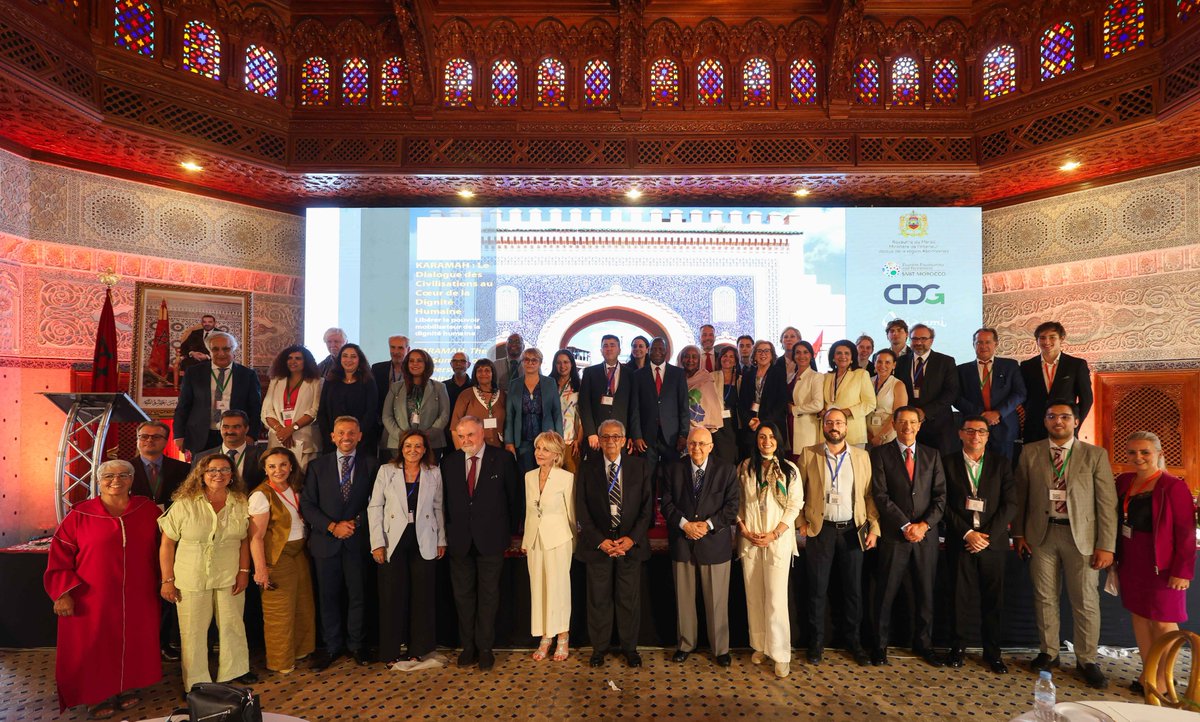
On 13–14 June 2026, MENA2050 proudly partnered with the World Association for Culture and Heritage (WACH), the Academy for Cultural Diplomacy, and the Institute for Cultural Diplomacy (ICD) in convening the inaugural KARAMAH Conference in Fez, Morocco.
The conference brought together distinguished leaders, thinkers, policymakers, and practitioners from around the world to engage in a timely and essential dialogue on human dignity and our shared humanity.
The gathering was made possible under the leadership of Dr. @HakimaElHaite , President of WACH and Member of the MENA2050 Advisory Board, whose vision and commitment were instrumental in bringing this initiative to life.
MENA2050 members contributed directly to the summit’s core discussions, advancing conversations on governance, cultural diplomacy, mediation, and ethical cooperation: Mr. @eli_bar_on , CEO of MENA2050, and Prof. @MichelineIshay , Member of the IMEC Task Force, participated in key panels addressing cultural diplomacy, soft power, and ethical governance, highlighting how dialogue, human dignity, and intercultural understanding can contribute to more resilient and cooperative regional and global frameworks.
A major outcome of the conference was the development of the Fez Declaration on Human Dignity and Universal Humanism. Mr. @BertozziRoger , Chair of the MENA2050 IMEC Task Force, played a pivotal role in advancing this document, which seeks to establish human dignity as a unifying principle across cultures, faiths, and nations.
Ambassador @SalwaDallalah , Member of MENA2050, moderated a key summit panel and served on the drafting committee, contributing directly to the declaration's framing and development.
This collaborative effort culminated in the formal adoption of the Fez Declaration, which was deposited at Al Quaraouiyine, symbolically linking this contemporary initiative to a centuries-old tradition of learning, dialogue, and intellectual exchange.
The KARAMAH Conference was founded on the conviction that human dignity can serve as a unifying principle across cultures, faiths, and nations. This is only the beginning. The initiative is envisioned as an annual gathering dedicated to advancing dialogue, cooperation, and universal humanism.
#KARAMAHConference #HumanDignity #CulturalDiplomacy #MENA2050 #FezDeclaration #EthicalGovernance #GlobalCooperation
We were honored to welcome Dr. Ismail Serageldin to the inaugural Karamah Conference in Fez.
A renowned Egyptian intellectual, former leader of the Bibliotheca Alexandrina in Alexandria, and a lifelong advocate for knowledge, science, and intercultural dialogue, Dr. Serageldin brought invaluable insights to our discussions. I am grateful for his participation and for our conversation.
#Karamah2026 #IsmailSerageldin #MENA2050 #HumanDignity #Knowledge #Education #Dialogue #CulturalDiplomacy #Fez #Morocco #Egypt #Alexandria #BibliothecaAlexandrina #RegionalCooperation #MiddleEast #FezDeclaration #WACH #InstituteForCulturalDiplomacy
It was a privilege to welcome Mr. Amr Moussa, former Egyptian Foreign Minister and Secretary General of the Arab League, to the inaugural Karamah Conference in Fes, Morocco.
As one of the Arab world's most distinguished diplomats and statesmen, he continues to inspire with his decades of public service and commitment to regional dialogue. We are grateful for his participation, and I am personally thankful for the thoughtful and meaningful conversation we shared about the future of the Middle East and the importance of building bridges across our region.
#Karamah2026 #AmrMoussa #MENA2050 #HumanDignity #RegionalCooperation #MiddleEast #Dialogue #Diplomacy #Fez #Morocco #HumanDignity #UniversalHumanism #FezDeclaration #WACH #InstituteForCulturalDiplomacy #CulturalDiplomacy #GlobalLeadership
I am proud that @MENA_2050 partnered with the World Association For Culture And Heritage (WACH) @wach2025 and the Institute for Cultural Diplomacy (ICD) @markdonfried in convening the inaugural Karamah Conference in the beautiful city of Fez, Morocco.
Together, we brought dozens of distinguished leaders, thinkers, policymakers, and practitioners from around the world to engage in a timely and important conversation on human dignity and our shared humanity.
We were particularly honored that Khalid Aït Taleb, Wali of the Fès-Meknès Region, opened the conference. His presence underscored the importance of the gathering and reflected Morocco's longstanding commitment to dialogue, coexistence, and human development.
A major outcome of the gathering was the adoption of the Fez Declaration on Human Dignity and Universal Humanism. It was particularly meaningful to deposit the declaration at Al Quaraouiyine, widely recognized as the world's oldest continually operating university, connecting this contemporary initiative to a centuries-old tradition of learning, dialogue, and intellectual exchange.
My deepest thanks go to Dr. Hakima El Haité @hakimaelhaite, President of the World Association for Culture & Heritage and a valued member of the MENA2050 Advisory Board, whose exceptional leadership, vision, and determination turned this ambitious idea into reality.
Special thanks also to Roger Bertozzi @bertozziroger, also a member of MENA2050, who worked tirelessly on the Fez Declaration and has championed its vision for many years.
I would also like to recognize my MENA2050 colleagues @salwadallalah and Prof. @MichelineIshay, whose participation enriched the discussions and contributed greatly to the success of the conference.
The Karamah Conference was founded on the conviction that human dignity can serve as a unifying principle across cultures, faiths, and nations. This is only the beginning. We intend for Karamah to become an annual gathering, bringing together diverse voices from around the world to advance human dignity, universal humanism, dialogue, and cooperation.
#Karamah2026 #HumanDignity #UniversalHumanism #FezDeclaration #MENA2050 #WACH #InstituteForCulturalDiplomacy #CulturalDiplomacy #Fez #Morocco #AlQuaraouiyine #Dialogue #InterculturalDialogue #GlobalLeadership #RegionalCooperation
🌍 𝐄𝐱𝐜𝐢𝐭𝐢𝐧𝐠 𝐀𝐧𝐧𝐨𝐮𝐧𝐜𝐞𝐦𝐞𝐧𝐭 𝐟𝐫𝐨𝐦 𝐌𝐄𝐍𝐀𝟐𝟎𝟓𝟎
We are delighted to announce that Dr. @Lee Recht, Chair of the Food Systems Committee at MENA2050, will be speaking at #DialogueNEXTinAFRICA, hosted by the World Food Prize Foundation in Nairobi, Kenya.
📢 𝐖𝐡𝐢𝐭𝐞 𝐏𝐚𝐩𝐞𝐫 𝐋𝐚𝐮𝐧𝐜𝐡
At this prestigious gathering of agri-food experts, including leaders, innovators, researchers and policymakers, Dr. Recht will officially launch MENA2050's new white paper: "𝐓𝐫𝐚𝐧𝐬𝐟𝐨𝐫𝐦𝐢𝐧𝐠 𝐀𝐠𝐫𝐢𝐟𝐨𝐨𝐝 𝐒𝐲𝐬𝐭𝐞𝐦𝐬 𝐢𝐧 𝐭𝐡𝐞 𝐌𝐄𝐍𝐀 𝐑𝐞𝐠𝐢𝐨𝐧".
As food insecurity continue to challenge the region, the white paper offers a first of its kind assessment, at a regional level, of the Middle East and North Africa food systems, alongside a forward-looking vision with actionable recommendations to build more resilient, sustainable, and inclusive agrifood systems across the MENA region.
The publication highlights opportunities to strengthen food security, accelerate climate-smart agriculture, foster innovation, redefine financial architecture and promote regional cooperation to address shared challenges.
We are proud to contribute to this critical global conversation and look forward to engaging with partners from across Africa and beyond on the future of food systems.
📍𝐃𝐢𝐚𝐥𝐨𝐠𝐮𝐞𝐍𝐄𝐗𝐓 𝐀𝐟𝐫𝐢𝐜𝐚 𝟐𝟎𝟐𝟔
🗓️ June 30, 2026
📌 Safari Park Hotel, Nairobi, Kenya
🔗 Interested in joining the conversation? Learn more about the event and register here: https://t.co/EsApLP5I6r
#DialogueNEXTinAFRICA #WorldFoodPrize #MENA2050 #FoodSystems #AgrifoodSystems #FoodSecurity #ClimateAction #ClimateSmartAgriculture #Sustainability #AgricultureInnovation #Nairobi #MENA #RegionalCooperation
@MENA_2050 was pleased to bring together friends and supporters in London for an evening of dialogue, culture, and connection.
CEO @eli_bar_on shared MENA2050's vision, current activities, and plans for the future, while Professor Ali Ansari provided valuable insights into recent developments in Iran and their regional implications. Guests also enjoyed a remarkable piano performance by @Mishkapianist.
Thank you to David Crook for his generous hospitality and to Dr. Nigel Meir for his dedication and support. Together, we continue to build a growing community committed to a more cooperative and prosperous Middle East and North Africa.
Read more: https://t.co/R260hfN3CS
#MENA2050 #MiddleEast #NorthAfrica #RegionalCooperation #Dialogue #CulturalDiplomacy #Geopolitics #Leadership #CommunityBuilding #London
A wonderful @MENA_2050 gathering in London, bringing together a remarkable group of friends and supporters to learn more about our work and vision for regional cooperation.
We were privileged to hear an illuminating briefing on developments in Iran and their regional implications from the brilliant Prof. Ali Ansari @aa51_ansari. We also enjoyed an extraordinary piano performance by the talented Mishka Rushdie Momen, whose magical music added a special dimension to the evening.
Most importantly, we enjoyed meaningful conversations and the opportunity to strengthen connections with people who share our belief in a more cooperative and prosperous Middle East and North Africa.
Thank you, David Crook, for your generous hospitality in your beautiful place. And thank you, Nigel Meir, for your tireless efforts representing MENA2050 in London.
#MENA2050 #MiddleEast #NorthAfrica #RegionalCooperation #RegionalIntegration #RegionalDevelopment #London #YoungLeadership
An excellent and important new paper by @MENA_2050's member, Prof. Shlomo Hasson, on the evolving strategic significance of IMEC.
Far beyond a transport corridor, IMEC is emerging as a new geoeconomic architecture connecting transport, energy, digital infrastructure, logistics, industrial development, and regional cooperation across India, the Middle East, and Europe.
At a time of growing geopolitical fragmentation and supply-chain vulnerability, this paper offers an important framework for understanding the future of connectivity, resilience, and regional integration.
Highly recommended reading.
#MENA2050 #IMEC #Connectivity #RegionalIntegration #Geoeconomics #MiddleEast #RegionalCooperation #EconomicCorridors #StrategicConnectivity
Prof. Shlomo Hasson’s latest paper on IMEC highlights its evolution beyond a transport corridor into an emerging geoeconomic system integrating transport, energy, digital infrastructure, industrial development, and regional coordination.
In a context of geopolitical fragmentation and supply-chain vulnerability, IMEC reflects a broader shift toward resilience, diversification, and redundancy in global connectivity.
The paper notes that while still developing, IMEC is already taking shape through infrastructure upgrades, digital trade platforms, and institutional coordination efforts across participating countries.
Its future success will depend on government leadership, regional coordination, trusted digital systems, and effective management of cooperation and competition across corridors.
Read more: https://t.co/0iFy3b1BZh
#IMEC #Geoeconomics #GlobalConnectivity #SupplyChainResilience #InfrastructureDevelopment #DigitalInfrastructure #EnergyTransition #RegionalCooperation #TradeCorridors #Logistics #MENA #EconomicDiplomacy
New publication | The Isaac Accords: A New Architecture for Regional Cooperation Following the Abraham Accords
In this new @MENA_2050 publication, @MissBChaimae , Member of MENA2050, and @EvangeliaA60930, Member of the Regional Vision Team, examine the strategic significance of the Isaac Accords and their potential role in shaping a broader framework for regional and international cooperation.
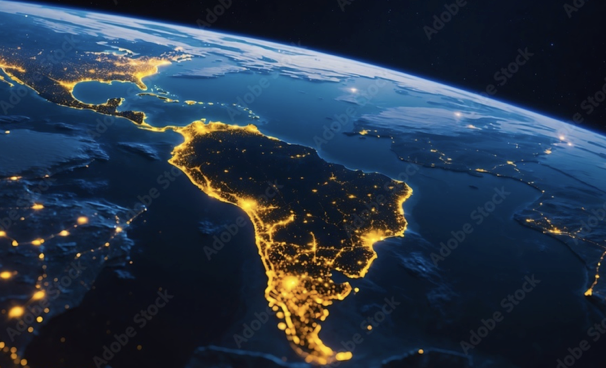
The article explores how cooperation between Israel and Latin America has developed over the years and how these relationships may contribute to new frameworks for regional and international collaboration.
Read the full article here: https://t.co/zsi57ARivm
#MENA2050 #IsaacAccords #AbrahamAccords #Israel #Argentina #IsraelArgentinaRelations #LatinAmerica #RegionalCooperation #Diplomacy #Geopolitics #MiddleEast #StrategicPartnerships
Connectivity is increasingly becoming the strategic language of the 21st century.
In this new publication, @BertozziRoger , Chair of the MENA2050 IMEC Task Force, looks at how Morocco’s Royal Initiatives, from the Nigeria-Morocco-Europe gas pipeline to the opening-up of the Sahel, could help shape a new Afro-Atlantic connectivity backbone linking Africa, Europe, the transatlantic space; and could, in conjunction with the India-Middle East-Europe Economic Corridor (IMEC), reshape three continents, global trade, economic security and prosperity.
The paper calls to look at the IMEC and the Nigeria-Morocco-Europe backbone no longer as separate undertakings, but as "sister corridors", which are part of a broader trend of infrastructural and multimodal connectivity, which constitutes a new paradigm of plurilateral cooperation, sustainable growth, strategic resilience and long-term stability.
Deeper regional integration and inter-regional cooperation around economic corridors have enormous transformative potentials and must be advanced as top strategic priorities.
Read more: https://t.co/t9RR3SNXT3
#MENA2050 #IMEC #Morocco #Africa #Connectivity #Geoeconomics #StrategicInfrastructure
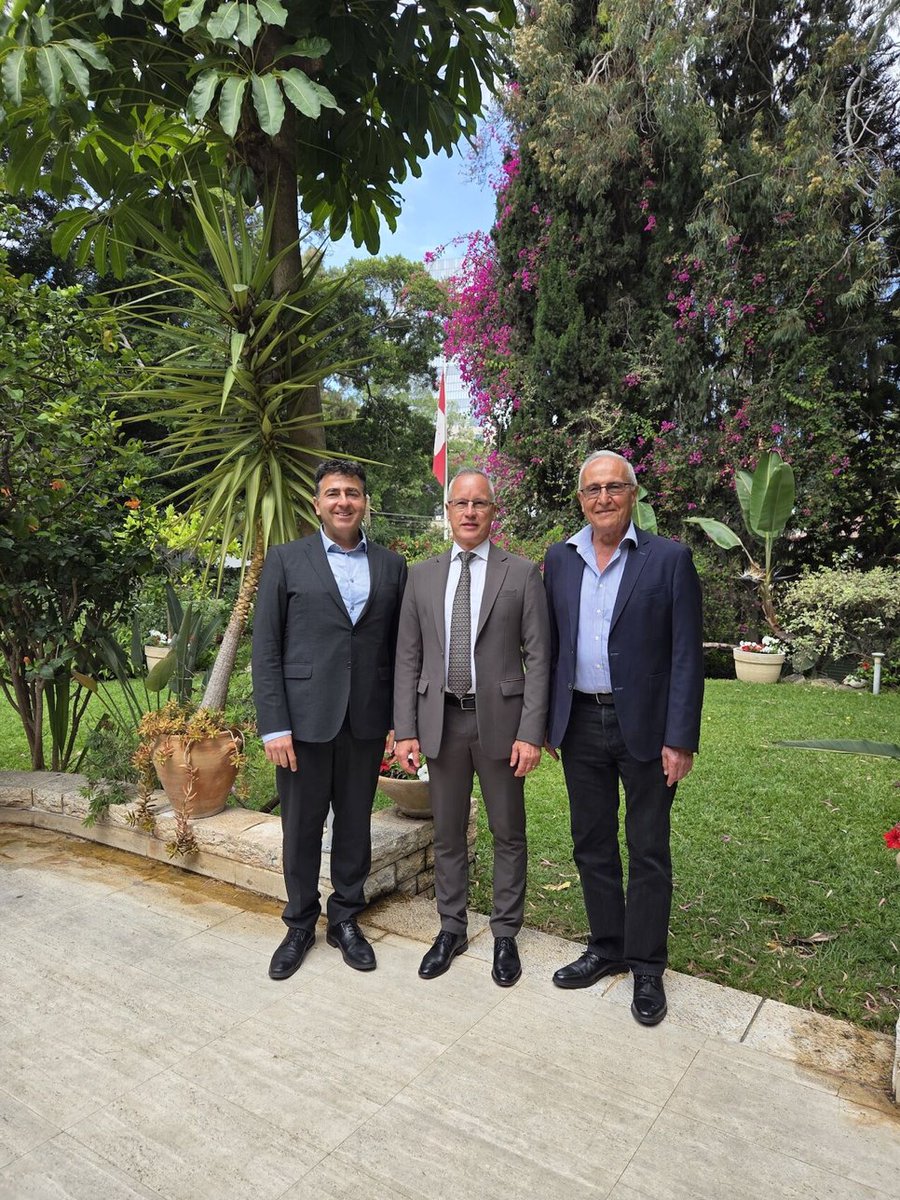
@MENA_2050 was pleased to lead a briefing at the Residence of the @SwissAmbIL on the future of IMEC and regional integration. Led by MENA2050 CEO @eli_bar_on and Professor Shlomo Hasson from the MENA2050 IMEC Task Force, the conversation explored how connectivity is becoming a central pillar of resilience, economic development, and regional cooperation.
Participants examined IMEC not simply as a transport corridor, but as an emerging framework linking infrastructure, digital systems, energy networks, and regional value chains.
As the Middle East continues to navigate a rapidly changing geopolitical environment, initiatives that strengthen connectivity, coordination, and long-term cooperation will become increasingly crucial.
#MENA2050 #IMEC #Connectivity #RegionalIntegration #Geoeconomics #MiddleEast #RegionalCooperation #Switzerland #SwissDiplomacy #EconomicCorridors #StrategicConnectivity
A strong and thoughtful contribution on a subject that is becoming increasingly important for the future of the wider Mediterranean and Indo-Mediterranean space.
This piece by Mahesh Adithya V and Nir Levitan examines how India-Israel cooperation is evolving beyond bilateral ties into a broader framework connecting infrastructure, energy, maritime connectivity, digital networks, and regional resilience.
Especially worth reading for anyone interested in the strategic implications of connectivity initiatives such as IMEC and the changing geoeconomic landscape of the Eastern Mediterranean.
Read the article here: https://t.co/73ucyreYqA
#MENA2050 #IMEC #India #Israel #EasternMediterranean #Geoeconomics #Connectivity #RegionalCooperation #MaritimeSecurity #EnergySecurity #DigitalConnectivity #Mediterranean #MiddleEast #EconomicIntegration
@MENA_2050 is pleased to share a new publication by Mr. Mahesh Adithya Venkateswaran and Dr. Nir Levitan on the growing strategic relevance of India–Israel cooperation in the Mediterranean.
The article explores how connectivity, maritime infrastructure, energy systems, and digital networks are increasingly shaping regional dynamics across the Eastern Mediterranean and beyond. It also highlights the importance of resilient and interconnected frameworks in supporting long-term regional stability, economic integration, and strategic cooperation.
Read here: https://t.co/hJOYYpNmoc
#mena2050 #IMEC #IndiaPolitics #Israel #EasternMediterranean #Geopolitics #connectivity #geoeconomics #MaritimeSecurity #StrategicConnectivity
It was a great pleasure to brief on IMEC at the beautiful residence of the wonderful Swiss Ambassador Simon Geissbuehler @SwissAmbIL, together with ambassadors and diplomats from the USA, the European Union, India, Germany, Italy, Greece, Azerbaijan, Belgium, and additional countries.
Our discussion focused on @MENA_2050's perception of IMEC not only as a transport corridor, but as an emerging framework for regional integration, economic resilience, digital connectivity, and strategic cooperation across the Middle East, Europe, and India. We also explored how connectivity projects can help foster regional development, stability, and new forms of cross-border cooperation in a rapidly changing geopolitical environment.
We are very grateful to Ambassador Geissbuehler and the Swiss Federal Department of Foreign Affairs for their continued support and strong partnership.
#MENA2050 #MiddleEast #NorthAfrica #MENA #IMEC #RegionalCooperation #RegionalIntegration #Switzerland #Diplomacy #EconomicCorridors
Building upon the work & activities of @SwissEnvoyMENA, I today hosted a briefing w/ @eli_bar_on & Shlomo Hasson @MENA_2050 for the CD on IMEC (India–Middle East–Europe Economic Corridor). IMEC is a visionary economic & political project to foster integration, connectivity & peace.
Eid Mubarak from MENA2050.
On the occasion of Eid Al-Adha, we extend our warmest wishes to everyone across the region and the world. May this special time bring peace, shared prosperity, and renewed hope for a brighter tomorrow.
#EidMubarak#EidAlAdha#MENA2050#Community #PeaceAndProsperity
Eid Mubarak from MENA2050.
On the occasion of Eid Al-Adha, we extend our warmest wishes to everyone across the region and the world. May this special time bring peace, shared prosperity, and renewed hope for a brighter tomorrow.
#EidMubarak#EidAlAdha#MENA2050#Community #PeaceAndProsperity
Breaking Through Israel's Barrier of Strategic Indeterminacy
Whatever the next government may be, it will have to confront Israel's central strategic challenge: no longer managing indeterminacy, but breaking it.
A new opinion column I wrote with my colleague, Professor Shlomo Hasson.
Breaking Through Israel's Barrier of Strategic Indeterminacy
Shlomo Hasson and Eli Bar-On
The government that takes office following this year's elections will face an extraordinary strategic reality. Over the past three years, the Israeli public has endured ongoing trauma since October 7, alongside multiple unresolved military confrontations and deep internal divisions. Despite these crises, Israel has also demonstrated exceptional capabilities: military and intelligence power that at times seems almost unimaginable, remarkable civilian resilience, technological leadership, and a stable economy. Nevertheless, it is difficult to avoid the feeling shared by large segments of Israeli society that Israel is operating within a sustained system of structural indeterminacy. This is a condition in which there is neither internal nor external resolution, yet neither is there collapse; there is no solution, but neither is there genuine stability. It is a prolonged state of stagnation marked by high volatility, in which any event may alter the course of developments.
The central argument of this article is that Israel's strategic challenge is not achieving a single decisive victory, but rather breaking a persistent pattern of structural indeterminacy through coordinated systemic action. This is the point of departure from which the next government will begin its path.
In the domestic arena, indeterminacy is reflected in a prolonged political deadlock that prevents strategic thinking and the development of a long-term vision. The political system struggles to produce broad and consensual leadership, while Israeli society remains divided around fundamental unresolved questions: the distribution of the security and economic burden, relations between religion and state, the civic identity of all sectors of Israeli society, and the status of state institutions. The fact that Israel has never formulated an agreed-upon social contract is evident in the erosion of historical arrangements without the creation of a new consensual foundation. These processes do not lead to collapse, but they steadily erode national resilience and governability.
In the security and regional arena, indeterminacy is expressed through a pattern of ongoing confrontations without a clear endpoint: Hamas has not been defeated in Gaza, Hezbollah has not been decisively subdued in Lebanon, and Iran continues to pose a major strategic challenge while preserving its capacity for recovery and renewed threat generation. Even when a significant force is applied, the outcome is not a decisive victory but rather a transition into another phase of managing a draining conflict. This pattern creates only partial deterrence and a constant risk of unpredictable escalation.
As a result, Israel is drawn into the arena where its enemies seek to position it. They know they cannot defeat Israel militarily, and therefore operate according to an ideology of "resistance." Within this framework, their concept of victory is not based on decisive military success, but on the mere continuation of conflict and attrition. All Israel's enemies need to present to their supporters as a "complete victory" is the disruption of normal life in Israel. These differing logics create a vicious cycle of exhausting conflict with no clear end. While this weakens Israel's enemies' operational capabilities, over time, it imposes an unbearable social and economic cost that all Israelis ultimately pay. Without changing this pattern, Israel may find itself over the coming decade facing a gradual erosion of its security, economic, and diplomatic advantages.
Within this broader context, the Palestinian issue remains a central focal point of indeterminacy. The absence of a political solution is not merely a security problem or a source of social disagreement, but a broader strategic constraint that steadily undermines Israel's international legitimacy and limits its ability to operate regionally and globally. Israel's adversaries are effectively working to restrict the activities of Israelis in multiple fields: academia, commerce, sports, culture, and beyond. Even Israeli tourists have become targets of harassment and attack around the world. Yet precisely within this arena lies a potential for change, since gradual steps of rehabilitation and integration may open pathways toward broader regional processes.
Structural indeterminacy creates a dual reality: on the one hand, it leads to erosion, stagnation, and continuing uncertainty; on the other hand, it opens a space of possibilities in which the future is not predetermined. This is a space where deterioration is possible, but where a new direction can also be shaped. The government's central challenge is therefore not to "solve" indeterminacy in one dramatic move, but to operate within it in a manner that gradually creates the conditions for change.
To achieve this, a transition from a sectoral approach to a systemic one is required. Policy, politics, diplomacy, economics, society, and technology are not separate domains but components of one integrated system. Only synchronization among them can break through the barrier of indeterminacy.
The starting point is the formulation of a clear national policy. Without a binding strategic direction, the system tends to react rather than initiate. Israel must therefore formulate a multi-year strategy that defines a supreme objective: moving from conflict management toward shaping a reality of regional stability based on integration. This policy must establish clear priorities, foremost among them the resolution of internal issues as a prerequisite for effective external action. It should be anchored in permanent coordination mechanisms, measurable indicators of success, and an overarching coordinating body that ensures continuity between governments.
Policy alone, however, is insufficient. Its implementation requires overcoming the lack of political decisiveness. Breaking the political deadlock requires proactive steps to stabilize the system: strengthening governance, creating mechanisms for cooperation between political blocs, and opening the system to broader coalition possibilities. Simultaneously, the civic foundations of the state must be strengthened by addressing core issues: integrating the ultra-Orthodox into military or national service and the economy, reinforcing the principle of civic equality, and integrating the Arab minority as an essential component of the political and social system. The balance among the legislative, executive, and judicial branches must also be redefined through broad consensus to reduce institutional confrontation and restore stability.
At the same time, gradual decisions must also be taken in the Palestinian arena, including regulating relations with the separate Palestinian political entity that is already recognized by most countries around the world, and advancing the reconstruction of Gaza as a strategic, not merely a humanitarian, objective.
Alongside domestic stabilization, Israel must shift from reaction to initiative in the international arena. In recent years, Israel has demonstrated its military superiority in the region. Yet a "diplomacy of bombs" is not enough. Israel is capable of practicing effective diplomacy that not only manages pressure but also creates opportunities. New regional coalitions must be built, especially with the Gulf states, Jordan, and Egypt, while promoting security and political arrangements with Lebanon and Syria. Restoring international legitimacy requires linking political initiatives with concrete actions, foremost among them, broad regional reconstruction within an international framework: in Syria and Lebanon, in Gaza and the West Bank, in northern Israel, the Gaza envelope, and the Western Negev.
Within this framework, regional initiatives such as the India-Middle East-Europe Economic Corridor (IMEC) can serve as a strategic platform connecting economic, security, and technological interests. Multi-track diplomacy, combining governments, the business sector, academia, and civil society, will expand the available space for action.
Breaking through the barrier of indeterminacy will also require supportive economic, social, and technological infrastructure. Israel must invest in regional projects in energy, water, and transportation, while deepening its integration into diverse economic spaces. The development of a regional digital backbone will enable the integration of trade, logistics, and data flows. This is a critical component of any modern regional system. At the same time, efforts must be made to strengthen social cohesion and public trust through investment in education, the integration of marginalized populations, and the construction of a shared sense of belonging. These areas are not merely the outcome of successful policy; they are a prerequisite for its existence.
Implementing such an approach also requires a clear prioritization over time. In the first stage, during the initial months, the focus should be on formulating a national strategy and taking political stabilization measures. Simultaneously, regional diplomatic initiatives and economic projects that create momentum and visible progress should be launched. Finally, economic and digital infrastructures should be embedded while deepening regional and social integration.
Ultimately, breaking through the barrier of indeterminacy is not the result of a single move, but of cumulative and coordinated actions. Policy provides direction, politics enables decision-making, diplomacy opens room for maneuver, and economics, society, and technology build the foundations of stability. When these four domains operate together, indeterminacy ceases to be a paralyzing condition and becomes a space that can be shaped.
The new government will be judged not only by its ability to manage reality but also by its ability to change its trajectory. Within the space of indeterminacy lies enormous potential, and realizing it depends on choosing to act not merely reactively but as a shaping force. The State of Israel was destined for greatness, and its sons and daughters have repeatedly demonstrated throughout history their capacity to rise to the occasion.
#Israel #MiddleEast #Strategy