I was on another podcast! Loved getting to be a part of the conversation on the impact of AI in CS Education, as part of a panel on the Intentional Teaching podcast. Thank you to Derek Bruff for having me on. Check it out here: https://t.co/HtSBIJXkAt
@ShriramKMurthi Is the quadrivium without the trivium still the complete "traditional liberal arts"? To me it stands to reason that speaking against the eroding of 3 of the 7 is not immediately a concession that the other 4 don't exist, but instead a statement that 4/7 shouldn't be sufficient.
@guzdial@ShriramKMurthi How much do these organizations actually impact what is taught in Engineering and Computing? I can think of many CS faculty outside of CSEd research (and a few within) who are either unaware of/not paying attention to SIGCSE. I can't speak to Engineering so I'd be curious.
🎙️ What is the future of learning? And how do we balance using AI and human wisdom?
In this episode of the @HumansofAIPod, I chat with Elijah Rivera, an Assistant Professor of Computer Science at Brandeis University, whose research looks at how people learn computer science, and at how programming languages themselves are designed.
Elijah earned his Ph.D. at Brown University, and before that a bachelor's and master's at MIT. At Brandeis, he developed and teaches a course on automation in software development that gives students hands-on experience with the modern software toolchain, while also rooting those tools in their respective histories and in the related questions philosophers of technology have continually raised.
Overarching this is a broader conviction Elijah keeps pursuing: that computer science is best served by learning to communicate effectively with other disciplines such as cognitive science, philosophy, and theology, and, more importantly, by being willing to listen to their challenge and critique.
Whether you’re a student, an AI engineer, founder, researcher, or just someone curious about the future of education, I hope you learn as much as I did from my talk with Elijah.
Brandeis just published a story about my new course, "Automation in Software Development." I'll be at #SIGCSE2026 starting today - if you're interested in any of {PL • formal reasoning • automation • philosophy of tech} in CS education, reach out! Link: https://t.co/GR4LgJ612y
I'm super excited to experiment with enabling programmers to define their own event hat blocks in @SnapCloud, expressed as predicates describing the condition which fires the event:
We're doing qualitative coding. For each top-level code in a category, we also select multiple modifier tags (think "pos/neg sentiment", "examples yes/no", etc.). The end result is exponential blowup of code combinations. What is an appropriate measure of inter-coder reliability?
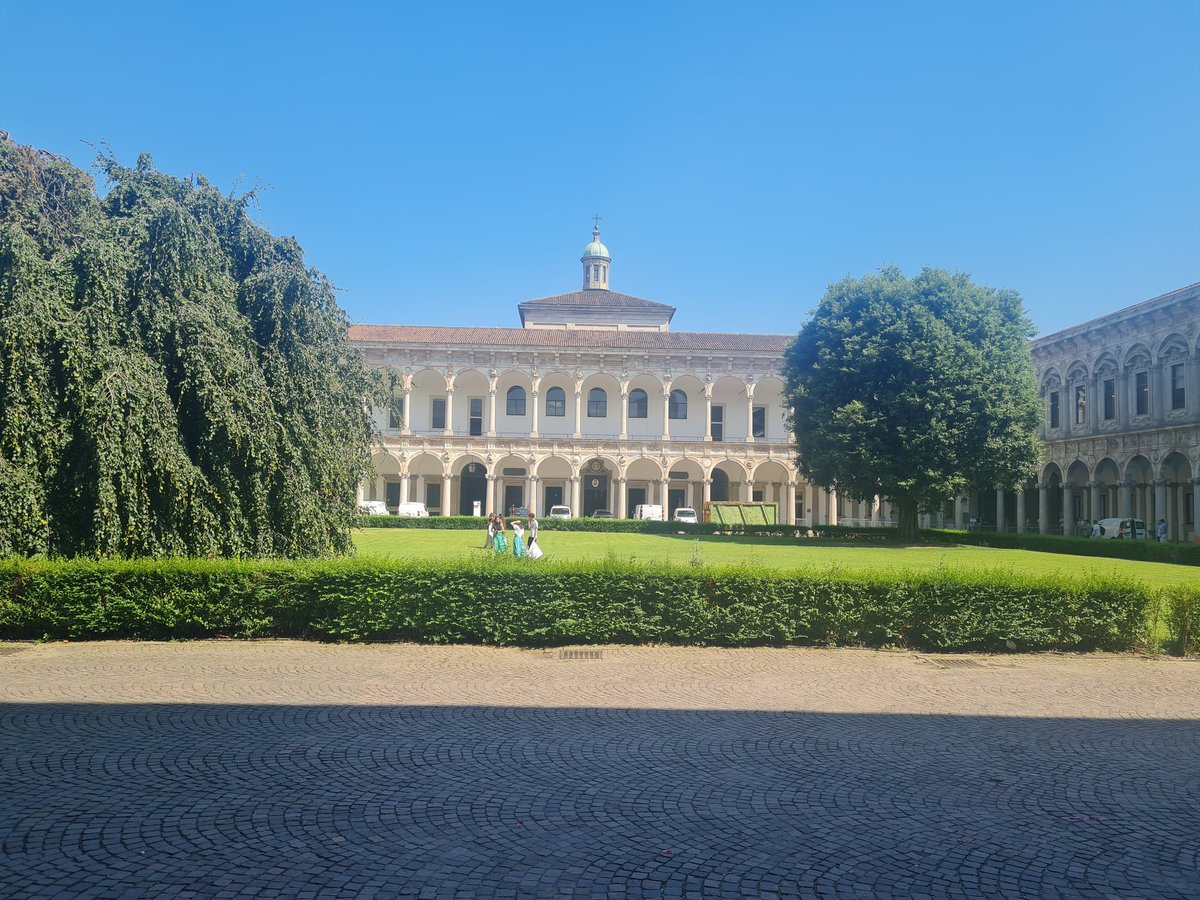
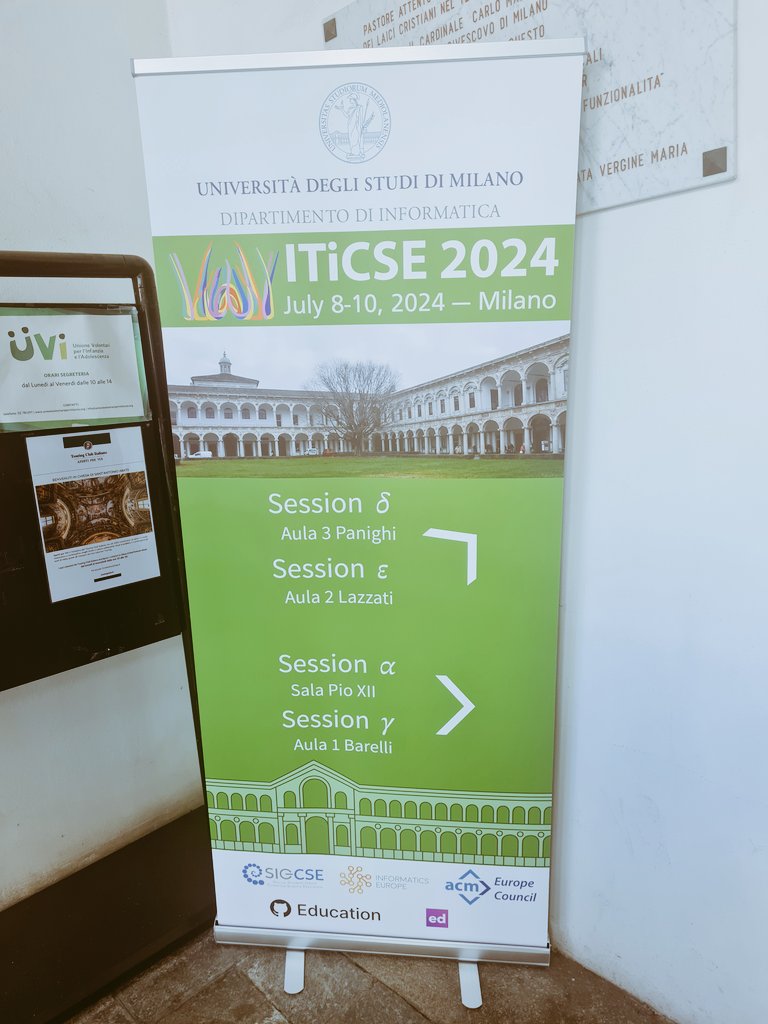
Had some fantastic days at #ITiCSE 2024 in Milan and met great researchers/educators with inspiring ideas. I'm also glad that I could present our work [@elijaherivera, @KathiFisler and @ShriramKMurthi] about iterative problem planning using transformers.
@ShriramKMurthi In contrast, I see this company (and others, as you've rightly observed) appearing (to me) to violate that characterization of mutual respect, and I think that's why I have such a strong reaction overall. (6/6)
@ShriramKMurthi but they didn't call me that until I said something because naming carries such weight. There was a mutual respect: them to me in keeping my name, and then me to them in adapting it. (5/)
@ShriramKMurthi I think this seems a healthier perspective. Unfortunately I suspect that the line between the two is thin and blurry. Perhaps there is something that can be made more obviously distinct from names, perhaps like GDocs does with "Anonymous [Animal]"
@ShriramKMurthi I hear that, and I see how that example is not the most sensitive. But that feeds into my point: we shouldn't allow companies (Twitter/X, Starbucks, or this company) to do that to us. I have to hope that there's a solution that moves away from (instead of further towards) erasure
@ShriramKMurthi At least with other settings where we have to give a name (e.g., coffee shop), one can choose to keep their name, to shorten it if they think others will struggle with it, or to change it entirely. The autonomy and the authority is still with the individual.
@ShriramKMurthi In many cultures (including my own) the ability to give a name is often a sign of authority over another, equivalent to giving meaning/purpose. My own name is a declaration of both my faith and my heritage, and don't wish to cede that name, that authority over me, to any company.