@SebJohnsonUK@fractile_ai In an era when AI and software startups appear and die every day, everyone has forgotten about hardware, where only a handful of companies dominate the market and competition is minimal compared to the IT/software sector
Each time you take money in exchange for something you don’t want to do you are selling your soul
Be unemployed
Only do what you want
You’re in this world to be conscious
I noticed that across the entire infosec space everyone talks about tor as a means of anonymous internet use, however, when using tor, you 1. let your provider know about it, 2. with traffic analysis it's easy to narrow down the circle for deanonymization, by looking at packet send times
this problem is exactly what Loopix addresses. in short, it works based on technology using Poisson mixing (independed message delays), which makes analyzing your traffic a pointless task, because at the same node at every moment in time packets arrive from different users, and each one waits its own random delay, on the output the order of packets gets shuffled naturally. Loopix is somewhat similar to Tor, since a connection before connecting to the target site passes through three nodes of the mix-network, at each of which it is protected by an additional layer of encryption
on the basis of Loopix there is already a ready mix-network: https://t.co/6DNZCdyUcf. it is more complex than Tor in implementation. in Tor we deal with regular TCP connections through a chain of nodes, while Nym works based on messages of fixed size (about 2 KB of useful payload per packet). if the data to send takes more space, then the file is split into smaller portions and then sent
quite a promising technology, considering that on its basis you can create quite familiar services, similar to mail or SaaS products.
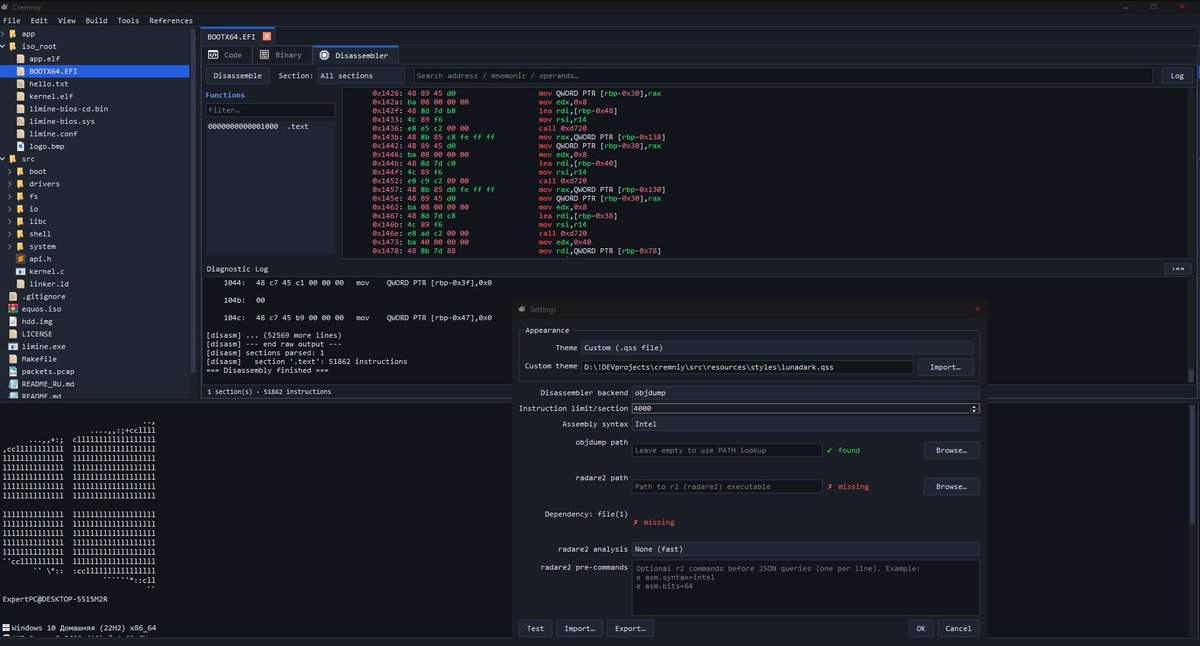
recently found a very interesting project – Cremniy. It's an IDE for embedded development. The project is still in development, so they don't have an installer, and some of the functionality hasn't been finalized yet. However, the concept is very interesting. The program combines everything needed for low-level development: hex viewer, disassembler, code editor, etc. I'm a contributor to the project; I added a feature for working with .ioc-files for STM32 projects
https://t.co/fxe1W7HWrV
Every day, life gives us thousands of different opportunities - a chance to change, a chance to start over, or a chance to show a different side of ourselves and discover new talents. The most important thing is not to let these opportunities slip away, for fate may never offer a second chance
Yeah, an LLM can read a datasheet and connect the pins. But try getting an AI to route a DC-DC converter without the whole board turning into a giant EMI antenna. Good luck with that. I think the real bottleneck isn’t drawing lines in Altium, it’s the 10 hours you spend with a spectrum analyzer chasing ghosts in the analog front-end
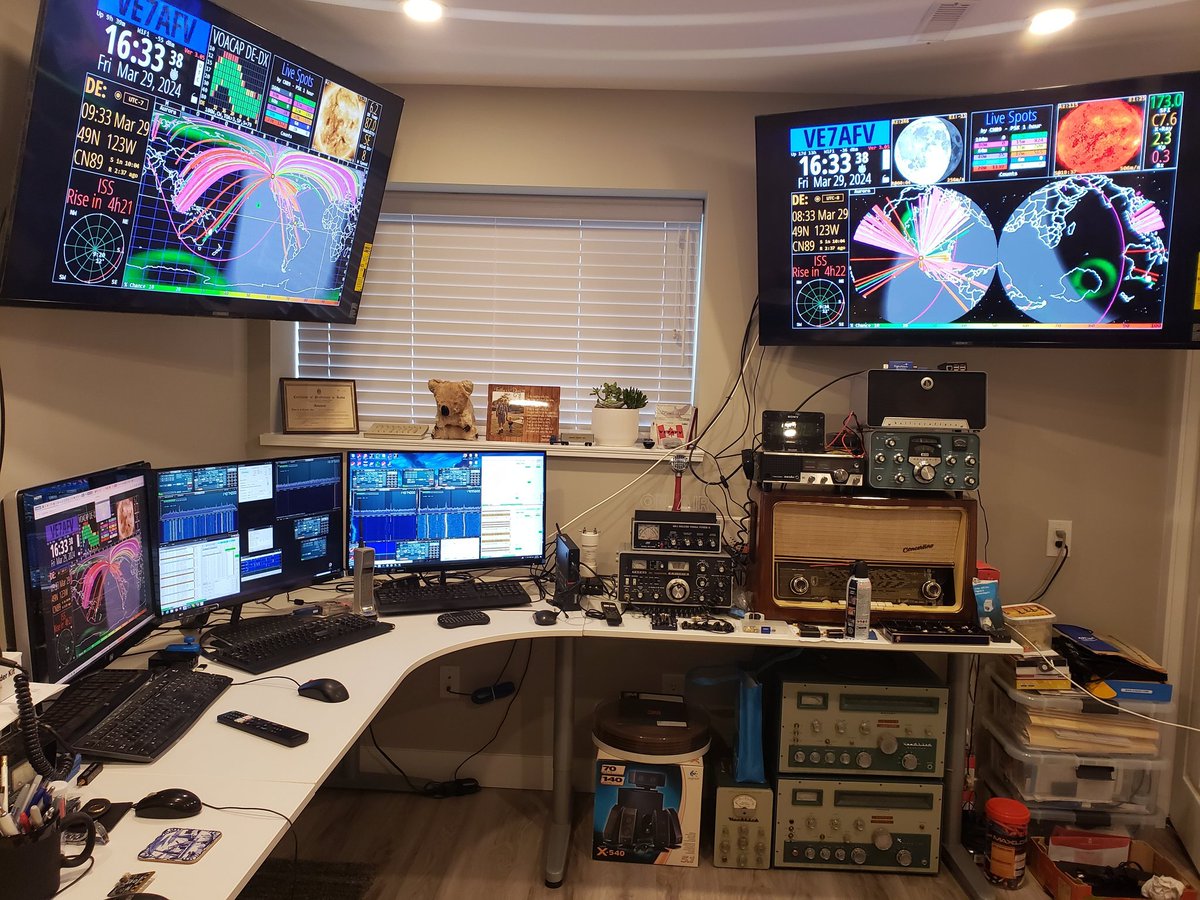
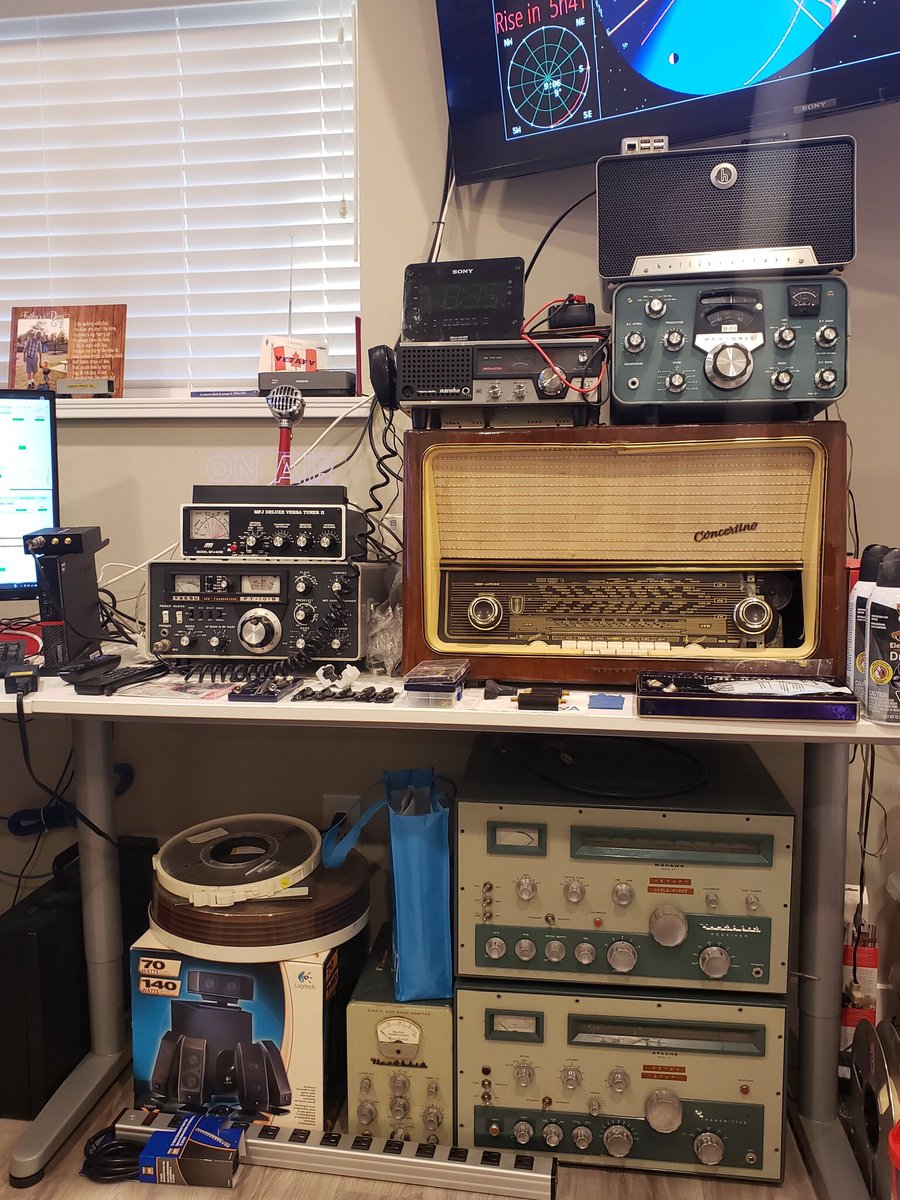
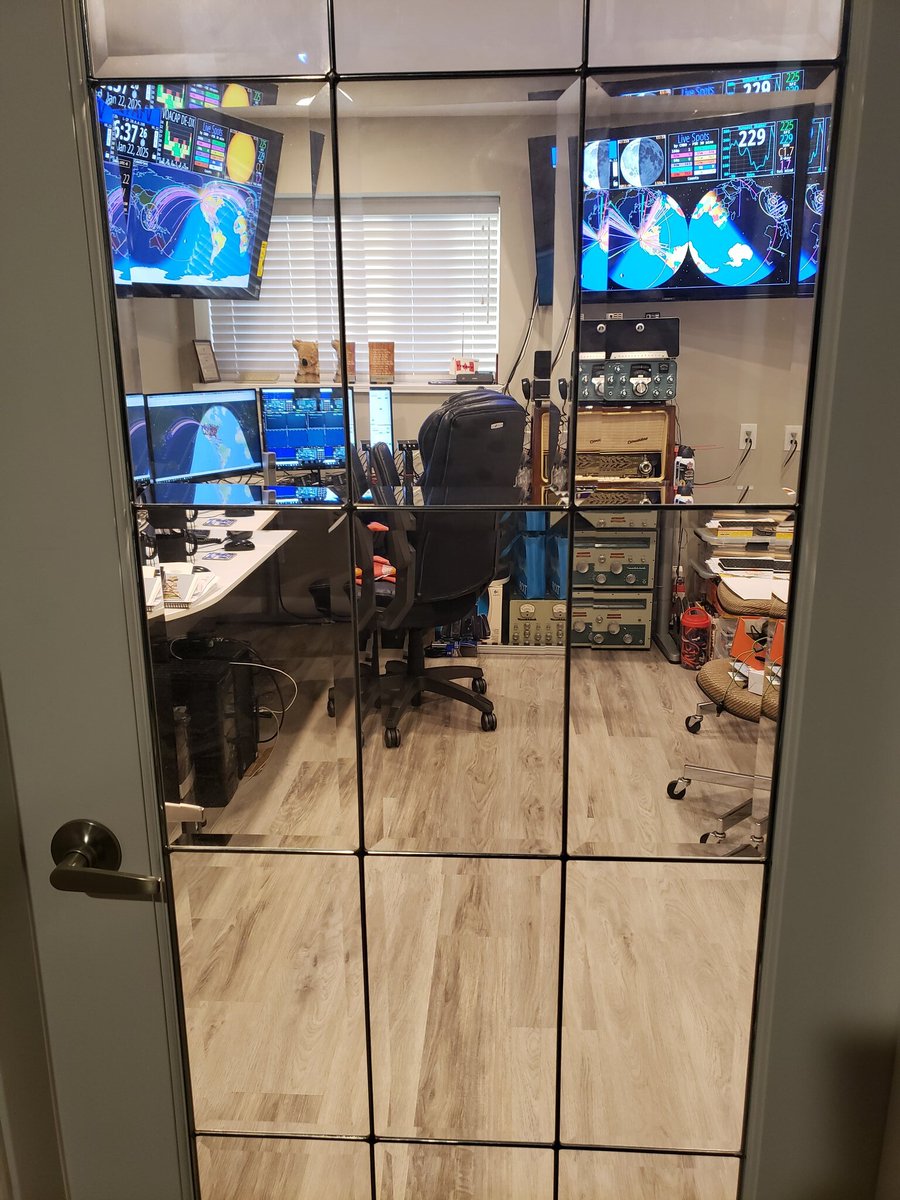
Base station for aircraft/ship tracking, weather satellite signals decoding, amateur radio, especially WSPR, FT8, SSTV, APRS, satellite telemetry. Big screens feature HamClock for signals propagation and space weather conditions.
@K3TripleR@MakanoTakeko@DustinFinn@eschecter@Mike_Coletta@BorgersonS
> learn electrical engineering
> think it's just circuits
> discover physics exists
> fall into rabbit hole
> start with DC
> learn ohm's law
> build voltage divider
> it works
> feel like a genius
> move to AC
> phasors destroy your sanity
> professor says "just think in complex domain"
> you nod like you understand
> hear "analog is where real engineers live"
> enter op-amp arc
> learn feedback loops
> circuit oscillates for no reason
> add capacitor
> different oscillation
> remove capacitor
> smoke
> hear "digital is the future"
> enter FPGA arc
> learn verilog
> timing violations rewire brain
> synthesis fails
> error message makes no sense
> hear "embedded is where the jobs are"
> enter microcontroller arc
> learn C
> registers, interrupts, datasheets
> another IDE
> another debugger
> another mental breakdown
> explore all domains
> analog
> digital
> power
> RF
> embedded
> design mixed-signal PCB
> trace impedance wrong
> ground plane split
> EMI everywhere
> send gerbers to fab
> 4 week lead time
> board arrives
> footprint mirrored
> solder BGA at 3 AM
> one bridge
> rework
> another bridge
> component desolders itself out of spite
> post project on reddit
> 4 upvotes (one is yours)
> caption "custom SMPS design"
> comment: "why not just buy a module"
> recruiter: "any industry experience?"
> you: "strong breadboard prototyping"
> silence
> join design contest
> ship actual product
> winner used an arduino with a shield
> power on final board
> first test passes
> magic smoke from U7
> U7 is discontinued
> stare at oscilloscope at 3:11 AM
> probe ground loop
> probe ground loop
> probe ground loop
> open KiCad again
> DRC passes
> no errors
> feel productive