⚛️An exciting new demonstration of the OPX just came out from Dr. Ioan Pop's group at @KITKarlsruhe.
💡The team used the OPX to turn a qubit into a quantum heat engine, actively cooling or heating its TLS environment with real-time feedback.
🔍Take a look: https://t.co/mzmEOAAIOy
🔨 Break out your tools! Today we're diving into building a scalable #quantum computer 👷♀️👷
🗞️ In this recent @IEEEXplore publication, @ella_lior discusses #quantumcontrol hardware: why we need it and the challenges it poses: https://t.co/wLIbTkZfmq
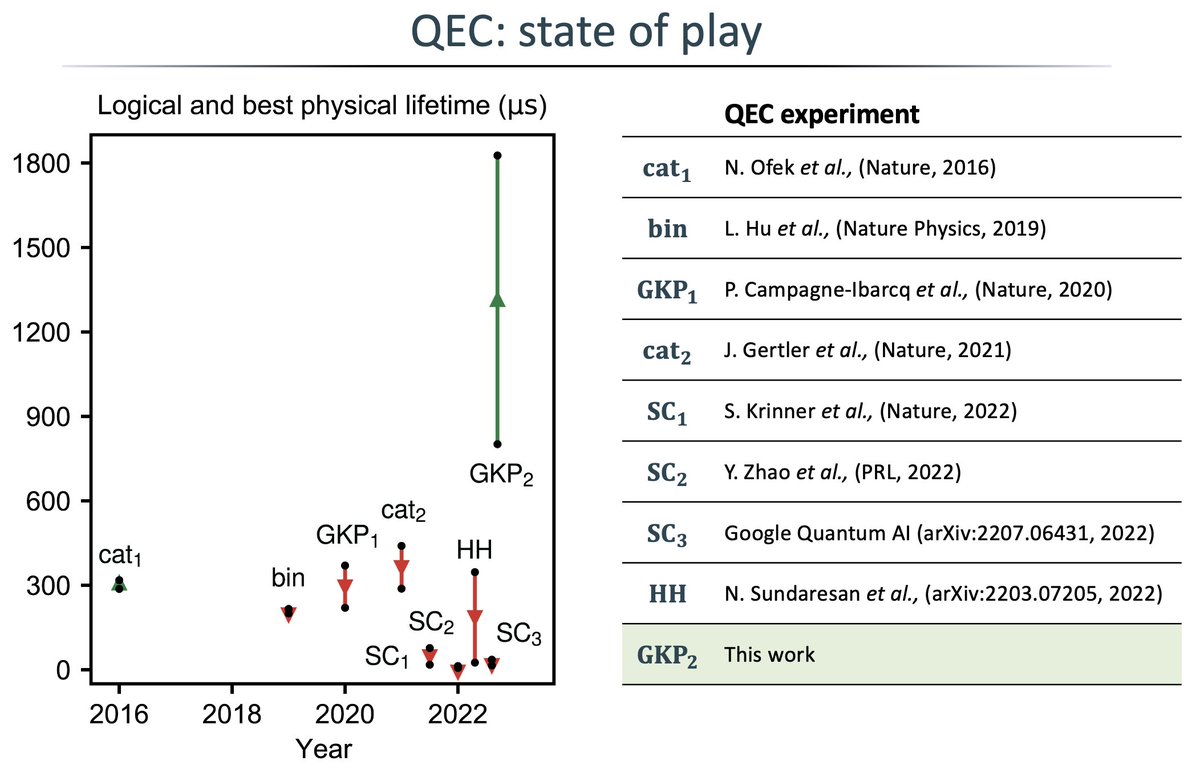
⏩ Later join @cohen_phd and @ella_lior and discover how you can accelerate the timeline for practical QEC. [Room W-194B | 1:18 pm]
🔊 Hear from @galwiner all about QM’s new open-source software solution to manage your complex experimental workflows: Entropy. [W-194B | 2:18 pm]
here's a suggestion: Perhaps the EU should tell all Russian soldiers that if they defect and give up their arms, they'll get a European citizenship and passport
@AndreasAtETH@qudev@ETH_physics@ETH_en Great work! In the paper you mention that you reject all runs that had f state measurements, and yet it looks like the error rate per cycle increases with cycle number. Do you know how much of this increase can be attributed to undetected leakage events?
want to know how to dramatically improve the initialization fidelity of your qubits and also have fun doing it? check this out! https://t.co/T1K5bhR9VT
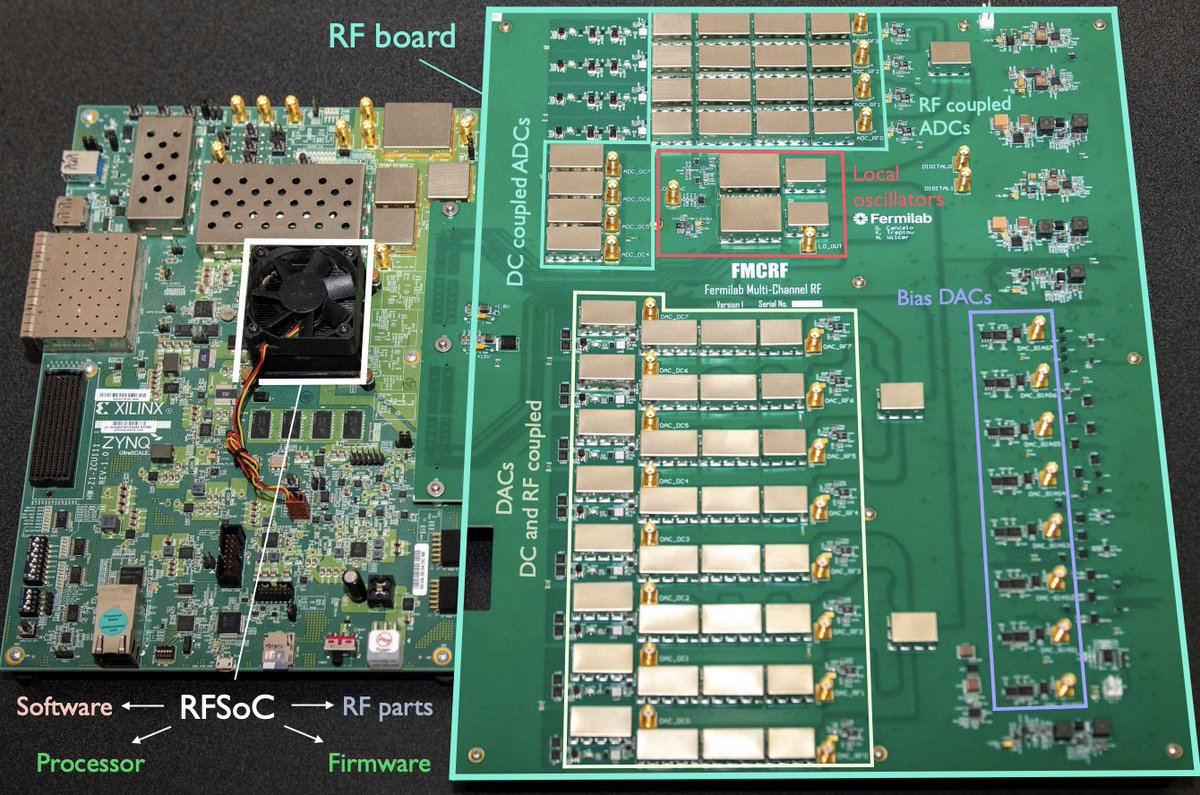
Excited to share our new open-source quantum instrumentation control kit (QICK), developed with @Fermilab, with @physicsfpgaeda, and @nanonoodle (and others without twitter accounts). The paper is at https://t.co/WuPsSZbyDD and the firmware/source is at https://t.co/n7cbakXidW
@zlatko_minev Hey @zlatko_minev I may be missing here some context, but if the goal is to find p=|b|^2 where |psi>=a|0>+b|1> and we repeat the experiment 10 times with no measurement error, then the most likely assumption given 10 times 1 is that p=1 no?




![QuantumQM's tweet photo. ⏩ Later join @cohen_phd and @ella_lior and discover how you can accelerate the timeline for practical QEC. [Room W-194B | 1:18 pm]
🔊 Hear from @galwiner all about QM’s new open-source software solution to manage your complex experimental workflows: Entropy. [W-194B | 2:18 pm] https://t.co/ES7f6mcKy8](https://pbs.twimg.com/media/FN5lVkJWQA0NnmF.jpg)