So, a disappointing start to the financial year for the public finances with risks to come. For more on how the government should manage the risks here see RF’s recent note on how the government can reset its ailing policy agenda: https://t.co/HQHKWoHVC9
Amid worries about the impact of conflict in the Middle East, today’s public finances data show a disappointing start to 2026-27: borrowing was £24.3bn in April, £3.4bn above (pre-war) forecasts. With conflict ongoing, plans for £17bn consolidation this year are at risk. Short 🧵
…the war in the Middle East means the latest forecasts are already out of date. We estimate that the war could add around £16bn to borrowing based on the BoE’s middle scenario and around £12bn this year.
Bank of England follows the Fed and holds its policy rate at 3.75% given uncertainty from the conflict in the Middle East. BoE hints it will be patient on raising rates but bigger issue is its assessment of the impact of the war. Thread on all that to follow...
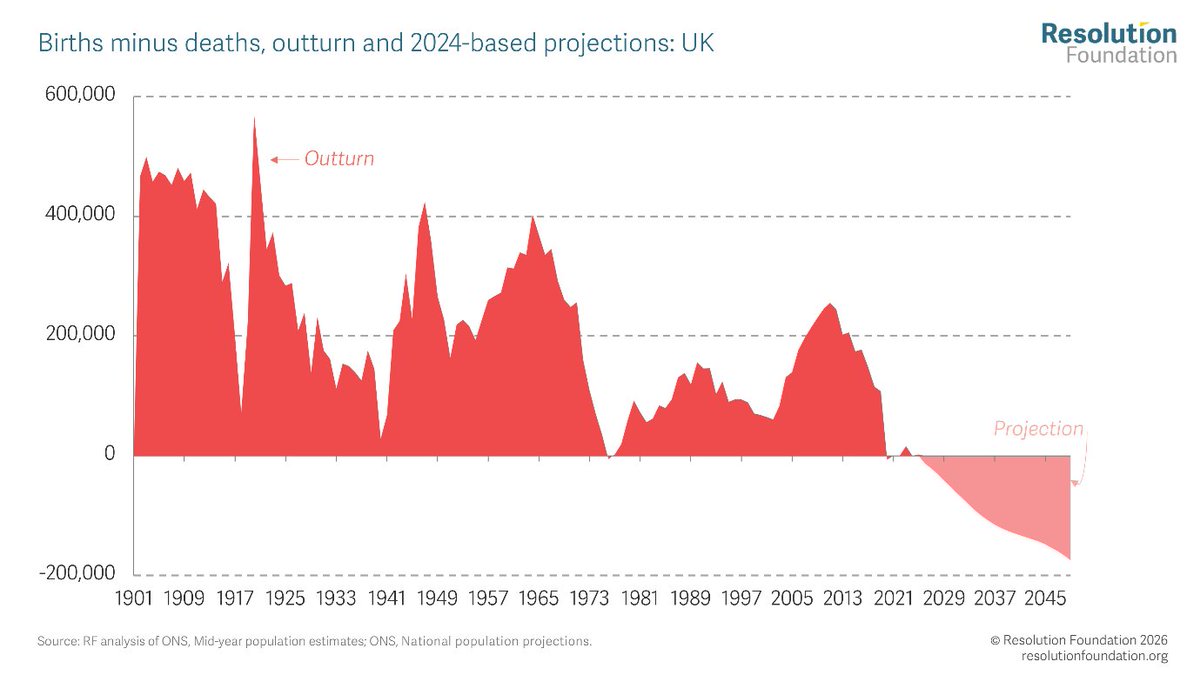
New @resfoundation substack out now with @charliejmccurdy considering the implications of the UK's new demographic squeeze - one where deaths outweigh births and all population growth comes from net migration, and that's falling too. Link below 👇
https://t.co/iwTGz3Zr0v
This shows the importance of raising the fiscal buffers in the last budget. Looking ahead, the Chancellor should ensure any energy bill support is targeted towards households facing significant hardship and time-limited in order to stay within her fiscal rules.
End.
Public finances data out this morning show the government managed to reduce borrowing in the financial year ending March 2026. But the economic effects of war in the Middle East present a new risk to the outlook. 🧵
This week, Resolution Foundation published a macroeconomic policy outlook examining these risks. Under a severe but plausible scenario, £16bn could be wiped off the Chancellor’s £24bn headroom.
The Macroeconomic Policy Outlook Q2 2026 https://t.co/7FEwH30lTG
Child poverty isn't just bad, it results in an enduring earnings gap.
This gap between graduates who grew up in poverty and those who didn't persists even for people who go to the same university, get the same degree and work for the same firm ⤵️
https://t.co/NTvz4BsQv5
Slightly eye-wincing moves in markets yesterday as expectations rose for a sharp rise in interest rates later in 2026 following the Bank's decision to hold rates. And today, we're seeing 10-year bond yields rising to levels last seen in 2008.
Good news, it isn't...
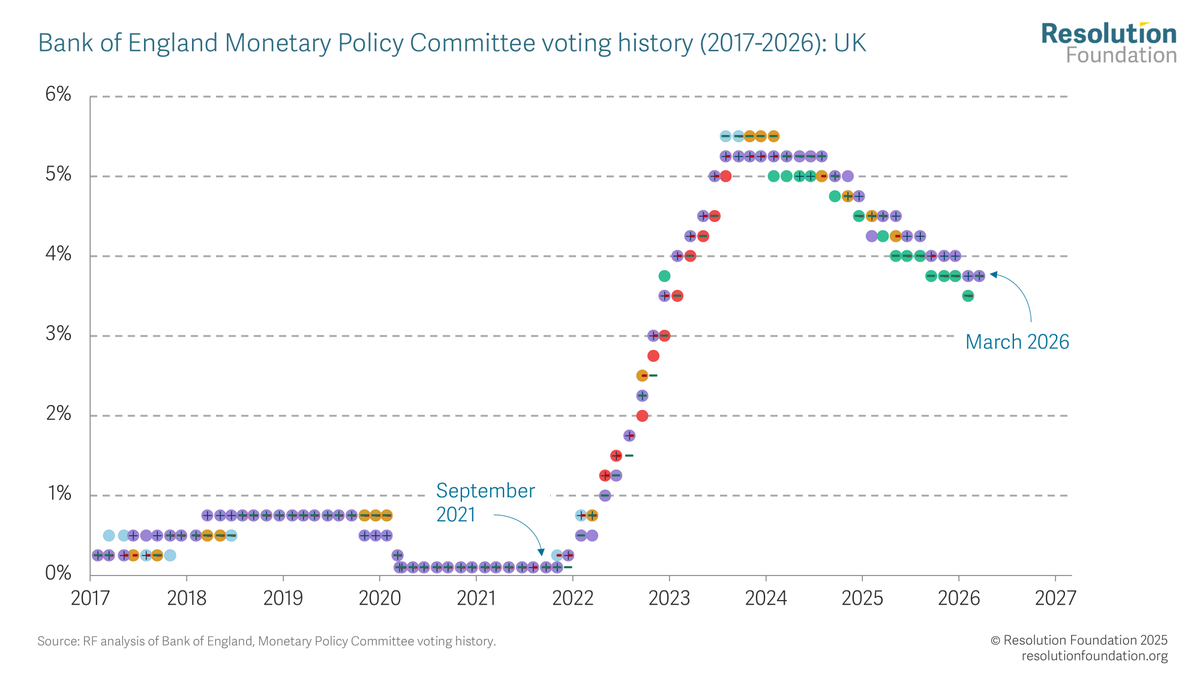
Unanimous in the face of uncertainty.
Yesterday's Bank of England decision to hold interest rates at 3.75% was the first unanimous vote by the 9-strong Monetary Policy Committee in over 4 years.
And that’s before considering perhaps an even bigger spending pressure: what the Government decides to do to support households with surging energy prices.
Disappointing government spending and borrowing numbers this morning – not helpful given conflict in the Middle East is likely to worsen the public finances. Other issue today is whether the data support the OBR’s benign forecasts. Thread to follow…
So, not a great release this morning suggesting the public finances deteriorated in February. Looking ahead, lower equity prices will reduce receipts and higher interest rates will push up spending...