General Surgery resident @UofTGSx, MSc student @ihpmeuoft. @uoftmedicine grad. Interested in equitable healthcare delivery, trauma, and acute care surgery.
@HalletJulie@UofTGSx@HalletJulie, you’ve been an incredible mentor right from the start, and it looks like this was only the beginning! Looking forward to working together over the years to come, and thrilled to be joining the @UofTGSx family with a fantastic group of co-residents!
3⃣Plan for geographically accessible high-volume care.
Consideration of geography 🗺️ is crucial in reorganizing care pathways to provide high-volume care without worsening distance barriers. (6/6)
Recent @ICESOntario study shows where patients with non-curative esophagogastric cancer live impacts outcomes, with inferior outcomes at distances >10 km from cancer centres. https://t.co/oOsvY54Opw @elliottkyee@DrNCoburn@HalletJulie@alyson_mahar
2⃣Reduce outcome variability.
Potential solution is high-volume med onc care for esophagogastric cancer—shown to ⬆️ chemotherapy use and survival and ⬇️ healthcare costs (https://t.co/44ByTq9loE & https://t.co/MOPjyum2cF). (5/6)
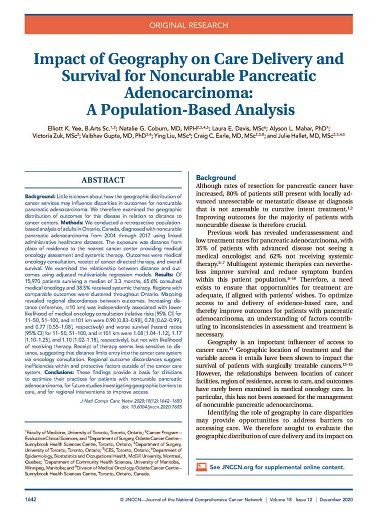
Finally, geography measurably impacts patient outcomes for noncurable pancreatic cancer. Tackling accessibility barriers within clinical practice is as important as understanding pathophysiology and therapeutic regimens—no one benefits from care they can’t access! 6/6
Enormous thanks to my research team! @DrNCoburn, @lauraellendavis, @alyson_mahar, @vvvzuk, @VGupta_MD, Ying Liu, Craig Earle, and @HalletJulie—I truly could not have asked for a more supportive, inspiring, and insightful group to work with and learn from. A brief overview: 1/6
Getting into the system through medical oncology is key—once this is established, the barrier of distance is reduced for receipt of treatment. Cancer systems should prioritize access to consultations for patients at a geographic disadvantage. 5/6
I met with him in the evening last week to explain the MRI results by @OTNtelemedicine. I sat in my home office and he sat in his living room—a red and gold Christmas tree in the background, and photos of his family on the wall.
Me: “Perhaps you should bring in your wife”
This from @WHO is getting a lot of attention and creating confusion.
I want to quickly share what I understand about this.
Bottom line question:
Are infected people without symptoms an important cause of spread?
My best guess: yes.
A thread
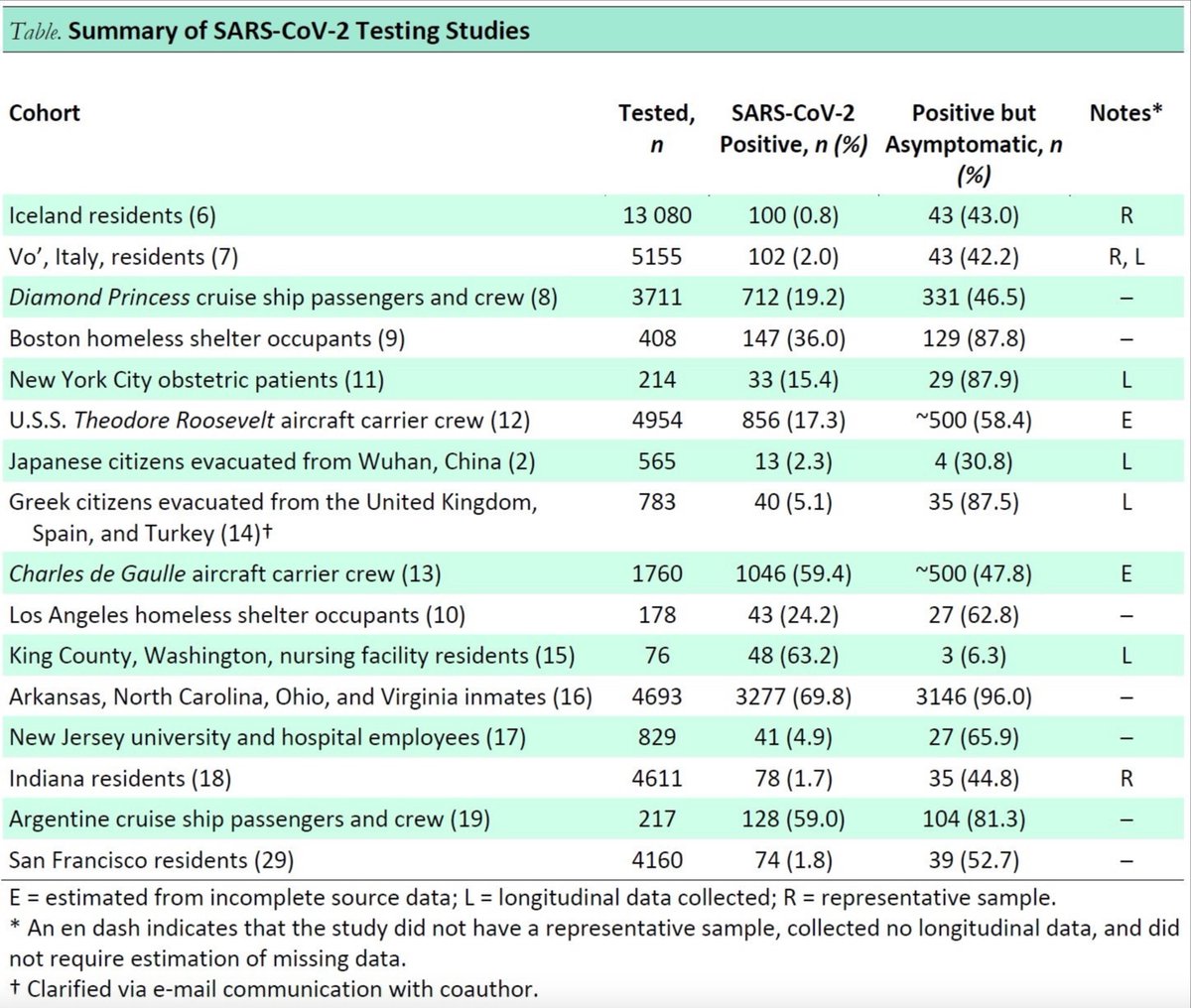
Nearly half of those in the community infected with SARS-CoV-2 may be asymptomatic. Public health responses cannot neglect asymptomatic transmission as a significant driver of ongoing infection.
We just published a review of 16 cohorts w/ #COVID19 + data for asymptomatic infections
@AnnalsofIM
great work by @danieloran@ScrippsRTI@scrippsresearch
https://t.co/7VTTW0ay0w
Bottom line: the rate is high, perhaps ~40% or greater, even taking into account presymptomatic Δ
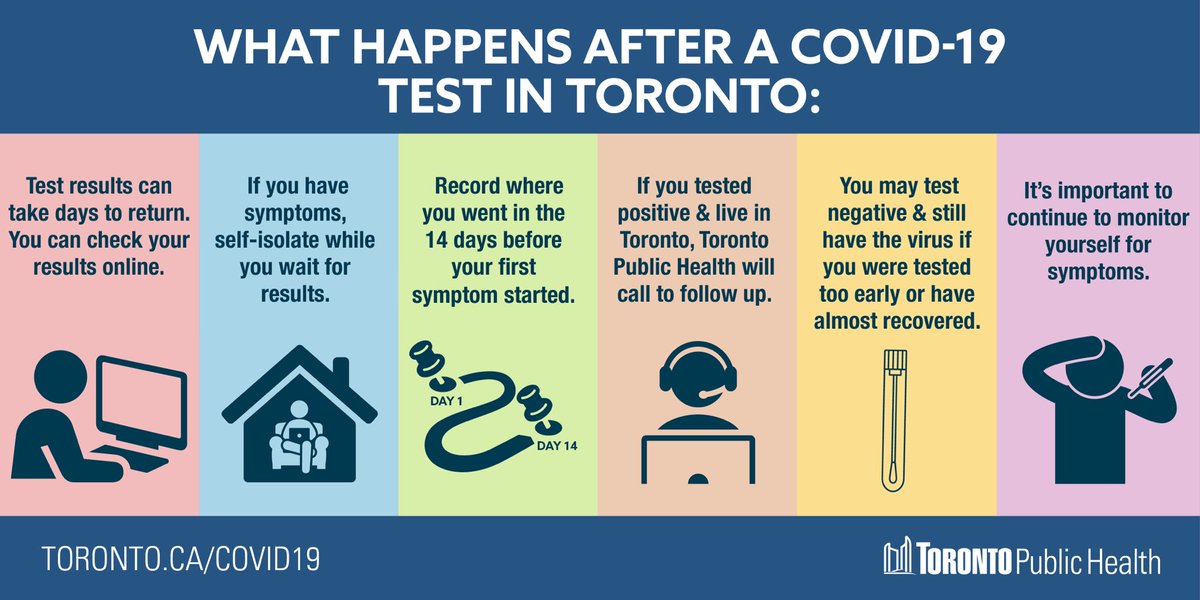
#COVID19 testing is led by the province & is available for;
✅ People with 1 symptom, even if mild
✅ People with no symptoms who are concerned they have been exposed
✅ Essential workers like health care & grocery store workers
✅ Others
➡️ More info: https://t.co/YDiwo5O5eE
The maps created with Toronto Public Health data reveal the heaviest concentrations of infected people living in northwest Etobicoke and northeast Scarborough. https://t.co/xyv6RI7Kdm
NEW: @ICESOntario analysis finds positive #COVID19 cases "more likely to live in marginalized neighbourhoods with greater residential instability, material deprivation and dependency, and lower income status" compared to Ontarians not tested for the virus.
https://t.co/TBEN5PWiv0