@TaoFeek182 To all the folks arguing..there was an incident like this, an accident occurred, people died. The organisation simply paid out insurance for burial of the victims and that was the end. If you like overtake or play COD with the one live you've got.
@Olami_deeEbony@ifyudembaozoh The girl was badly behaved. She should have at least offered. Her excuse is a reflection of her upbring and her who she hopefully was....
"Greatest Uniben Students!"
"Great!"
Was sufficient enough to put to flight Soldiers, Policemen, not talking of cultists. Even Iron Lady Alele Williams fled from her home...
Fucking kids....
It's wild reading these stories as there was a time people denied being members. Persons referenced in all the shared stories are common criminals operating openly with the connivance of students & the system. I recall a cult war where Hall 3/4 students butchered an armed hit man
They will first say “Dey with me”.
You will buy crates of beer that is equivalent to your height. We saw so many ridiculous things in Ekosodin. Police couldn’t do anything about it.
he came to faculty of Law in the wee hours searching for a rival who was reading during an ongoing war. The rival quickly spotted him and fled. The merc & his gang assumed being armed meant freedom. Those guys were reffered to as "arrows" mobilised and gave chase.
That call...
@ldwllms@ElJefe__@MichaelAzeez2 Most of these outfits have poorly trained porters/security operatives. An experienced porter/security staff would often profile based on other factors.
The idea that SWIFT payments take 3 – 5 days is starting to age badly.
At least, in some corridors.
Payment companies are getting smarter about routing, liquidity management and banking partnerships. We’re increasingly seeing international payments arrive the same day or the next business day.
We tried a rail at @0xStableStack that delivered a SWIFT payout from the US to Nigeria in about two hours.
Two hours!!! Through SWIFT
Now, I’m not suggesting this is the norm across every corridor. Anyone building in cross-border payments knows the challenges are real. Timelines still depend on the banks involved, cut-off times, compliance checks, currencies and the route a payment takes.
But I find this development fascinating. In the stablecoin ecosystem, one of our common selling points has been that traditional payments are slow, while stablecoins settle in seconds or minutes.
That argument becomes less compelling when traditional rails are finding ways to be significantly faster.
The competition isn’t standing still, perhaps that’s a good thing.
It pushes all of us to think beyond the technology and focus on what customers actually care about: how quickly funds arrive, how much the payment costs, how reliably it settles and how easy it is to use.
The real opportunity is to build smarter payment infrastructure, combining the best available rails, liquidity and settlement options for each transaction.
1961: Nigeria was the first African nation to break diplomatic relations with France, and the day was 5 January 1961.
That was not a quiet diplomatic quarrel. That was Nigeria standing up in front of the whole world and saying, enough is enough.
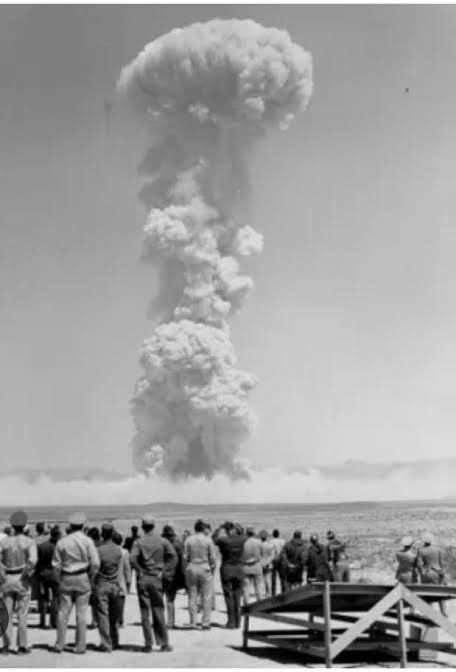
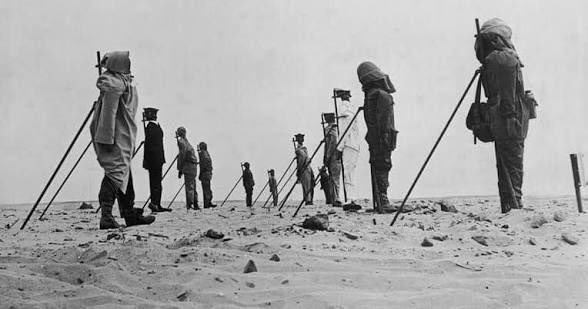
France had gone into the Sahara Desert and exploded an atomic bomb, the third one, on 27 December 1960. They called it Gerboise Rouge.
Nigeria had warned them before the test. African leaders had warned them. The people had warned them. The fear was simple and real.
The harmattan wind could carry radioactive fallout south, into Nigeria and into other African countries, and poison the air, the water, the soil, and the bodies of innocent people who had never asked for any bomb.
France tested anyway.
Prime Minister Sir Abubakar Tafawa Balewa did not hide behind a statement.
On the evening of Dec. 28th 1960, The French Ambassador, Raymond Offroy, was summoned to the Foreign Ministry and told of the Nigerian Government's “concern” over France's explosion of an atomic bomb in the Sahara, then January 5th, 1961, Prime Minister Tafawa Balewa summoned the French ambassador in Lagos, Raymond Offroy, and told him face to face that Nigeria was cutting diplomatic relations with France.
He personally handed him the letter. In that letter, Balewa spoke of the greatest resentment at the unalloyed intransigence of the French Government and the utter disregard with which that Government had treated the feelings of Nigerians on the question of atomic tests in the Sahara Desert.
Then came the part the French would never forget. The ambassador and his embassy staff were given only forty eight hours to leave Nigeria. Forty eight hours. And to make the message even sharper, Nigeria barred French planes and vessels from using Nigerian airports and ports, cancelled French transit rights through Nigeria, banned French ships from its coastal waters, and froze French assets in the country.
Think about that. This was 1961. Nigeria had only become independent on 1 October 1960. Barely three months into independence, a young African country looked one of the most powerful nations on earth in the eye and said, if you will not respect African lives, you will not enjoy African friendship.
That is why this story still matters. It was not only about a bomb in the desert. It was about dignity. It was about a new nation refusing to be treated as if its people did not matter. It was Nigeria saying that African lives are not expendable, and that no friendship is worth the silence that allows your neighbour to be poisoned.
Nigeria paid a price for that courage. Relations with France stayed broken until 1965. But history remembers who spoke first, and who acted first.
On 5 January 1961, Nigeria spoke, and Nigeria acted.
Let us never forget that this country once had the courage to stand alone for Africa.
If this history moved you, drop a comment and share it, so the next generation will know what Nigeria once stood for.
Now You Know
Foreign stablecoin issuers will not incorporate in, issue from, and maintain reserves in every country they want to distribute. It defeats the whole point of tokenising money, and it’s effectively saying that stablecoin issuers must become banks (that can’t lend) in every country. They won’t do it.
Conversely, there’s no point having a Naira stablecoin if the Nigerian issuer needs a license in Hong Kong to distribute there, since there’s little domestic use-case for stablecoins.
The only consequence of this (yet again), if it becomes the global regulatory habit, is that stablecoins will only be traded on informal peer-to-peer venues—the original problem they’re trying to solve.
@MikaelCBernard@RumeOphi See ehh..they would be inundated with demand notices, from LG, State and Federal parasites...not counting agberos with political cover who would present spurious demands, over 90% would be unreciepted. Their staff kpa-kpa would not be exempt, they would be targeted.
Eyes go peel
I’ve been waiting for the unfortunate feminist who will come and tell me rubbish so I can ask her to show me her achievements at her age from feminism and I will show mine at my age without man hating or toxic feminism.
But I am glad you satanic bitches know which battles to pick
Come and tell me at 28 that “I never see anything” or “I am too young and I will learn” or whatever stupid things you people have been saying to the little girl
Same youth all of us have. Una use your own dey jump from club to club and party to party.
I on the other hand was called to bar at age 22 and I have been working hard to build a career since then (28 now and enjoying the benefits of putting in years of work already as a young lawyer).
Come and tell me men will ruin my life nau.
Bitches wey go dey one room self con. Come try rub shoulders with me nau since I need to “learn”. Abi I don too old to learn?
Una mouths can only run around teenage girls? You no wan go career for career with a fellow aunty (female of almost 30?)
Fucking stupid girls.
New rules from Nigeria’s Central Bank (CBN) will require foreign-currency stablecoin issuers, including companies behind dollar-pegged tokens such as USDT and USDC, to maintain at least ₦15 billion ($11.16 million) in paid-up capital to operate in Africa’s largest cryptocurrency market.
The rules, released Thursday evening, will require foreign stablecoin issuers to establish licenced entities in Nigeria and comply with local capital, reserve, and operational requirements or risk losing market access. The CBN also set a ₦10 billion ($7.44 million) minimum capital requirement for issuers of naira-backed stablecoins.
The regulations come nearly three months after the CBN opened the second cohort of its regulatory sandbox in August, creating a dedicated track for stablecoin issuers and other virtual asset companies to test their products under its supervision for the first time.
Read about it : https://t.co/vqnLizh5jI
#Cyrptocurrency #TechCabal
@jassjegs Academics combined with military training, no be yam and beans... especially for 1st to 3rd timers. I'd a NEPO baby friend who passed out late 90s...within a year he had changed drastically, he looked like a prisoner wearing military uniform...
Thank God for life and grace!