#ASCO26
This one is special.
This is the hottest paper of 2026 and potentially in the history of pancreatic cancer.
Let’s dive in.
RASolute 302: Daraxonrasib vs investigator’s choice chemotherapy in previously treated metastatic pancreatic cancer
Abstract LBA5 (soon!)
Presentation: May 31, 2026, 3:21-3:33 PM CDT
For decades, pancreatic cancer has been where good ideas go to die.
We have optimized chemotherapy. We have sequenced chemotherapy. We have celebrated modest gains.
But the central driver of PDAC has always been sitting there in plain sight:
RAS.
More than 90% of pancreatic cancers have oncogenic RAS mutations, and until recently, we had essentially nothing direct to do about it.
Daraxonrasib is an oral RAS(ON) multiselective inhibitor targeting the active GTP-bound state of mutant and wild-type RAS.
And in RASolute 302, it delivered.
Quick hits:
📌 Phase 3 international randomized trial 500 patients with previously treated mPDAC Daraxonrasib vs investigator’s choice chemotherapy
🧬 RAS G12 population
91.8% of patients had RAS G12 mutations
📈 OS in RAS G12 population
13.2 vs 6.6 months
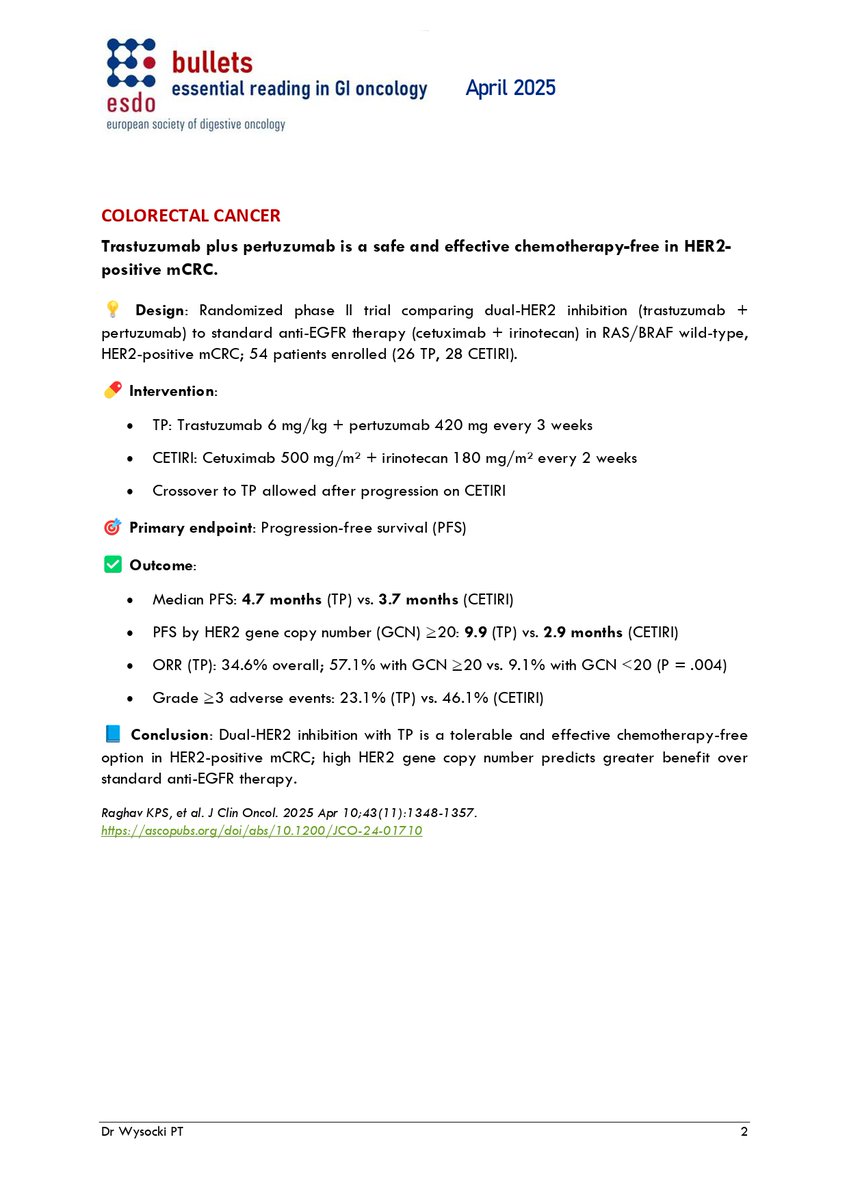
HR 0.40
P<0.001
📈 OS in overall population
13.2 vs 6.7 months
HR 0.40
P<0.001
📊 PFS in RAS G12 population
7.3 vs 3.5 months
HR 0.45
P<0.001
📊 PFS in overall population
7.2 vs 3.6 months
HR 0.49
P<0.001
🔥 12-month OS
Overall population: 53.2% vs 17.3%
⚠️ Toxicity matters, but this was not just more efficacy for more toxicity
Grade ≥3 AEs: 61.8% vs 69.6%
TRAEs leading to discontinuation: 1.2% vs 11.2%
This is the kind of survival curve we almost never get to see in pancreatic cancer.
This validates RAS(ON) inhibition in the most RAS-addicted major cancer. It takes a target we have talked about for decades and turns it into a clinically meaningful survival benefit in a randomized phase 3 trial.
The next questions come fast: 1L combinations, maintenance, perioperative disease, sequencing, resistance, toxicity management, and whether this becomes a new backbone.
RAS is here, and it couldn’t have come sooner.
https://t.co/Y4WJRlRRTk
@TheGutonclab@UGrewalMD@TimothyJBrownMD@OncoAlert@Onco_Nexus@ASCO@NazliDizman@LauraAlderMD@DVAraujoMD@DrBarbiOnc@LauraEsfeller@FunchainMD@YGaritaonaindia@DrSAHaddad@jgong15@iandresmeraz@SakditadMD@RamilaShilpakar@RohitBanwar@lungoncdoc
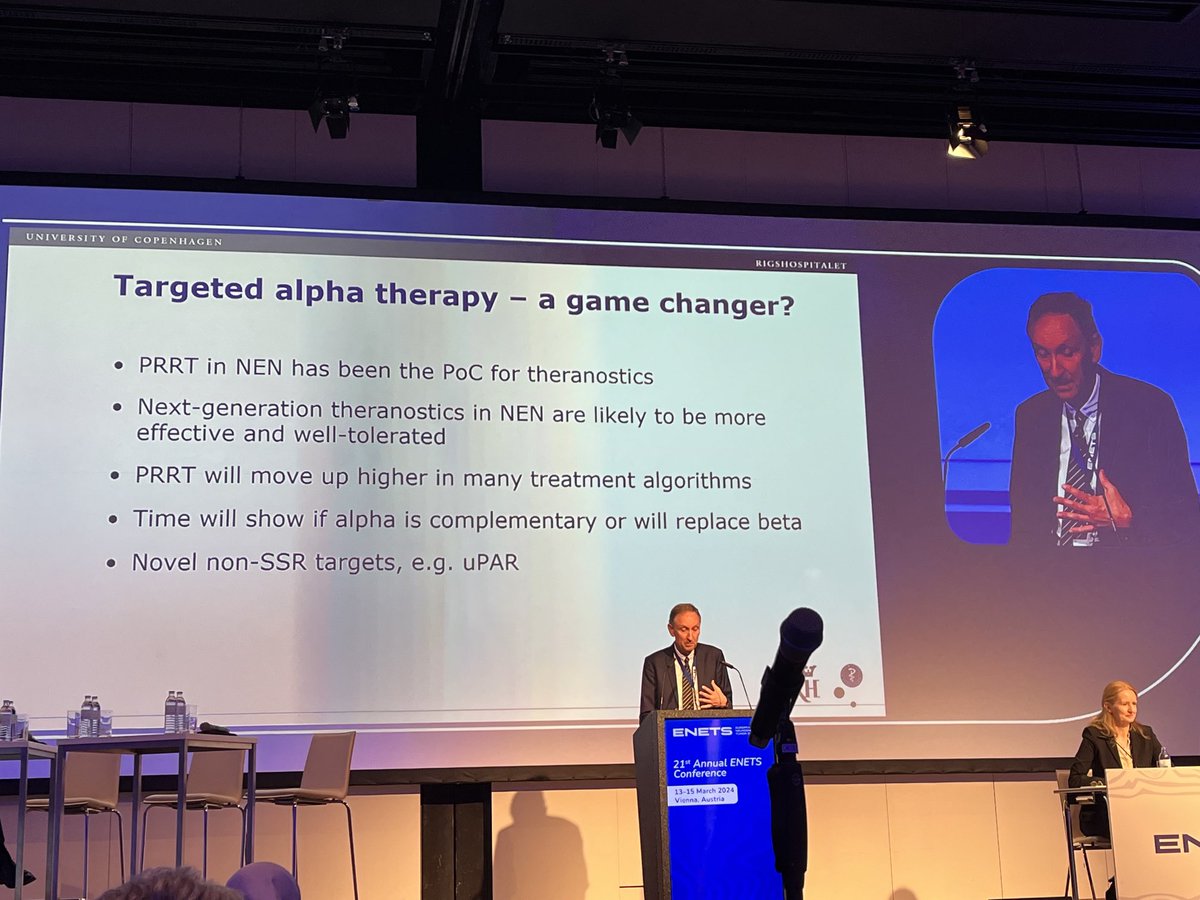
Poorly differentiated NECs remains a terrible disease with a short overall survival and a dire need for better therapy options. Excellent presentation from the NORDIC NEC study by Dr. Halfdan Sorbye. #ENETS24
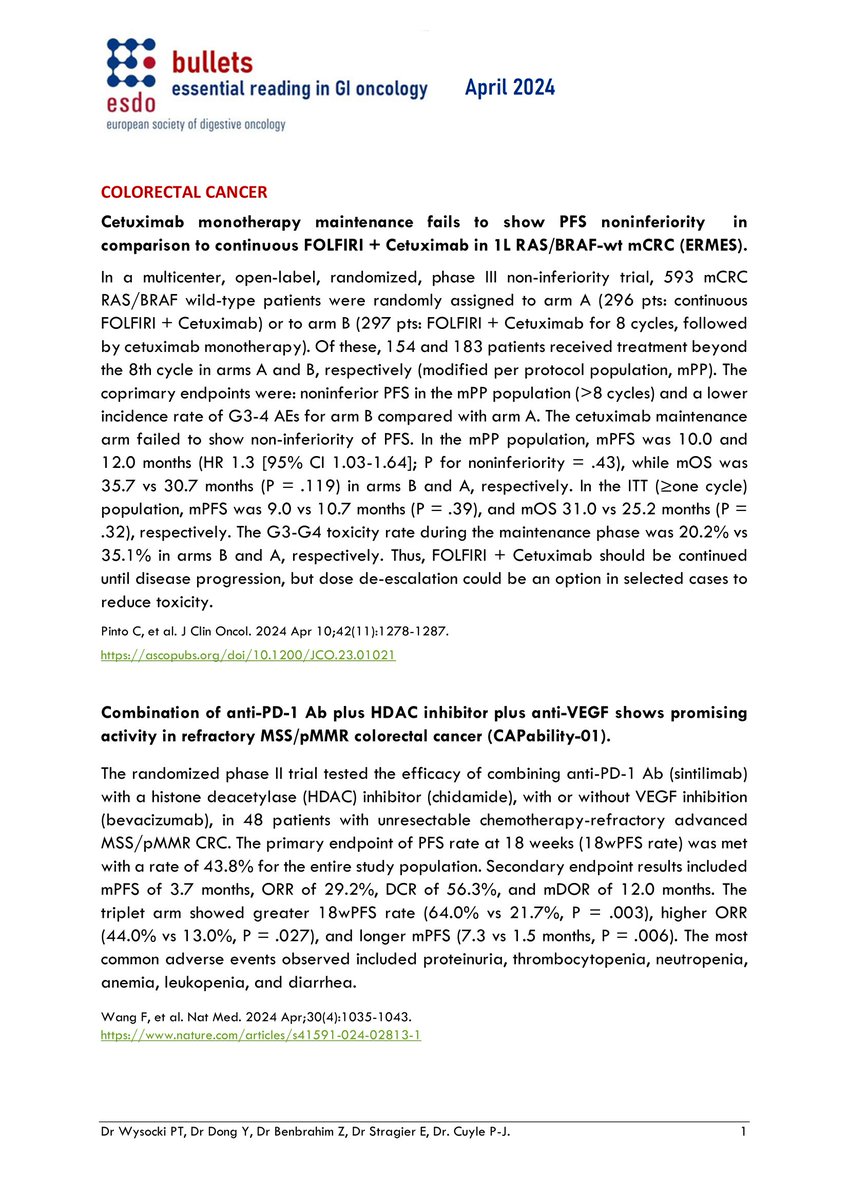
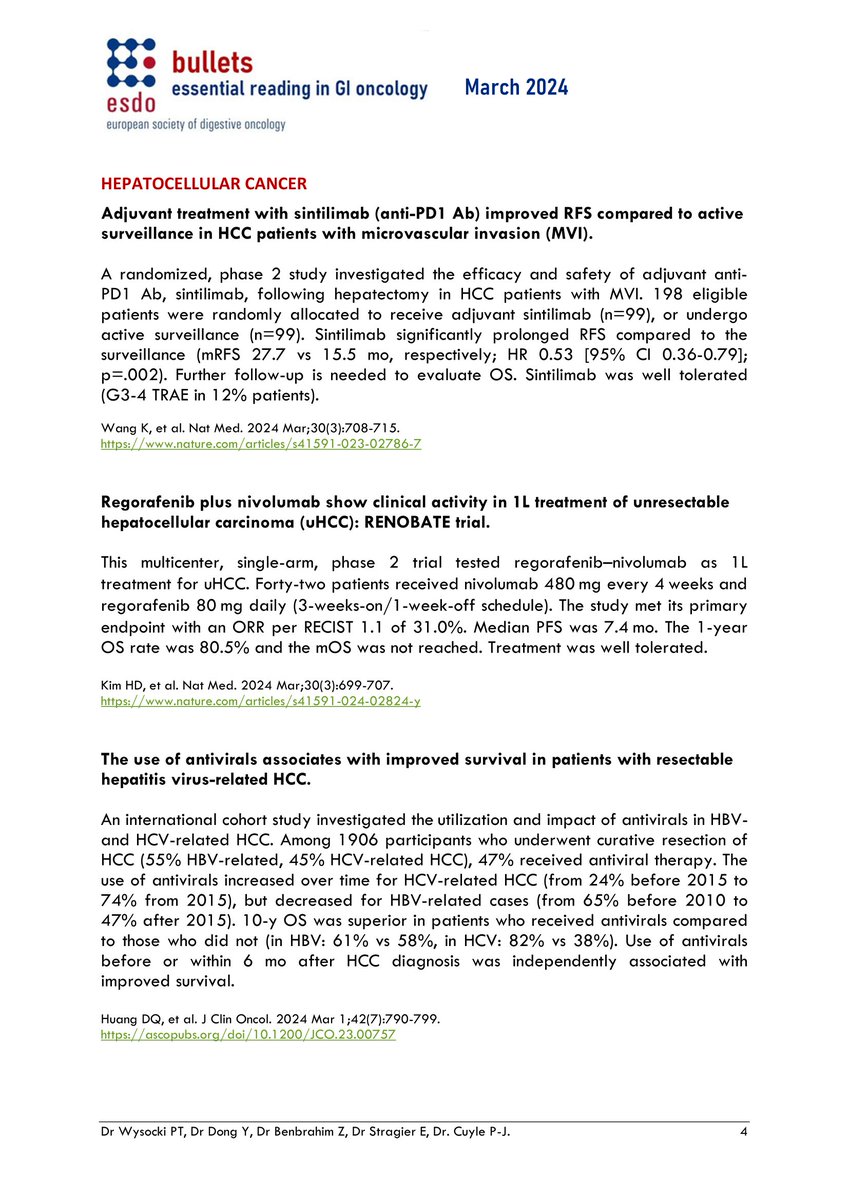
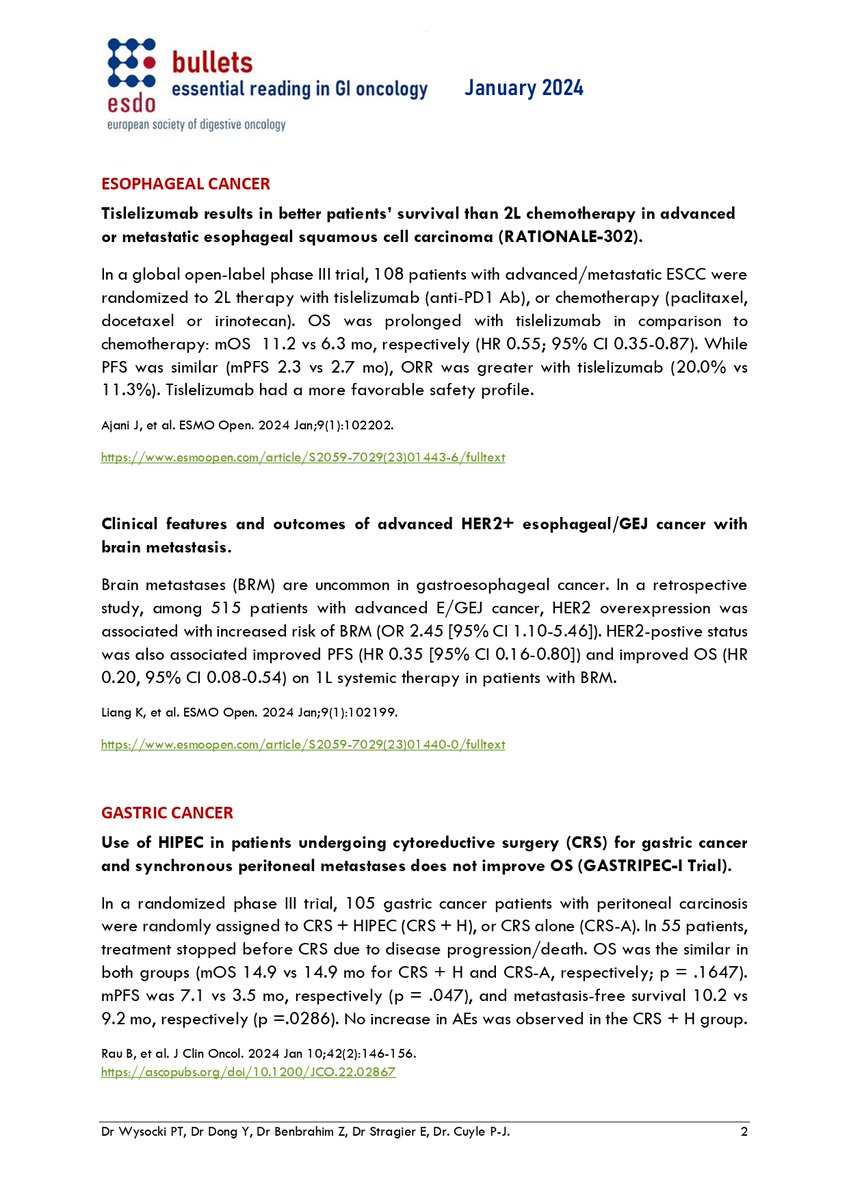
Check out our new GI Bullets video format! All major papers in GI oncology from 12/2023 in just 1 minute! 🎞
For more details see: https://t.co/WtzYMbUteQ
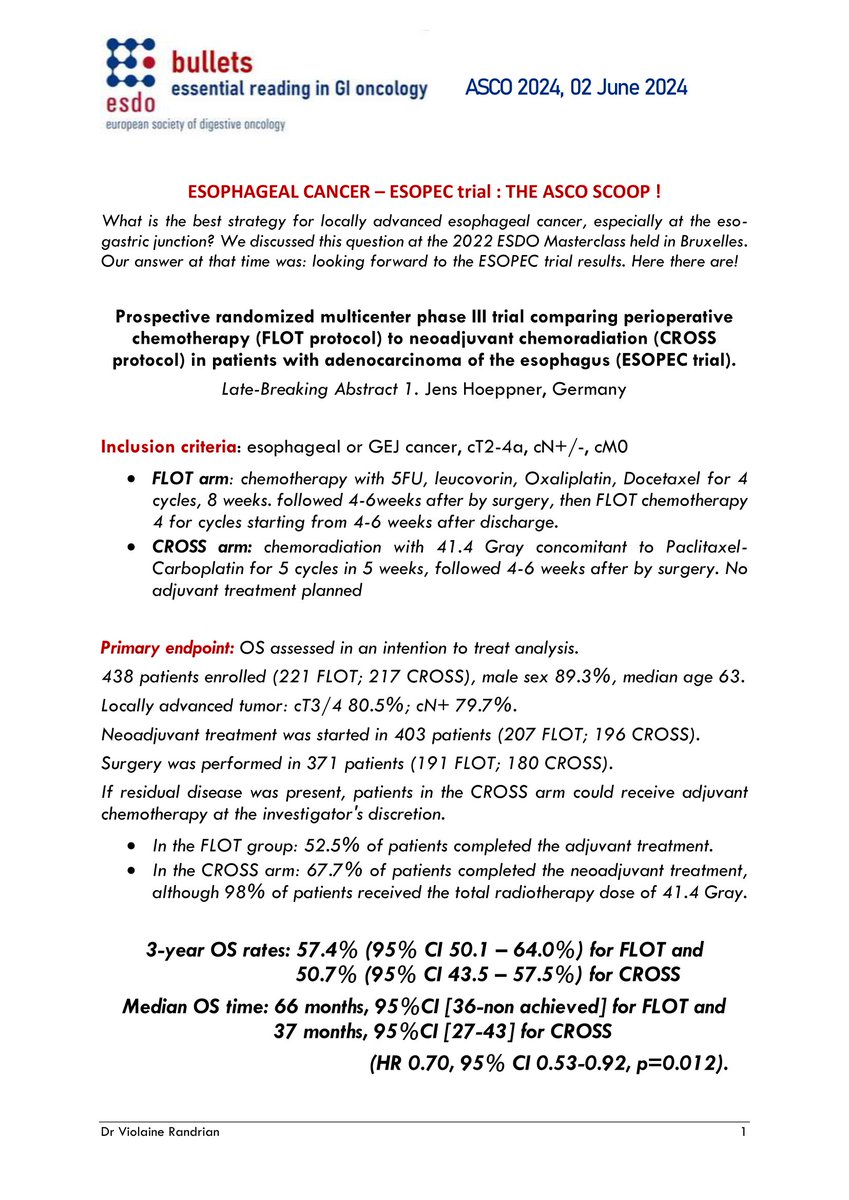
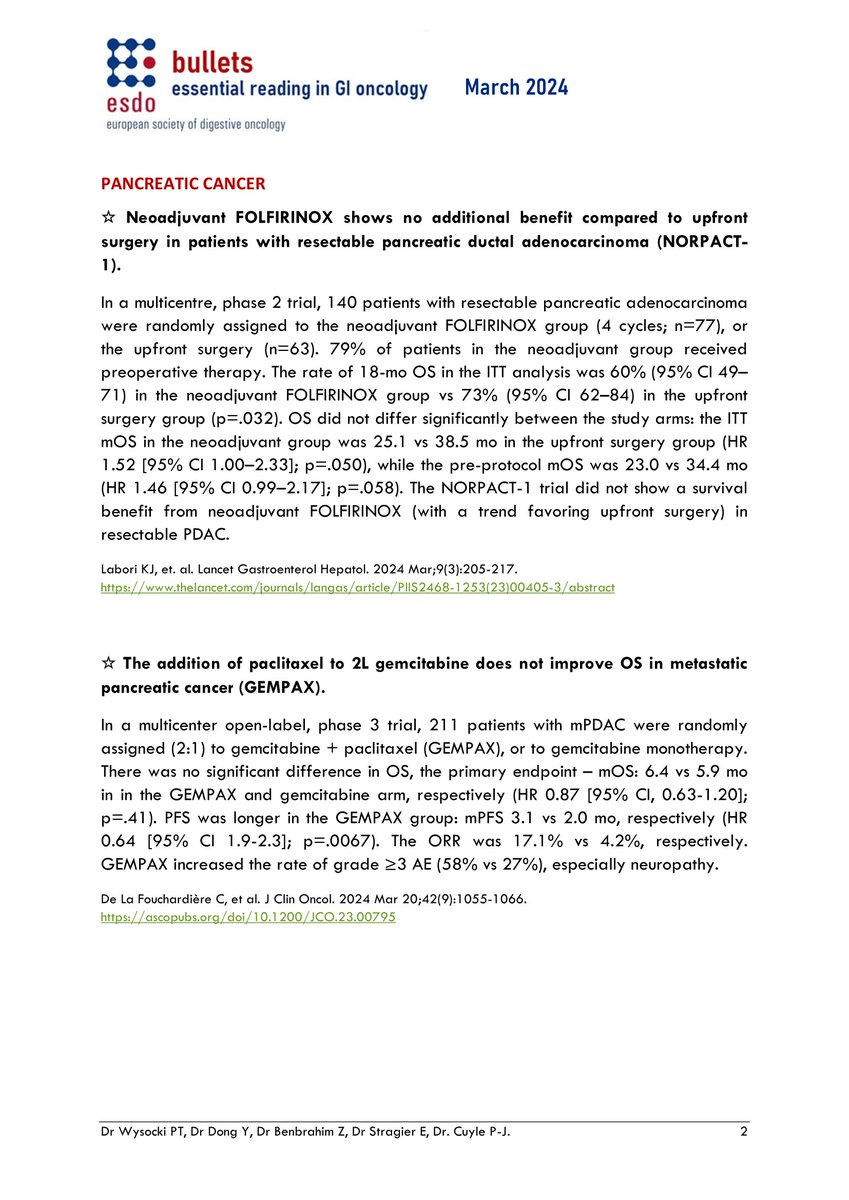
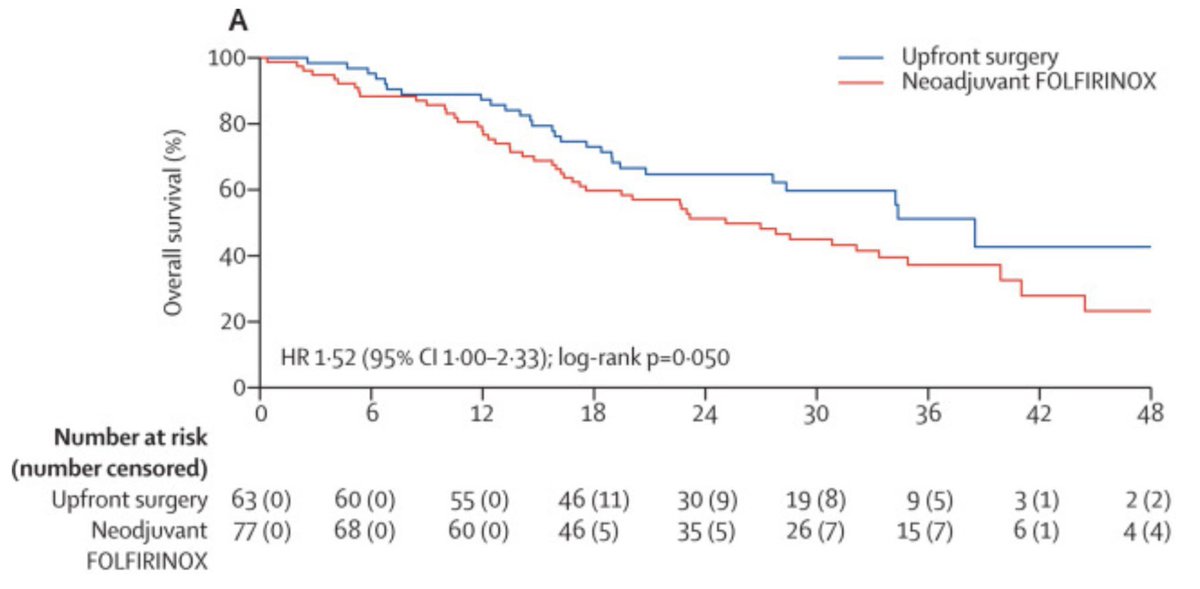
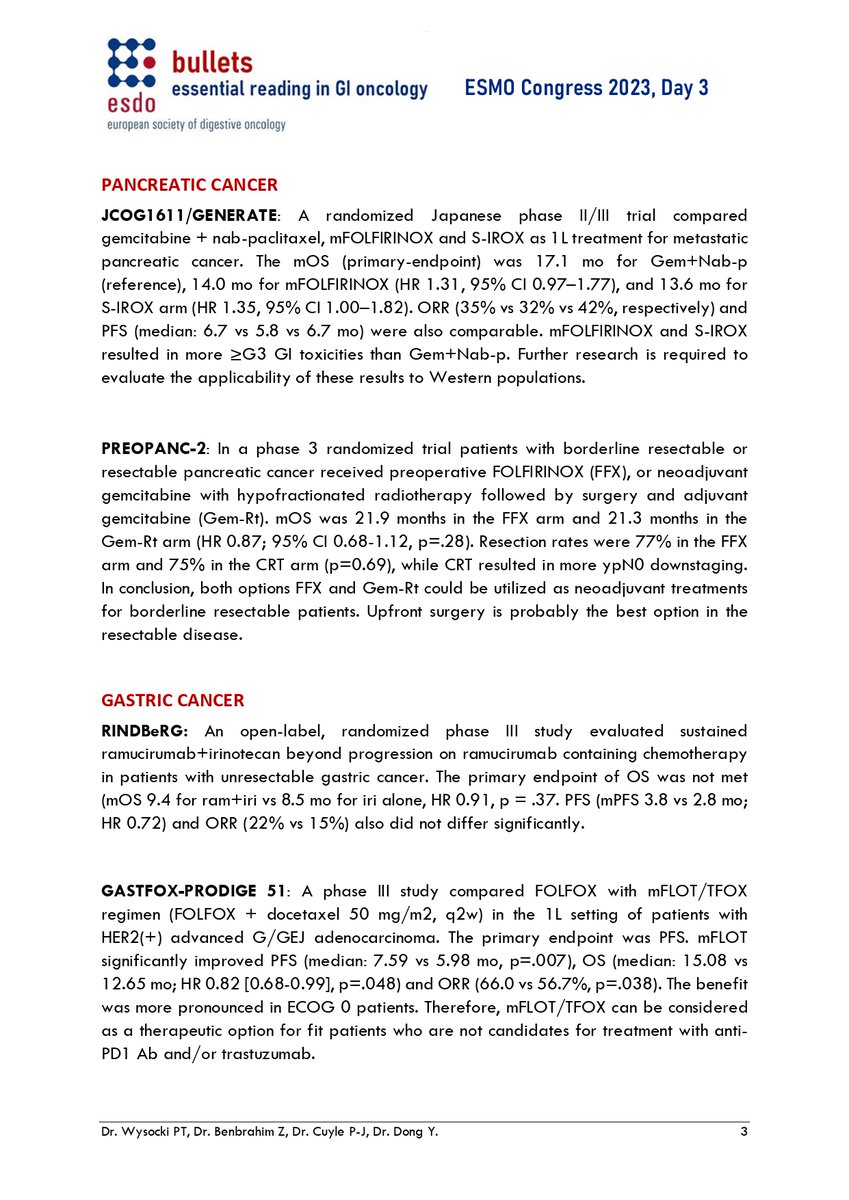
Neoadjuvant FOLFIRINOX 🤜🤛upfront surgery for resectable pancreatic cancer
NORPACT-1 out 🔥 now @LancetGastroHep
📈 Median OS 25 vs. 38 months and resection rate did not differ
💉 60% neoadjuvant group had severe adverse event 🚨
🫵Comments?🧐
👉 https://t.co/zhikhG8XQN
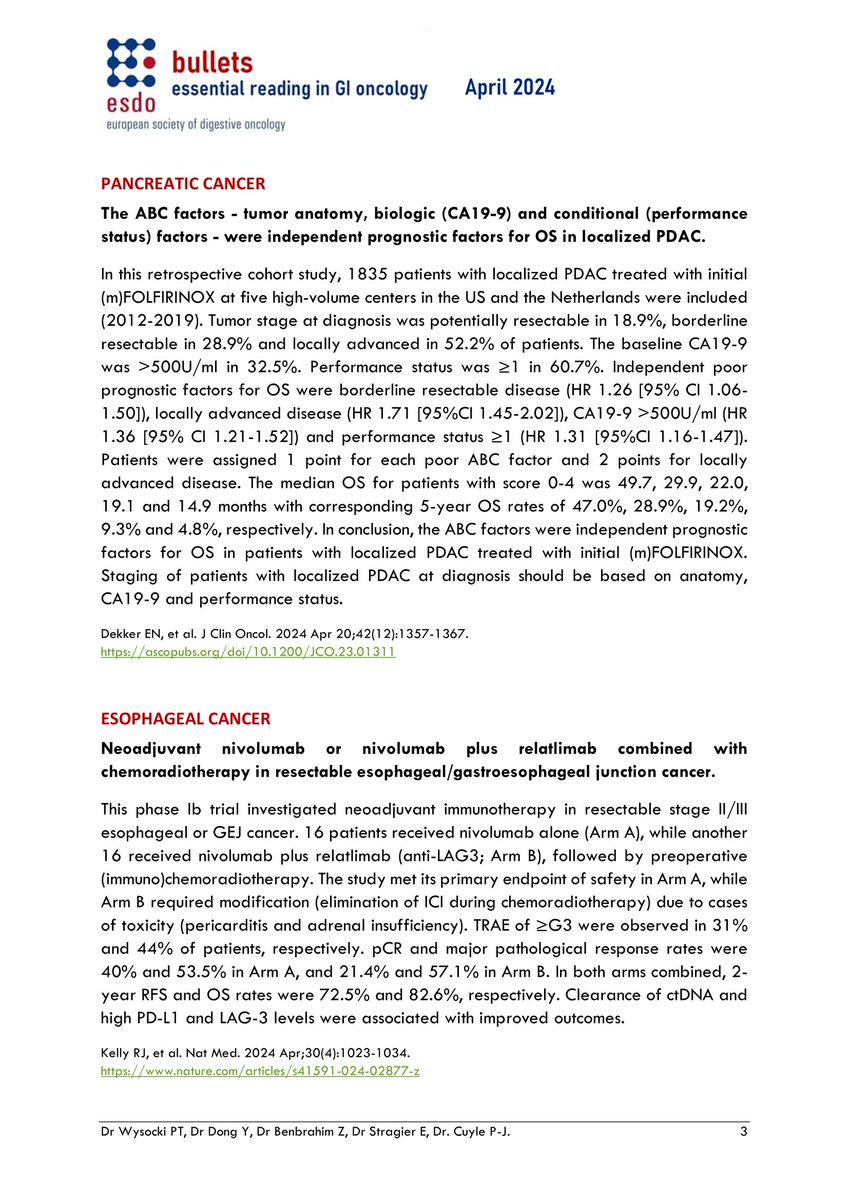
🧬Pancreatic acinar cell carcinoma is found to frequently harbor BRCA2 germline pathogenic variants (in ca. 37%).
🔸Explore all papers from November 2023 in our bulletin!
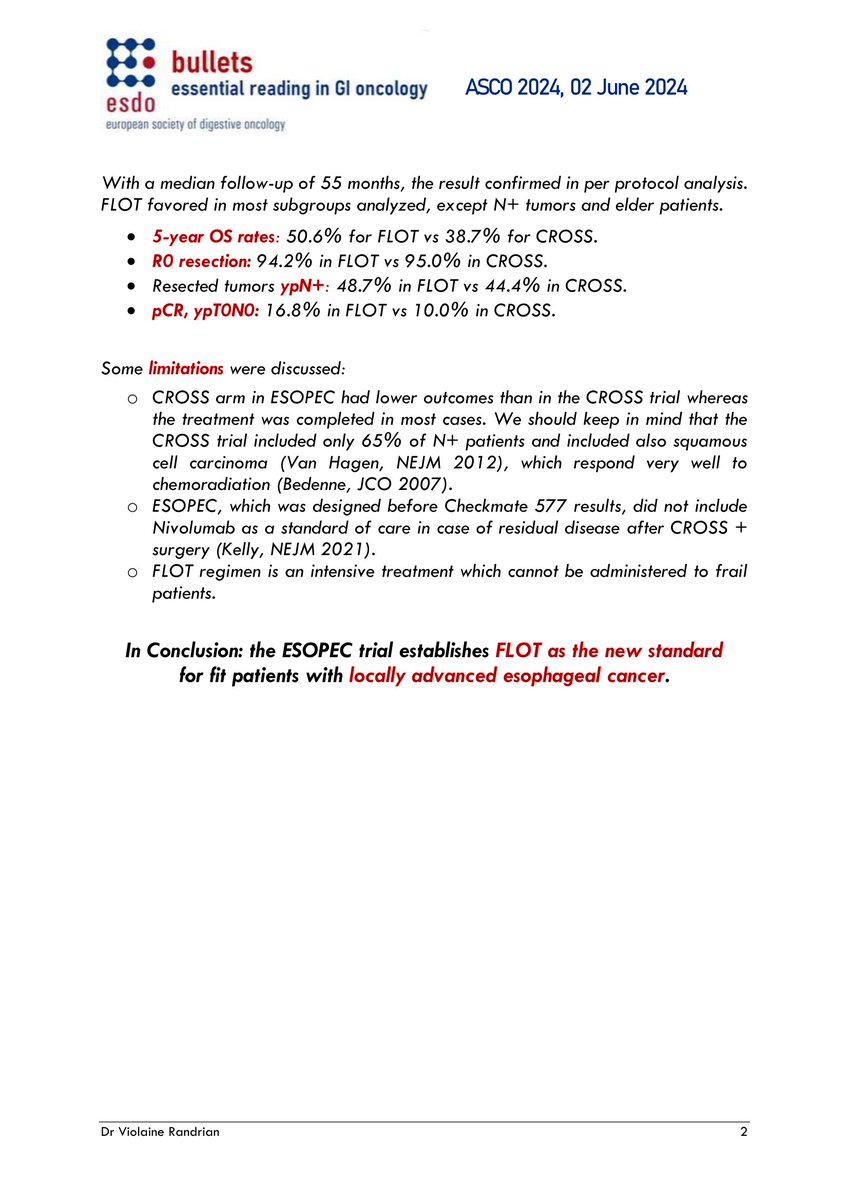
Lots of upper GI data to digest from #ESMO23!
In #KN585, the addition of pembrolizumab to periop chemo in locally advanced #GastricCancer did not improve EFS.
Check out the interpretation of the results by key expert @KoheiShitara!
Link👇 @Medi_Mix
https://t.co/0Ko5qqIXN6
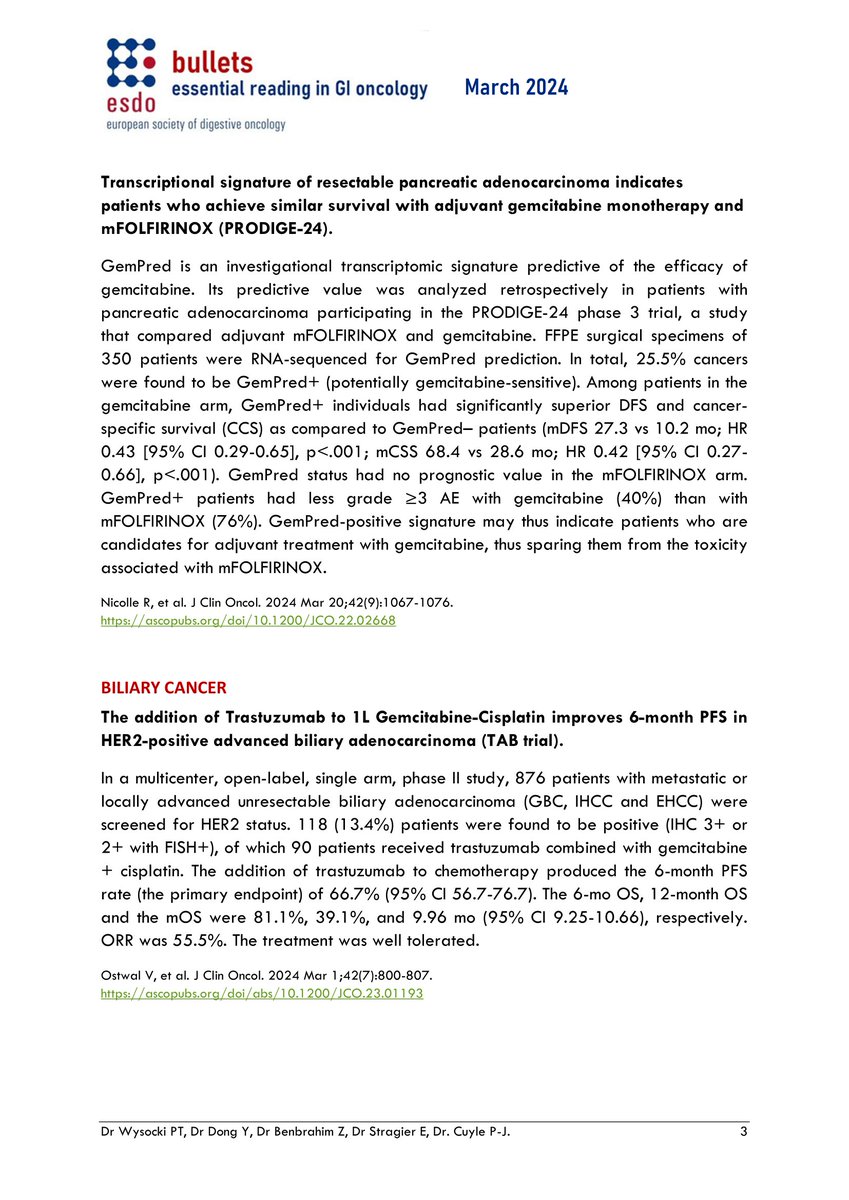
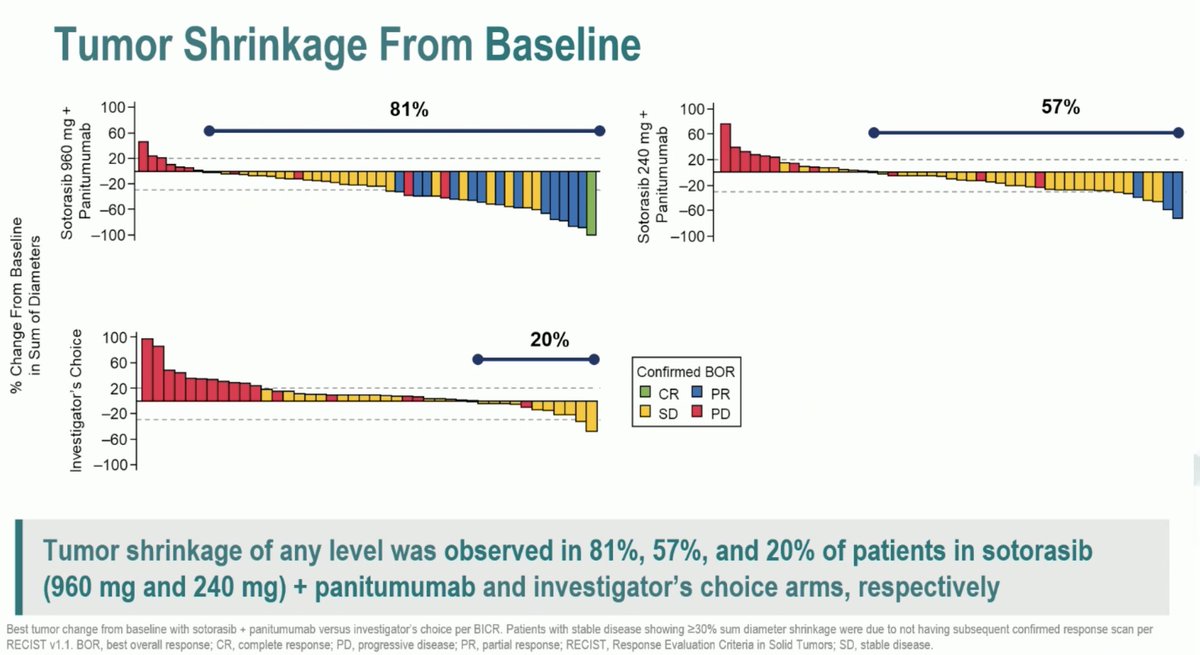
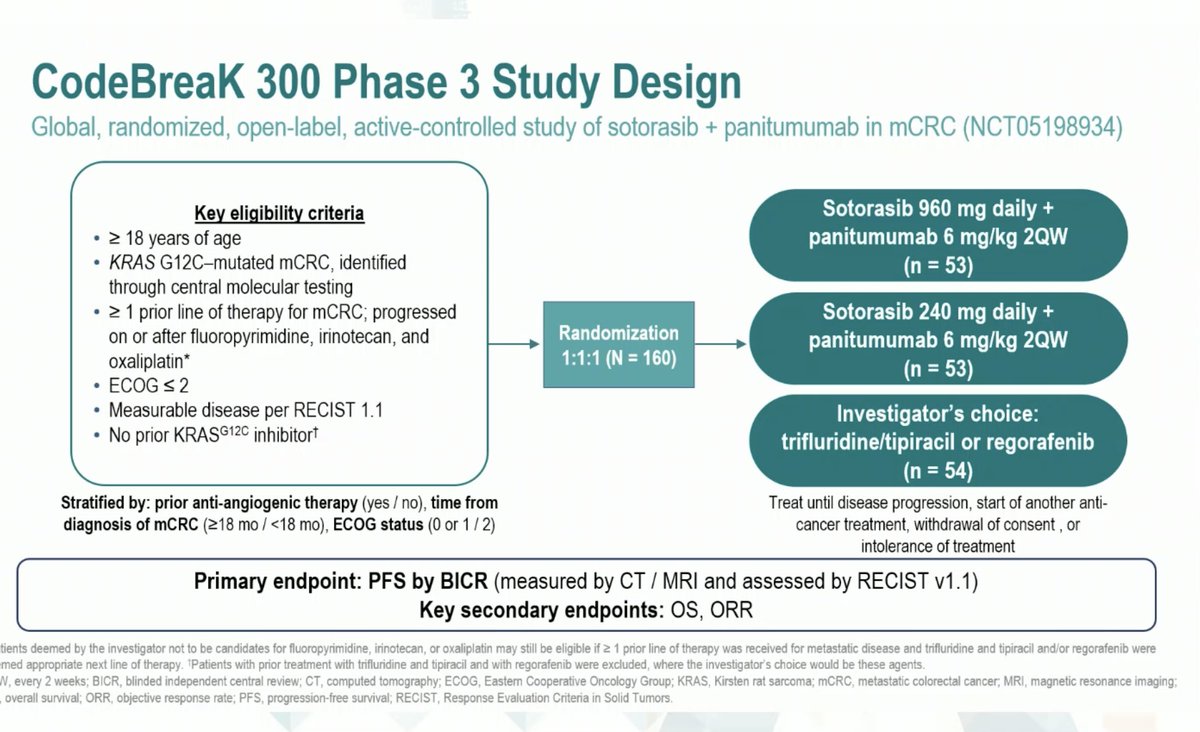
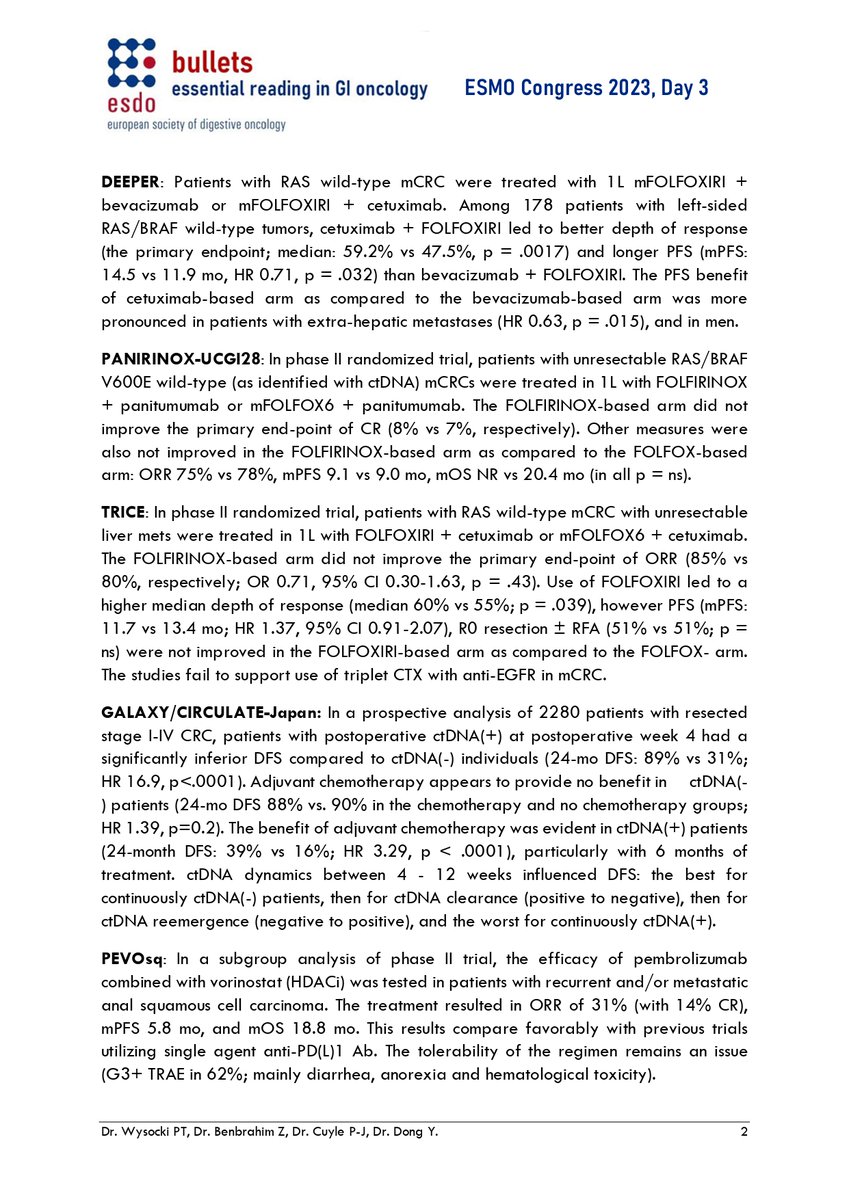
🔥Sotorasib plus panitumumab vs SOC for mKRASG12C mCRC #ESMO23
✅ CodeBreak 300 phase III
👉960 vs 240 vs plc
👉ORR 26.4 vs 5.7 vs 0
👉DCR 71.7 vs 67.9 vs 46.3
👉mPFS 5.6 vs 3.9 vs 2.2
👉OS: hmm…
🧐met 1° EP, definitely an option, but maybe earlier & w/ CTx
@myESMO