LIVE: They are coming home.
Watch as the Artemis II crew returns to Earth, splashing down at around 8:07pm ET (0007 UTC April 11). https://t.co/n3vZE2rcFv
Even in darkness, we glow.
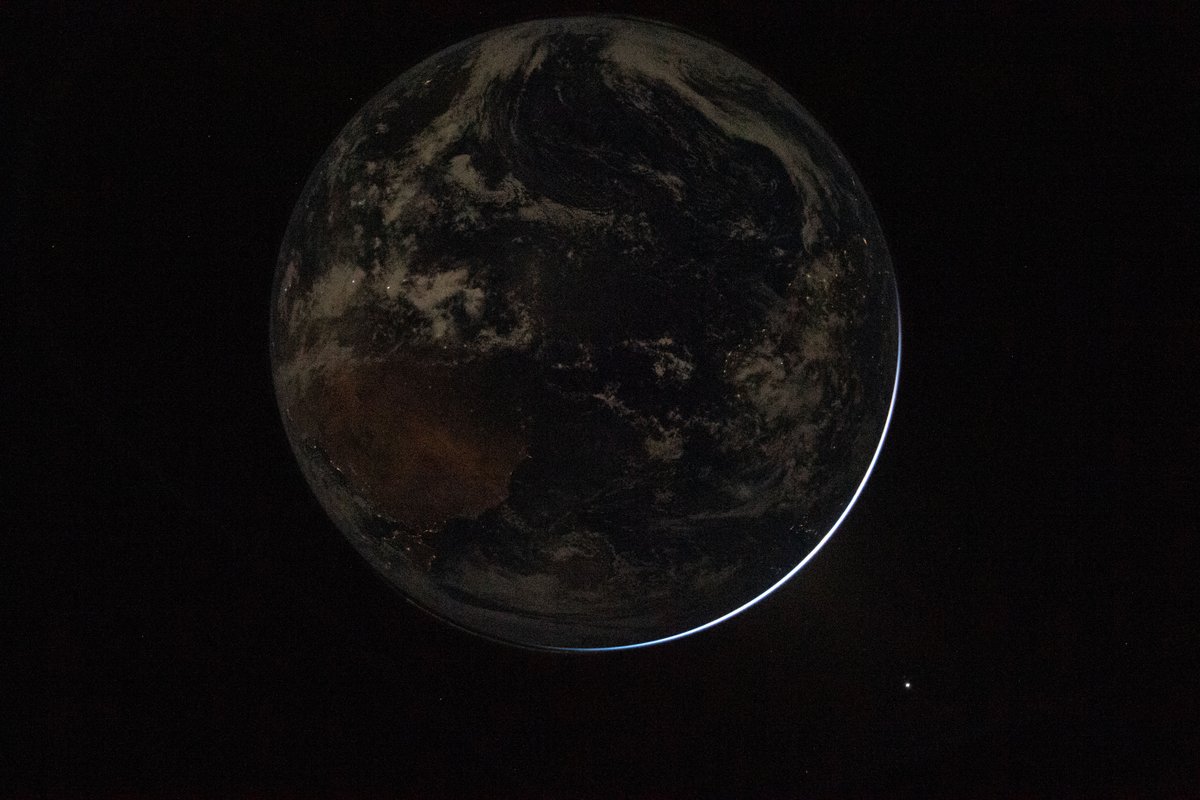
In this image of Earth taken by the Artemis II crew, we can see the electric lights of human activity. In the lower right, sunlight illuminates the limb of the planet.
Drawing Lesson No.1
In light of today's widespread use of Artificial Intelligence tools, we thought it might be helpful to reintroduce some old-fashioned ways of creating artwork.
In this lesson, we have two topics to cover, examples attached:
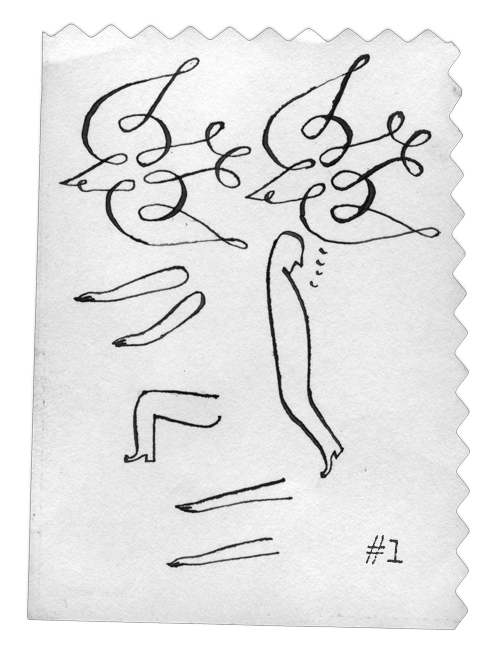
#1 Draw the same thing multiple times. After a few attempts, you'll probably get it right or decide it was a dumb idea and scrap it.
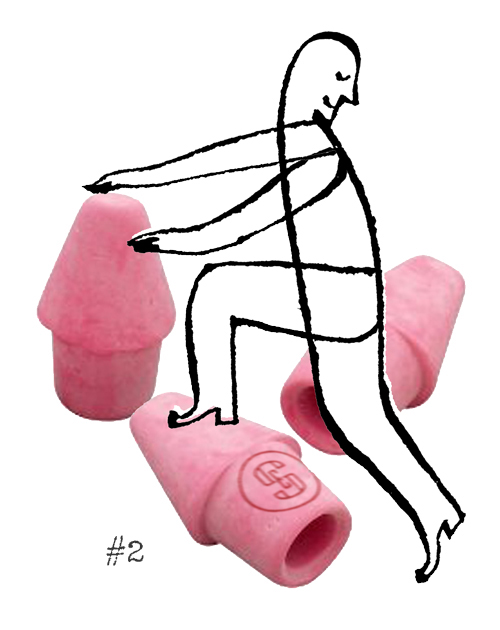
#2 Draw your subject in parts and pieces. Once all elements are rendered, cut them out and assemble them in the preferred arrangement. Doing this will allow you to modify your subject in a multitude of ways without erasing (you know how we feel about erasing) or redrawing (redrawing is okay, but see tip #1 above).
If you try these strategies for drawing, at the very least you'll find them interesting, if not helpful. And we hope this has been a refreshing glimpse into the past, when people drew stuff themselves.
https://t.co/doqLHpKVG4
Ode to the Artists Representative By Elvis Swift
The artist paints as passions plea, their art surrounds us daily. Upon the walls and goods galore, whose works displayed so gaily.
How did it get on walls and things once there to shine so bright? Did chance alone without some help get works placed in the light?
T’was no turn of fate the art’s displayed, presented in its grandeur. The art rep or the agent named worked hard to get it put there.
https://t.co/sZOglMAnXN
Ode to the Art Director By Elvis Swift
A thank you to the Art Director The one who forms the image dear Thank you Art Director for the work Your rough has paved the path so clear
Without you no idea can stand Upon your call the clouds do part The hand begins to chart the path To sketch then draw desired art
Oh how the time goes by When shown the light of insight right Hold my hand and guide the lines And make the picture shine as light
An ode to you oh Art Director Who makes or breaks at will Deciding fates of drawings Which art will stand and what to kill

(This poem is bound to get me in trouble.)
As part of our $600B commitment, Mac mini will be produced in the US for the first time later this year!
We're accelerating our progress even further— producing more AI servers and opening an all-new Apple Advanced Manufacturing Center for hands-on training.
1866: Cotton seeds are agricultural waste. After extracting cotton fiber, farmers are left with millions of tons of seeds containing oil that's toxic to humans. Gossypol, a natural pesticide in cotton, makes the oil inedible. The seeds are fed to cattle in small amounts or simply discarded.
1900: Procter & Gamble is making candles and soap. They need cheap fats. Animal fats work but they're expensive. Cotton seed oil is abundant and nearly worthless. If they could somehow make it edible, they'd have unlimited cheap raw material.
The process they develop is brutal. Extract the oil using chemical solvents. Heat to extreme temperatures to neutralise gossypol. Hydrogenate with pressurised hydrogen gas to make it solid at room temperature. Deodorise chemically to remove the rancid smell. Bleach to remove the grey color.
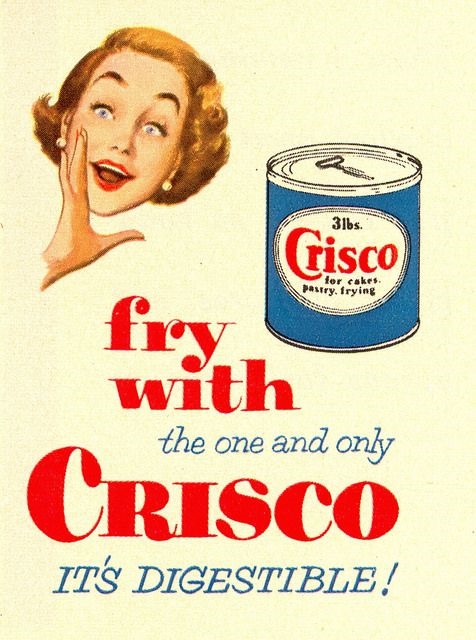
The result: Crisco. Crystallised cottonseed oil. Industrial textile waste transformed through chemical processing into something white and solid that looks like lard. They patent it in 1907, launch commercially in 1911.
Now they have a problem. Nobody wants to eat industrial waste that's been chemically treated. Your grandmother cooks with lard and butter like humans have for thousands of years. Crisco needs to convince her that her traditional fats are deadly and this hydrogenated cotton-seed paste is better.
The marketing campaign is genius. They distribute free cookbooks with recipes specifically designed for Crisco. They sponsor cooking demonstrations. They target Jewish communities advertising Crisco as kosher: neither meat nor dairy. They run magazine adverts suggesting that modern, scientific families use Crisco while backwards rural people use lard.
But the real coup happens in 1948. The American Heart Association has $1,700 in their budget. They're a tiny organisation. Procter & Gamble donates $1.7 million. Suddenly the AHA has funding, influence, and a major corporate sponsor who manufactures vegetable oil.
1961: The AHA issues their first dietary guidelines. Avoid saturated fat from animals. Replace it with vegetable oils. Recommended oils: Crisco, Wesson, and other seed oils. The conflict is blatant. The organization issuing health advice is funded by the company that profits when people follow that advice.
Nobody seems troubled by this. Newspapers report the guidelines as objective science. Doctors repeat them to patients. Government agencies adopt them into policy. Industrial cotton-seed oil, chemically extracted and hydrogenated, becomes "heart-healthy" while butter becomes "artery-clogging poison."
1980s: Researchers discover that trans fats, created by hydrogenation, directly cause heart disease. They raise LDL, lower HDL, promote inflammation, and increase heart attack risk more than any other dietary fat. Crisco, as originally formulated, is catastrophically unhealthy. This takes 70 years to officially acknowledge.
Procter & Gamble's response: Quietly reformulate without admission of error. Remove hydrogenation, keep selling seed oils, never acknowledge that their "heart-healthy" product spent seven decades actively causing the disease it claimed to prevent.
Modern seed oils remain. Soybean, canola, corn, safflower oils everywhere. Same chemical extraction process. Same high-temperature refining. Same oxidation problems. Just without hydrogenation so trans fats stay below regulatory thresholds.
These oils oxidise rapidly when heated. They integrate into cell membranes where they create inflammatory signalling for months or years. They're rich in omega-6 fatty acids that promote inflammation. They've never existed in human diets at current consumption levels.
But they're cheap. Profitable. And the food industry has spent a century convincing everyone they're healthy. The alternative, admitting that industrial textile waste shouldn't have been turned into food, would require acknowledging the last 110 years of dietary advice was fundamentally corrupted from the start.
Your great-grandmother cooked with lard because that's what humans used for millennia. Then Procter & Gamble needed to sell soap alternatives and accidentally created the largest dietary change in human history.
We traded animal fats that built civilisations for factory waste that causes disease.
The soap company won. Your health lost.
As the list of disruptions and demands that the industry must consider when sourcing goods keeps growing, one strategy has become a top priority: diversification. Discover how @InterloopLtd is dealing with unpredictability and supporting customers: https://t.co/ywAeIUAgAg
Watch Falcon 9 launch Fram2 and the @framonauts, the first humans to fly over the Earth’s polar regions → https://t.co/vSt6tffjPe https://t.co/P4tpoG5vKl