1/5
At the bottom of this thread is my interview with Benjamin Moser, the author of the book Anti-Zionism, A Jewish History.
The interview didn't go well.
As I've said before, there is a movement afoot to create worldwide Pavlovian disgust with anything Jewish. Thus, Moser barely makes arguments about practical realities, policies, or even ideas. Instead, he focuses on things like Herzl's alleged obsessions with genitals and attempts to make every admired character in Zionist history into something, in one way or another, repulsive.
What I see here: the art of bullshit- and something much, much more dangerous.
Hasan Piker is a commentator and political activist who built his fame promoting a radical view of Israel while expressing sympathy for forces like Hezbollah, fundamentalist and reactionary movements abhorrent to any coherent progressivism. He knows very little about the Israeli-Palestinian conflict or its history. He stitches together fragments: scraps of history, anecdotal observations from different eras, pieces of unrelated circumstances. The result is bullshit dressed up as political insight.
Example:
At the beginning of the clip, Ezra Klein raises the question of Israeli security concerns, giving the impression that this is a substantive discussion. Piker responds by asking how Palestinians can be expected to live alongside “those who slaughtered them.”
When wars and conflicts end, people routinely find themselves living alongside those they once fought. And Palestinians, of course, have slaughtered Israelis too. That's precisely why security concerns are a serious issue.
Piker isn't interested in answering the question. He's interested in turning it into another opportunity to portray Israelis as monstrous, while evading the issue. It's just a shallow political performance.
Klein knows well what Piker is doing. Yet he sits across from him with a straight face and treats him as an authority on the Middle East. He doesn't do it because Piker has anything illuminating to say. He does it because Piker commands an enormous young audience, and with it clicks.
The performance rests on a bargain: Piker delivers his radical talking points, and everyone else pretends something intellectually serious is taking place => more hits. A legit onlyfans.
Pornography simulates intimacy without providing any, and this kind of discourse simulates intellectual engagement without delivering any. It borrows the gestures of serious journalism, like measured questions, the thoughtful expressions and the look of open-minded inquiry, and empties them of substance.
Why is this dangerous? Because hatred is one thing. People see the images from Gaza, believe passionately in Palestinian liberation, and come to hate Israel. That's an emotional response. But something fundamentally different happens when hatred masquerades as intellectualism.
Hatred alone has limited political reach. Many people are reluctant to enlist in it. But dress it up as reasoned analysis, as a sophisticated debate that supposedly leads to the conclusion that Israel has no right to exist as a national home for Jews, and suddenly you can recruit people, institutions, justify policies, and legitimize violance.
What started as the art of bullshit becomes the pornography of discourse, and ultimately something more dangerous: the transformation of prejudice into the shell of respectable thought.
Where theory meets undeniable evidence. @elysiums402 's piece in the Jüdische Allgemeine brilliantly connects contemporary antisemitism research with the groundbreaking documentation work led by Dr. @CochavElkayam and the Civil Commission.
For nearly three years this documentation has shaped one of the most critical records of our time.
A must-read on why looking away is no longer an option
https://t.co/a3aToDQkZ0
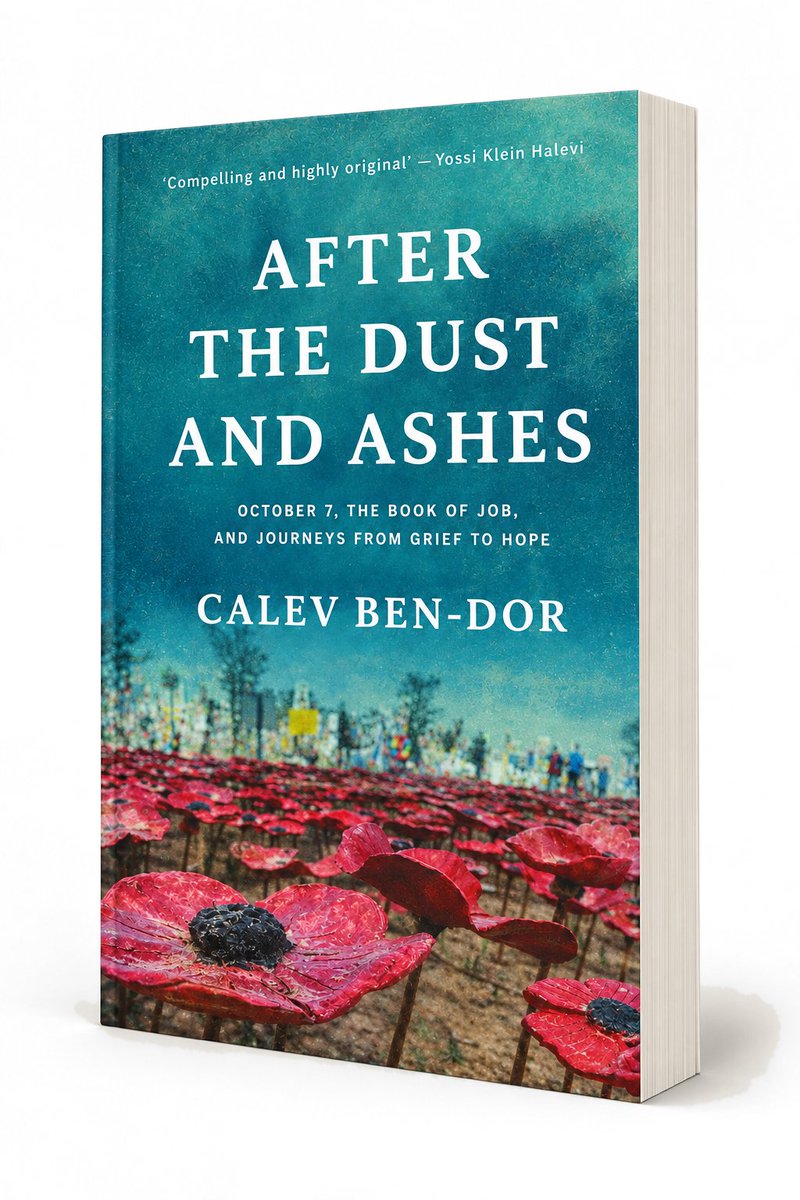
As we approach the third anniversary of October 7, I am delighted to publish After the Dust and Ashes: October 7, the Book of Job, and Journeys from Grief to Hope. (Fathom Journal Press)
Part literary reportage, part biblical commentary / Jewish theology, and part analysis of Israeli society, the book explores how to find meaning when our assumptions about the world collapse.
Details of how to purchase the book as well as launch events in the comments. Those who would like to organize a zoom event or in person, feel free to reach out.
This small sample of newspaper clippings from the 1950s - 1980s proves the “genocide” smear against Israel is not a new phenomenon.🧵
For decades, Israel has been accused of “genocide” no matter the facts on the ground. The lie is meant only to demonize & delegitimize the state.
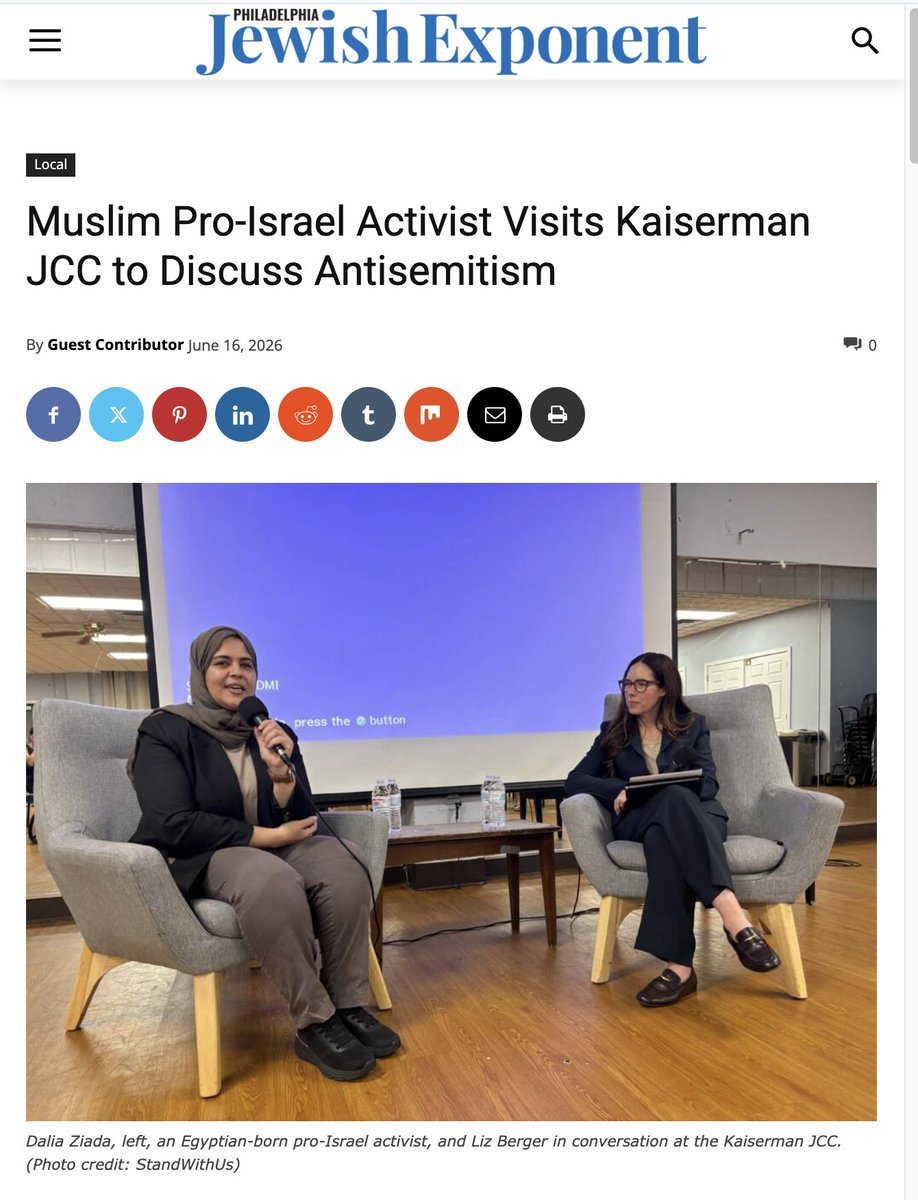
In the part of the world where I came from, describing someone as "pro-Israel" has always been used as a stigma or an insult, and in my case, as a legal and a religious crime with an extreme penalty!
This has never been the case in the West until the October 7 attack happened. Before that, being "pro-Israel" was something most Americans, Canadians, or Europeans would be proud to express. But, now, ....
(Read the full report on the link in the following post in this thread)
I have been following @daliaziada for years, since she emerged as one of the leaders of the Arab Spring. Last week, we talked about a fatwa, Jewish cohesion after October 7, and about the rare experience of being seen as a people.
https://t.co/YQ4OdgGRbX
Joanne Strasser examines why discussions about antisemitism are so fraught. She argues 3 factors prevent an actual exchange of views about facts: people confuse what is the case, what social conventions allow them to say, and what appears to be the moral urgency. https://t.co/07g4tcJEZD
To engage critically is not to serve up categorical truths in meme form.
We don't have the raw power to substitute one re-heated truth for the other.
Knowledge is partly power, but also reason, evidence and argument.
It is necessary to win people over.
https://t.co/UC4Dkh32FF
Literally 24 hours after 10/7 — and 20 days before the IDF even entered Gaza — people were in the streets accusing Israel of “genocide.”
Were they confused about the meaning of the word, or they were using it for something else?
https://t.co/p3tUlGVjLm
When a system turns contradiction into proof, you’re no longer arguing facts. You’re arguing about whether facts are allowed to matter.
https://t.co/d8wu1IBKB3