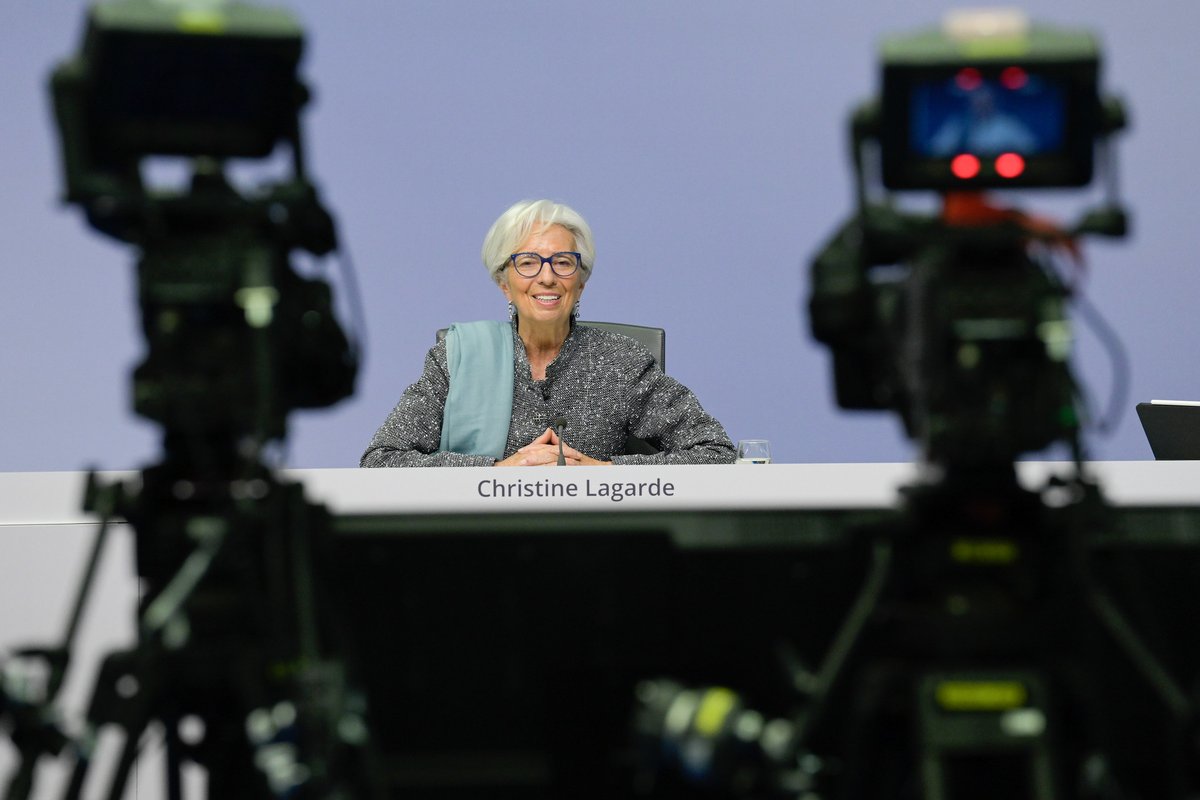
Thus words speak louder than numbers in central bank communication about the #inflation outlook. The @ECB and other central banks can bring down #inflation expectations not only by raising rates, but also by using targeted and tailored communication about their own forecast. 3/3
In 2022, #inflation in the #Euro area has climbed to record highs. As a result, many households have raised their #inflation expectations, thus increasing the risk of inflationary pressures becoming entrenched. How can the @ecb address this? See my new @voxeu column below. 1/3
In the column, we document that survey participants who are shown @ecb communication on the inflation outlook significantly reduce their #inflation expectations. Moreover, explaining the outlook verbally has a substantially larger effect than providing numerical projections.2/3
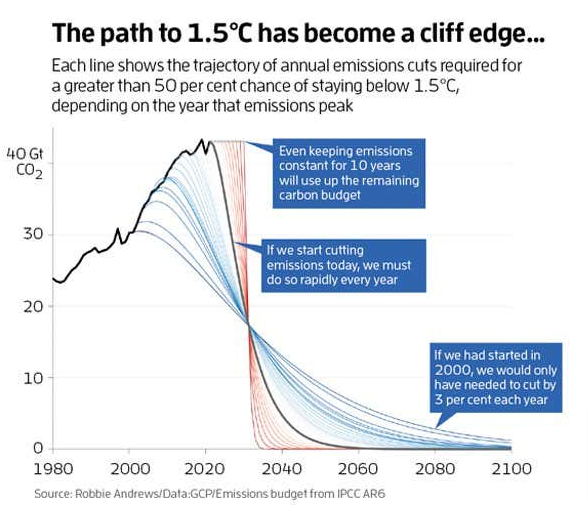
A disorderly transition to net-zero (if one happens at all) literally seems to be baked in the cake. It is mind-blowing how little capable we as a species are of processing relevant information and acting on it. Anyone out there with a more serene view, please share some hope!
The 1.5°C climate goal may technicallly still be possible, but realistically it looks improbable. That doesn't mean people should give up. As @KHayhoe says: “Every bit of warming matters. Every year matters, every choice matters, every action matters.” https://t.co/S0YrsGqVg2
Looking forward to this virtual panel discussion on "Inflation and Climate Change" with Lisa Tanaka from @bankofengland and Kartik Athreya from @RichmondFed, moderated by @Pierre_Monnin from @CEPweb tonight. There is still time to register 👇
The reason is that the #FederalReserve has historically slashed rates aggressively in response to high stock market volatility and bad news about the business cycle. Bottom line: if you want to understand what moves Treasury yields, look beyond the yield curve today. /end of 🧵
Glad to see my paper "What Moves Treasury Yields?" with @soofi_soroosh now out in @J_Fin_Economics. A short 🧵on what we learned. 1/ https://t.co/vRspyQiKWC
They also move term premiums and expected future short rates in opposite directions, with the term premium response being transient and the expected short rate response quite persistent. 5/
Bottom line: term premiums did not rise much around previous monetary tightenings. This was also true in 1994 which chair Powell mentioned as an example of a soft landing yesterday. While expected short rates increased sharply, term premiums were little changed back then. 2/
With a #Fed tightening cycle under way and Treasury yields rising, I thought it was time to dust off this @LibertyStEcon blog I co-authored with Tobias Adrian and Richard Crump while working at the @NewYorkFed almost ten years ago: https://t.co/aMlef6aYUh 1/
In sum, our analysis shows that households understand alternative monetary strategies such as average inflation targeting and adjust their inflation expectations accordingly, but central bank credibility is key for this adjustment to happen. 7/7
Glad to see this paper with my former @Bundesbank colleagues Lora Pavlova, Guido Schultefrankenfeld and Mathias Hoffmann now out in the JME. https://t.co/syJWb2LNOO A short 🧵on what we learned 1/7
Finally, we document economic significance by calibrating two model economies to match the observed difference in medium-term inflation expectations and show that under AIT #inflation is substantially less volatile and the frequency of hitting the zero lower bound is reduced. 6/7