@tonysoprano2471@dencarr_ il migliore sulla base di cosa? 😬 ormai i gestori si possono differenziare solo dal servizio clienti e il prezzo, e TIM ha un pessimo servizio clienti e non i miglior prezzi
OKX unisce la liquidità di EUR ed EURC in un unico order book, per minimizzare lo slippage.
EUR sarà convertibile 1:1 in EURC senza fees in qualsiasi momento
@evers9720@LeofaccoTweet Revolut sta iniziando a fare controlli più severi e anche loro stanno iniziando a bloccare le transazioni più grandi,
ho perso il conto di quante richieste di giustificazioni ho ricevuto nel ultimo mese per un bonifico. Sto per chiudere il conto dalla disperazione.
Con l'energia prodotta dal mio fotovoltaico ricarico circa 80km di autonomia all'ora nella mia auto elettrica.
L'equivalente di circa 4-5 litri di benzina.
Se esistesse un marchingegno capace di creare dal nulla 5 litri di benzina all'ora la gente farebbe a pugni per averlo.
🚨BIG WARNING: AI COULD PUSH GLOBAL ECONOMY INTO A RECESSION THIS DECADE.
And this will not happen by AI bubble burst, but rather by AI becoming bigger and better.
This is a scenario laid out by Citrini in their report, and here's why you should pay attention:
Right now, AI is improving much faster than expected.
But what if AI keeps improving and that success creates economic damage?
Here’s the idea in simple terms.
Step 1: AI improves fast.
Companies use it to cut jobs.
At first, markets like this.
Costs go down. Profits go up. Stocks rally.
But companies don’t stop there. They take the money saved from layoffs and spend even more on AI tools and compute.
Each company is acting logically. But the combined effect starts hurting the wider economy.
This could create something called as "Ghost GDP," which means output still shows up in GDP numbers. Productivity looks strong. But wages weaken.
Machines produce more, and humans earn less.
And machines don’t spend money.
The U.S. economy depends heavily on consumer spending. If high-income workers lose jobs or take big pay cuts, spending falls.
Even a small drop in high earners can cause a large drop in discretionary spending, because top earners drive a big share of total consumption.
And then the damage will spread.
Software companies are hit first.
AI coding tools improve so much that companies start asking why they are paying large annual fees for SaaS products when they can build similar tools internally with AI help.
Even if they don’t fully replace vendors, they demand big discounts.
That hurts pricing power.
At the same time, when companies cut staff, they cancel software seats. So SaaS firms lose revenue because their own customers reduced headcount.
To survive, those SaaS firms cut more jobs and invest more in AI. The loop continues.
Then it moves beyond software.
AI agents begin handling everyday decisions: shopping, renewals, price comparisons, booking travel, and managing subscriptions.
These agents do not get tired. They always look for the cheapest option.
That weakens business models built on human habits and friction.
Payment systems are also affected.
If AI agents are making transactions, they will choose the cheapest settlement method.
This could push more activity toward stablecoins and low-cost blockchain rails because card fees become an unnecessary cost in machine to machine commerce.
So stablecoins stop being just a crypto trend and become part of transaction infrastructure.
Meanwhile, the labor issue becomes more serious.
With income falling, housing will be affected.
Mortgages depend on stable incomes, and if incomes are structurally weaker, lenders reprice risk.
Then credit markets feel pressure.
Private credit and leveraged deals that assumed steady growth may face defaults if AI disruption weakens revenue.
Now the problem is not just layoffs.
It becomes:
• weaker spending
• stress in housing
• pressure in credit markets
• falling tax receipts
• rising government support costs
And this probably won't be solved by rate cuts.
Lower rates can support markets. But they do not change the fact that AI can replace many tasks at a much lower cost than human labor.
This will cause unemployment to rise sharply and markets will experience a deep drawdown which will probably cause the biggest financial crisis since 2008.
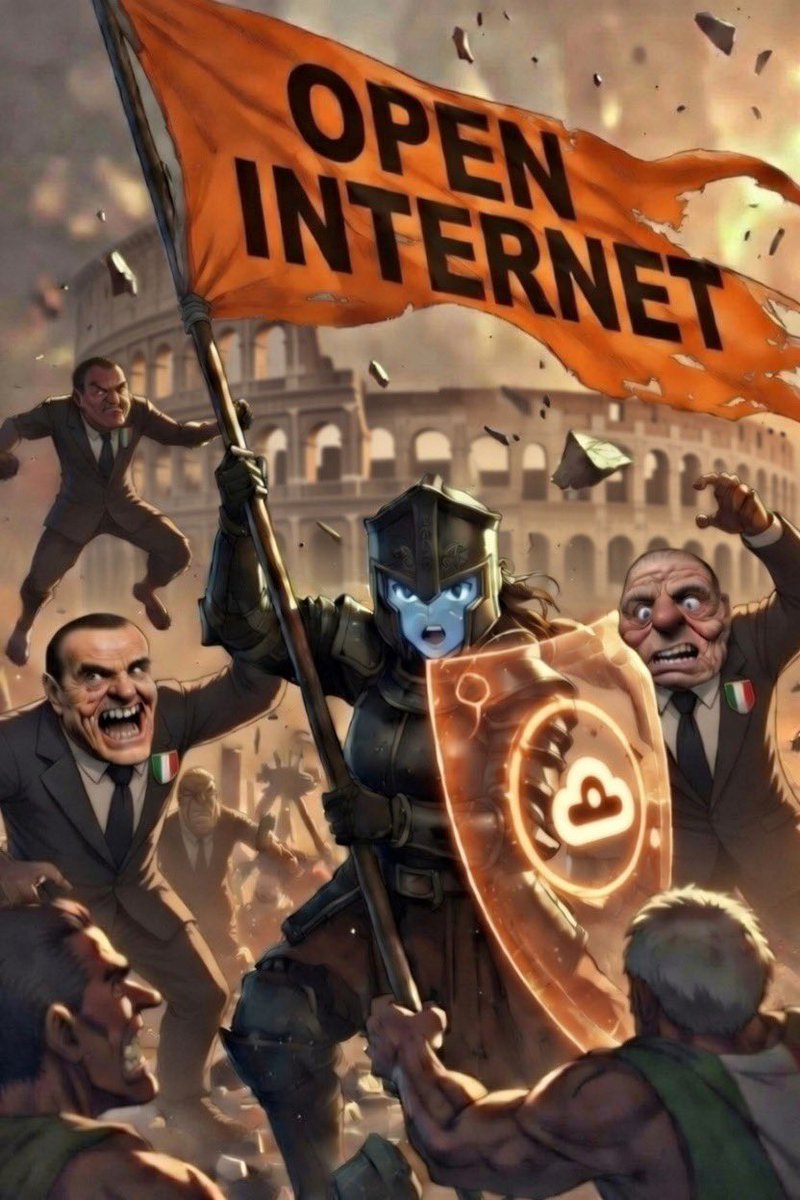
Yesterday a quasi-judicial body in Italy fined @Cloudflare $17 million for failing to go along with their scheme to censor the Internet. The scheme, which even the EU has called concerning, required us within a mere 30 minutes of notification to fully censor from the Internet any sites a shadowy cabal of European media elites deemed against their interests. No judicial oversight. No due process. No appeal. No transparency. It required us to not just remove customers, but also censor our 1.1.1.1 DNS resolver meaning it risked blacking out any site on the Internet. And it required us not just to censor the content in Italy but globally. In other words, Italy insists a shadowy, European media cabal should be able to dictate what is and is not allowed online.
That, of course, is DISGUSTING and even before yesterday’s fine we had multiple legal challenges pending against the underlying scheme. We, of course, will now fight the unjust fine. Not just because it’s wrong for us but because it is wrong for democratic values.
In addition, we are considering the following actions: 1) discontinuing the millions of dollars in pro bono cyber security services we are providing the upcoming Milano-Cortina Olympics; 2) discontinuing Cloudflare’s Free cyber security services for any Italy-based users; 3) removing all servers from Italian cities; and 4) terminating all plans to build an Italian Cloudflare office or make any investments in the country.
Play stupid games, win stupid prizes. While there are things I would handle differently than the current U.S. administration, I appreciate @JDVance taking a leadership role in recognizing this type of regulation is a fundamental unfair trade issue that also threatens democratic values. And in this case @ElonMusk is right: #FreeSpeech is critical and under attack from an out-of-touch cabal of very disturbed European policy makers.
I will be in DC first thing next week to discuss this with U.S. administration officials and I’ll be meeting with the IOC in Lausanne shortly after to outline the risk to the Olympic Games if @Cloudflare withdraws our cyber security protection.
In the meantime, we remain happy to discuss this with Italian government officials who, so far, have been unwilling to engage beyond issuing fines. We believe Italy, like all countries, has a right to regulate the content on networks inside its borders. But they must do so following the Rule of Law and principles of Due Process. And Italy certainly has no right to regulate what is and is not allowed on the Internet in the United States, the United Kingdom, Canada, China, Brazil, India or anywhere outside its borders.
THIS IS AN IMPORTANT FIGHT AND WE WILL WIN!!!