Put simply, people like new narratives, and peptides is the hottest narrative in the world right now thanks to glucagon-like peptide-1 receptor agonists [GLP-1s]. GLP1s have effectively de-risked the entire category, and JFK Jr loosening the regs this summer will go some way to further de-risk. Alongside this, AI is rapidly increasing peptide development. One project using agents right now for peptide discovery + actual connections to wetlabs [step prior to clinical trials] is $FOLD, a recent BIO Hackathon winner.
What most people miss is that peptides already have demand, it just isn’t structured. Biohackers, clinics and longevity communities are actively experimenting in real time, but outcomes are fragmented, anecdotal and mostly lost. There’s no system capturing what works, feeding it back into discovery and improving over time. Demand for this exists but data is limited. This is the gap that @clarity_proto fill.
Traditional biotech doesn’t really solve this either. It’s slow, capital intensive and optimised for billion dollar drugs, whereas peptides often sit in an awkward middle ground, too early, too niche or not patentable enough to attract serious funding. As a result, a lot of potential discovery simply never compounds because no one is capturing the learnings in a continuous loop.
Clarity is going after that gap, starting with neurologics. Focusing on neurodegenerative diseases like dementia gives them a high signal entry point, where protein misfolding and peptide interaction are well understood and measurable. Neurologics is just the starting point, this same system will soon be applied to all and any peptides from longevity, performance, metabolic health and beyond. Clarity will be the infra for a much broader peptide discovery system.
The model is simple:
1. AI discovers peptides
2. Best candidates get surfaced -> wetlabs/trials
3. Products get distributed for real-world use
4. Usage generates data
5. Data feeds back into the model
Basically, how you go from "biohacking products" to a compounding discovery engine through the fusion of GPUs x AI agents x protein folding x wetlabs.
kinda wild there’s a robotics project at ~2m mc rn (up 30% today)
esp when Fabric is ~180m and robotics/physical AI is gonna be massive
no dilution, legit team, Oxford Uni already working w/ them, US uni next, prototype robot coming. ticks all boxes
real-world revenue tied in too → buy pressure on mainnet
looks like KOLs are mostly out as well which is why it’s still cheap relative to the TGE pump
lowkey has that “bittensor but for physical AI” feel
will be one of the biggest runners of 2026 imo
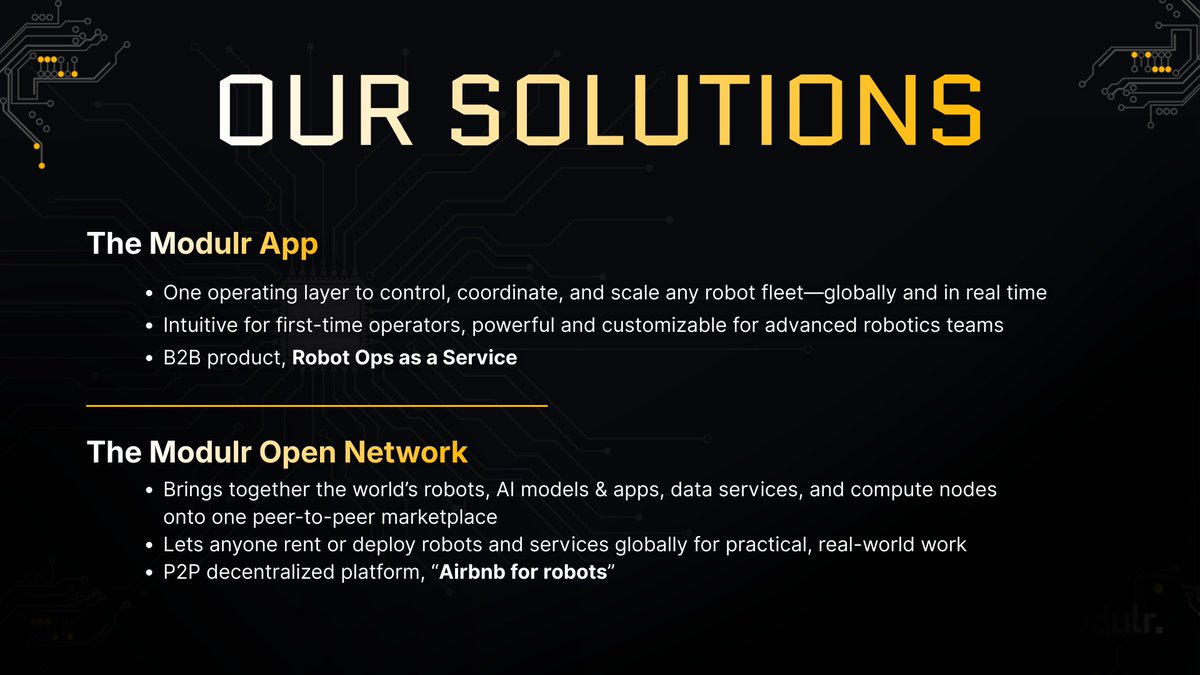
For those who don't know us or for those who forgot, we've got 2 revolutionary products we're building:
The Modulr App + Modulr Open Network
-Short term + long term strategy
-B2B + P2P
-Robots + AI + data + compute
🫦
Here are the asset classes with the highest potential for Australian economic gain according to the DFCRC. No surprise @RedbellyNetwork already works with funds, private equity issuers and commodity issuers.
Following a successful tokenisation partnership with @RedbellyNetwork, the DFCRC has just released today its report that announces the $24B Digital Finance Opportunity for Australia.
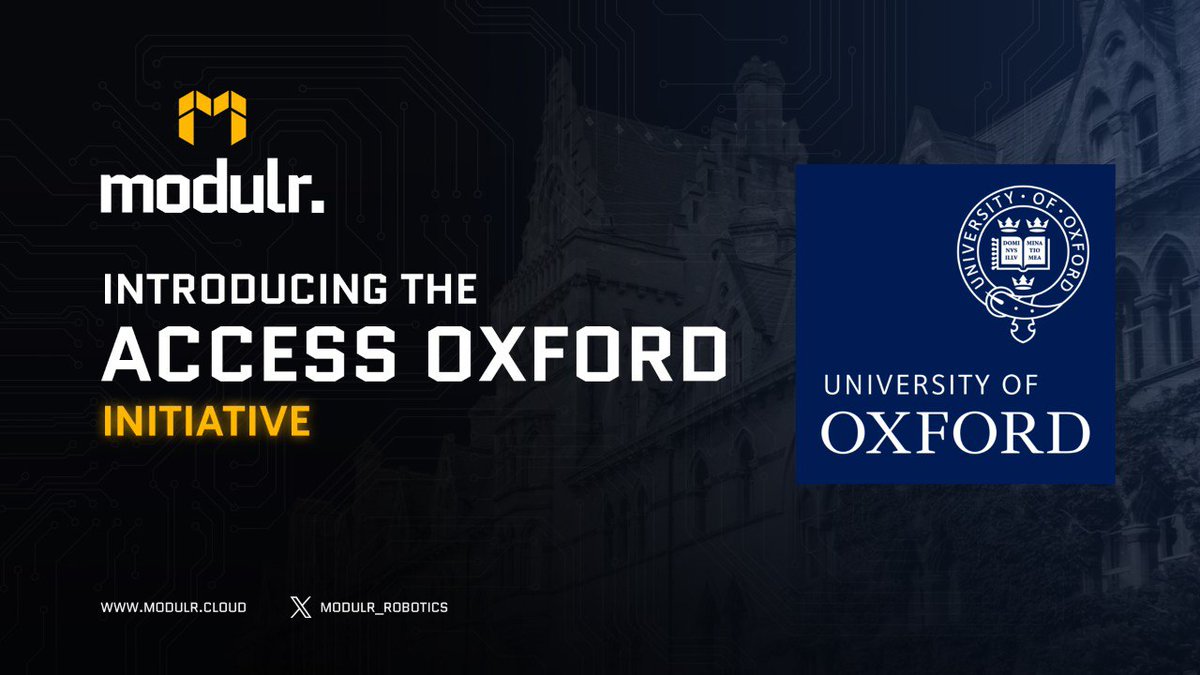
Major Announcement: Modulr is partnering with the University of Oxford! 🤖🤝🧑🎓
After months of coordination & planning, we are thrilled to finally announce the Access Oxford Initiative in collaboration with @UniofOxford.
This initiative will allow prospective students who can't be physically present on Oxford's campus to use Modulr's interface to remotely control a humanoid robot and tour the campus as if they were there in person.
With just a computer and an internet connection, these students will be able to see what other students see, ask questions about one of the most prestigious universities in the world, and have full control of where the robot goes.
Not only is this a giant leap forward in improving accessibility for students, it also highlights one of many important use cases for remote robot work.
We are beyond excited to work with the University of Oxford and help give these students an opportunity previously thought impossible.
Coming summer 2026.
INTERNATIONAL REMOTE TELEOP ACHIEVED ✅
Breakthrough: after months of overcoming new challenges daily, we've finally created a way to operate any robot, from anywhere.
In this video you can see @macklorden - in Miami - operating a @UnitreeRobotics Go2 robot dog in the UK...from a laptop.
And this is just the first step. Every part of the UX will be improved.
🟨Imagine when major industrial companies use Modulr to remote operate and scale their fleet.
⬛️Imagine when robots no longer have to sit idle, and can instead earn income (like vacation homes do on Airbnb).
🟨Imagine when local robots are used for things like disaster relief or event photography or gaming.
All of it is possible through Modulr - the first platform for anyone to operate any robot, anywhere.
So a few months ago, I watched a warehouse robot worth more than my entire bloodline just… sit there.
Powered on. Calibrated. Idle.
Not because it was broken... but because only one company, one location, one permissioned system was allowed to touch it.
That moment messed with my head.
Because if machines are supposed to be the future of work…
Why are they unemployed?
That’s how I stumbled into @Modulr_Robotics and why their upcoming testnet feels like something people will regret ignoring.
A thread 🧵
Open-source multimodal AI in 2025 just made the enterprise moat irrelevant. The data is undeniable.
Flux.1 [dev] runs 1-2 it/s locally. TripoSR outputs 3D meshes in 0.5s. Qwen2.5-VL-72B matches GPT-4V benchmarks on document reasoning. All on consumer RTX 4090s. No API calls. No per-token fees.
Black Forest Labs, Alibaba, Stability AI ship SOTA weekly. ComfyUI chains text-to-image-to-3D pipelines at zero marginal cost. FP8 quantization drops Flux to 12GB VRAM. The gap between enterprise H100 clusters and prosumer rigs collapses with each optimization cycle.
Strategic calculus shifts. Centralized providers built pricing power on capability asymmetry. That leverage erodes when open weights match performance. Margin compression follows capability parity.
The arbitrage is clear. Rent a 4090 at $0.40/hr versus paying premium API rates for equivalent output. Latency, privacy, customization all favor distributed inference.
Consumer-grade GPU access is the hedge against centralized AI capture. The infrastructure layer that democratizes compute wins the next cycle. $loopin
Reminder: Modulr testnet launches in 4 days on Dec. 30th!
📢For those looking to participate:
We're going to be doing testnet a little different than most projects. We don't want people wasting their time, sending useless transactions, bridging endlessly back and forth, etc.
We don't care about vanity metrics like how many "users" we have on the network. We care about speed and UX.
We want to actually stress test the network, which means we'll be having specific events (calling them Modulr Missions) where we all try to break the network - probably on a weekly basis.
^^btw, if you succeed in breaking the network, we'll give out bonus rewards 🤑.
So for now, just enjoy the holidays and know that the next phase of Modulr's growth is close at hand. We'll keep you posted on the first Mission (likely the first week of the new year).🚀
🚨 ESTATEX UPDATE 🚨
Big ecosystem expansions ahead. RWA Pad, AIESX, new property launches, and major progress on the EstateX L1 RWA Blockchain. L1 Mainnet Beta opens end of January, boosting TVL with $ESX as gas. Global investor access expanding next month. 🚀
🚨 HUGE: Repsol has joined the Hedera $HBAR Council.
Repsol is a Fortune Global 500 energy company serving 24M+ customers in 90+ countries
The company generates ~$85B in annual revenue with a ~$22B market cap.
What they’re building on Hedera:
•Standardization: Unified digital identity for employees, partners, and suppliers
•Automation: Wallet-to-wallet credentials to streamline KYC/KYB
•Integrity: Tamper-resistant credentials to reduce fraud and manual reconciliation
Great articulation of a sovereign agent stack.
We saw this presented in person by @dabit3 at Trustless Agent Day during Devconnect, and it clearly resonated.
Unruggable agents don’t come from platforms, they come from open standards, verifiable execution, and decentralized coordination.
Identity, reputation, payments, compute, memory, and discovery all matter.
This is exactly the problem space Praxis is building in.
Finally, #Tokeniser is now part of @RedbellyNetwork, following its recent acquisition to diversify revenues. Instead of paying traditional bank accounts, @IQEQ_Group will use #Tokeniser to pay @RedbellyNetwork accounts, reaching unprecedented efficiency levels.
Tokeniser: https://t.co/wh106zuxU2
https://t.co/aO3wQ3Yyac just revealed https://t.co/ztOfohpUxD's new social log-in feature, which allows anyone, on any device, to sign in to Casper apps using their @Google or @Apple account, and have a full, self-custodial experience without ever downloading a wallet!
📢 Welcome @GBBC_io as a Hedera Council Strategic Partner!
GBBC is the largest, leading nonprofit industry association for the blockchain, digital assets, and emerging technology community. As a Strategic Partner, they strengthen the Council’s ability to engage governments, enterprises, and industry bodies worldwide.
Read more: https://t.co/UZz8wK9q1I
GBBC: https://t.co/AWFCdNTRzw





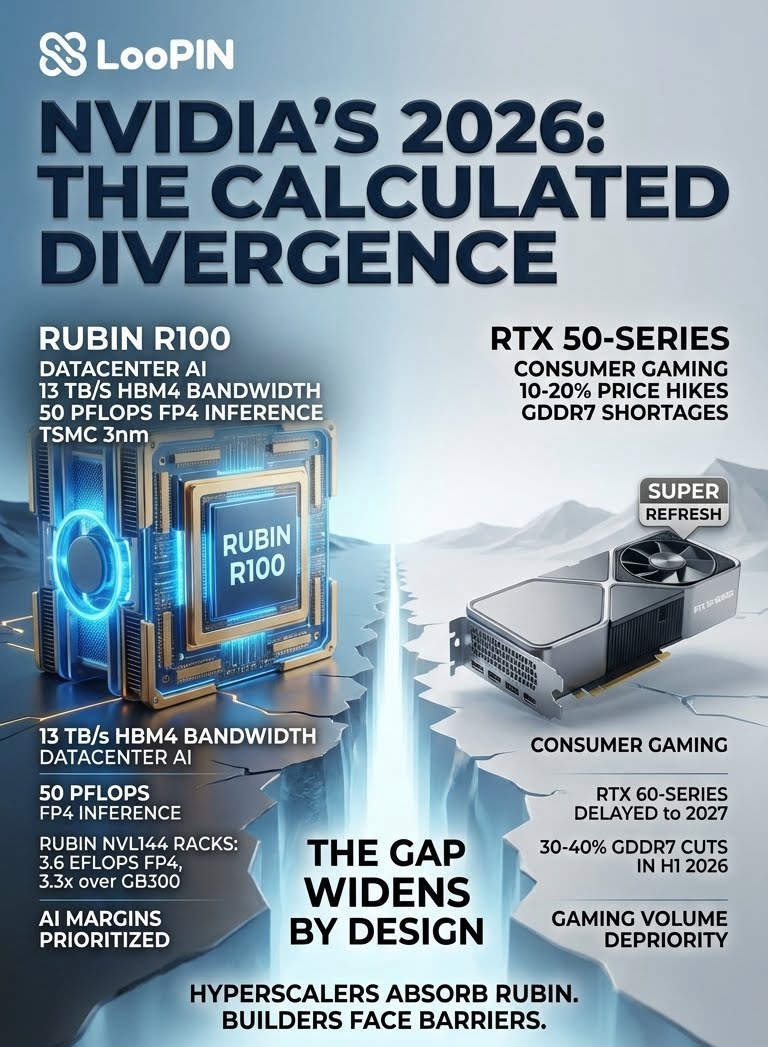

![loopin_network's tweet photo. Open-source multimodal AI in 2025 just made the enterprise moat irrelevant. The data is undeniable.
Flux.1 [dev] runs 1-2 it/s locally. TripoSR outputs 3D meshes in 0.5s. Qwen2.5-VL-72B matches GPT-4V benchmarks on document reasoning. All on consumer RTX 4090s. No API calls. No per-token fees.
Black Forest Labs, Alibaba, Stability AI ship SOTA weekly. ComfyUI chains text-to-image-to-3D pipelines at zero marginal cost. FP8 quantization drops Flux to 12GB VRAM. The gap between enterprise H100 clusters and prosumer rigs collapses with each optimization cycle.
Strategic calculus shifts. Centralized providers built pricing power on capability asymmetry. That leverage erodes when open weights match performance. Margin compression follows capability parity.
The arbitrage is clear. Rent a 4090 at $0.40/hr versus paying premium API rates for equivalent output. Latency, privacy, customization all favor distributed inference.
Consumer-grade GPU access is the hedge against centralized AI capture. The infrastructure layer that democratizes compute wins the next cycle. $loopin](https://pbs.twimg.com/media/G9TqxsFWUAEUNSN.jpg)