Witold Pilecki is regarded as the only known person to have volunteered to enter Auschwitz. His mission was to discover what was happening inside the camp, inform the outside world and establish a resistance network.
Yesterday marked the 86th anniversary of Witold Pilecki’s arrest.
“His decision to allow himself to be arrested was one of the bravest acts of the war,” says Jack Fairweather, author of the acclaimed Pilecki biography The Volunteer and interim President and CEO of the Pilecki Institute (USA).
How did his arrest come about?
In the summer of 1940, the leadership of the Polish underground knew very little about the camp the Germans had established at Auschwitz. The town lay in the part of occupied Poland that the German Reich had annexed directly following the invasion of September 1939. At that time, Auschwitz was used primarily to crush Polish resistance and terrorise members of the Polish elite.
The underground was looking for an officer who could enter the camp, gather information and establish clandestine structures there. Witold Pilecki was chosen for the mission. But an undertaking of such danger could not simply be imposed upon him as an order. The final decision was his.
On 19 September 1940, Pilecki was staying at the home of his sister-in-law, Eleonora Ostrowska, in Warsaw’s Żoliborz district. German units had sealed off the neighbourhood and begun a large-scale roundup. The building’s caretaker twice offered to hide Pilecki,
but he declined. Pilecki had prepared himself for his arrest, both mentally and physically. He had even packed a toothbrush.
When, shortly afterwards, there was a violent knock at the door, Pilecki said goodbye to Ostrowska’s son and went to face the German uniformed officers. Before being led away, he whispered to his sister-in-law: “Report where necessary that I have carried out the order.”
That same day, Pilecki and the other detainees were taken to a barracks in Warsaw. Two days later, the prisoners were marched to the railway station and locked inside freight wagons. Pilecki was carrying false papers in the name of Tomasz Serafiński.
There was no guarantee that he would actually be sent to Auschwitz. He could not know where the Germans would take him, and anyone arrested during such a roundup faced an immediate threat to their life. His mission therefore began with a decision whose consequences he could not control.
At Auschwitz, Pilecki was assigned prisoner number 4859. Despite the omnipresent terror, he established a secret resistance network that eventually included hundreds of prisoners. The organisation gathered information about conditions in the camp and passed it to the outside world. At the same time, it created a system of mutual assistance: it obtained food and medicine, supported weakened prisoners and those in particular danger, and attempted to have them assigned to less arduous work details.
From the beginning of his imprisonment, Pilecki collected information about German crimes and living conditions at Auschwitz. His first message reached the Polish underground in Warsaw as early as October 1940. Further reports followed regularly. Among other methods, Pilecki had them smuggled out of the camp by released prisoners. Through the structures of the Polish Underground State, the information reached the Polish government-in-exile in London and subsequently the Allies. Later reports also documented Auschwitz’s development into a centre for the extermination of Europe’s Jews.
After two years and seven months, Pilecki decided to escape. On the night of 26–27 April 1943, he fled Auschwitz together with Edward Ciesielski and Jan Redzej. Once free, he wrote extensive reports describing his experiences and the crimes committed in the camp.
What unfolded in Iran during the Second World War is one of the least remembered humanitarian chapters of the conflict, often referred to simply as the Polish experience in Iran.
Between 1942 and 1944, over 100,000 Polish civilians and soldiers arrived in Iran after surviving Soviet deportations, forced labor camps, starvation, and mass death. They came from Siberia, Kazakhstan, and the Arctic north, many barefoot, skeletal, carrying children who had already seen more graves than classrooms. For most, Iran was the first place where death loosened its grip.
Iran itself was under enormous strain. Occupied by Allied forces and facing food shortages and political pressure, it nevertheless opened its ports, cities, and villages to the Poles. Under the Shah’s government, refugees were not treated as enemies, burdens, or pawns, but as human beings who had endured catastrophe.
Polish civilians were housed in camps at Bandar Anzali, Tehran, Ahvaz, and Isfahan. Isfahan, in particular, became known as the city of Polish children. Thousands of orphaned Polish boys and girls were fed, clothed, educated, and medically treated. Iranian doctors, nurses, shopkeepers, and families routinely provided help beyond what was required, often sharing scarce food with strangers who spoke another language but carried unmistakable suffering in their faces.
This was not charity as spectacle. There was no propaganda campaign, no demand for gratitude, and no effort to reshape Polish identity. The refugees were allowed to retain their culture, religion, language, and dignity. Polish schools, churches, newspapers, and theaters operated openly. Graves of Polish dead were respected and maintained. To many Poles, Iran felt less like exile and more like a temporary moral homeland, a place where they were seen again as people, not numbers.
The contrast with what had preceded Iran could not have been starker. These Poles had survived systematic Soviet dehumanization, not rescue. Iran represented a pause in history where cruelty was not the default response. That pause mattered. Thousands who would have otherwise died recovered enough to continue on to India, Africa, the Middle East, or to join Polish military units fighting alongside the Allies.
Importantly, Iran asked for nothing in return.
There were no demands of political loyalty, no attempts to weaponize memory, and no retroactive moral claims. What Iran offered was hospitality under conditions where hospitality was costly, a rare moral act in a war defined by indifference.
Today, this episode unsettles simplified narratives. It reminds us that the Second World War was not only a story of perpetrators and victims but also of choices made under pressure. Iran’s choice to receive, shelter, and respect a broken people stands as a quiet rebuke to the idea that cruelty is inevitable in times of crisis.
For Poles, the memory endures not as myth but as gratitude. For Iranians, it remains an understated chapter of national decency. For history, it is proof that even amid total war, humanity was still possible and sometimes practiced without applause.
OTD 1943
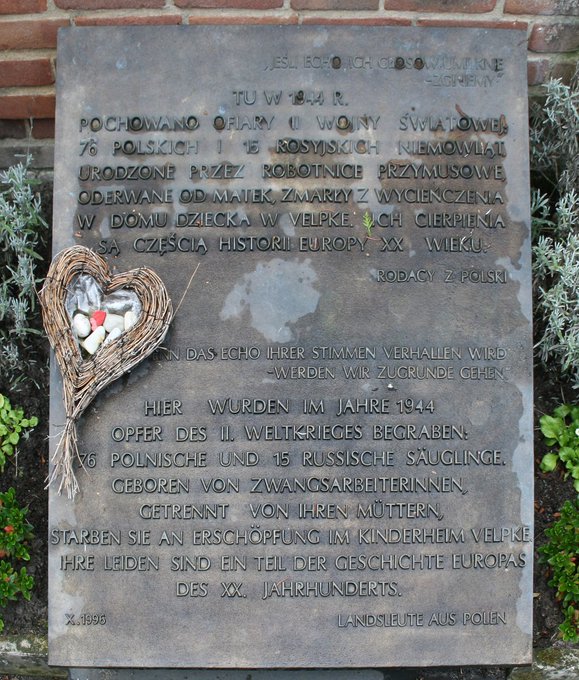
Niemieckie MSW utworzyło sieć 300 umieralni ("żłobków") dla urodzonych w Niemczech dzieci niewolnic z terenów okupowanych. Największą grupą pośród nich były Polki. W jednym z nich, Kinderheim Velpke, na 102 powierzonych dzieci zmarło 94. W tym aż 76 🇵🇱...
Dzieci odbierano matkom niemal natychmiast po urodzeniu. Chodziło o to aby jak najszybciej skierować kobiety z powrotem do przymusowej pracy. W ośrodkach do których dzieci trafiały pozostawiano je prawie bez żadnej opieki.
Przetrzymywane w niehigienicznych warunkach, bez dostępu do świeżej wody czy opieki lekarskiej, umierały masowo w brudzie z powodu chorób i niedożywienia. Zgodnie z planem. Decyzją rządu w Berlinie upośledzone rasowo polskie noworodki nie miały prawa przeżyć...
Ponad 10 tysięcy polskich szkół otrzyma zestawy do nauki lutowania i klucze telegraficzne w kształcie satelity. To część misji #IGNIS, która ma inspirować młodych do zabawy elektroniką i pierwszych kroków w inżynierii.
Sam zaczynałem od układów scalonych, by potem budować sprzęt kosmiczny 🛰️ Zobacz, jak prostym kluczem możesz nadawać kod Morse’a i rozpocząć swoją przygodę z technologią.
#Ax4 #astro_slawosz
@Axiom_Space@SpaceX@esa@MRiTGOVPL@POLSA_GOV_PL@Space_Station@MEN_GOVPL
@VolatilityVIX You should really look into what what was said about soviet union overtaking the "west". This planing for century ahead might end up just like Mao's experiment.