girls start coming back to analog hobbies when they start healing. baking, reading, dancing, singing, gardening, scrapbooking, crocheting and so much more. girls want to consume less social media and be present with physical hobbies when their nervous systems are no longer frozen
TODAY IS LAUNCH DAY!
The recompilation project
Twilight Princess Dusk is available for download on ALL PLATFORMS.
Windows, Linux, Android, iOS and more!
Modding, High res textures support, unlocked framerates, new control schemes etc! Enjoy!
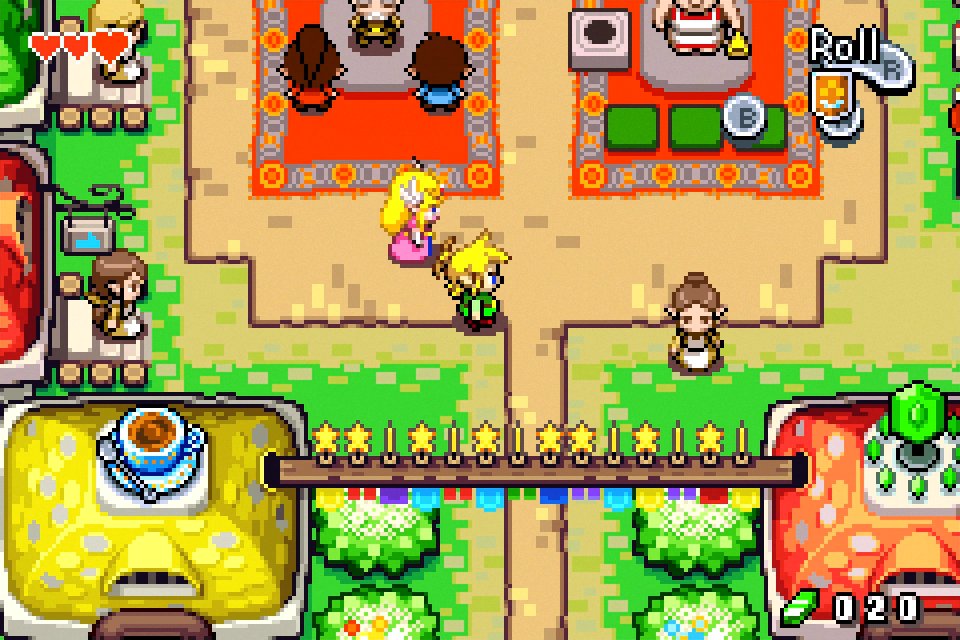
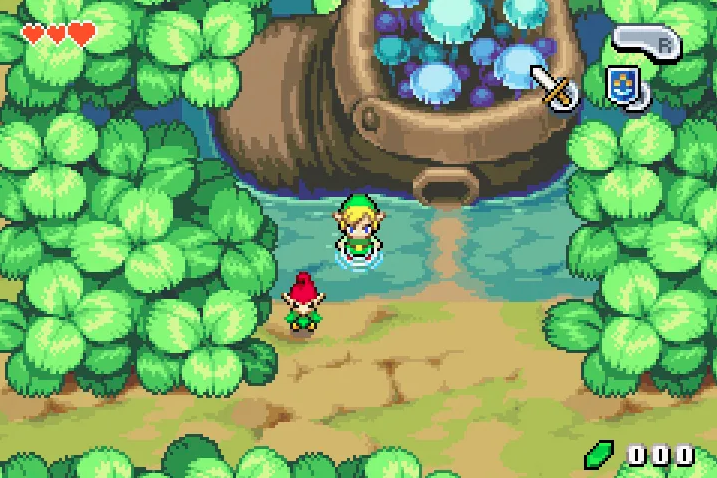
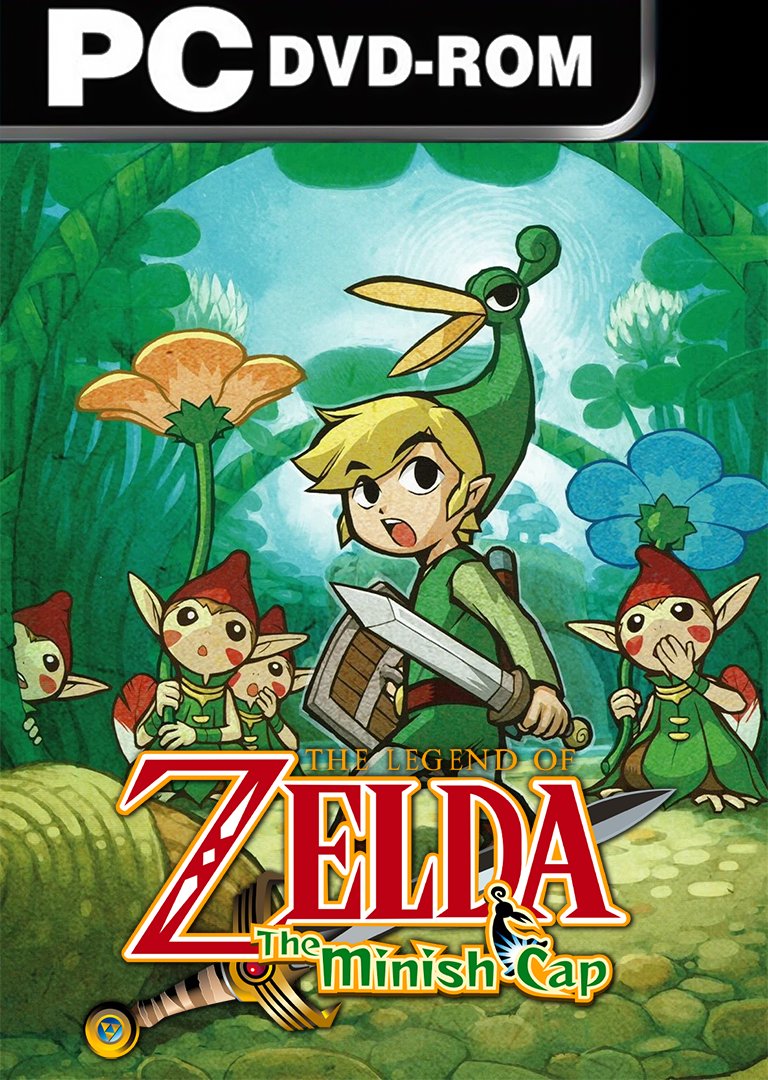
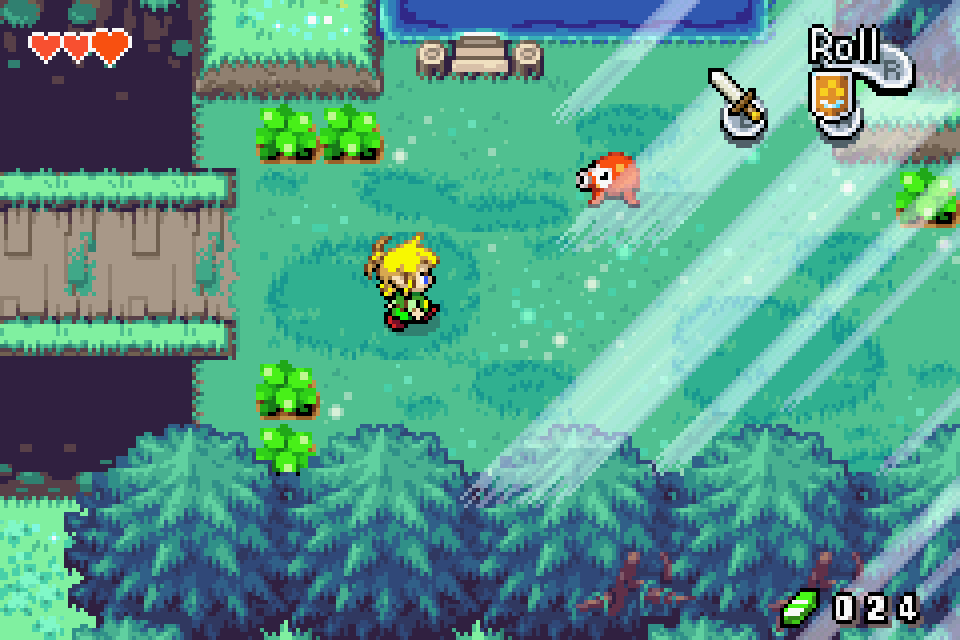
The Legend of Zelda: The Minish Cap (2004)
It's been recompiled and ported to PC!
With all the modern bells and whistles you'd expect! Gameplay improvements, improved framerate beyond the original 30FPS hard limit, controls and an expanded inventory system which was limited in the original GBA!
You can play it on PC and handhelds like the Steam Deck!
This is amazing, and Twilight Princess is just around the corner! ENJOY!
Your brain has a circuit that doesn't know you live in a city. Its only job is to monitor whether birds are still singing. Right now, in this room, it is on.
The circuit predates primates. Mammals have been using ambient soundscape continuity as a predator-detection system for roughly 200 million years. Birds stop singing when something larger moves through their territory. For most of mammalian history, a forest full of song meant no large predator was nearby, and the cessation of sound was the warning. Your nervous system never updated this software.
The Max Planck Institute tested the inverse in 2022 with 295 participants. Six minutes of birdsong dropped anxiety with a medium effect size. Six minutes of traffic noise raised depression with the same. The effect worked on subjects who lived in dense urban environments and had no regular contact with nature. The brain still ran the check.
Birdsong sits in the 1,000 to 8,000 Hz range. Your brainstem reads continuous patterns in that band as a signal that nothing dangerous is currently moving through the environment. EEG data shows birdsong at 45 to 50 decibels boosts alpha wave activity by 14.1% relative to silence. Alpha is the brainwave signature of relaxed alertness. Push the same birdsong above 60 decibels and the response flips. Stress markers rise 29%. The circuit only trusts the signal at the volume of quiet conversation, which is exactly the volume birds sing at from a typical distance.
Three things happen simultaneously when the brain registers ambient safety. The amygdala downregulates. The parasympathetic nervous system takes over from the sympathetic. Heart rate variability rises, cortisol drops. The posterior cingulate cortex, which sits at the center of the rumination circuit, quiets down. King's College London tracked this through a smartphone study with over 1,200 participants and found the mood lift lasted hours after the sound stopped. People diagnosed with depression got the same response as healthy controls.
Most of what gets labeled mental fatigue is hypervigilance running in the background. Birdsong tells the circuit it can stand down, and the brain reallocates the freed compute everywhere else.
A quiet park feels different from a quiet office because the parks have sentinels.
For a relationship to truly work in real life, you have to accept that you and your partner are two different individuals..shaped by different backgrounds, experiences, and ways of seeing the world…coming together to build one future. That alone requires patience, grace, and deep understanding.
You won’t always think alike, feel the same, or see things from the same perspective—and that’s normal. Differences don’t mean something is wrong; if handled well, they become an opportunity for growth.
In reality, you’ll notice a pattern: you meet someone you’re attracted to, but they lack sense. You find someone who has sense, but they can’t communicate. You meet a good communicator, but they struggle with trust. You find someone who trusts you, but they’re nonchalant. Then the one who isn’t nonchalant may not even have a clear future. It starts to feel like something is always missing.
That’s where understanding the 80/20 rule comes in. If your partner is 80% right for you, chasing the missing 20% in someone else will only lead you in circles. Even if it’s 70/30 or 60/40, the principle still stands…there’s no perfect person anywhere. What matters is that the good clearly outweighs the bad.
At the end of the day, it’s not always about who is right or wrong, but how you handle the moments when things don’t align. Do you listen or just react? Do you seek to understand, or are you only trying to be heard? Do you choose communication over ego?
Healthy love isn’t about perfection or agreeing on everything…it’s about respecting each other enough to work through your differences, protect what you have, and keep choosing each other even when it’s not easy. That’s where real love shows up.
🚨 The greatest life hack is treating your future self like a stranger you want to help.
Your brain can't emotionally connect with Future You. Brain imaging studies show that when you think about yourself in 10 years, the same neural regions light up as when you think about celebrities or distant acquaintances. Future You feels like somebody else entirely.
That psychological distance is why you stay up scrolling when you know you'll regret it tomorrow. Why you eat junk food knowing you'll feel sluggish later. Why you procrastinate on important projects until they become emergencies.
Your brain literally perceives Future You as someone else's problem.
The hack makes that distance work for you instead of against you.
When you're tired at 10 PM and considering another hour of social media, ask yourself: what would help the person waking up in this body tomorrow morning? When you're deciding whether to prep meals on Sunday, think: what would make weeknight life easier for the version of yourself coming home exhausted from work?
The reframe changes everything. You stop making choices based on immediate comfort and start making them based on setting up the next version of yourself for success.
I've seen that people struggle to deny themselves things they want, but excel at doing helpful things for others. The same person who can't stick to a diet will meal prep for a friend going through chemotherapy. The same person who hits snooze five times will wake up early to drive someone to the airport.
We have unlimited generosity for others and limited discipline for ourselves. The hack exploits that asymmetry.
Take it further. When you're procrastinating on a project, don't force Current You to work on it. Set up Future You to make progress effortlessly. Clear the desk. Open the right documents. Write one sentence about where to start. Leave breadcrumbs that make forward momentum inevitable.
When choosing what to wear, don't pick based on what looks good in the mirror right now. Pick based on what will make Future You feel confident in the situations they'll encounter. When deciding how to spend your evening, don't choose what sounds relaxing. Choose what will make Future You proud when they reflect back on how they used their time.
The psychology backing this runs deep. People who score high on "future self continuity" measures make better financial decisions, exercise more consistently, and have lower rates of anxiety and depression. They don't see delayed gratification as sacrifice. They see it as collaboration.
The compound effect kicks in fast. Every choice you make with Future You in mind creates better starting conditions for the next set of choices. Wake up early and you have more energy for evening decisions. Eat well and you think more clearly about work priorities. Exercise and you sleep better, which makes everything else easier.
Within weeks, your life starts running itself. Tasks complete before deadlines. Problems get solved before they become crises. Opportunities appear because you're prepared when they show up.
The approach requires zero self discipline. Instead of fighting present impulses, you channel your natural instinct to help others toward the one person who benefits from your help: the version of yourself living with today's consequences.
Future You starts feeling like someone you actually know. You anticipate their needs. You root for their success. You develop genuine affection for this person you're setting up to win.
Then one day you realize: Future You became Present You. And they're grateful for everything you did to get them there.
The cycle continues. Today's choices become tomorrow's starting conditions. Tomorrow's version gets to pay it forward to the day after that.
Your entire life becomes a collaboration between all versions of yourself across time, each one setting up the next for greater success than they could achieve alone.
The hack scales infinitely because you're always on the same team as yourself.
Huge win for feminism. EU committees supported a new report saying clearly: “Sex without consent is rape”
This is an important move for protecting women’s rights.
@omgsidewalks@TomBoyOptional I like how so many people here think you said ALL mental health issues disappear. No. Not all. But yes. As the original poster said…a LOT of mental health issues disappear. Being poor is very stressful. It’s awful. And anyone arguing that has never been poor.
Howdy.
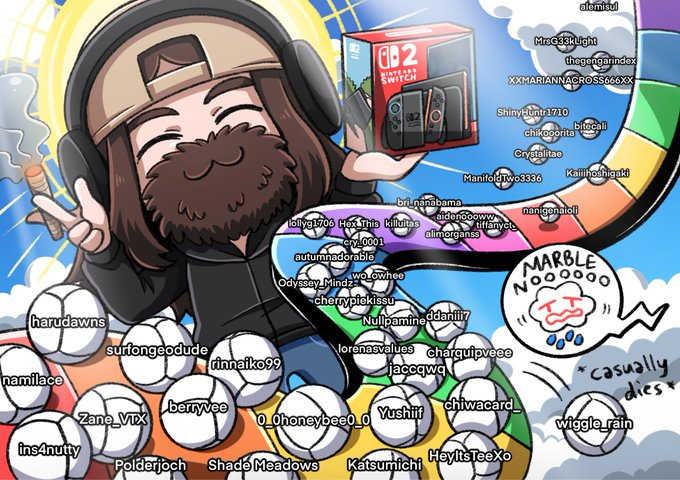
On this post I will be giving away 5 Switch 2s to the community in 1 day. I don't usually go this hard but this time I wanted to. To enter:
Like & Retweet that's all
30 Days of Switchmas continues tonight with day 20, I give a Switch away every day on Twitch. These are NO ATTENDANCE REQUIRED. All twitter giveaways require no attendance forever. 7pm EST good luck everybody!
P.S. If anyone knows people or companies that do good/kind things that might be interested in sponsoring some of what we do, send em my way.
The research behind this is wild. If you played Pokémon as a kid, you have a tiny region in your brain that exists only because of Pokémon. Not a metaphor. Stanford put people in brain scanners and found it.
The study was published in Nature Human Behavior in 2019. They scanned 11 adults who grew up glued to their Game Boys and 11 who never played. When they showed both groups images of the original 151, the players' brains lit up in one specific spot every time. Same spot across all 11 people. The non-players showed zero response.
That spot is a little fold in the back of your brain that normally processes things like animal shapes and cartoon faces. In the Pokémon players, a chunk of it had been permanently reassigned. Their brains carved out a Pokémon department sometime around age 6 or 7 and just never took it down.
And the reason it ended up in the same place in everyone's brain comes down to the Game Boy itself. The screen was 2.6 inches. Every kid held it at roughly the same distance. So those 151 characters hit the exact same patch of each kid's retina, thousands of times, during the years when the brain is still soft enough to reorganize itself. Where an image hits your retina in childhood is what tells your brain where to build the wiring.
Reading works the same way. Humans invented writing about 5,000 years ago. There's zero evolutionary reason for a brain region dedicated to recognizing words. But every person who learns to read grows one, roughly the size of a dime, in the same part of the brain.
Brain-imaging research from 2018 actually watched it appear in children's heads as they learned their letters. It grew by quietly taking over nearby tissue that wasn't doing much yet. Stanford published a follow-up this year showing this region is way smaller or missing entirely in kids with dyslexia, and that 8 weeks of intense reading practice physically grew it back.
London taxi drivers show the same thing in a completely different part of the brain. Brain scans from a 2000 study found the region that stores mental maps had physically expanded, and the longer they'd been driving, the bigger it got. These drivers spend 3 to 4 years memorizing 25,000 streets before they get licensed. About half wash out.
The common thread is childhood. Harvard researchers trained young monkeys to recognize new shapes and they developed brand-new brain regions in predictable locations. Adult monkeys trained on the same shapes never got those structural changes. The young brain wires itself in a way the adult brain cannot replicate.
If you're wondering whether a Pokémon patch in your brain means you lost something else, no. The region sits alongside your normal visual processing areas, not on top of them. Your brain has hundreds of millions of neurons in that zone alone. The lead author noted that every participant in the study had gone on to earn a PhD.