Profesor de Educación Física, entrenador, aprendiz de triatleta, Campeón del Mundo de Duatlón 2011 GE, Bronce en el Cto. de Europa de Triatlón de MD 2013 GE,...
¿Está sobrevalorado el entrenamiento en altitud?
He analizado un nuevo metaanálisis (2026) que cuestiona algunas de las ideas más aceptadas sobre la hipoxia y el rendimiento en corredores de resistencia.
https://t.co/01eS7ILGme
El 800 no debería explicarse como una simple mezcla de entrenamiento aeróbico y anaeróbico.
En este artículo propongo una lectura actualizada del entrenamiento de 800 desde la fisiología del lactato, la función mitocondrial y mi modelo de entrenamiento.
https://t.co/xgVLEoVpJs
Sawe llevó la maratón a otra dimensión: 1h59:30
Pero más allá del récord, hay una pregunta mucho más interesante para quienes analizamos datos:
¿Qué relación pudo existir entre potencia, ritmo?
En este nuevo artículo planteo una hipótesis de análisis
https://t.co/YH716tzgYj
Una actualización del clásico modelo de zonas de San Millán a la luz de su nuevo enfoque sobre equilibrio metabólico, deriva y sobrecarga.
https://t.co/J3cwkwbEb7
Durante años se ha explicado la carga como una oposición entre intensidad y duración. Pero la fisiología del entrenamiento actual nos obliga a mirar más allá del número externo... La pregunta ya no es solo cuánto haces...
https://t.co/Pz9IyYGpp0
Contento de haber sido incluido en la base de datos de revisores/as de Sportis. Scientific Journal of School Sport, Physical Education and Psychomotricity.
Las tiras nasales vuelven a estar de moda en deportes de resistencia.
En este nuevo artículo analizo qué dice realmente la ciencia sobre su efecto en VO₂max, RPE, frecuencia cardíaca, economía y rendimiento.
Disponible en Patreon.
https://t.co/5Bl7HJMJqA
🧬🧫🧪🔬
The theory that cancer is a metabolic and mitochondrial disease is gaining strength. In my view, the somatic mutation and mitochondrial theories of cancer are not rivals but rather two sides of the same coin.
Nuclear mutations can disrupt mitochondrial function and drive metabolic reprogramming toward glycolysis and chronic lactate production (the Warburg effect). This metabolic shift contributes to the over- or underexpression of key genes involved in cancer, as we and others have shown. Mitochondrial dysfunction, in turn, generates excess ROS, promotes DNA damage, and triggers further epigenetic changes.
Lactate is a central player in both hypotheses and, more broadly, a promising therapeutic target. Despite strong resistance from the “cancer establishment,” which for decades has focused almost exclusively on the somatic mutation theory, we and others have demonstrated that lactate is a key oncometabolite which regulates gene transcription, fuels tumor growth, and shapes the tumor microenvironment. Lactate is the metabolic link between mitochondrial dysfunction and malignant transformation.
Ultimately, I believe that we should contemplate cancer is likely both a genetic and a metabolic disease—perhaps this dual nature explains why, as the “mother of all maladies,” it continues to evade full understanding. Grasping the mutation–mitochondria–lactate axis is, in my opinion, essential if we are to truly understand and effectively treat cancer.
In our 2017 paper, Brooks and I bridged the somatic and mitochondrial theories of cancer by highlighting lactate as the key metabolic connector.
https://t.co/yViJoMQniW
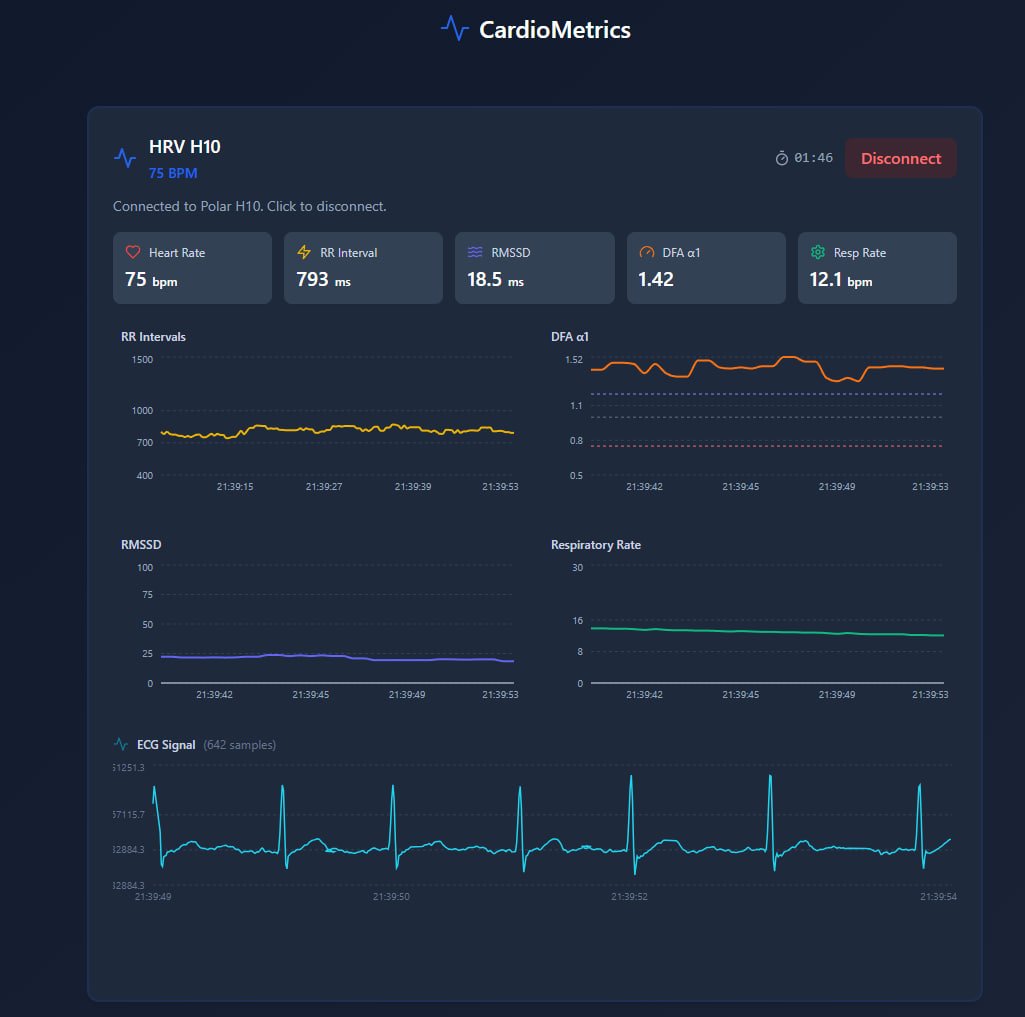
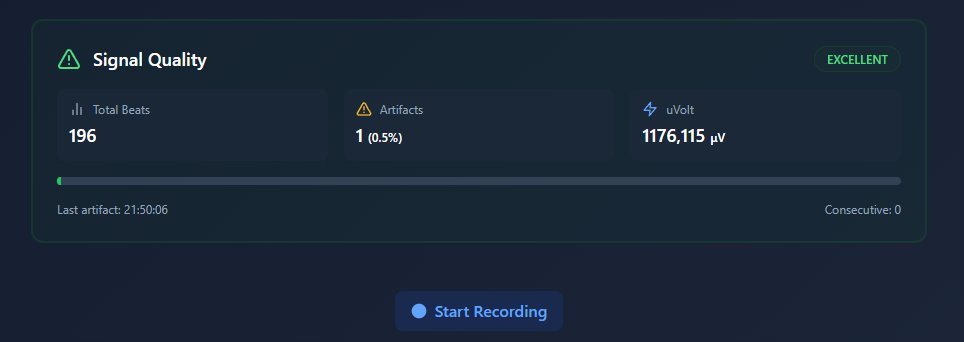
CardioMetrics is moving forward. I've now got the ECG implemented in the web app, along with artifact management, and all records are being saved to a CSV file for later analysis.
The next step on the roadmap is to implement intensity zones using DFA alpha 1.
I am adjusting the HRVT1 ESTIMATES through various algorithms, including a GPT that uses vision to estimate the value with a detailed heatmap. I use several algorithms to calculate the HRVT1 value (I do not rely on fixed values). I use DFA, respiratory frequency, and RRa1.
Una pena que la Federación Española de Triatlón (FETRI) convoque un curso de entrenador de Triatlón nivel I en Asturias, y se olvide que que exista un centro de formación de referencia en Técnicos Deportivos como es el CIFP del deporte de Avilés…
Síndrome del “trasero muerto” me parto y me mondo… y entonces también síndrome del cuádriceps muerto, recto anterior muerto, lumbar muerto… nos extinguimos…