Post-SSRI Sexual Dysfunction for 7 years.
Struggling with physical and cognitive symptoms.
Raising awareness and building community with other PSSD sufferers
After 6 years of debilitating Post-SSRI Sexual Dysfunction (PSSD), it is good to finally see detailed mainstream coverage.
Thank you Daniel Bergner for your sensitive and well-researched piece.
https://t.co/t5YU2OJlXe
This was literally an entire thread about how minimization of the chemical removal of sexuality is emotional violence, and you responded to it with minimization of the chemical removal of sexuality.
Look, I get it. Many people find the other symptoms of PSSD harder to live with. But go make your own thread.
People with PSSD are commonly told by loved ones and medical professionals alike that we need to move on and get over the chemical removal of our sexuality because “sex isn’t everything.”
This is an inappropriate, abusive response.
@doctornevercope You're clearly just antagonistic and starved for attention so I'm not going to engage with you any further, but if you actually looked you'd find all that information on the donation page of the site I linked. Bye now.
@doctornevercope 100% of funds used by PSSD organizations are amassed from small private donations from people with PSSD. That's it. Not one single PSSD advocate, online or elsewhere, receives payment for what we do. We just know no one is coming to save us and we have to speak up for ourselves.
@doctornevercope For anyone reading this: this man is lying or just doesn't know what he's talking about. PSSD is nothing like depression and anyone experiencing its symptoms will tell you that. Learn more here: https://t.co/XdcsSCzxpZ
Then, after the break, Vanderbilt senior Lauren Friedman is here to talk about Post-SSRI Sexual Dysfunction and why UK regulators now officially warn patients about it, but the FDA still does not. She says an antidepressant took away her sexual and emotional function, and even after stopping, she still struggles to feel joy, attraction, or even love for her own family. Find more on Instagram at @StolenYouthMovement.
@GrantS0227 It's another way of blaming the injury on the patient. "Well, you're not supposed to be on them that long..." Yeah ok it can happen in a week. Now what?
This whole thing with SSRIs are dangerous to use long term, but fine to use short term have to stop.
Some of the worst cases of PSSD I have seen from people are the ones who took these drugs for no more than a month. Some even a couple of weeks, or a couple of days at a low dose.
A lot of people take these drugs for decades and stop without a problem, and without any lasting side effects.
People need to stop making definitive blanket statements when we clearly do not understand exactly who is susceptible to these post drug syndromes, or why this even occurs.
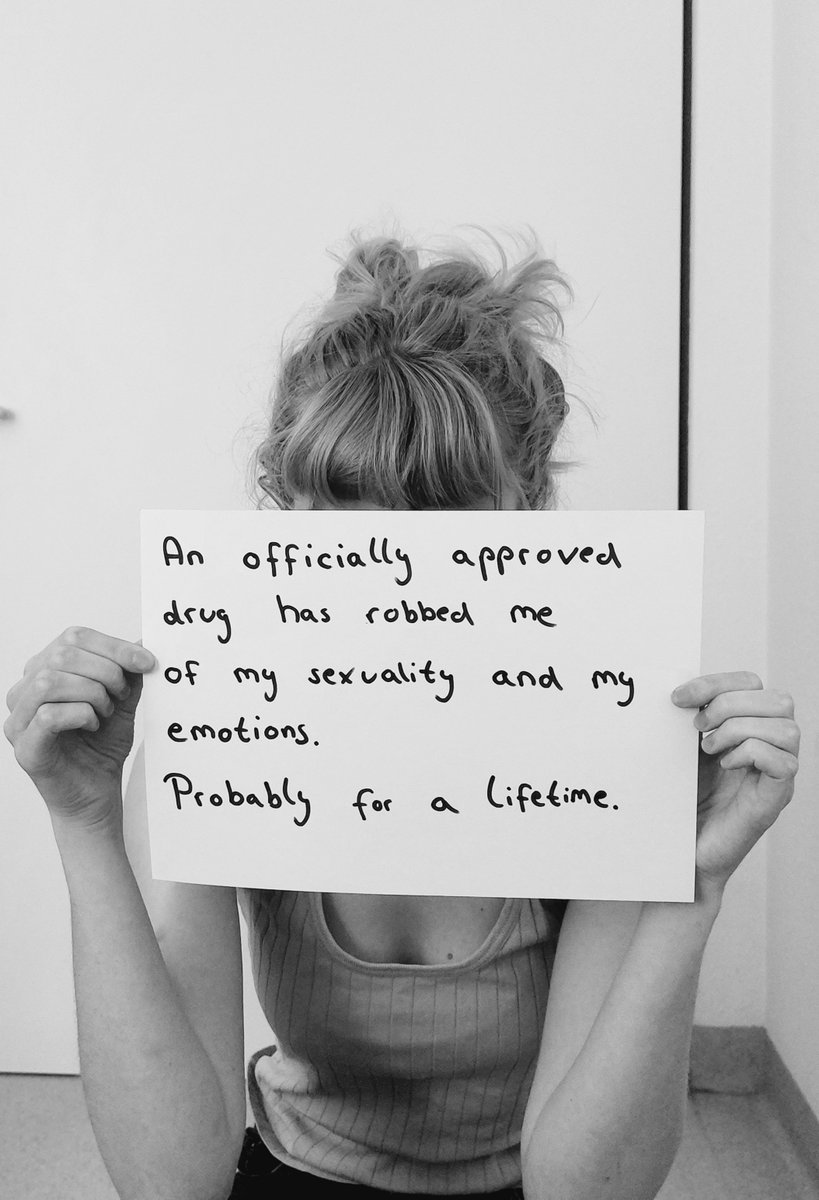
A #PSSD friend and I are looking for volunteers for a Photograph campaign to raise awareness for this devastating iatrogenic syndrome. Our stories need to be heard from the outside world 🌍 Please reach out to me if you like to join !
#pssdisreal
"Is it fair and honest to describe PSSD as permanent?"
Persistent harm must be understood in practical, patient-centered terms
Objection: "There is no proof that PSSD is biologically irreversible. Isn't describing it as permanent scientifically inaccurate?"
My response:
I am using permanent in a practical, patient-centered sense. There are currently no established treatments. We do not know how long it might take for treatments to start to emerge.
I am not claiming that researchers have established that every underlying biological abnormality is impossible to reverse.
But a condition that oftentimes naturally persists indefinitely, doesn't have clear biomarkers, and for which there are no treatments deserves to be taken seriously.
To put it concisely:
-A condition that persists for decades may be functionally permanent.
There is currently no established intervention that reliably reverses PSSD.
Reliable long-term recovery rates remain unknown.
Some people may live with the condition for the remainder of their lives.-
If someone develops PSSD at 40 and experiences it until death, the condition was permanent in their lived experience.
The theoretical possibility that scientists might eventually discover a treatment does not restore the years they have already lost.
Patients should not have to demonstrate molecular irreversibility before decades of treatment-associated disability are recognized as potentially lifelong harm.
Following Bobby Lee on today's @AskDrDrew:
Vanderbilt senior Lauren Friedman says an antidepressant left her with Post-SSRI Sexual Dysfunction (PSSD), a condition UK regulators now warn about while the FDA has not.
Americans for Ibogaine CEO Bryan Hubbard @w_bryan_hubbard speaks on Texas's $50 million ibogaine trials, and what Stanford's research on veterans with traumatic brain injuries shows about the psychedelic.
LIVE at 2pm PT / 5pm ET
https://t.co/GyADtgRliA
https://t.co/ZdGDy5fBAv
Really appreciate everyone who participated in this discussion and helped bring more attention to PSSD. I'm especially glad to see greater acknowledgment that the symptoms extend far beyond sexual dysfunction, including a wide range of physical, neurological, and emotional symptoms that can be absolutely devastating.
This is an important discussion that deserves far more views and attention than it's received. I highly encourage people to take the time to watch and share it.
The MHRA has finally acknowledged PSSD and planned to add it to patient information leaflets. And that's just with low reported numbers. Imagine what we could achieve if everyone reported their condition.
We know that hundreds of thousands of people have PSSD. Right now, the global reported cases are in the hundreds. If this number increased even to thousands, we would have a much stronger case for institutions to respond and take us seriously. But how can they make a case without data?
If you haven't reported PSSD, please take a look at the PSSD Network's handy guide that takes you through it step by step.
#MedSafetyWeek
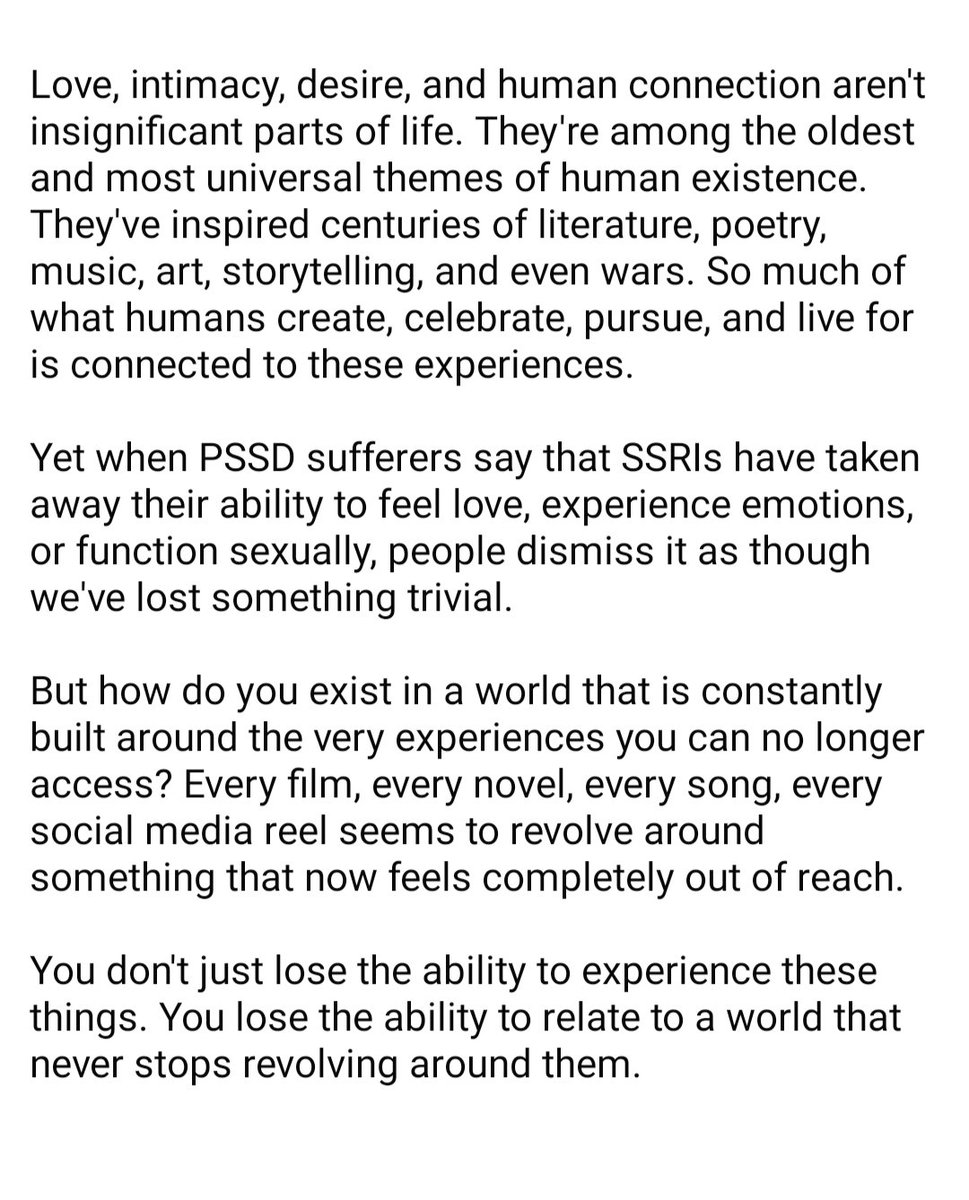
And yet, when people with PSSD say that SSRIs have left them unable to feel love, emotions, sexual desire, or intimacy, we're told it's not a big deal.
If the Left doesn't address the people harmed by undisclosed adverse effects of psych meds, those people will (justifiably) turn to those who do advocate for them. It shouldn't be a partisan issue but it becomes one when we are treated like a political inconvenience instead of people who need help.