Canadian media and politicians have all but ignored Congo’s recent World Court case against Rwanda. It’s unsurprising since Canada has enabled three decades of aggression, including by leading a bizarre, little known, UN mission to the region on behalf of Washington.
On Friday the Democratic Republic of Congo filed a case to the International Court of Justice against Rwanda for repeated invasions and support for armed groups on its territory since 1996. Congolese Justice Minister Guillaume Andali said his country is seeking redress for Rwanda’s breaches of conventions covering genocide prevention, racial discrimination, women's rights and torture.
In 1996 Rwandan forces marched 1,500 km to topple the regime in Kinshasa and then re-invaded after the Congolese government it installed expelled Rwandan troops. This led to an eight-country war between 1998 and 2003, which left millions dead. Since that time Rwanda and its proxies have repeatedly invaded eastern Congo and continue to occupy the east of the country. Some six million remain displaced.
The Rwanda government in Kigali justified its 1996 intervention into the Congo as an effort to protect the Banyamulenge (Congolese Tutsi) living in eastern Congo from the Hutus who fled the country when the RPF took power after the 1994 genocide.
The US military increased its assistance to Rwanda in the months leading up to its fall 1996 invasion of Zaire. In The Great African War: Congo and Regional Geopolitics, 1996-2006 Filip Reyntjens explains: “The United States was aware of the intentions of Kagame to attack the refugee camps and probably assisted him in doing so. In addition, they deliberately lied about the number and fate of the refugees remaining in Zaire, in order to avoid the deployment of an international humanitarian force, which could have saved tens of thousands of human lives, but which was resented by Kigali and AFDL [a Rwandan backed rebel force led by Laurent-Désiré Kabila].”
In the just released Rwanda’s 30-Year Assault on Congo: The Crimes, the Criminals, and the Cover-Up (Baraka Books) Judi Rever documents Washington’s central role in a war to topple aging kleptocrat Mobutu Sese Seko, who lost his use after the end of the Cold War. According to a review, Rever documents how “the US provided satellite tracking data to locate Hutu refugees in the jungle. It deployed AC-130 gunships, P-3 Orion surveillance planes, and a national intelligence support team drawing on the CIA, the NSA, and the Defense Intelligence Agency. It sent Special Forces from Fort Bragg to train Rwandan troops in counter-insurgency.”
Ottawa played an important, if somewhat bizarre, part in this sordid affair. In late 1996, Canada led a short-lived UN force into eastern Zaire, meant to bring food and protection to Hutu refugees. The official story is that Prime Minister Jean Chrétien organized a humanitarian mission into eastern Zaire after his wife saw images of exiled Rwandan refugees on CNN. In fact, Washington proposed that Ottawa, with many French speakers at its disposal, lead the UN mission. The US didn’t want pro-Joseph Mobutu Sese Seko France to gain control of the UN force.
On November 9, 1996, the UN Security Council backed a French resolution to establish a multinational force in eastern Congo. Four days later, French Defence Minister Charles Millon, urged Washington to stop stalling on the force. “Intervention is urgent and procrastination by some countries is intolerable,” Millon said in a radio interview. “The United States must not drag its feet any longer.”
Canada’s mission to the Congo was designed to dissipate French pressure and ensure it didn’t take command of a force that could impede Rwanda’s invasion of the eastern Congo. “The United States and Canada did not really intend to support an international force,” writes Belgian academic Filip Reyntjens. “Operation Restore Silence” was how Oxfam’s emergencies director Nick Stockton sarcastically described the mission. He says the Anglosphere countries “managed the magical disappearance” of half a million refugees in eastern Zaire. In a bid to justify the non-deployment of the UN force, Canadian Defence Minister Doug Young claimed over 700,000 refugees had returned to Rwanda. A December 8 article in Québec City’s Le Soleil pointed out that this was “the highest estimated number of returnees since the October insurrection in Zaire.”
The RPF dismantled infrastructure and massacred thousands of civilians in the Hutu refugee camps, prompting some 300,000 to flee westward on foot from refugee camp to refugee camp. Dying to Live by Pierre-Claver Ndacyayisenga describes a harrowing personal ordeal of being chased across the Congo by the RPF and its allies.
Ultimately, most of the Canadian-led UN force was not deployed since peacekeepers would have slowed down or prevented Rwanda, Uganda and its allies from triumphing. But the initial batch of Canadian soldiers deployed to the staging ground in Uganda left much of the equipment they brought along. In Le Canada dans les guerres en Afrique centrale: génocides et pillages des ressources minières du Congo par le Rwanda interpose Patrick Mbeko suggests the Ugandan army put the equipment to use in Congo.
Prior to deploying the Canadian-led multinational force, Commander General Maurice Baril met with officials in Kigali as well as the Director of the Joint Staff at the Pentagon. Hinting at who was in the driver’s seat, the New York Timesreported that Baril “cancelled a meeting with United Nations officials and flew instead to Washington for talks.” In deference to the Rwandan-backed forces, Baril said he would only deploy UN troops with the rebels’ permission. “Anything that I do I will coordinate with the one who is tactically holding the ground,” Baril noted.
Much to Joseph Mobutu’s dismay, Baril met rebel leader Laurent Kabila who was at that time shunned by most of the international community. The meeting took place in a ransacked mansion that had belonged to Zaire’s president and as part of the visit Kabila took Baril on a tour of the area surrounding Goma city. Baril justified the meeting, asserting: “I had to reassure the government of Canada that the situation had changed and we could go home.”
The book Nous étions invincibles, the personal account of Canadian special forces commando Denis Morrisset, provides a harrowing account of the Joint Task Force 2 (JTF2) operation to bring Baril to meet Kabila. The convoy came under attack and was only bailed out when US Apache and Blackhawk helicopters retaliated. Some thirty Congolese were killed by a combination of helicopter and JTF2 fire.
Almost no one knows about a bizarre, short-lived, Canadian led UN force that enabled three decades of horrors in Congo. It’s long past time to reevaluate Canada’s support for Paul Kagame’s endless horrors in the region.
The invasion of Iran must be pretty crazy from the Iranian perspective. You're against the most prolific pedophiles ever invading your country and almost exclusively targeting elementary schools, all while their soldiers make tiktoks about how they can't wait to rape your women
Days after Mark Carney endorsed the US-Israeli war of aggression, Minister Anita Anand now tries to distance Canada from it and says her government supports a "peaceful solution."
Absolute weasels.
I'm not a Maoist but I love the slogan "It is right to rebel". I think of it as a shortened formulation of what Marx called "the categorical imperative to overthrow all relations in which man is a debased, enslaved, forsaken, despicable being"
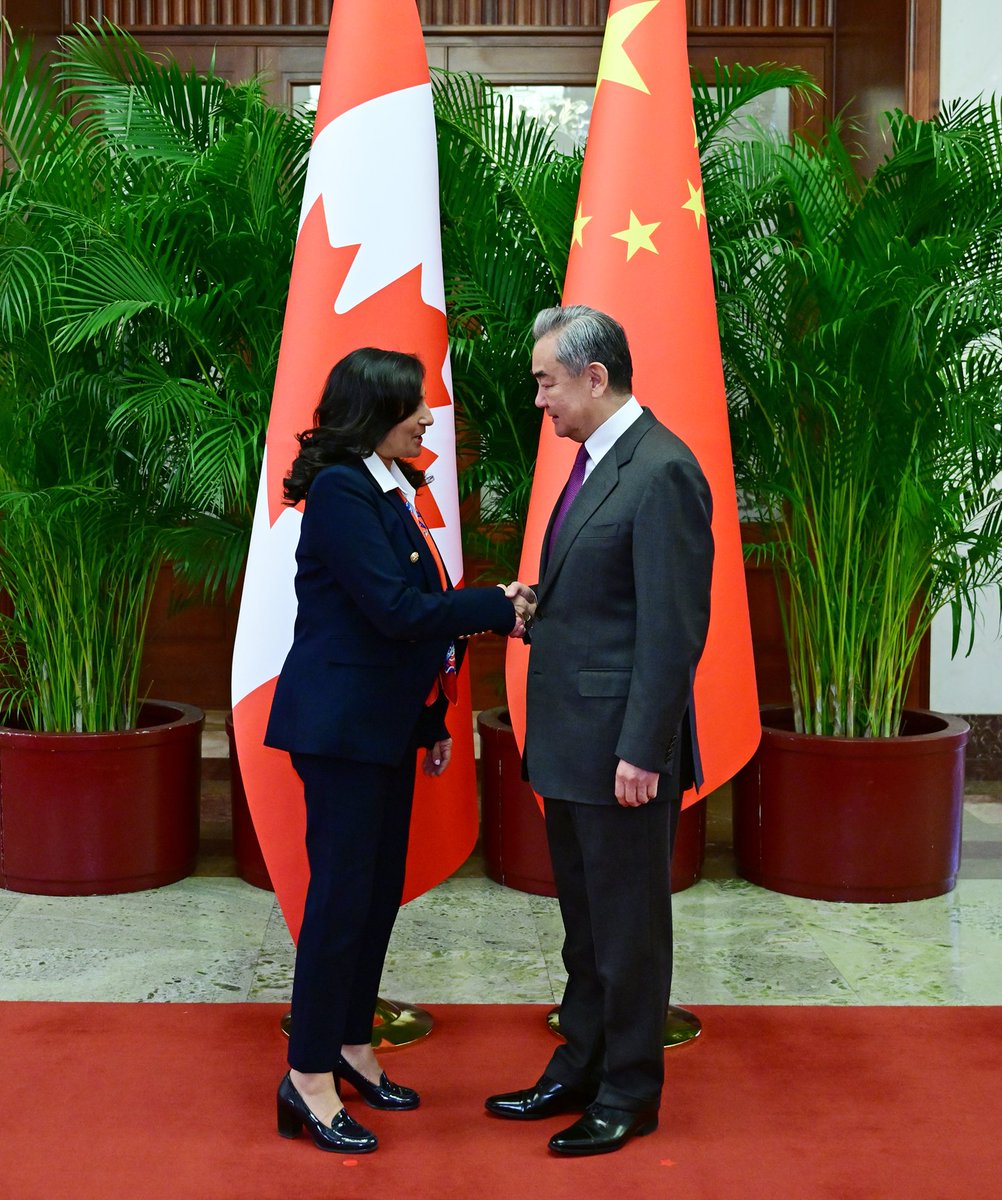
Chinese FM Wang Yi met with Canadian FM Anita Anand in Beijing.
Canadian PM Mark Carney has embarked on his official visit to China. This is the first trip to China by a Canadian prime minister in eight years, marking a turning point in the relationship and carrying symbolic significance for bilateral ties.
#China is willing to strengthen communication, enhance trust, eliminate interference, and deepen cooperation with #Canada to advance bilateral relations steadily, make solid progress, and achieve sound development under the new circumstances.
🔗https://t.co/m2CuN9jlLy
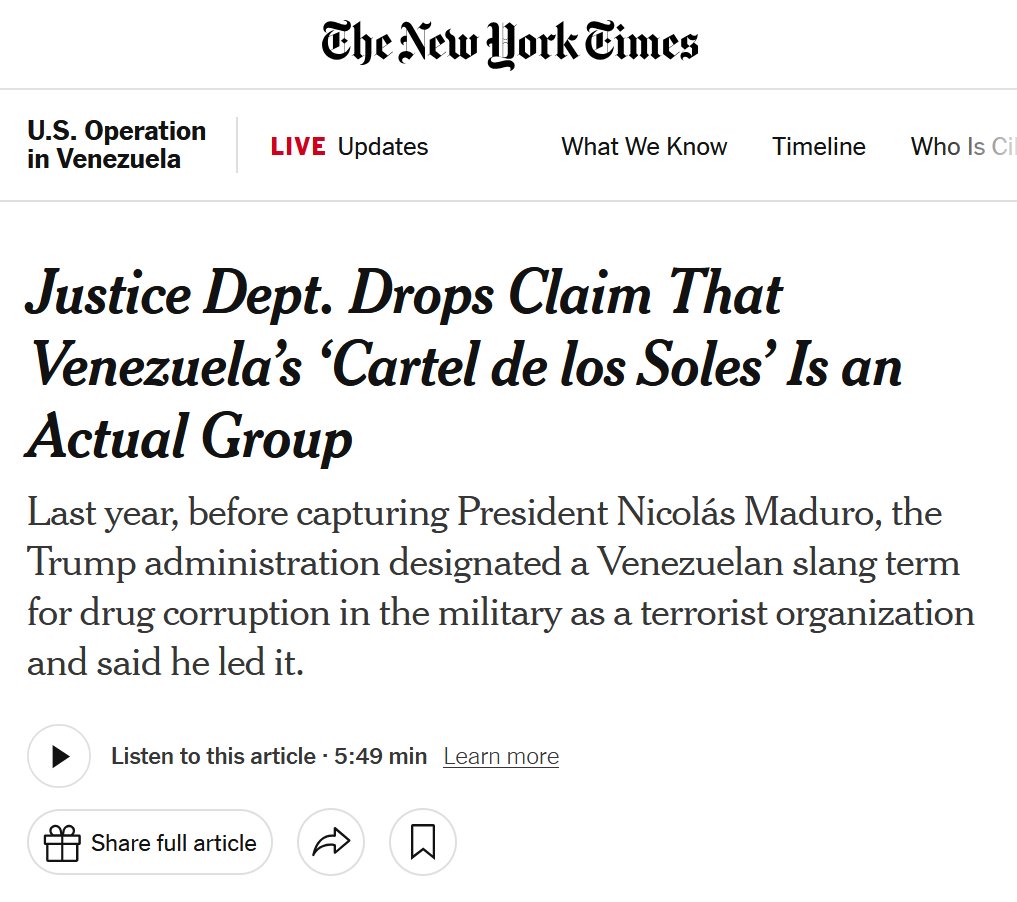
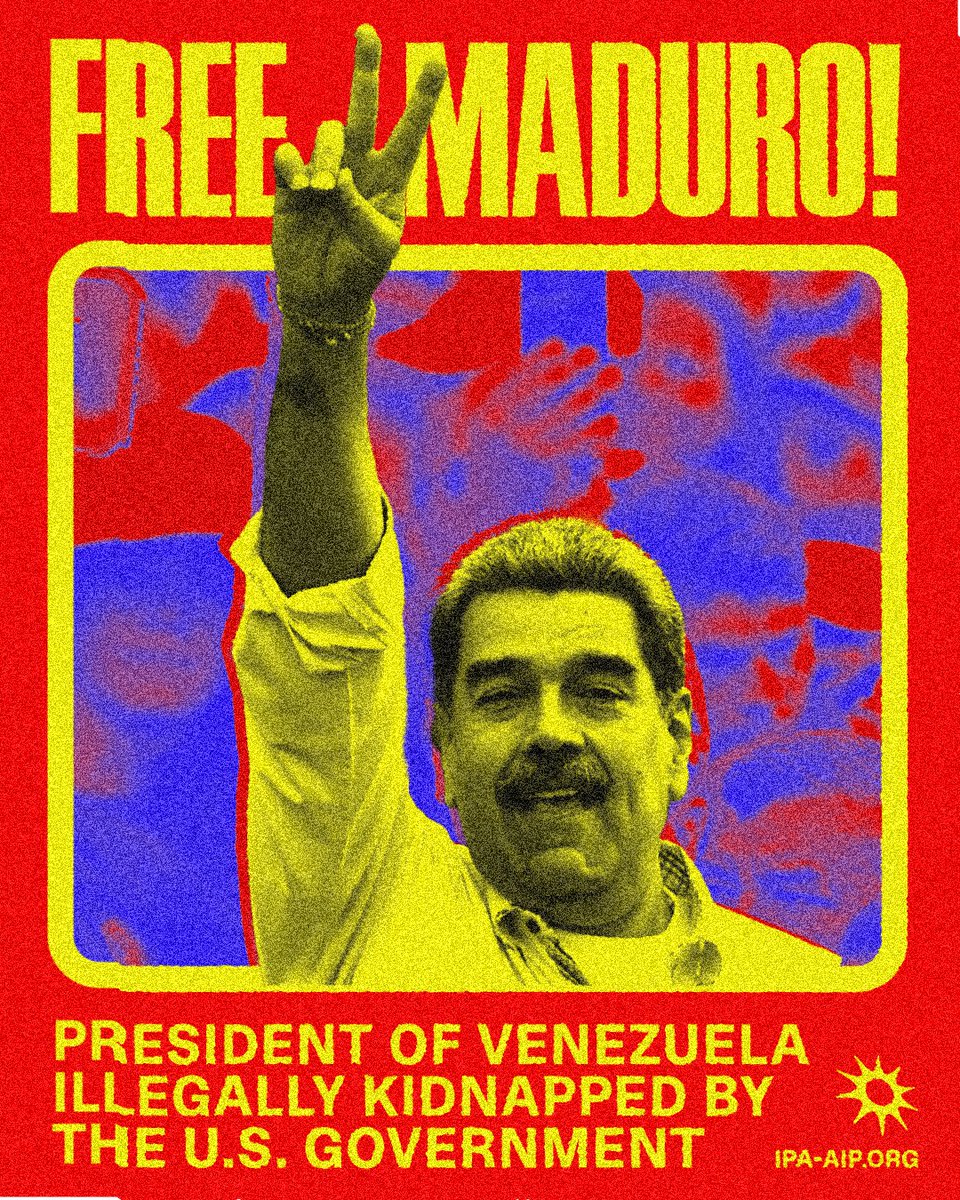
For months, I've been hearing @MaxBlumenthal explain that "Cartel of the Suns" doesn't actually exist. Now that the US has abducted President @NicolasMaduro to steal Venezuela's oil, the Trump administration no longer needs to pretend it does.
It is endlessly amusing that political literacy in the US is so low that supporters of the Republican Party don't understand that they, too, are liberals.
This is but one of many: the GMMV, providing nearly 5 million homes to working class Venezuelans despite the genocidal sanctions being imposed on them during their construction AND with an intentional feminist focus on women-led & managed projects. https://t.co/DVpXVCxp9C
Unbelievable. After months of propaganda claiming Maduro is the head of the dangerous drug-smuggling cartel, the US government has admitted it was all a ruse in order to kidnap a sitting head of state.
Is this a real question? Under Maduro, Venezuela didnt pivot to neoliberal austerity (unlike all its neighbours) despite sanctions, oil collapse, and hyperinflation. Instead it doubled down on a defensive redistributive model by expanding social protection through the CLAP food programme, cash transfers and pensions distributed via the Carnet de la Patria, and pandemic-era income support, while continuing the Gran Misión Vivienda Venezuela, which delivered 4 million decommodified homes outside the market (under Maduro). Strategic sectors including oil, electricity, water, and telecoms remained publicly owned, with no IMF programme, no mass privatisations, and no wholesale dismantling of healthcare, education, or pensions (unlike neighbours). Labour protections were maintained through minimum-wage hikes, job-protection decrees, and emergency bonuses, even as inflation undermined real wages. While, the state explicitly treated social reproduction as a public responsibility by expanding women-targeted cash transfers to female heads of household, sustaining state-run food provisioning and childcare through the missions system, and formally recognising unpaid care work within welfare and social policy frameworks. In parallel, his governments preserved and extended the legal architecture of communal councils and communes, backed collective land titles in rural and Indigenous regions, and promoted non-market, community-based production as an alternative to private property and agrarian commodification. Internationally, Maduro pursued South–South alliances with China, Russia, Iran, and Cuba as a way of resisting US-led regime-change and financial discipline.
There are many articles about these reforms: https://t.co/h0iYO6R1vh
The poverty caused in Venezuela is due to the sanctions placed on it by the United States government. The sanctions were meant to cause immeasurable suffering to get everyday Venezuelans to rise up and help collapse Maduro’s government. It’s weird no one mentions the sanctions.
In case you do not know. Israel bombed Lebanon more than 9 times today...last of which was an hour ago bringing down a residential building in the industrial area of Saida city with 3 martyrs so far and at least 10 injured.



![EnglerYves's tweet photo. Canadian media and politicians have all but ignored Congo’s recent World Court case against Rwanda. It’s unsurprising since Canada has enabled three decades of aggression, including by leading a bizarre, little known, UN mission to the region on behalf of Washington.
On Friday the Democratic Republic of Congo filed a case to the International Court of Justice against Rwanda for repeated invasions and support for armed groups on its territory since 1996. Congolese Justice Minister Guillaume Andali said his country is seeking redress for Rwanda’s breaches of conventions covering genocide prevention, racial discrimination, women's rights and torture.
In 1996 Rwandan forces marched 1,500 km to topple the regime in Kinshasa and then re-invaded after the Congolese government it installed expelled Rwandan troops. This led to an eight-country war between 1998 and 2003, which left millions dead. Since that time Rwanda and its proxies have repeatedly invaded eastern Congo and continue to occupy the east of the country. Some six million remain displaced.
The Rwanda government in Kigali justified its 1996 intervention into the Congo as an effort to protect the Banyamulenge (Congolese Tutsi) living in eastern Congo from the Hutus who fled the country when the RPF took power after the 1994 genocide.
The US military increased its assistance to Rwanda in the months leading up to its fall 1996 invasion of Zaire. In The Great African War: Congo and Regional Geopolitics, 1996-2006 Filip Reyntjens explains: “The United States was aware of the intentions of Kagame to attack the refugee camps and probably assisted him in doing so. In addition, they deliberately lied about the number and fate of the refugees remaining in Zaire, in order to avoid the deployment of an international humanitarian force, which could have saved tens of thousands of human lives, but which was resented by Kigali and AFDL [a Rwandan backed rebel force led by Laurent-Désiré Kabila].”
In the just released Rwanda’s 30-Year Assault on Congo: The Crimes, the Criminals, and the Cover-Up (Baraka Books) Judi Rever documents Washington’s central role in a war to topple aging kleptocrat Mobutu Sese Seko, who lost his use after the end of the Cold War. According to a review, Rever documents how “the US provided satellite tracking data to locate Hutu refugees in the jungle. It deployed AC-130 gunships, P-3 Orion surveillance planes, and a national intelligence support team drawing on the CIA, the NSA, and the Defense Intelligence Agency. It sent Special Forces from Fort Bragg to train Rwandan troops in counter-insurgency.”
Ottawa played an important, if somewhat bizarre, part in this sordid affair. In late 1996, Canada led a short-lived UN force into eastern Zaire, meant to bring food and protection to Hutu refugees. The official story is that Prime Minister Jean Chrétien organized a humanitarian mission into eastern Zaire after his wife saw images of exiled Rwandan refugees on CNN. In fact, Washington proposed that Ottawa, with many French speakers at its disposal, lead the UN mission. The US didn’t want pro-Joseph Mobutu Sese Seko France to gain control of the UN force.
On November 9, 1996, the UN Security Council backed a French resolution to establish a multinational force in eastern Congo. Four days later, French Defence Minister Charles Millon, urged Washington to stop stalling on the force. “Intervention is urgent and procrastination by some countries is intolerable,” Millon said in a radio interview. “The United States must not drag its feet any longer.”
Canada’s mission to the Congo was designed to dissipate French pressure and ensure it didn’t take command of a force that could impede Rwanda’s invasion of the eastern Congo. “The United States and Canada did not really intend to support an international force,” writes Belgian academic Filip Reyntjens. “Operation Restore Silence” was how Oxfam’s emergencies director Nick Stockton sarcastically described the mission. He says the Anglosphere countries “managed the magical disappearance” of half a million refugees in eastern Zaire. In a bid to justify the non-deployment of the UN force, Canadian Defence Minister Doug Young claimed over 700,000 refugees had returned to Rwanda. A December 8 article in Québec City’s Le Soleil pointed out that this was “the highest estimated number of returnees since the October insurrection in Zaire.”
The RPF dismantled infrastructure and massacred thousands of civilians in the Hutu refugee camps, prompting some 300,000 to flee westward on foot from refugee camp to refugee camp. Dying to Live by Pierre-Claver Ndacyayisenga describes a harrowing personal ordeal of being chased across the Congo by the RPF and its allies.
Ultimately, most of the Canadian-led UN force was not deployed since peacekeepers would have slowed down or prevented Rwanda, Uganda and its allies from triumphing. But the initial batch of Canadian soldiers deployed to the staging ground in Uganda left much of the equipment they brought along. In Le Canada dans les guerres en Afrique centrale: génocides et pillages des ressources minières du Congo par le Rwanda interpose Patrick Mbeko suggests the Ugandan army put the equipment to use in Congo.
Prior to deploying the Canadian-led multinational force, Commander General Maurice Baril met with officials in Kigali as well as the Director of the Joint Staff at the Pentagon. Hinting at who was in the driver’s seat, the New York Timesreported that Baril “cancelled a meeting with United Nations officials and flew instead to Washington for talks.” In deference to the Rwandan-backed forces, Baril said he would only deploy UN troops with the rebels’ permission. “Anything that I do I will coordinate with the one who is tactically holding the ground,” Baril noted.
Much to Joseph Mobutu’s dismay, Baril met rebel leader Laurent Kabila who was at that time shunned by most of the international community. The meeting took place in a ransacked mansion that had belonged to Zaire’s president and as part of the visit Kabila took Baril on a tour of the area surrounding Goma city. Baril justified the meeting, asserting: “I had to reassure the government of Canada that the situation had changed and we could go home.”
The book Nous étions invincibles, the personal account of Canadian special forces commando Denis Morrisset, provides a harrowing account of the Joint Task Force 2 (JTF2) operation to bring Baril to meet Kabila. The convoy came under attack and was only bailed out when US Apache and Blackhawk helicopters retaliated. Some thirty Congolese were killed by a combination of helicopter and JTF2 fire.
Almost no one knows about a bizarre, short-lived, Canadian led UN force that enabled three decades of horrors in Congo. It’s long past time to reevaluate Canada’s support for Paul Kagame’s endless horrors in the region.](https://pbs.twimg.com/media/HMJIKtlX0AASZzJ.jpg)