Climate models now unanimously expect the strongest El Niño on record this year.
Eight of them expect the record-breaking margin to be wide — at least a degree Celsius.
There is no modern precedent.
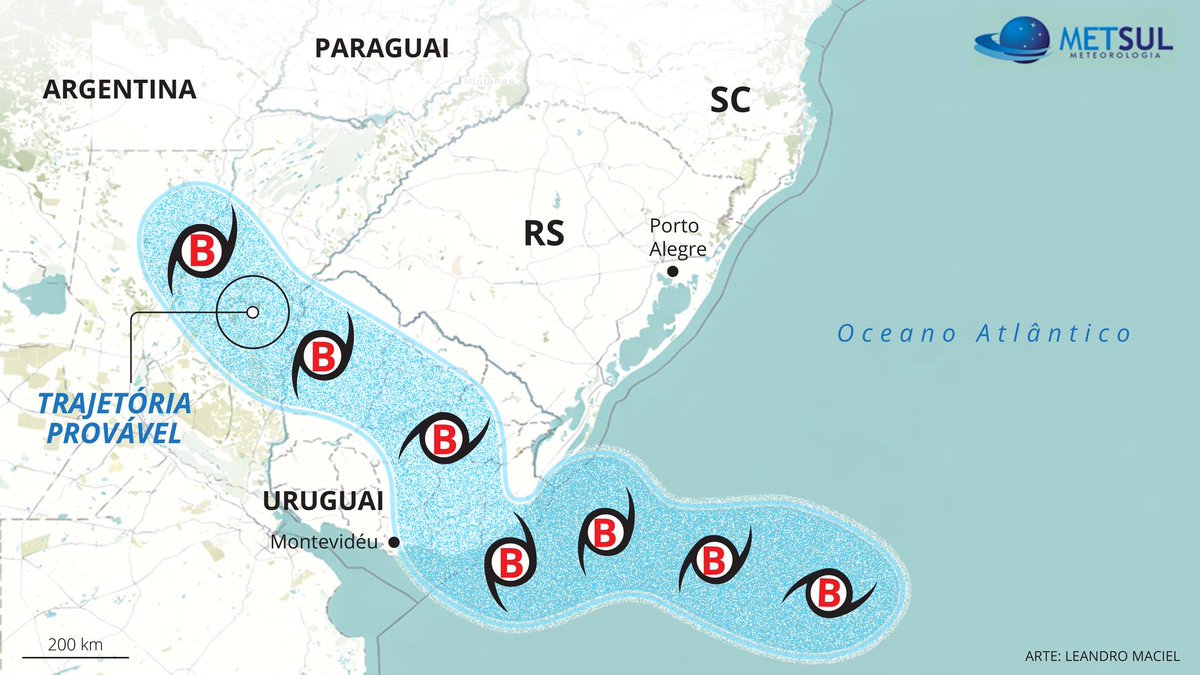
⚠️ AVISO | Ciclone está em formação entre a Argentina, Uruguai e o Rio Grande do Sul. Sistema já provoca chuva excessiva e tempestades na Argentina e Paraguai. Veja a rota do ciclone e quais áreas devem ter mais chuva e vento. ▶️ https://t.co/anlgoB3oDy
@carloseggnator@bbbrezenski Sinceramente. Tentando remover o máximo de hipocrisias que alguém consegue. Não costumo ser bajulador de magnatas. Estou sinceramente preocupado com a questão ambiental. Sei que ações de 'remover canudinho' são insuficientes.
@SrgioFerna1708@metsul Atmosfera mais quente consegue reter mais umidade. Quando encontra uma massa de ar frio a chance de nevasca intensa é maior. Aquecimento global não significa que sempre tudo ficará quente o tempo todo. Qualquer dúvida é só perguntar.
@heatwav07965730@PCarterClimate Earth is sensitive to abrupt temperature variations (over a few decades), even if only a few degrees Celsius on average. This is unlike a stadium, which would require a temperature increase of several degrees to be effective.
@andyanajones_@metsul O problema é que lentamente estes eventos estão ficando mais severos. Corremos risco de serem mais destrutivos do que nossa capacidade de recuperação. (ao longo das próximas décadas)
@doemdenker1@PCarterClimate coal power and heat, road transport, heavy industry, gas-fired power, shipping, aviation, building heating, oil & gas production, agricultural machinery, and other minor sources — and most of these are growing faster than EVs can reduce emissions
@McGovernUphols1@PCarterClimate Volcanic ash dissipates in one or two years. Carbon dioxide (fossil) is cumulative. Humans produce 100 times more CO2 than all volcanoes combined.