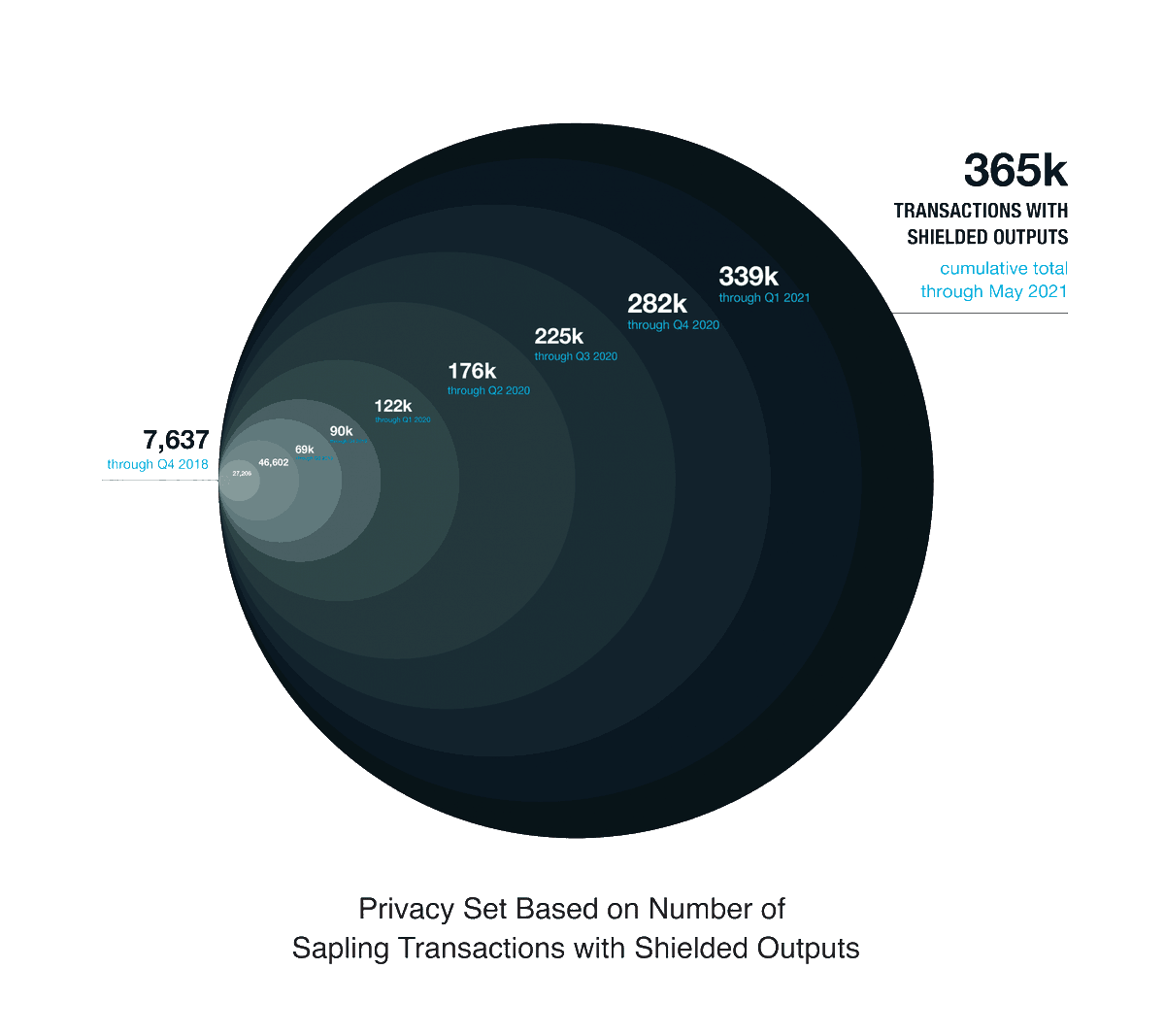
Strong privacy on the base layer is a fundamentally important feature for a cryptocurrency to ultimately win the long game against the incumbent global fiat system. Without this feature Bitcoin doesn’t make it all the way to being full global money. $ZEC
ZATOSHI AND ZETHEREUM
Here’s a bold plan for how one brave engineer could strike a blow for internet freedom while bringing Ethereum all the way back: they just need to go Zatoshi and build Zethereum.
What does that mean? It means an pseudonymous developer with impeccable opsec should take it upon themselves to add private transactions along with the zero knowledge stack to Ethereum as a set of optional smart contracts.
Call that developer Zatoshi.
And call that stack Zethereum.
Zethereum would be the newly legal[1] Tornado Cash, plus APIs for all the zero knowledge (ZK) innovation[2] over the last few years. Essentially it would be a way to ship much of Justin Drake’s impressive[3] five year ZK roadmap in three months...except via smart contracts rather than the base layer. This would enable our hypothetical Zatoshi to move quickly and take more risk.
Speaking of risk though…a user-facing Zethereum would still be high risk. The recent Tornado Cash ruling[1] does give a window for privacy-preserving smart contracts again. But we need pardons for Roman Storm[4] and Alexey Pertsev[5] to fully confirm that privacy is not a crime — just like we need them for Ross Ulbricht, Assange, and Snowden.
Until that day comes, anyone who wants to build a Zethereum should still go Zatoshi to do it: meaning full anon, with perfect opsec.
Now let me answer some obvious questions.
1) Why not Bitcoin? I love Bitcoin, but the base layer is essentially immutable at this point. And the BTC community is more focused on political innovation (eg converting nation states) than technical innovation. That is critical and necessary, but it’s just different.
2) Why not Solana? I am also very impressed with Solana and use USDC-SOL and Solana NFTs constantly, which means they actually work, which is the highest praise I can give. However, Solana has non-anonymous developers, so doing something as private as Zethereum is a risk. This is why it's a job for a Zatoshi.
3) Why not Base? See answer on Solana. Brian, Jesse, and my friends on the Coinbase team have executed extremely well on Base. But they too may want a Zatoshi to be the first mover on Zethereum.
4) Why not Zcash? Zooko and his old team are of course the pioneers in zero knowledge. And Zcash arguably has already done much of this in terms of base-layer privacy. But Zcash doesn’t have the distribution of Ethereum. Perhaps it's because privacy aficionados don’t talk about their chain, so Zcash had a word-of-mouth marketing problem. Regardless, adding easy privacy to Ethereum would mainstream Zcash's ideas.
5) What about all the other ZK tech on Ethereum? Yes, we have ZKsync and Starkware — and they too are technically amazing — but their focus has been on ZK for scaling, which is different from ZK for privacy.
6) Why not another chain? You could try Zethereum on another chain, but the Tornado Cash ruling specifically concerned a smart contract on Ethereum. So it's maybe slightly higher risk on another chain, particularly until Storm and Pertsev are pardoned. But you might try it if you are willing to take a calculated risk for internet freedom.
7) Oh, and why now? Two reasons. First, the Tornado Cash ruling just reduced risk. And second, the recent election should reinvigorate the appetite of Ethereum's left-libertarians to defend privacy via technology. At a minimum, the left-statists won't oppose them anymore, and the principled right-libertarians will support them. Because building neutral platforms that protect universal human rights — like privacy — is valuable no matter what party is in power or what chain is used to protect those rights.
SUMMARY
So, that's how one bold anon could make Ethereum great again — and in months rather than years.
Because if Tornado Cash is legal[1], you could first anonymously enable any Ethereum wallet to send Zcash-grade private transactions from one ENS address to another. Then you could add the full panoply of new ZK innovations[2].
You could thereby go Zatoshi.
And build Zethereum.
i am more bullish crypto this year than any other time ive been here & ive been around for ~8 years now
would be in your best interest to mute/unfollow people waxing poetical about how we don't have any use cases nor apps
they are not paying attention
@BenarrochDaniel Neither scale nor PoS bring new people to Zcash. If blocks aren't full, scale is a future thing.
Shielded assets and better wallets baby 🔥
We've received approval for a @zcashomg grant to help us integrate Zcash Orchard (ZIP-224) shielded transactions into Trezor Model T firmware, Trezor Suite, and the Trezor Connect API!
Work begins in October 2021.
https://t.co/thVA6eNN10
Thesis: coin market caps encourage mimesis.
Google didn't *initially* compete with other companies *primarily* on its stock price but on its product.
Assets should likewise have unique features. Good example: Zcash's privacy sets & shielded transactions. https://t.co/OQ0dERC3BE
I'm glad to see the enthusiasm in the community for Zcash Shielded Assets.
With ZSAs, Zcash is positioned to become the privacy layer for digital money.
Here's a quick thread on what this could mean 🧵👇
So basically Zcash shielded assets are an emergency. I hope to see ECC accelerate on this now.
That panel discussion served as a great final paragraph to the discussion that’s been had by the community for some time.
ZSAs and further programability ASAP $ZEC
@z_i_g_a I am really confident about Zcash $ZEC as being a solid investment right here.
Maximum opportunity right before big protocol implementations & adoption like mentioned above.
Like Ethereum $ETH before ICO’s or Binance #BNB before turning into BSC enabling utility.