European football doesn’t have the democracy it thinks it has.
Since 1992 when the UEFA Champions League came to being, only two teams outside the top 5 European leagues have won the UCL. That’s 33 seasons.
Of the leading 5 European leagues, Ligue 1 has only produced two winners — Marseille in 1993 and PSG in 2025. Even PSG needed massive state-level ownership to stand a chance.
It means that even within those top 5, there’s a top 4 controlling the system.
Those two clubs outside the top 5 European leagues who won the UCL — Ajax in 1995 and FC Porto in 2004 — were handled by world class managers who could make something out of nothing. Louis Van Gaal in ‘95 and Jose Mourinho in ‘04.
Look at pre-‘92, there were UCL winning clubs from Scotland, Romania, Portugal, the Netherlands and Serbia. Today, it’s practically impossible.
Since ‘92, only ten nationalities have won the UCL as coaches.
Four Italians, one French, one Swiss, one Belgian, one Scot, two Dutch, one Portuguese, four Spaniards, four Germans. Of the top 5 European league nations, only England is yet to produce a UCL-winning coach.
The bulk of the money available in European football is also in these leagues. The French league may not be as rich as the Premier League, but French clubs, for example have made over €2bn from selling players to English clubs in the last ten years. Still within the top 5 leagues. More than 150 players have moved between both leagues in the last decade.
Guess where the Premier League’s next factories are in? Spain, Germany and Italy with all of them making over €1bn from selling to England. They all compete.
Other European leagues and club academies, those privately-owned African academies and South American clubs and academies are building for these 5 (read 4) major European leagues. The player who rises in Kaduna, Nigeria or Buenos Aires, Argentina is eventually going to feed that elitism.
This is not to say those leagues don’t have programmes for the future but they raid the rest of the world in addition to what they have and that’s why they win time and again. And why they’ll keep winning for a long time.
The young man running an academy in Nigeria wants to make money. He sells his talent to Norway for what’s breadcrumbs in the larger scheme of things. Norwegian club fleshes the player up and prepares him for the bigger European leagues. In two years, he’s ready for Belgium or France and they make 10x or 15x of what they’ve invested. In Belgium or France, he spends another two years and he’s ready for Germany or Spain. They make heavy money by the time they eventually sell to England.
It’s why English clubs are also going from strength to strength.
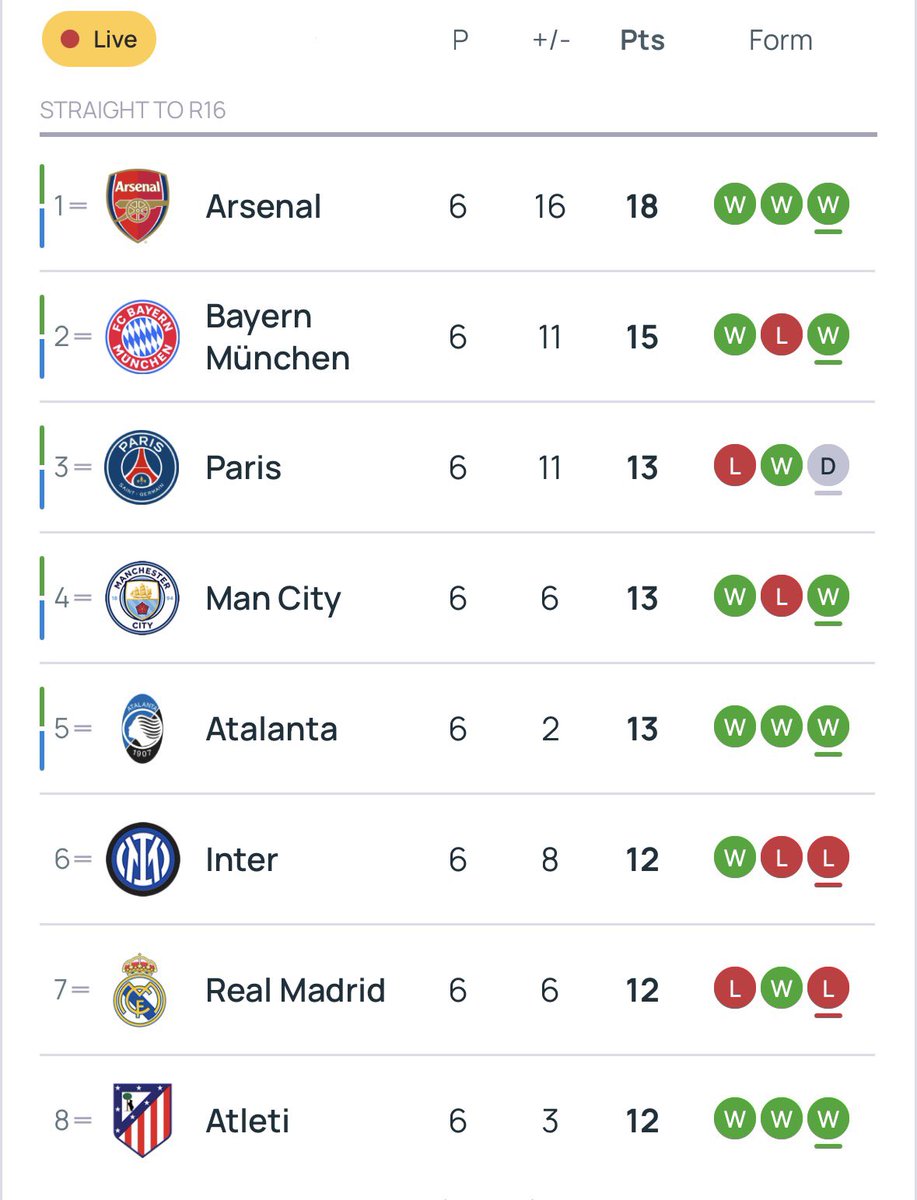
This is why there’ll hardly be surprises at the elite levels of European football, no matter what UEFA tries to do. Change it to league format, round robin or whatever, the top will still feed on the bottom.
That those minor leagues are involved is egalitarian, it’s cute. They get to make money at the end of the day, but it’s somewhat tokenistic when we consider they stand no chance in the real sense.
There may never be another story of Greece in 2004, or another FC Porto in the same year. Surprises ended that year.
I have 5 scholarships to the course "Applied Machine Learning".
Andrew Maas, Senior Manager at Apple and Instructor at Stanford University, teaches the course that starts in September 5th and lasts 4 weeks.
Read on for details on how to apply:
1 of 3