Re-intro time.
I’m Shubham Mishra.
Born in Ayodhya.
Building things in Ahmedabad, India.
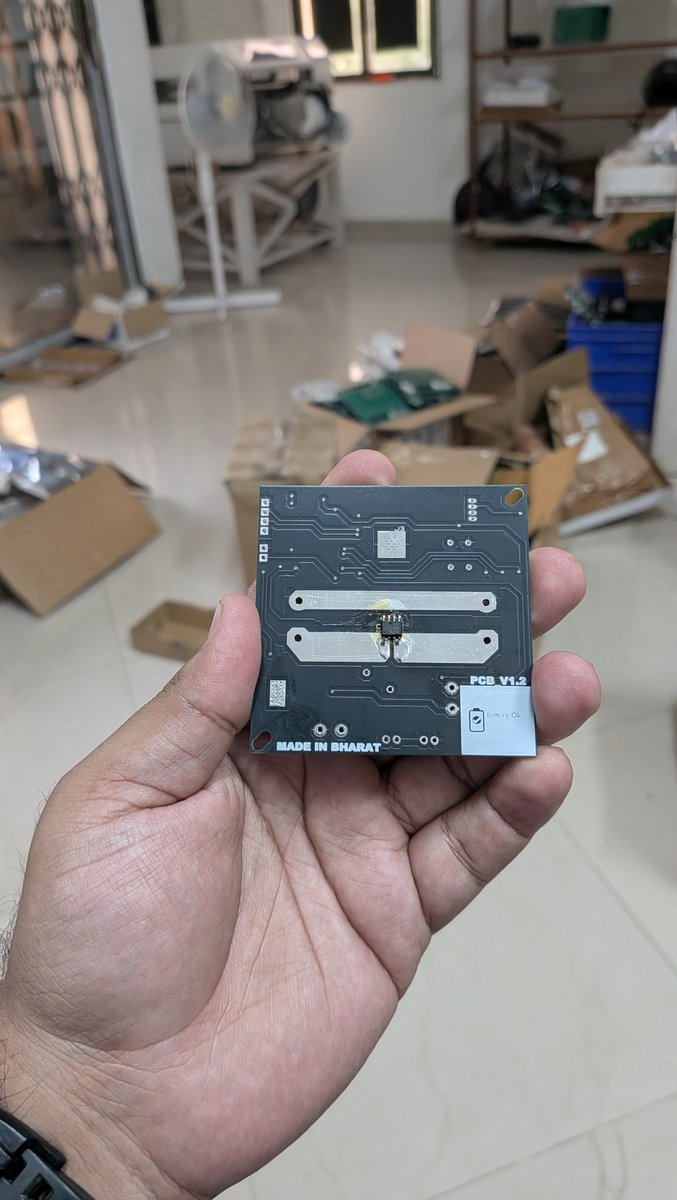
My journey into energy and deep tech wasn’t exactly planned.
I started as a hardware engineer after https://t.co/vew3DMlljd, working with multiple startups like sickle innovations, streamline controls, aim innovations etc. and spending a lot of time understanding how things actually work beyond textbooks.
Pursued my https://t.co/7kghkBZtn4 in Energy Infrastructure.
Along way, I built machine-learning models for energy forecasting, worked on research, filed a few patents, and published international research papers.
Then came Gensol.
I joined the design team straight out of college.
Probably the wrong time to proudly mention that name, I know. :)
I left after 10 months.
And somewhere through all of this, one obsession started becoming stronger
Batteries.
For nearly 8 years now, I’ve been trying to understand one question:
How do we make batteries superintelligent?
Not just measure voltage.
Not just estimate charge.
But actually understand what is happening inside a battery:
Its health.
Its degradation.
Its safety.
Its faults.
Its remaining life.
Its performance.
Today, I’m building Energy AI Labs alongside Ajay @Ajayv93, ex-DRDO, a real tech wizard, and probably one of the most relentlessly curious people I know.
Together, we built EV DOCTOR™.
What started as an experiment eventually became a battery diagnostics platform that can help EV and battery businesses understand battery health, safety, faults and performance in minutes instead of relying on random guesswork.
Today, EV DOCTOR™ is being used by hundreds of EV and battery businesses across markets worldwide daily.
And now the journey is evolving again.
We’re building Battery OS, https://t.co/LQ4xGMSCml
The idea is simple to explain, but incredibly difficult to build:
An intelligence layer for every battery.
Regardless of chemistry.
Regardless of format.
Regardless of application.
EVs today.
But eventually batteries inside energy storage systems, robots, drones, machines, medical devices, consumer electronics and things that probably haven't even been invented yet.
I wish I could say we started with some beautiful 10-year masterplan.
We didn’t.
A lot of this journey has been:
blowing up prototypes,
burning components,
spending years in R&D,
testing thousands of batteries,
writing algorithms that failed,
questioning assumptions,
rebuilding hardware,
making mistakes,
and starting again.
Repeatedly, with a smile and sometimes unbearable pain.
Those failures probably taught us more than the successes ever could.
And they shaped a few beliefs I hold very strongly:
- Data will become one of the most valuable assets in energy.
- Energy intelligence will eventually become more valuable than energy hardware itself.
- Hard engineering problems require patience, not hype.
- The best technology eventually becomes invisible quietly embedded inside products people use every day.
- Some of the world's most important deep-tech companies can absolutely be built from India.
Outside work, I’m endlessly curious about deep tech, AI, manufacturing, energy systems, first-principles thinking, and products that might outlive the people building them.
Batteries are only the starting point.
What we're ultimately interested in is something much larger:
building the core intelligence layer for energy.
Battery intelligence
Then Battery OS
Then Energy Intelligence
Eventually, Energy Superintelligence.
There are a few things we're working on right now that I'm incredibly excited about.
Can’t reveal much yet.
But I’ll share as we build and go ahead.
In short?
I’m still just a stubborn, curious kid who believes we can build superb technology in India.
And he’s trying damn hard.
🇮🇳🚀
@energyailabs
Four years ago, I pitched EV DOCTOR™ to a Silicon Valley VC.
EV battery diagnostics.
Energy APIs.
Battery intelligence.
I was barely a few minutes into the conversation when he asked:
“How much have you raised?”
I said:
“Nothing.”
We had bootstrapped it with my https://t.co/7kghkBZtn4 stipend (from MHRD), personal savings, and a few government grants.
The meeting lasted 17 minutes.
His verdict?
“Not scalable.”
That same week, I remember reading about a US startup raising millions for an app built around something as simple as reminding people to drink water.
And something clicked.
Maybe India was never supposed to build Silicon Valley-style startups.
Because here, we aren't always building for convenience.
We are building because problems leave us no other choice.
When a mechanic cannot understand why an EV battery is failing, that's not a UX inconvenience.
That's his livelihood.
When a farmer cannot reach the right buyer, that's not an optimization problem.
That's his income.
When energy becomes unreliable, water becomes scarce, mobility becomes unaffordable, or infrastructure simply doesn't exist…
you don't build because it sounds cool.
You build because someone desperately needs it to work.
That is the India I see being built today.
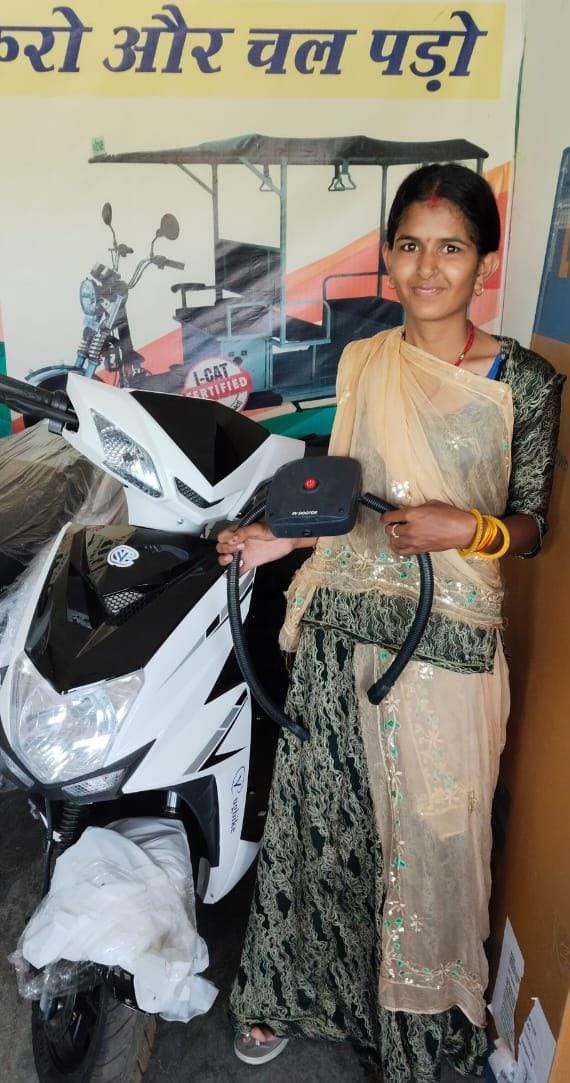
EV DOCTOR™: turning ordinary garages into EV-ready diagnostic centres with fast, data-driven battery intelligence.
DeHaat: connecting more than a million farmers with markets, inputs and services.
Agnikul Cosmos: building and 3D-printing rocket technology from Chennai.
Vicharak: building next-generation computing infrastructure from Surat.
And there are hundreds more.
This is what constraint-driven innovation looks like.
A lack of sophisticated battery diagnostics becomes a new intelligence layer.
Scarce resources force better systems.
Weak infrastructure forces founders to invent infrastructure.
Problems the world once dismissed as “too Indian” are suddenly becoming global problems.
Climate.
Energy.
Mobility.
Food security.
Battery safety.
Resource scarcity.
These are not local problems anymore.
They are tomorrow's global emergencies.
And some Indian founders have already spent years solving them.
That “unscalable” EV battery diagnostic idea?
EV DOCTOR™ has now tested 10M+ batteries, reached 30+ countries, and we are working toward making battery diagnostics universal.
But the part I care about most isn't the number.
It's the garage owner who can now diagnose an EV confidently.
The technician who gets a new livelihood.
The buyer who doesn't have to gamble on a used battery.
The business that can finally understand the most expensive component inside an EV.
Because this was never only about selling a device.
It was about giving people intelligence they never had access to.
And then came the strange full-circle moment.
That VC reached out again recently.
This time, asking about participating in our first fundraise for Energy AI Labs. (@energyailabs)
I refused with all due respect :)
Funny how four years can change the meaning of “not scalable.”
So I have one message for anyone watching Indian startups from the sidelines:
DON'T UNDERESTIMATE THEM.
We may be underfunded.
We may be building from smaller cities, garages, workshops, hostels and laboratories you've never heard of.
We may be hungry.
We may even be, in Steve Jobs' words, “foolish.”
But that hunger creates a very different kind of company.
Not companies designed merely to make comfortable lives slightly more comfortable.
But companies trying to make difficult lives possible.
India isn't chasing Silicon Valley anymore.
We are slowly writing our own playbook.
One battery.
One farmer.
One rocket.
One livelihood.
One impossible problem at a time.
And maybe that's how the world actually changes.
We started with batteries, because they were the most uncertain energy nodes we knew of, now we are past that conversation.
Now we are building energy superintelligence, from batteries, to homes, enterprises, utilities, factories and beyond.
Just a heartfelt suggestion to all VCs of the world:
Never underestimate Indian startups and its founders.!
Four years ago, I pitched EV DOCTOR™ to a Silicon Valley VC.
EV battery diagnostics.
Energy APIs.
Battery intelligence.
I was barely a few minutes into the conversation when he asked:
“How much have you raised?”
I said:
“Nothing.”
We had bootstrapped it with my https://t.co/7kghkBZtn4 stipend (from MHRD), personal savings, and a few government grants.
The meeting lasted 17 minutes.
His verdict?
“Not scalable.”
That same week, I remember reading about a US startup raising millions for an app built around something as simple as reminding people to drink water.
And something clicked.
Maybe India was never supposed to build Silicon Valley-style startups.
Because here, we aren't always building for convenience.
We are building because problems leave us no other choice.
When a mechanic cannot understand why an EV battery is failing, that's not a UX inconvenience.
That's his livelihood.
When a farmer cannot reach the right buyer, that's not an optimization problem.
That's his income.
When energy becomes unreliable, water becomes scarce, mobility becomes unaffordable, or infrastructure simply doesn't exist…
you don't build because it sounds cool.
You build because someone desperately needs it to work.
That is the India I see being built today.
EV DOCTOR™: turning ordinary garages into EV-ready diagnostic centres with fast, data-driven battery intelligence.
DeHaat: connecting more than a million farmers with markets, inputs and services.
Agnikul Cosmos: building and 3D-printing rocket technology from Chennai.
Vicharak: building next-generation computing infrastructure from Surat.
And there are hundreds more.
This is what constraint-driven innovation looks like.
A lack of sophisticated battery diagnostics becomes a new intelligence layer.
Scarce resources force better systems.
Weak infrastructure forces founders to invent infrastructure.
Problems the world once dismissed as “too Indian” are suddenly becoming global problems.
Climate.
Energy.
Mobility.
Food security.
Battery safety.
Resource scarcity.
These are not local problems anymore.
They are tomorrow's global emergencies.
And some Indian founders have already spent years solving them.
That “unscalable” EV battery diagnostic idea?
EV DOCTOR™ has now tested 10M+ batteries, reached 30+ countries, and we are working toward making battery diagnostics universal.
But the part I care about most isn't the number.
It's the garage owner who can now diagnose an EV confidently.
The technician who gets a new livelihood.
The buyer who doesn't have to gamble on a used battery.
The business that can finally understand the most expensive component inside an EV.
Because this was never only about selling a device.
It was about giving people intelligence they never had access to.
And then came the strange full-circle moment.
That VC reached out again recently.
This time, asking about participating in our first fundraise for Energy AI Labs. (@energyailabs)
I refused with all due respect :)
Funny how four years can change the meaning of “not scalable.”
So I have one message for anyone watching Indian startups from the sidelines:
DON'T UNDERESTIMATE THEM.
We may be underfunded.
We may be building from smaller cities, garages, workshops, hostels and laboratories you've never heard of.
We may be hungry.
We may even be, in Steve Jobs' words, “foolish.”
But that hunger creates a very different kind of company.
Not companies designed merely to make comfortable lives slightly more comfortable.
But companies trying to make difficult lives possible.
India isn't chasing Silicon Valley anymore.
We are slowly writing our own playbook.
One battery.
One farmer.
One rocket.
One livelihood.
One impossible problem at a time.
And maybe that's how the world actually changes.
We started with batteries, because they were the most uncertain energy nodes we knew of, now we are past that conversation.
Now we are building energy superintelligence, from batteries, to homes, enterprises, utilities, factories and beyond.
Just a heartfelt suggestion to all VCs of the world:
Never underestimate Indian startups and its founders.!
We built EV DOCTOR in India to solve a very real battery problem.
Now we’re taking this indigenous technology to the world. 🇮🇳🌍
We’re opening channel partnerships across high-growth electric two-wheeler markets - starting with India, Indonesia, Vietnam, Thailand, the Philippines and Nepal.
The ambition is simple:
Build world-class battery intelligence in India.
Make it useful everywhere.
Looking forward to partnering with people who want to build this category with us.
Indian innovation. Global ambition. 🚀
Know more at https://t.co/bCMNRqwLub
@batteryoktech
Some people shape your journey and
push you towards the pursuit of greatness.
On this Guru Purnima, I’m deeply grateful to Tapan Misra Sir.
He believed in us when we were just getting started.
From our early days of building e-bikes to eventually creating EV DOCTOR™, his guidance, clarity, and conviction have shaped our journey in ways that are difficult to measure.
Having spent decades building some of India’s most critical radar and space technologies at ISRO, including serving as Director of the Space Applications Centre (SAC), his journey itself is a masterclass in deeptech, persistence, and nation-building.
And even after ISRO, he chose to keep building.
Through SISIR Radar, he is now working on indigenous advanced radar technologies, including Synthetic Aperture Radar systems continuing the pursuit of building globally significant technology from India.
Our entire team has learned immensely from his experience, perspective, and way of thinking.
More importantly, he continues to inspire a generation of Indian deeptech founders to dream bigger, take on harder problems, and have the conviction to build world-class technology from India. 🇮🇳
Grateful to have a mentor like him in our journey.
Guru Purnima wishes, Sir.
@TapanMisra1@batteryoktech@Ajayv93@energyailabs
An OS for batteries, from India to the world.
We have Dolby for sound.
Android for phones.
Intel for chips.
But what powers the battery era?
Battery OS is the intelligence layer for batteries across EVs, drones, BESS, robotics, and consumer electronics.
Built on years of R&D and real-world data, it turns battery health, safety, fire risk, degradation, faults, and remaining life into actionable insights through APIs and dashboards.
The same intelligence proven inside EV DOCTOR™,
now built for every battery application.
The battery era needs a universal OS.
We’re building it from India, for the billions of batteries across world.
https://t.co/LQ4xGMSCml
@Ajayv93@batteryoktech@energyailabs
Today,
we’re launching a new version of EV DOCTOR™.
New features, More value.
Another step towards making battery intelligence accessible at scale, from India to the world.
For this launch, we chose a different path.
No typical Silicon Valley-style video. No AI.
Just pure creativity, 3D modelling, and animation by a talented Gen Z student from Ahmedabad.
Proudly, Built in India. 🇮🇳
For the world.
More here: https://t.co/LQ4xGMSCml | https://t.co/bCMNRqwLub
@batteryoktech@Ajayv93@energyailabs
re-intro time.
i'm Ajay Vashisht.
Born in Himachal Pradesh, building the future of energy from Ahmedabad, India.
I'm an electronics engineer who has always been obsessed with one thing:
understanding how complex systems work and making them better.
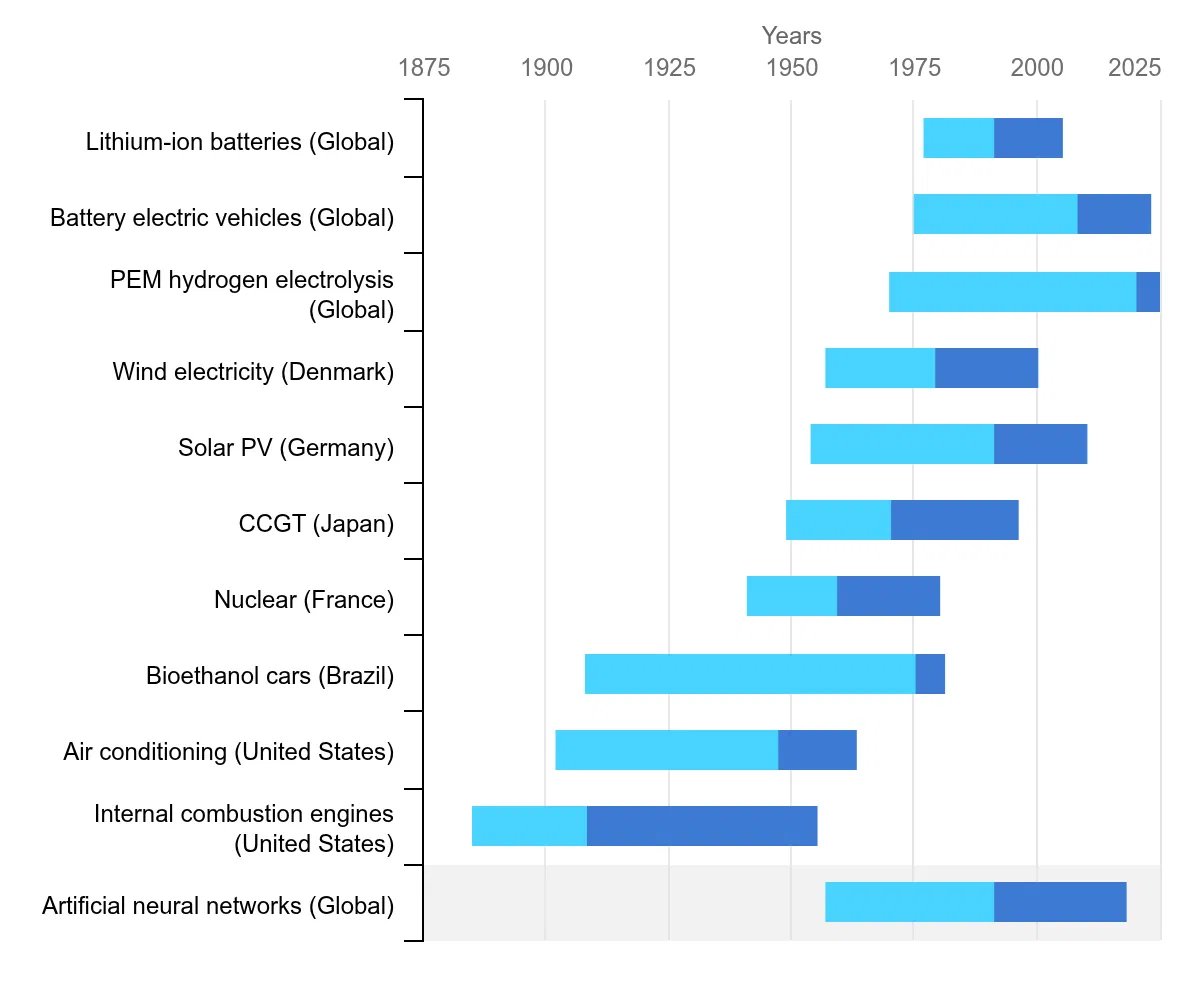
India isn't on this chart. Anywhere.
The IEA just mapped 150 years of energy innovation, and every technology with a single national home is an old one.
Wind is Denmark.
Solar PV, Germany.
Nuclear, France.
The combustion engine, American.
India is the world's third-largest energy consumer and originated none of them.
The newest bars, batteries, hydrogen, EVs, neural networks, are all just tagged "Global." No flag yet. And they're younger than they look.
The IEA's own numbers: energy tech averaged ~30 years from invention to first sale.
The neural network took 35 years just to reach commercialization.
Perceptron in 1958, the ChatGPT moment in 2022. The steep part of that curve started about five minutes ago.
That's the opening.
The old technologies came with a 50-year national head start.
The intelligence layer on batteries and the grid didn't.
It's the one frontier India can still enter early, and the only one a three-person team can afford to build.
And thats where the origins of @energyailabs exist.