When disasters hit, public power is first in and last out. LPPC backs bipartisan H.R. 4669 to speed FEMA recovery and get communities re-energized faster.
When weather disasters strike, public power utilities are on the front lines of recovery. We work to restore power, repair critical infrastructure, and ensure public safety.
LPPC supports H.R. 4669, the bipartisan Fixing Emergency Management for Americans (FEMA) Act of 2025, which takes important steps to improve federal disaster response and streamline recovery efforts for communities nationwide. Learn more as LPPC President @EnergyFalcone explains how this bill will strengthen @FEMA and support faster, more resilient grid recovery.
Our members are ready to lead recovery efforts. Washington can give us the tools to move swiftly.
Learn more: https://t.co/VWS7CJenQ5
#PublicPower #DisasterRecovery #GridResilience #SmartInvestments #EmergencyResponse
LPPC is proud to join the @NatlHydroAssoc in supporting the Hydropower Licensing Affordability Act (H.R. 9337 / S. 5048), legislation that would improve the federal hydropower licensing process while maintaining strong environmental protections.
LPPC member utilities own and operate more than 17 GW of hydropower — about one-quarter of the nation's non-federal hydroelectric capacity.
This legislation would help ensure licensing conditions are tied to a project's actual impacts, improving certainty, reducing unnecessary costs, and supporting reliable, renewable power.
LPPC thanks Rep. @RepBentz and Sens. @SteveDaines, @SenatorRisch, and @lisamurkowski for their leadership on this important legislation.
#hydropower #hydrorelicensing #publicpower #permittingreform
Video footage of hydro facilities in order appeared:
@SnoPUD | @SEACityLight | @NYPAenergy | @amppublicpower | @NPPDnews | @PRPAuthority | @SRPconnect | @grda_ok
When disaster strikes, every minute matters.
In Chapter 2 of LPPC's FEMA Reform Video Series, @dssullivantulsa, President & CEO of @grda_ok, explains how outdated @fema reimbursement rules can unintentionally discourage utilities from sending and staging mutual aid crews before major storms.
Public power utilities routinely mobilize crews across the country ahead of major events to restore power as quickly and safely as possible. But if a storm changes course, most of those advance deployment costs are ineligible for FEMA reimbursement — even though proactive planning ensures a rapid response when communities need it most.
LPPC believes FEMA should modernize its policies to support — not penalize — pre-event staging, pre-positioning, and mutual aid, in order to provide recovery efforts as soon as possible to lessen the impact of storms on communities.
Learn more about LPPC's principles for FEMA reform: https://t.co/mwVAPGx2pF
#PublicPower #FEMA #GridReliability #DisasterResponse #MutualAid
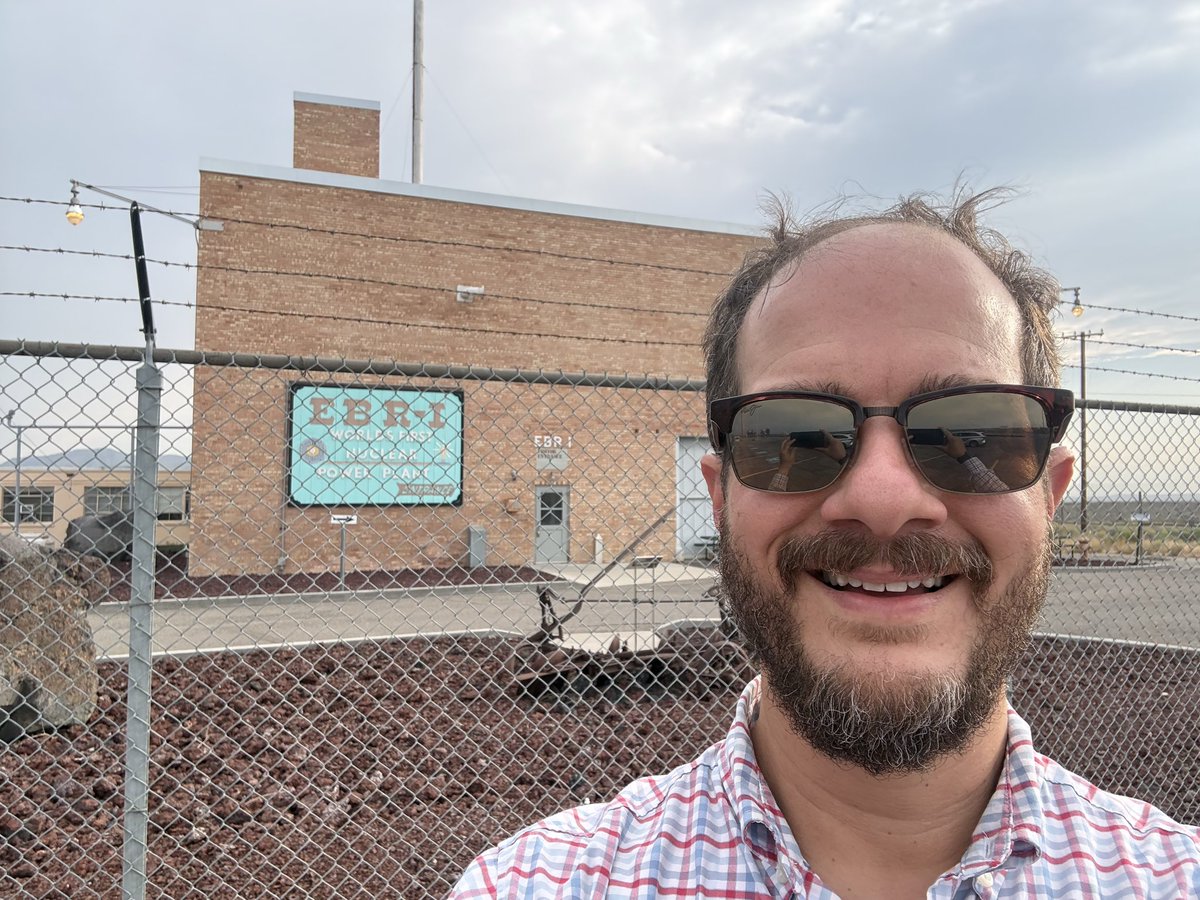
Hello from Arco, Idaho!
The first city in the world powered by nuclear energy. Just down the road, EBR-I generated the world’s first electricity from nuclear fission in 1955.
@LPPCorg members are investing in the next generation of reactors, but it all started here.
LPPC's 34 task forces and networks are run by more than 60 member volunteers: senior leaders who chair a network on grid hardening or data centers or cybersecurity on top of doing that job at their own utility.
Last week our volunteer leaders spent two days in Kenmore, Washington, taking stock of what their groups delivered in 2026 and building the 2027 work plan. Load growth from AI and data centers, electrification, and a manufacturing build-out none of the old forecasts anticipated. One priority outranked the rest in every session: keeping power reliable and affordable for the 30 million Americans our members serve.
"There's a feel-good aspect of public power I never had in previous roles. We're customers of the utility we serve. Our kids go to school here."
Same grid, same bills, same neighbors.
#PublicPower #GridReliability
In April, LPPC President @EnergyFalcone testified before the @HouseCommerce Subcommittee on Energy to ensure public power's input was heard on several bipartisan energy bills.
On July 21, Chairman Rep. @RepGuthrie led the committee in a mark-up that resulted in 6 of these bills passing with overwhelming bipartisan support. They now head to the full U.S. House of Representatives for consideration.
Across the legislative package, LPPC consistently emphasized three core principles:
⚡ Protect existing customers through cost causation by ensuring large-load customers pay the infrastructure costs they create.
⚡ Support innovation without increasing costs to customers, encouraging AI and advanced grid technologies where they demonstrate net customer benefits.
⚡ Promote credible load forecasts, distinguishing between committed load from probable or speculative load.
Learn more: https://t.co/aSWyywqdcA
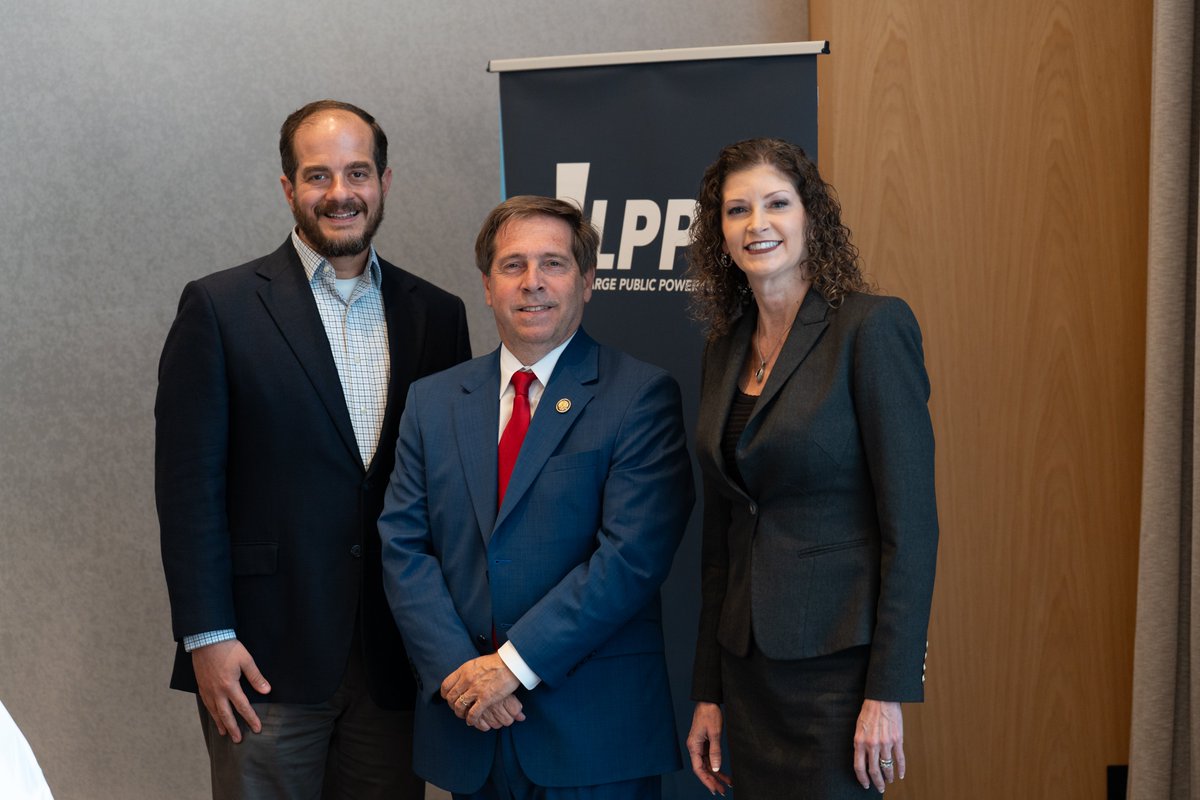
Pictured below from left to right: Rep. @boblatta (R-OH), senior member of the House Committee on Energy and Commerce and Chairman of the Subcommittee on Energy and LPPC President Tom Falcone.
LPPC welcomes the @WhiteHouse's Ratepayer Protection Pledge, which reinforces the commitments made by hyperscalers in March to ensure existing customers are not burdened with the infrastructure costs required to support AI and data center growth.
LPPC President @EnergyFalcone said, “LPPC applauds the Administration’s effort to bring all stakeholders to the table to protect affordability in the face of unprecedented demand from large loads.
The Ratepayer Protection Pledge was also endorsed by these LPPC members: @CSUtilities, @ElectriCitiesNC, @grda_ok, @GrantPUD, @LCRA, @MEAGPower, @NPPDnews, @OPPDCares, @SRPconnect, @santeecooper, and @SnoPUD.
#datacenters #ai #ratepayerprotection #largeloads #tariffs #rateclasses #customerprotections
How do LPPC member utilities protect customers from inflation, power supply fluctuations, large loads, and other rate stressors?
Learn more in our latest fact sheet on affordability:
https://t.co/sHuBEDVTCB
As not-for-profit, community-owned public power utilities, LPPC members share a single purpose: providing the most reliable electric service at the least cost to their customers.
A recent study finds that LPPC member utilities offer some of the most affordable residential rates in the U.S., with a combined average rate ~19% less than the national average.
Since 2010, LPPC member utilities’ residential electric rates are ~17% less than the rate of inflation, and significantly less than the increases in all other major goods and services.
Learn more in our latest fact sheet on affordability: https://t.co/1vFVK4wmNi
Member Spotlight | LPPC congratulates @NYPAenergy and @nationalgridus on completing Smart Path Connect.
Together, the partners upgraded ~100 miles of 345-kV transmission, built 4 new substations and upgraded 10 existing substations, creating nearly 200 miles of continuous high-voltage transmission across northern and central New York.
The project unlocks 1,000 MW of additional capacity, improves reliability, reduces congestion, and is expected to deliver approximately $438 million in annual savings for New Yorkers.
Learn more about the project: https://t.co/WjqNcmDcWw
#PublicPower #PublicPowerOn #GridModernization #Transmission
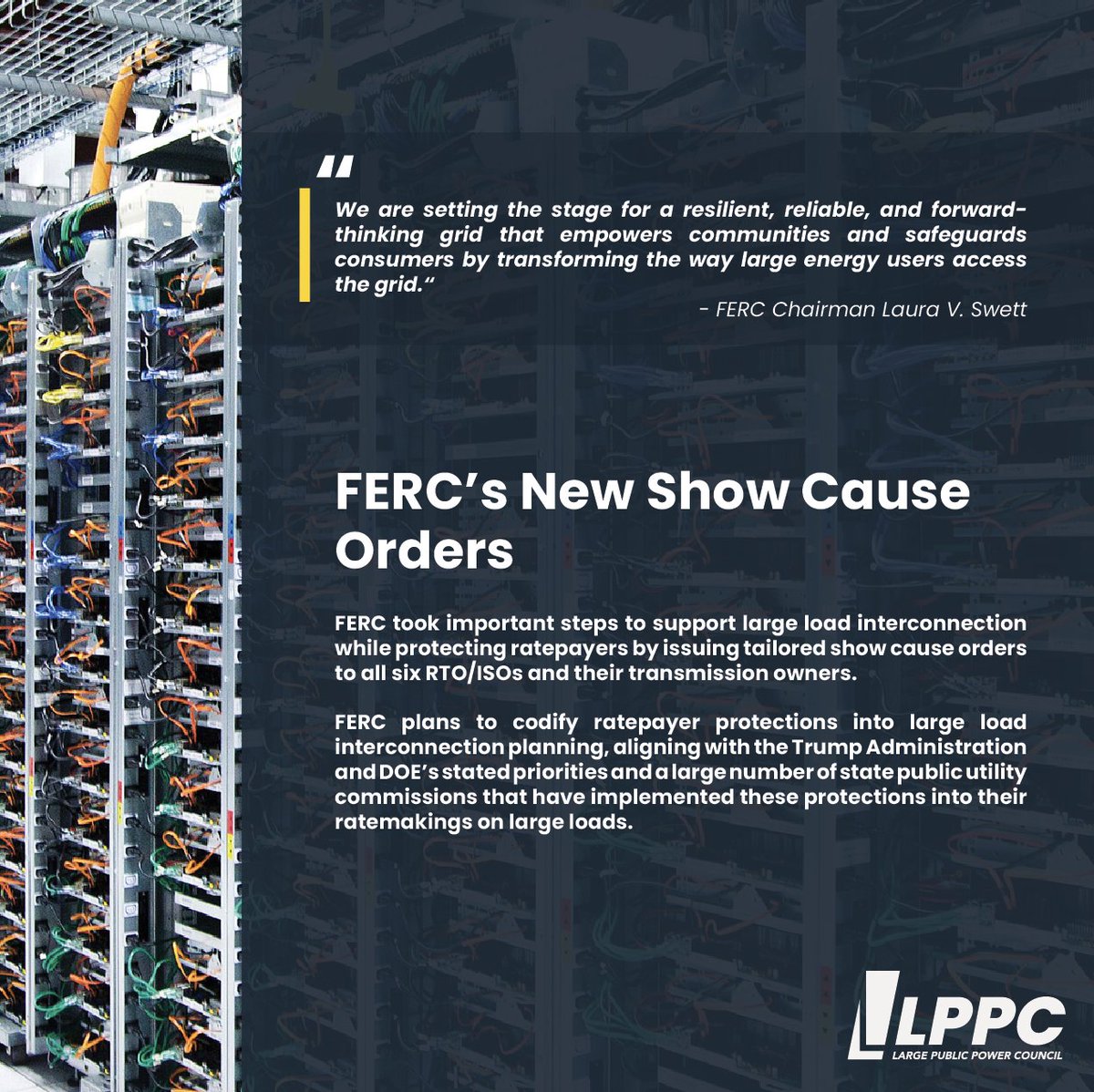
@FERC is acting to support large loads and protect customers, while public power seeks the same from the @USTreasury on private use regulations.
This month, FERC issued tailored show cause orders to all six RTO/ISOs (@pjminterconnect, @SPPorg, @MISO_energy, @CaliforniaISO, @NewYorkISO, @isonewengland) and their transmission owners, a clear signal it intends to codify ratepayer protections into large-load interconnection planning, consistent with the Administration and @ENERGY stated priorities and with a large number of state commissions that have done the same.
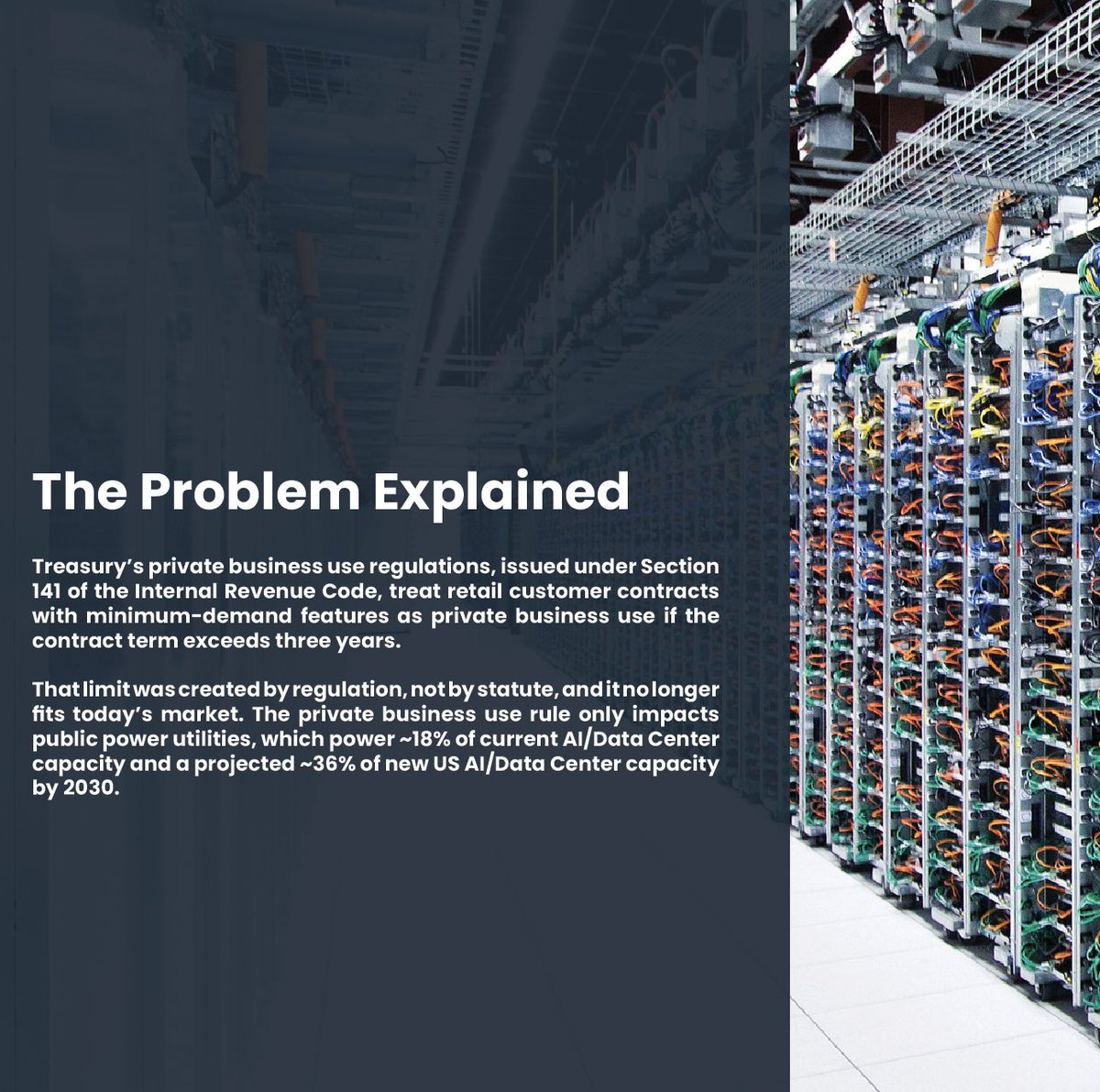
The contract protections @FERC is embracing are ones public power cannot fully use. Under @USTreasury's private business use rules, public power utilities cannot sign large-load contracts beyond three years, a limit set by regulation, not statute. Long-term commitments are a core customer protection in nearly all large-load tariffs, because they put the risk on the new customer, not existing ratepayers. Our members' large-load interconnection queue already totals up to 50 GW.
LPPC continues to work with Treasury to update its private business use rules so public power can build what this moment demands, while protecting the 30.5+ million customers our members serve.
Learn more: https://t.co/PcVbIrYjeO
In the first video in LPPC's FEMA Reform Video Series, President @EnergyFalcone explains the importance of maintaining @fema as a reliable federal partner during catastrophic events. While utilities can insure certain facilities, most electric system restoration costs are not commercially insurable.
Mutual aid, emergency labor, debris removal, damaged poles and wires, transportation, and system-wide restoration efforts generally fall outside traditional insurance coverage. As not-for-profit public power utilities, recovery costs that FEMA does not cover fall on the communities they serve.
Read more about LPPC's Principles for FEMA Reform: https://t.co/TNnWGi7ni3
In 2025, the U.S. experienced 23 billion-dollar disasters causing approximately $115 billion in damage.
In LPPC's new @fema reform report, we examine how Congress can streamline recovery, strengthen grid resilience, and ensure the communities we serve have access to reliable federal disaster assistance.
LPPC surveys found that 91% of member utilities have received FEMA public assistance funding since 2010, while the commercial insurance market does not offer meaningful coverage for restoring a transmission and distribution system under emergency conditions. That is why FEMA remains an essential federal backstop when disasters exceed local and state capacity.
The nation needs a disaster recovery system that works better. With thoughtful reforms, Congress can modernize FEMA while preserving the federal partnership that communities depend on when they need it most.
📑 Read the report → : https://t.co/bZM3v2uxKl
@DHSgov #femareform #publicpower #publicpoweron #disasterrecovery
When the grid goes down, public power utilities are first responders, restoring electricity for 30M Americans. @fema is how that recovery gets funded.
Our comments to @DHSgov lay out 7 principles for faster recovery that doesn't shift cost onto storm-hit communities. Most grid restoration isn't insurable, so the federal backstop matters.
We back the bipartisan H.R. 4669 and urge Congress to strengthen it for public power.
Read LPPC's comments & principles for FEMA Reform: https://t.co/GV4Tx0rJ9A
#FEMA #FEMAReform #DisasterRecovery #PublicPower #PublicPowerOn
According to a recent survey, LPPC member utilities collectively reported ~50GW of committed, speculative, or early-stage load in their interconnection queues. 18+GW of this load accounts for AI/Data Center interconnections, which equates to over a third of all U.S. AI/Data Center capacity in the next five years.
As echoed in the President's Ratepayer Protection Pledge, hyperscalers and AI companies must pay the full cost of the energy and infrastructure needed to serve them, "no matter what."
LPPC member utilities are employing a variety of customer-protective mechanisms and both approved tariffs and contract-based structures across mutiple states to ensure that growth pays for growth.
Learn more in LPPC's recent Large Load Projects & Tariffs report: https://t.co/UyfUNsrcaN
#publicpower #publicpoweron #largeload #FERC @FERC@ENERGY
Recently, LPPC CEOs convened in Nashville, Tennessee for their Spring meeting. Critical discussions focused on cyber and physical security for critical infrastructure, advanced nuclear technologies, and managing AI & data center load growth.
CEOs heard from Marcus Nichol, Vice President of Nuclear Deployment and Fuel Cycle at @NEI, and @RepChuck, Chairman of the House Appropriations Energy and Water Development Subcommittee, on the state of Gen III+ small modular reactor technology, supporting legislation, and federal investment in advanced nuclear generation.
They were also briefed by Liz Martin of @DragosInc and Sezaneh Seymour, Vice President & Head of Regulatory Risk and Policy at @CoalitionSec on current cyber and operational security threats, along with tactics to strengthen defenses and reduce vulnerabilities.
LPPC thanks @NESpower, and its President & CEO @tbroylesaplin for hosting our CEOs and senior leaders. Together, we look forward to applying these insights to maintain reliability and affordability for LPPC members' 30.5+ million customers across the country.
#publicpower #publicpoweron #advancednuclear #cybersecurity #largeload #AI #datacenter
Member Update: Last week the @NPPDnews was awarded ~$28 million in federal cost-shared funding from @ENERGY as part of a larger federal investment to deploy advanced light-water small modular reactors (SMRs) in the U.S. The award will support NPPD's efforts in obtaining an @NRCgov early-siting permit for a location in Nebraska for future deployment of Gen III+ SMRs.
For the last 50+ years, NPPD has owned and operated the Cooper Nuclear Station in Brownsville, Nebraska, which has a net capacity of ~800 MW and employs over 680 Nebraskans.
In a recent LPPC survey from our newly formed Nuclear Subcommittee, members reported owning over 6,200 MW of nuclear generation capacity with several members exploring the technology to meet load growth, electrification, and decarbonization goals.
Learn more here: https://t.co/58LLBpYvot