I’ve posted about this before, and this epitomizes the issue: this is the direct result of the irresponsible, idiotic severe cuts to @NOAA / @NWS. No spin or opinion…this is 100% FACT. This never happened before these cuts. THIS HURTS EVERY. SINGLE. AMERICAN.
At a time when ocean temperatures are smashing records and scientists are still trying to understand how fast the system is shifting under climate change, they are talking about scrapping a 368 million dollar early warning network that has ALREADY BEEN PAID FOR by tax payers.
This is not just a few sensors in the sea. It is a network of ~900 instruments measuring temperature, currents, carbon, chemistry and ecosystem change. It was designed to deliver long term data over decades.
This would effectively end key long running records and that matters because ocean data only becomes powerful over time. You cannot rebuild a continuous climate record once it is interrupted.
As a meteorologist, I can say without hesitation that discontinuing this dataset would be another significant blow to my science, just like the cuts to the NWS that have caused adverse impacts to the radiosonde (weather balloon) network.
Climate change has put the oceans in deep trouble, and now the Trump admin is ditching a $368 million deep-sea monitoring system. https://t.co/KSBFQAcdLy
Turnip's trying to blind climate scientists into silence.
No data, no science, no warning.
The clueless idiots are dismantling a decade-old, $368m deep-ocean observation system that monitors coastal environments, marine ecosystems and ocean currents.
(NYT) https://t.co/xnTGyEt0Wi
@eniiler@nytimes@nytclimate Stardust's claim: ~10m tons of particles to cool 1.5°C.
What's not said: particles fall out in 1-2 yrs, so that's just the starting dose.
To maintain the cooling you inject again.
And again. For decades.
With rising CO₂ levels, the required dose keeps climbing.
And if it stops?
Stardust reveals its recipe for cooling the Earth: tiny spheres of silica and calcium carbonate. Here's a look at how that would work and the risks of privatizing geoengineering. @nytimes@nytclimate
https://t.co/z8a7KSsUmb
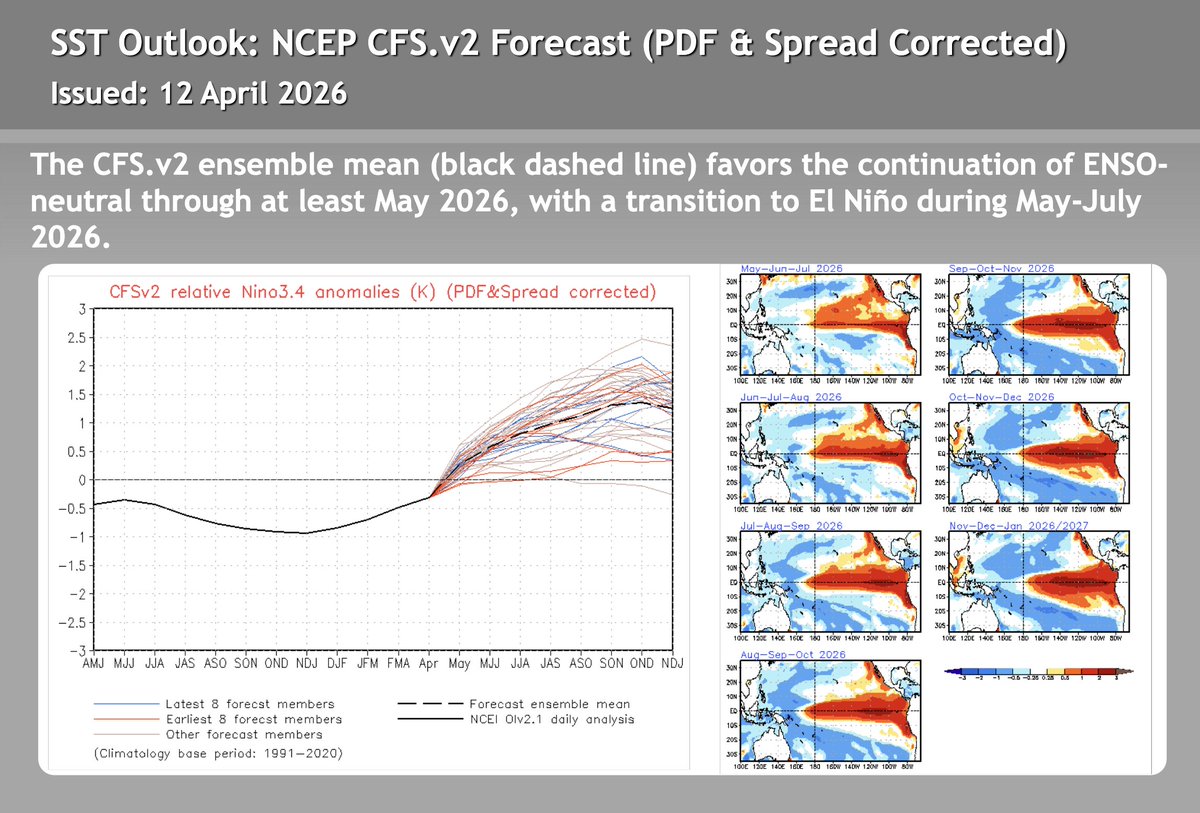
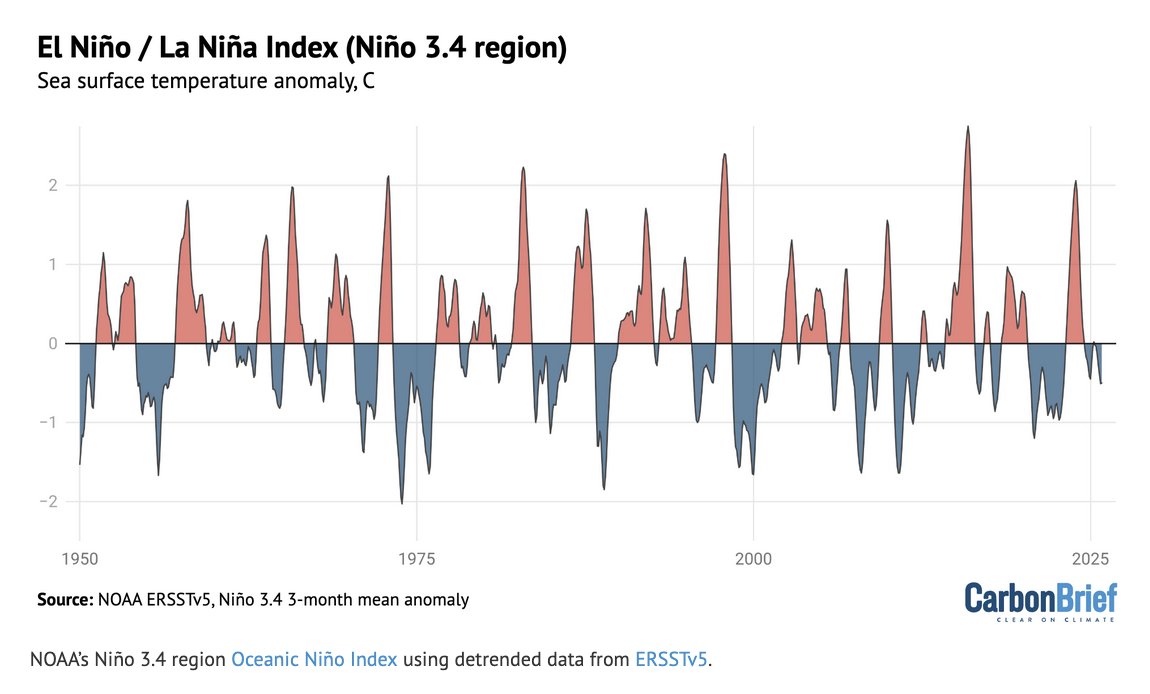
The "super-El Nino" talk is unhelpful clickbait hype. Current consensus forecast is for a Nino3.4 index of ~1.3C to emerge later this year. That's a *moderate* El Nino; pales in comparison w/ recent (e.g. 2016 & 2024) events.
The truth remains bad enough!
https://t.co/KrBrq60Xlj