Navy EOD. Author of "Proximity," "The Recipient's Son," and "A Poisoned Chalice." Podcast host of "Preble Hall" and ASNE's "Talk a Little, Learn a Lot."
The U.S. Navy sunk more Iranian minelaying vessels before they could sow the “weapons that wait” and a Royal Navy mine warfare unit is heading to the Strait of Hormuz aboard HMS Lyme Bay to conduct clearance operations.
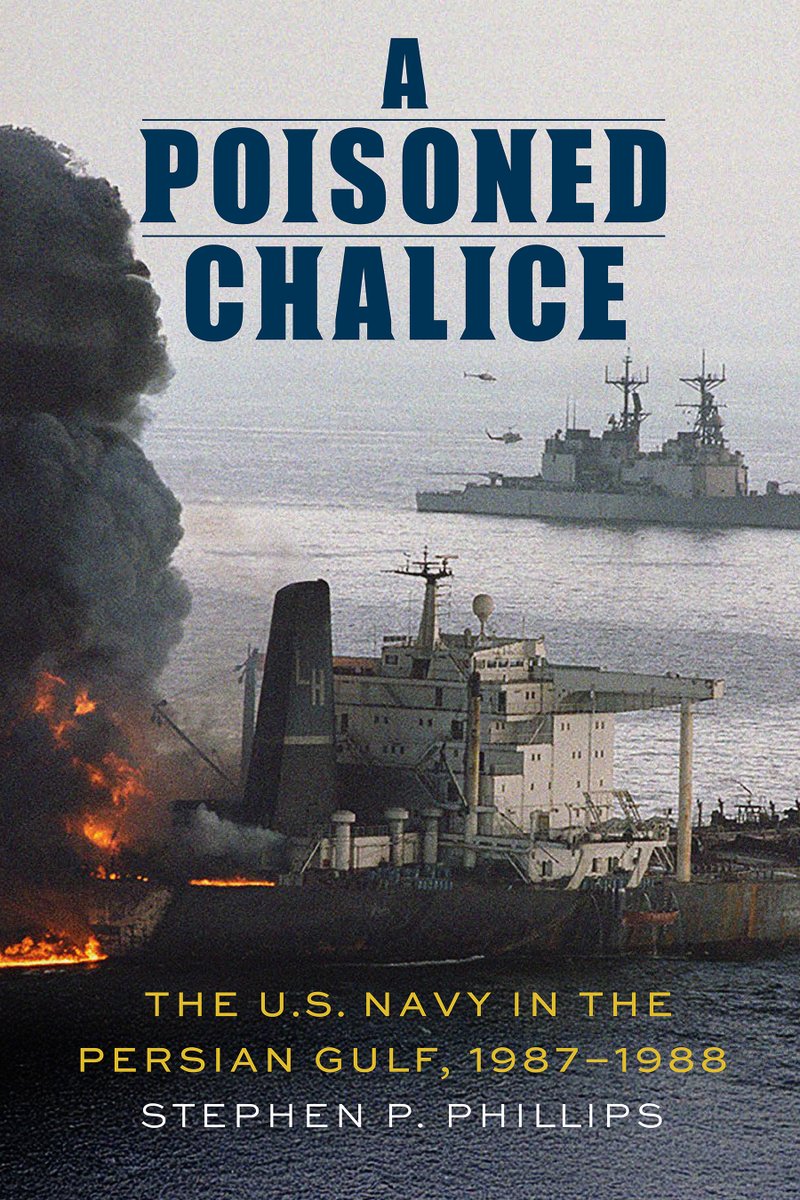
To learn more about mine warfare during the Tanker War and Operation Earnest Will, read “A Poisoned Chalice: The U.S. Navy in the Persian Gulf, 1987-1988” published by @PotomacBooks. Enter code 6AS26 on check out for 40%.
https://t.co/gsWo1mJjap
Here is a good listen for Memorial Day.
In episode 260 of the Preble Hall Podcast, Midn Austin Wilson serves as host. He interviews Dr. Justin Laborde to discuss Scattered Far and Wide, a poignant work about the U.S. Naval Academy Class of 1938 published by the Naval Institute Press.
Through their discussion, Austin and Wilson talk much of '38's service in World War II, to include those that made the ultimate sacrifice.
https://t.co/471IDPSd1m
In episode 51of Talk a Little, Learn a Lot, the American Society of Naval Engineers (ASNE) podcast, Dr. Mark Hagerott discusses with host Stephen Phillips his presentation…”The Emergence of Intelligent Machines: Framing the Challenge for the Navy and our Sailors.”
https://t.co/43Dap0BZ9t
Join ASNE and learn more about its publications and events here: https://t.co/3yidxzbHwf
Hosted by transistor, Talk a Little, Learn a Lot [https://t.co/ObZdMwRLTr] can also be found on Spotify, iTunes, Amazon Music, iHeartRadio, and many other podcast platforms. Listeners can add it to their favorite podcast platform by using the RSS feed: https://t.co/c2FWNprMdO
Please give the podcast a “like,” rate it, and provide a review. If you have a suggested topic, guest, or just want to ensure your comment gets through, contact Dr. Phillips at [email protected].
Operation Earnest Will is the precursor to all our modern conflict. The U.S. Navy’s presence led to a stalemated conclusion of the Tanker War, and thus the Iran-Iraq War. Iraqi did not achieve its aims, invaded Kuwait, leading to Desert Shield, Storm, and all other operations through Operation Iraqi Freedom. Add to this, increased presence of Americans on the Saudi peninsula was a factor in forming Al Qaeda, which attacked our nation on 9/11, resulting in the Global War on Terrorism.
To learn more about Operation Earnest Will, the last time we fought Iran in the Persian Gulf, read “A Poisoned Chalice: The U.S. Navy in the Persian Gulf, 1987-1988.” Published by @PotomacBooks order directly with code 6AS26 for 40% off.
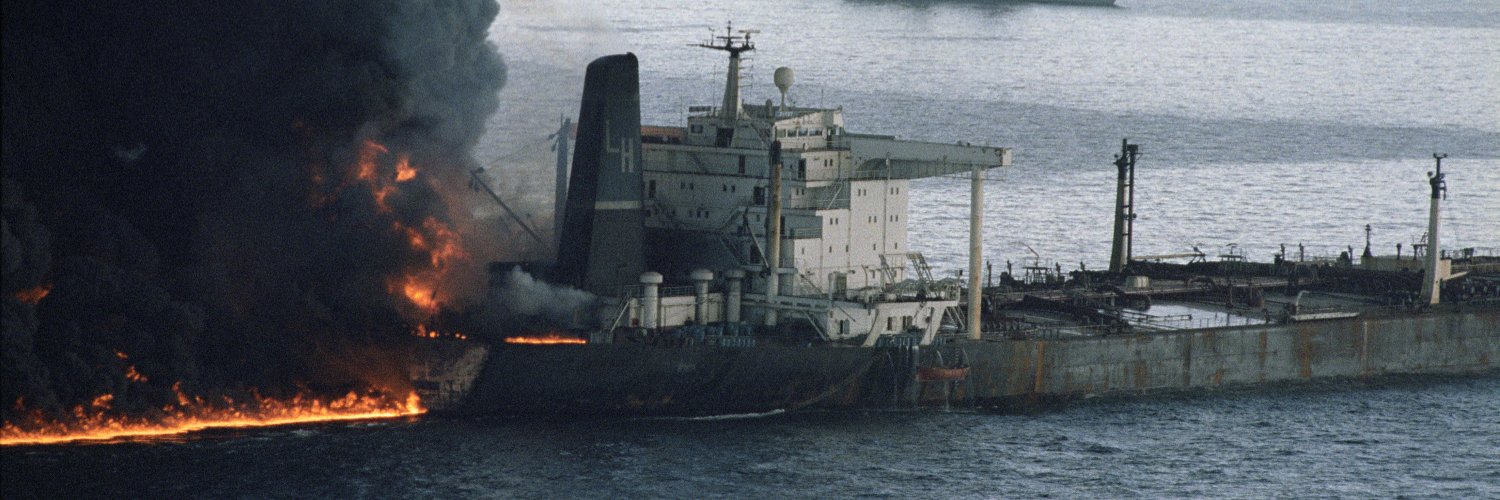
On May 17, 1987, an Iraqi Air Force jet, in a case of misidentification, attacked USS Starkwith two Exocet missiles. Thirty-seven American Sailors made the ultimate sacrifice. Though not officially part of Operation Earnest Will, it had significant impact on all who served in the Persian Gulf thereafter.
To learn more about Operation Earnest Will, the last time we fought Iran in the Persian Gulf, and the precursor to our nation’s war in the region thereafter, read “A Poisoned Chalice: The U.S. Navy in the Persian Gulf, 1987-1988.” Published by @PotomacBooks, order directly with code 6AS26 for 40% off.
How apropos to see these two books displayed together.
“A Poisoned Chalice: The U.S. Navy in the Persian Gulf, 1987-1988” begins with a brief description of U.S. presence in the Gulf, to include our nation’s relationship with the Shah. For example, Nixon developed a personal relationship with the Shah. Nixon once said to the Shah, “Protect me. Do not think of détente as as something that weakens you but as a way for the United States to gain influence.” The implication was that Nixon wanted to strengthen ties with the Shah, for Iran to become a more important U.S. partner in the Middle East. It was Nixon that approved the sale of F-14s to Iran.
I’ve picked up Scott Anderson’s “King of King’s” and have already delved into it. I’ve been a fan of Anderson since his recent book on Lawrence of Arabia. Though just into this read, I can already recommend it to those who want to understand the context of our conflict with Iran today.
For those who have not yet picked up a copy, if you are going to purchase “A Poisoned Chalice,” I recommend including “King of Kings” in your cart.
Saturday is National EOD Day, when the Joint EOD community recognizes those Explosive Ordnance Disposal Technicians who have made the ultimate sacrifice in the service of our nation. Hooya, EOD!
Iranian leadership infighting creates a “historical echo” that can be heard throughout the pages of my latest book, but reverberates loudest on the cover, in the title.
According to Iran International, @IranIntl_En, Khamenei has been told that war with the U.S. cannot continue. The piece reads, “The historical echo is hard to miss. In the final days of the Iran-Iraq War in 1988, senior Iranian officials and commanders warned Ruhollah Khomeini that the war could no longer be sustained.
Only days earlier, Khomeini had still been insisting on continuing the war. But under the weight of those warnings, he accepted UN Security Council Resolution 598 and ended the conflict, a decision he famously likened to drinking from a poisoned chalice.”
https://t.co/3AI8oZyhnJ
Published by Potomac Books, A Poisoned Chalice: The U.S. Navy in the Persian Gulf, 1987-1988 is still offered at 40% through the published using the code in the attached flyer.
Laying mines in international waters, or in the territorial waters of another nation is considered an act of war. During Operation Earnest Will (1987-1988), the U.S. intervention in the Iraq War at sea, our nation’s forces were poised to attack Iranian ships and Islamic Revolutionary Guard Corps-Navy fast boats...commonly called Boghammars...if they were discovered in the act of laying mines.
One notable example occurred on September 21st, 1987. The Iranian Navy ship Iran Ajr intended to lay mines in the approaches to Bahrain with the intent of sinking a U.S. naval vessel, especially the USS La Salle, which was the flagship for Commander Middle East Force.
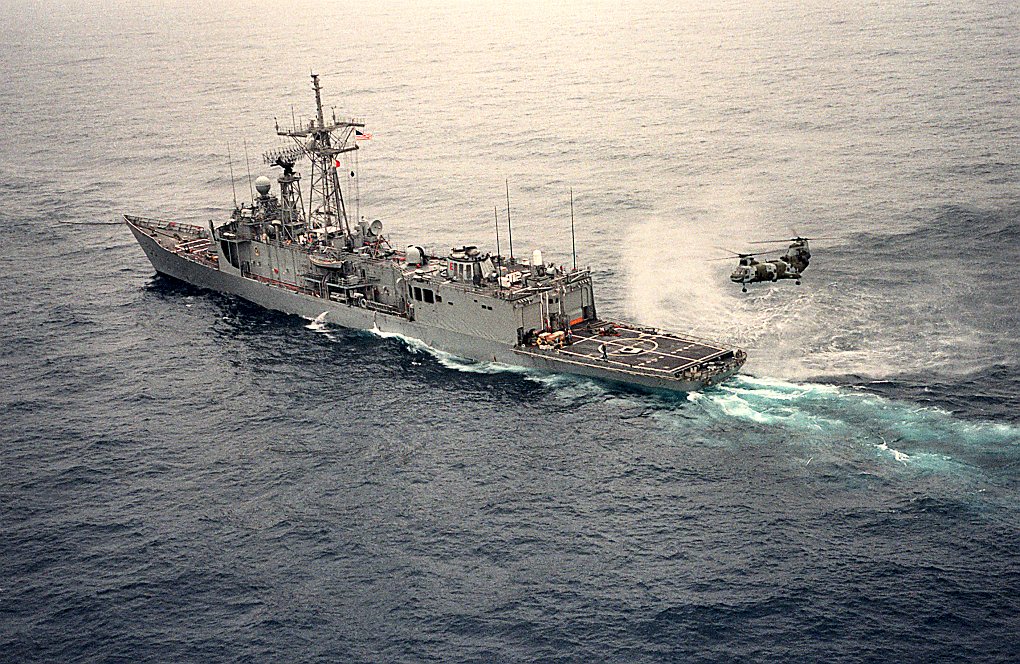
USS Jarrett, an Oliver Hazard Perry-class frigate, had three Task Force 160 helicopters on board. This was a U.S. Army special operations aviation capability, supporting the effort in a smaller operation called Operation Prime Chance.
On a night patrol, the three helicopters saw Iran Ajr and through night vision realized they were dropping something over the side. After consulting with the COMIDEASTFOR staff on La Salle, they were assured the activity was mine laying and they should engage immediately.
After a one-sided battle, Iran Ajr was dead in the water, and its crew abandoned their ship. The next day, Naval Special Warfare sailors...SEALs...captured the ship. They were followed by Explosive Ordnance Disposal (EOD) technicians and intelligence specialists to gather vital information from the ordnance that remained aboard.
To learn more about mine warfare during the Tanker War and Operation Earnest Will...invite you to read "A Poisoned Chalice: The U.S. Navy in the Persian Gulf, 1987-1988" published by Potomac Books earlier this month. Currently, it is available for 40% with a code listed in the attached flyer.
The discount is directly from Potomac here:
https://t.co/RNdDsR95S6
In episode 49 of Talk a Little, Learn a Lot, the American Society of Naval Engineers (ASNE) podcast, Christopher Carroll discusses with host Stephen Phillips his article entitled, “America's Fourth Coast Could Help Close the Shipbuilding Gap with China."
https://t.co/CuhNeDzCps
Join ASNE and learn more about its publications and events here: https://t.co/3yidxzbHwf
Hosted by transistor, Talk a Little, Learn a Lot [https://t.co/ObZdMwRLTr] can also be found on Spotify, iTunes, Amazon Music, iHeartRadio, and many other podcast platforms. Listeners can add it to their favorite podcast platform by using the RSS feed: https://t.co/c2FWNprMdO
Please give the podcast a “like,” rate it, and provide a review. If you have a suggested topic, guest, or just want to ensure your comment gets through, contact Dr. Phillips at [email protected].
In Preble Hall episode 259 Dr. John Sherwood interviews Dr. Stephen Phillips to discuss his book, A Poisoned Chalice: The U.S. Navy in the Persian Gulf, 1987-1988. The book, based on Phillips’ King’s College London dissertation is a discussion of Operation Earnest Will, the U.S. Navy’s intervention in the Iran-Iraq War at sea, commonly known as “The Tanker War.”
https://t.co/rAaI5XmkiY
On this day, April 18, 1988 U.S. naval forces in the Persian Gulf conducted Operation Praying Mantis in response to the USS Samuel B. Roberts mine strike and other aggressive acts. Three surface action groups attacked Iranian oil platforms that the Islamic Revolutionary Guard Corps-Navy (IRGC-N) employed a bases for their Boghammars – small, fast, heavily armed boats - and a means to survey merchant traffic in the Gulf.
One of the operation’s objectives was to sink at least one Iranian ship. The Sabalannearly sunk. Sahand and Joshan were both sunk, the latter in naval warfare’s first surface-to-surface engagement with missiles.
After Praying Mantis there was a significant decline in Iranian aggression in the Gulf.
To learn more details of this engagement in our last war with Iran, allow me to invite you to read A Posioned Chalice: The U.S. Navy in the Persian Gulf, 1987-1988published by Potomac Books. Right now Potomac is offering 40% off with a code in the attached photo with more information.
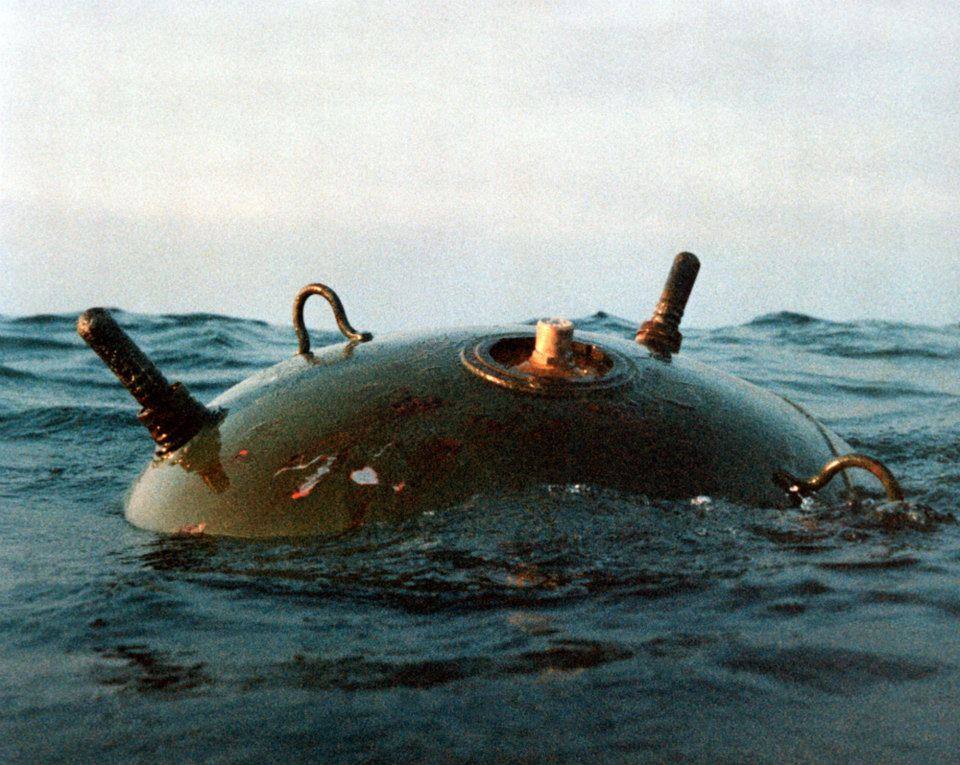
On this day, April 14, 1988, USS Samuel B. Roberts was transiting the Persian Gulf when the forward lookout spotted something on the surface…a dark, black orb with horns. Then he spotted another. Then a third.
Mines.
The Officer of the Deck immediately ordered “All stop” and called Captain Paul Rinn to the bridge. Within moments, the ship was at general quarters—but with a critical twist: sailors in engineering spaces were ordered topside, away from the danger below.
Rinn then made a calculated move—backing the ship out along its own wake, the safest path he had.
Unfortunately, Roberts backed over a mine that detonated beneath the ship, ripping a 22-foot hole in the engine room.
What followed was a herculean fight for survival—firefighting, flooding control, and lifesaving efforts carried out under extreme conditions.
No sailors were lost.
The mine that struck Roberts cost roughly $2,000.
The damage? $93 million—and nearly the ship itself.
Mine warfare, guerre de mine, remains an effective naval strategy. Mines are a means for a small sea power to thwart a strong sea power state.
If you want to learn more about the Roberts mine strike, take a deeper look in A Poisoned Chalice: The U.S. Navy in the Persian Gulf, 1987–1988 (Potomac Books).
Now available at 40% off with the code in the attached image with additional information about the book.


![eodauthor's tweet photo. In episode 51of Talk a Little, Learn a Lot, the American Society of Naval Engineers (ASNE) podcast, Dr. Mark Hagerott discusses with host Stephen Phillips his presentation…”The Emergence of Intelligent Machines: Framing the Challenge for the Navy and our Sailors.”
https://t.co/43Dap0BZ9t
Join ASNE and learn more about its publications and events here: https://t.co/3yidxzbHwf
Hosted by transistor, Talk a Little, Learn a Lot [https://t.co/ObZdMwRLTr] can also be found on Spotify, iTunes, Amazon Music, iHeartRadio, and many other podcast platforms. Listeners can add it to their favorite podcast platform by using the RSS feed: https://t.co/c2FWNprMdO
Please give the podcast a “like,” rate it, and provide a review. If you have a suggested topic, guest, or just want to ensure your comment gets through, contact Dr. Phillips at sphillips@navalengineers.org.](https://pbs.twimg.com/media/HI7yiG6XMAAQWmW.jpg)




![eodauthor's tweet photo. In episode 49 of Talk a Little, Learn a Lot, the American Society of Naval Engineers (ASNE) podcast, Christopher Carroll discusses with host Stephen Phillips his article entitled, “America's Fourth Coast Could Help Close the Shipbuilding Gap with China."
https://t.co/CuhNeDzCps
Join ASNE and learn more about its publications and events here: https://t.co/3yidxzbHwf
Hosted by transistor, Talk a Little, Learn a Lot [https://t.co/ObZdMwRLTr] can also be found on Spotify, iTunes, Amazon Music, iHeartRadio, and many other podcast platforms. Listeners can add it to their favorite podcast platform by using the RSS feed: https://t.co/c2FWNprMdO
Please give the podcast a “like,” rate it, and provide a review. If you have a suggested topic, guest, or just want to ensure your comment gets through, contact Dr. Phillips at sphillips@navalengineers.org.](https://pbs.twimg.com/media/HGqoFo9W8AAO654.jpg)








![eodauthor's tweet photo. In episode 51of Talk a Little, Learn a Lot, the American Society of Naval Engineers (ASNE) podcast, Dr. Mark Hagerott discusses with host Stephen Phillips his presentation…”The Emergence of Intelligent Machines: Framing the Challenge for the Navy and our Sailors.”
https://t.co/43Dap0BZ9t
Join ASNE and learn more about its publications and events here: https://t.co/3yidxzbHwf
Hosted by transistor, Talk a Little, Learn a Lot [https://t.co/ObZdMwRLTr] can also be found on Spotify, iTunes, Amazon Music, iHeartRadio, and many other podcast platforms. Listeners can add it to their favorite podcast platform by using the RSS feed: https://t.co/c2FWNprMdO
Please give the podcast a “like,” rate it, and provide a review. If you have a suggested topic, guest, or just want to ensure your comment gets through, contact Dr. Phillips at sphillips@navalengineers.org.](https://pbs.twimg.com/media/HI7yk3dWwAAc2m0.jpg)


![eodauthor's tweet photo. In episode 49 of Talk a Little, Learn a Lot, the American Society of Naval Engineers (ASNE) podcast, Christopher Carroll discusses with host Stephen Phillips his article entitled, “America's Fourth Coast Could Help Close the Shipbuilding Gap with China."
https://t.co/CuhNeDzCps
Join ASNE and learn more about its publications and events here: https://t.co/3yidxzbHwf
Hosted by transistor, Talk a Little, Learn a Lot [https://t.co/ObZdMwRLTr] can also be found on Spotify, iTunes, Amazon Music, iHeartRadio, and many other podcast platforms. Listeners can add it to their favorite podcast platform by using the RSS feed: https://t.co/c2FWNprMdO
Please give the podcast a “like,” rate it, and provide a review. If you have a suggested topic, guest, or just want to ensure your comment gets through, contact Dr. Phillips at sphillips@navalengineers.org.](https://pbs.twimg.com/media/HGqoHgoWgAA_lM8.jpg)


