Manuscript done ✅ Off to production at Bloomsbury!
The book revisits Adam Smith’s Wealth of Nations at 250, rethinking prosperity through inclusive wealth & sustainability
More soon… 📖✨
Is Europe falling behind the US on productivity? The Krugman vs Aghion–Bergeaud–Garicano debate hinges on one choice: current vs constant PPPs. A new note maps the gap behind it — all 27 EU states, two data sources — and what it does and doesn't settle. 🧵
The Irish government appears to be in denial over the extent of the housing crisis.
It now has some of the highest eviction rates in the OECD and eviction rates are now at levels not since the mid-19th century.
Here's an earlier RTE Brainstorm piece that we published in February: https://t.co/5EAxa8WLVL and this was fact checked by the Journal https://t.co/vkBlZdirqW
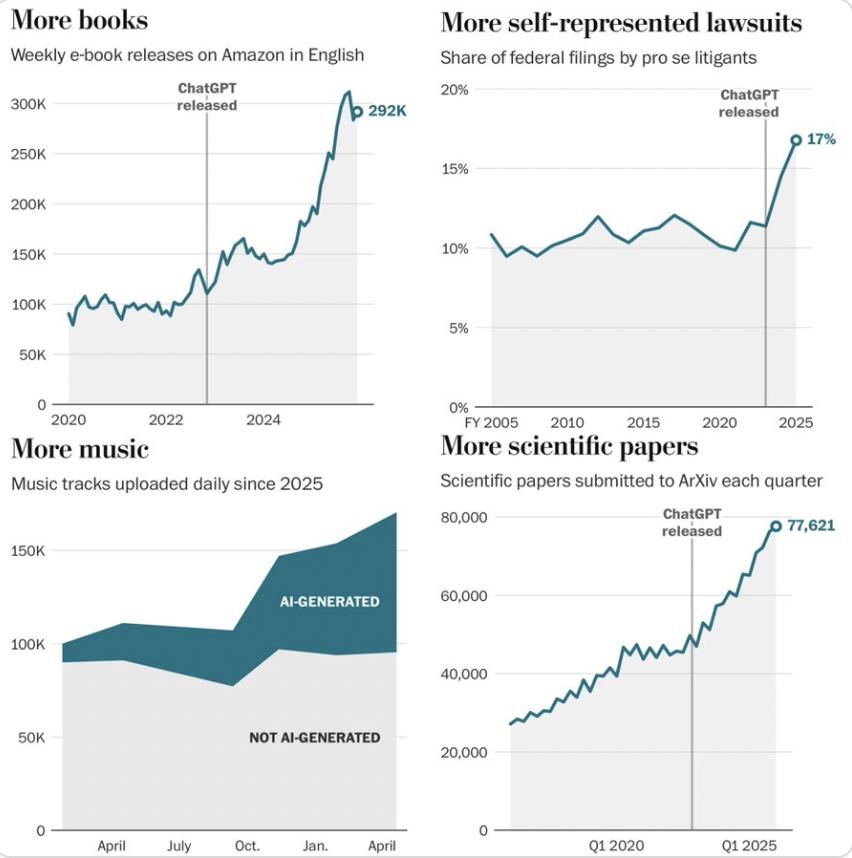
The fundamental problem of genAI - it has increased quantity but it has *not* improved the quality of the output. It is quality improvements that drive economic growth. I wrote a piece on AI and quality drawing on Zen and the Art of Motorcycle Maintenance (link below).
The market continues to underestimate the AI slop problem and what it means for enterprise adoption and spending: "Two engineers who built the core of the OpenClaw AI agent have a stark warning: The artificial intelligence supposedly capable of replacing well-paid software developers is flooding the world with bad, potentially even dangerous, code...“You have infrastructure that’s falling apart, and you have software that’s now very, very buggy compared to before,” says Mario Zechner, creator of Pi, the agentic harness inside OpenClaw. “We can play this game for a couple more months, or maybe even years, but eventually it will catch up to us”...Their core message: These systems are supposed to make senior engineers so productive that companies can lay off junior engineers, but in reality, many companies are trading near-term productivity for long-term woes. Not only does the pipeline of junior talent dry up, but residual effects include buggy software, service outages, security vulnerabilities and mounting technical debt."
I caught up with an old friend this week. He works for a large media company. Last year, AI use was mandated from the top down. This year, management pulled back and AI use is only recommended on a case-by-case basis. The productivity drag of slop was core to the pivot. As I warned in my December report on "GenAI & Productivity" (https://t.co/kEx5Z4BbRz):
"To sum up the weakness: genAI’s intellectual shortcomings lead to flaws in work products while at the same time compromising the organizational expertise required to mitigate the flaws. It’s a weakness that appears to be holding back genAI adoption for use cases far beyond computer programming...Often as we researched this report, self-interest was apparent in how thought leaders glossed over genAI’s current weaknesses, whether it’s the technologists selling genAI applications, the consultants poised to profit off of guiding companies through genAI transformations, or the investors whose future returns depend on genAI-driven outperformance. The dominant message is that the challenges are transitory and soon-to-be resolved. The technology is improving at a rapid rate. Companies recognize the steps they need to take to unlock genAI’s ROI potential so they’ll act quickly to resolve them.
We believe this is the most significant misguided genAI assumption priced into markets today. GenAI is delivering ROI already for many use cases across industries. However, for it to truly scale across industries and unlock the game-changing productivity gains many investors expect, significant weaknesses need to be overcome."
Learn more about Sage Road Research: https://t.co/Wgwz2xmY1y. Interested in subscribing? Message me.
WSJ link: https://t.co/u0iqlydxfS
Chart link: https://t.co/6EB63MzkvW
When AI first arrived on the scene, I worried it would make economists, or even critical thinkers more broadly, less valuable. In my travels in the past 6 months to work with non-profits, for profits, and government agencies, I have observed how people are actually using AI. I have watched them fumble around with insights they clearly did not create themselves.
My fears are now assuaged. One observation is that AI can produce something that in some cases is very wrong and in others looks nearly right, but is not quite there. Even if in time AI improves to "nearly right" or "exactly right" every time, a second issue still arises: explaining the materials.
Explaining why an answer is almost correct but subtly off requires exactly the critical thinking skills that created the knowledge in the first place. Even explaining "exactly right" material takes critical thinking. I've watched smart people confidently present AI-generated material they clearly don't fully understand. The words sound right. But when someone pushes back just a little bit, the sand castle crumbles.
It is quite difficult to defend what you didn't build. This leads me to now make the optimistic case for human expertise. The value of deeply understanding something — of having built the knowledge yourself — hasn't diminished with AI. If anything, it's increased. The people who can tell the difference between "nearly right" and "right" are more valuable than ever. The people who can explain the subtle details about something that is exactly right are invaluable.
Creating knowledge still matters. Maybe now more than ever.
'We're seeing eviction rates not seen in Ireland since the 1850s'. The growth in eviction notices is quite revealing viewed against Ireland's historical record, write @eoinaldo@HWUEconomics@HeriotWattUni@Researchirel & Richard McMahon @MICLimerick https://t.co/61DqjqRJ5k
In 2019, Fiona Hill testified that the Russian government was “signaling very strongly that they wanted to somehow make some very strange swap agreement between Venezuela and Ukraine.” (Search: Venezuela) i.e. we get Venezuela, they get Ukraine.
https://t.co/nkXbEi8X4a
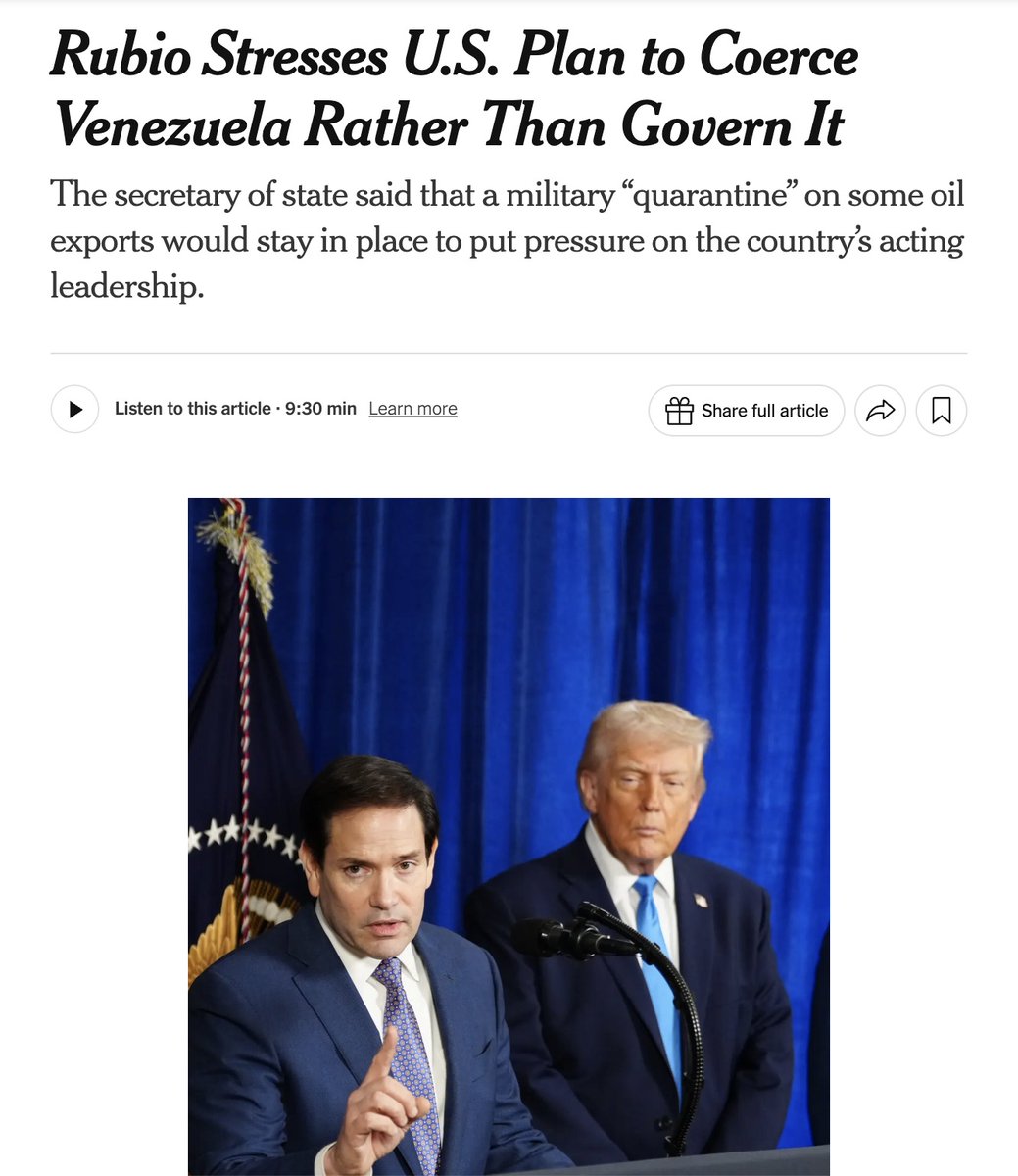
Breaking: Rubio said the US Navy will keep up a "quarantine" of some Venezuelan oil exports to coerce Maduro's allies to open up the oil industry. A White House official said that's what Trump meant when he said the US will "run" Venezuela. It's the new gunboat diplomacy.
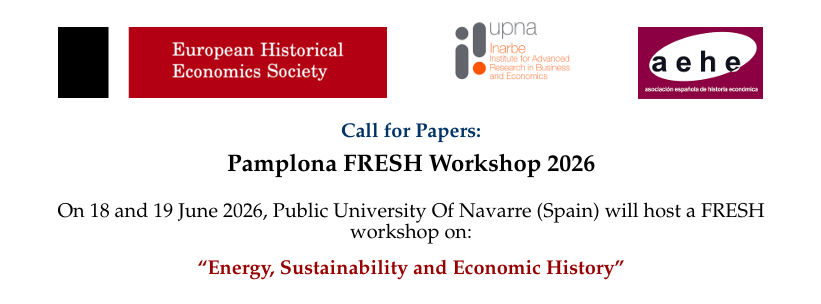
On the 18th and 19th of June 2026, the Public University of Navarre (Spain) will host a #FRESH meeting on "Energy, Sustainability, and Economic History"
Keynote lecture by Henry Willebald (@HWillebald )
Local organizer: Cristián Ducoing
More details below:
BREAKING NEWS
The Royal Swedish Academy of Sciences has decided to award the 2025 Sveriges Riksbank Prize in Economic Sciences in Memory of Alfred Nobel to Joel Mokyr, Philippe Aghion and Peter Howitt “for having explained innovation-driven economic growth” with one half to Mokyr “for having identified the prerequisites for sustained growth through technological progress” and the other half jointly to Aghion and Howitt “for the theory of sustained growth through creative destruction.”
#NobelPrize
Two graduate students and myself (both are on market this year — hire them) found a way to test the doughnut model and … very simply … it explains nothing. It yields NONE of its predictions.
See here : https://t.co/bKEgnrnIQl