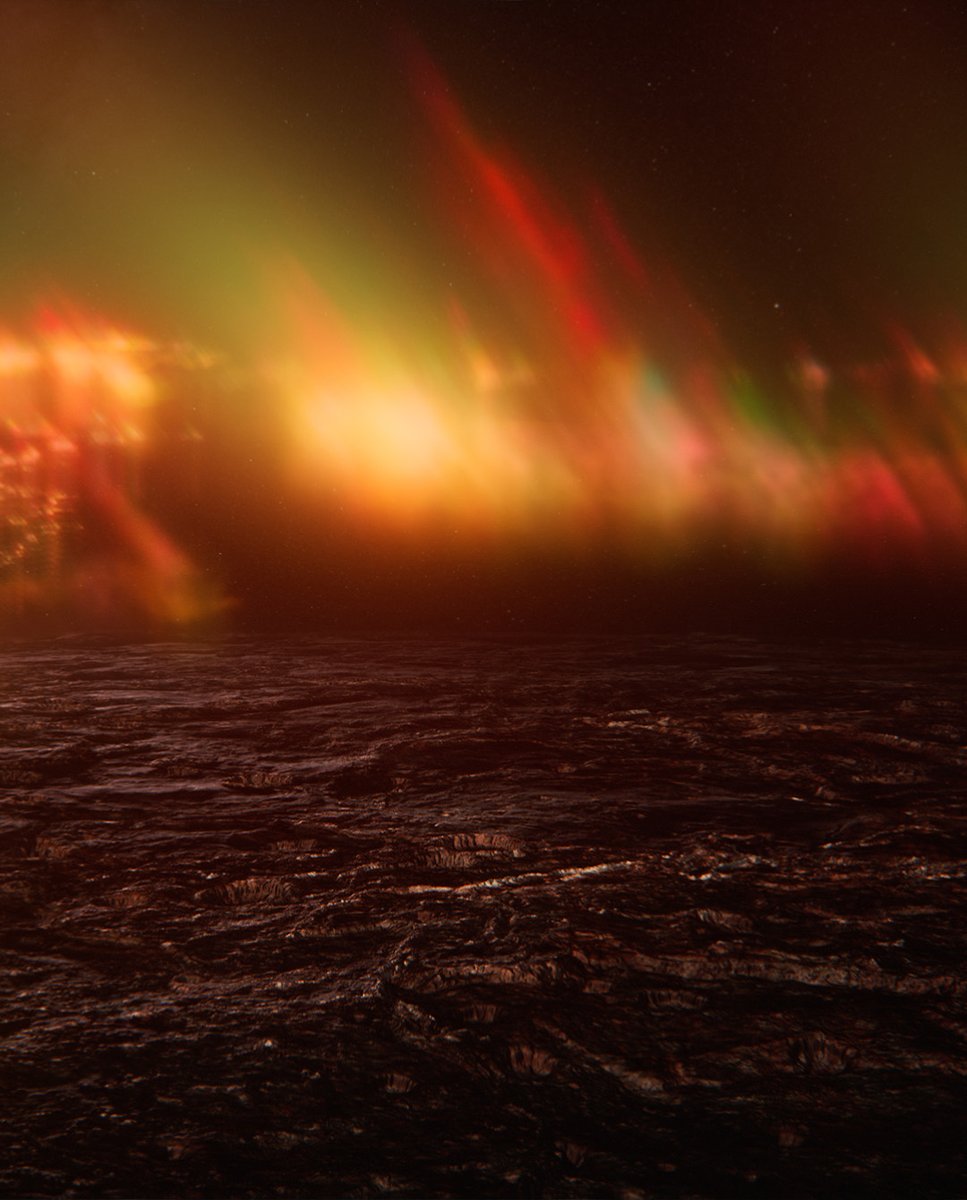
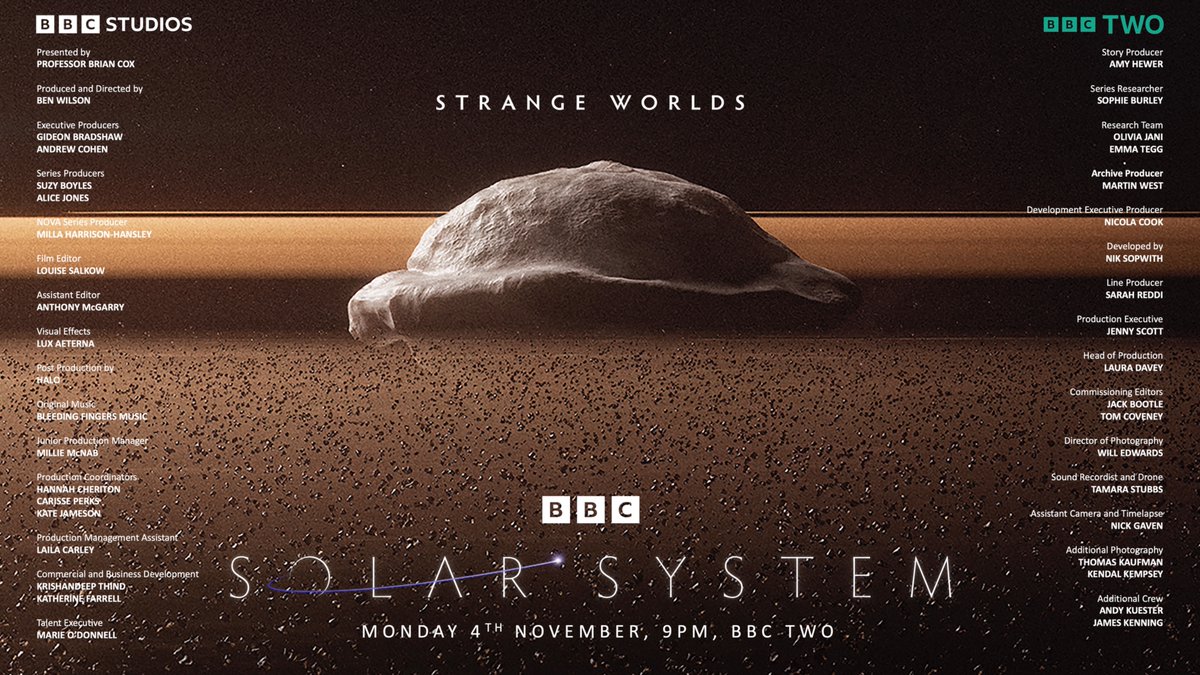
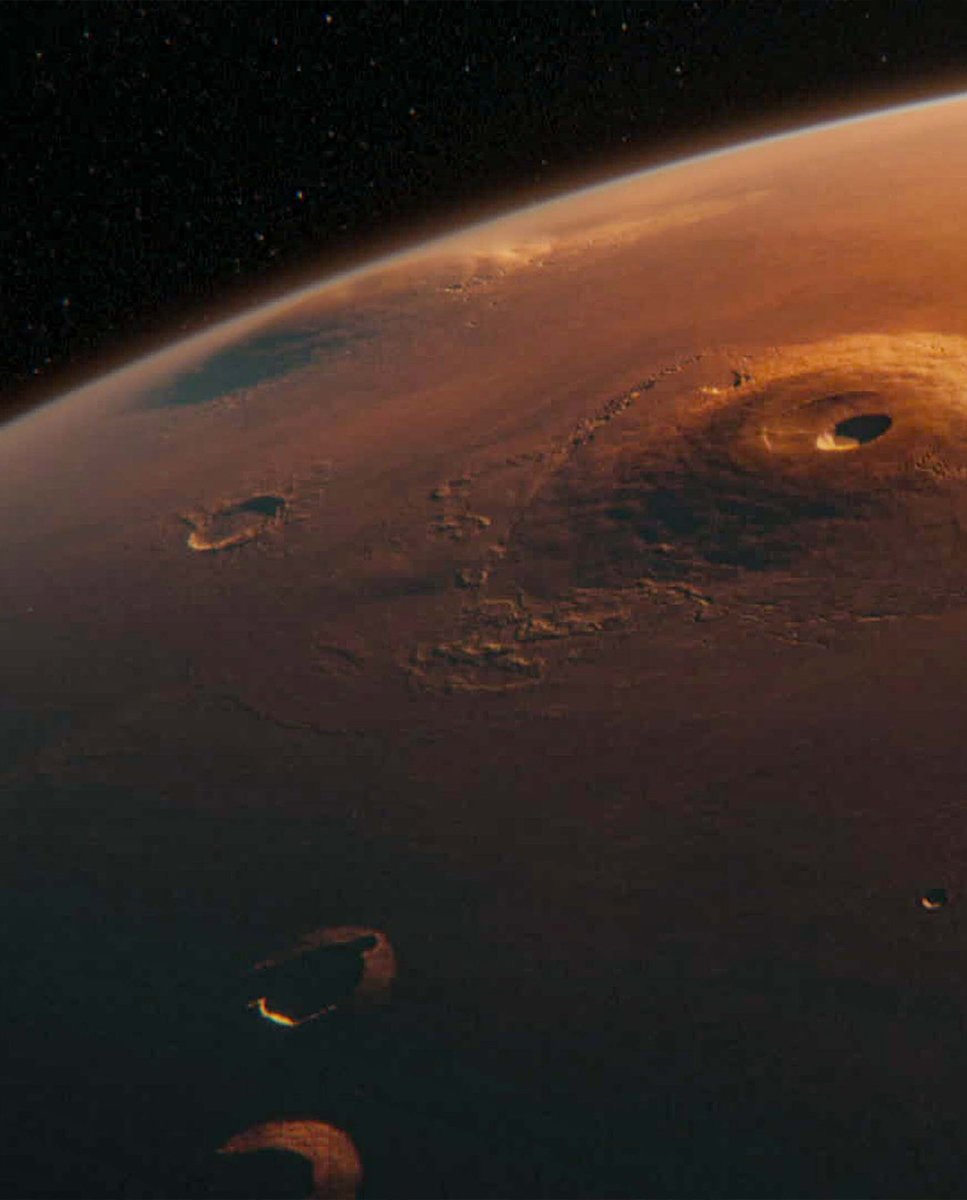
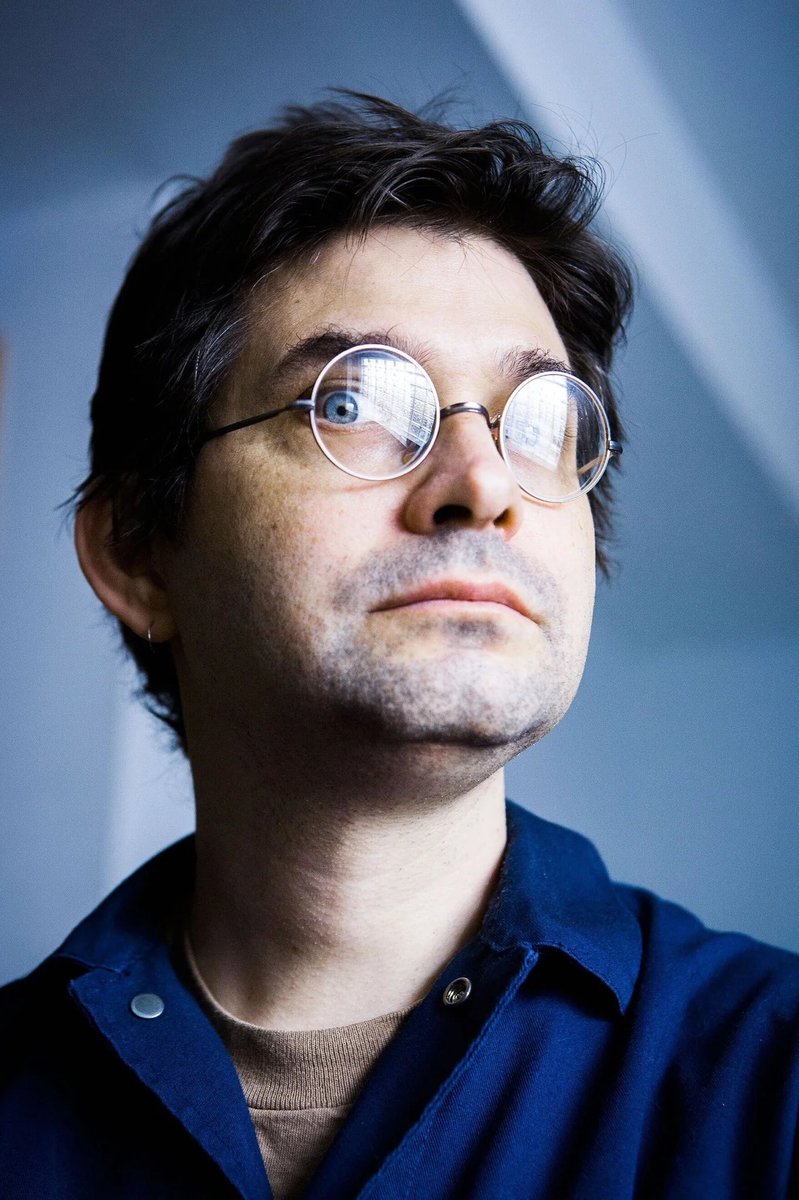
Thank you to everyone who has come on the journey these last few weeks. Final episode to the 'Strange Worlds' is on @BBCTwo tonight at 9pm or on @BBCiPlayer now where the rest of the series will remain for a time.
If you've been enjoying Solar System on @BBCiPlayer or @BBCTwo then you might like @ProfBrianCox talking to Sam Howell who is working on NASA's Europa Clipper mission. AS THE ROCKET PREPARED TO LAUNCH!
https://t.co/l0b3ySx83G
Sam appears in episode five of the series 'Ice Worlds' where he an Brian explain why Europa may be one of the most extraordinary habitats in the solar system. And how the Clipper mission will deepen our understanding of Jupiter's ice moon when it gets there in the 2030s.
The reality of filming one take shots 🤣 Wait until the end...
Did you catch #SolarSystem with @ProfBrianCox last night on BBC Two? You might've seen our continuous shot and here's how we did it!
Produced by BBC Studios Science Unit #MadeByBBCStudios
Reminder - another journey into space on @BBCTwo tonight at 9pm. Laura led an incredible team to the 'Dark Worlds' of the solar system where they found all kinds of surprises. She also got @ProfBrianCox doing a ptc whilst running a distance. @bbcstudios
So pleased that Anze and the BFs crew have been recognised for this. It really is a beautiful score built around a series of improvisations on bone flute and cello in a Slovenian cave...
@bbcstudios for @netflix
Streaming now!
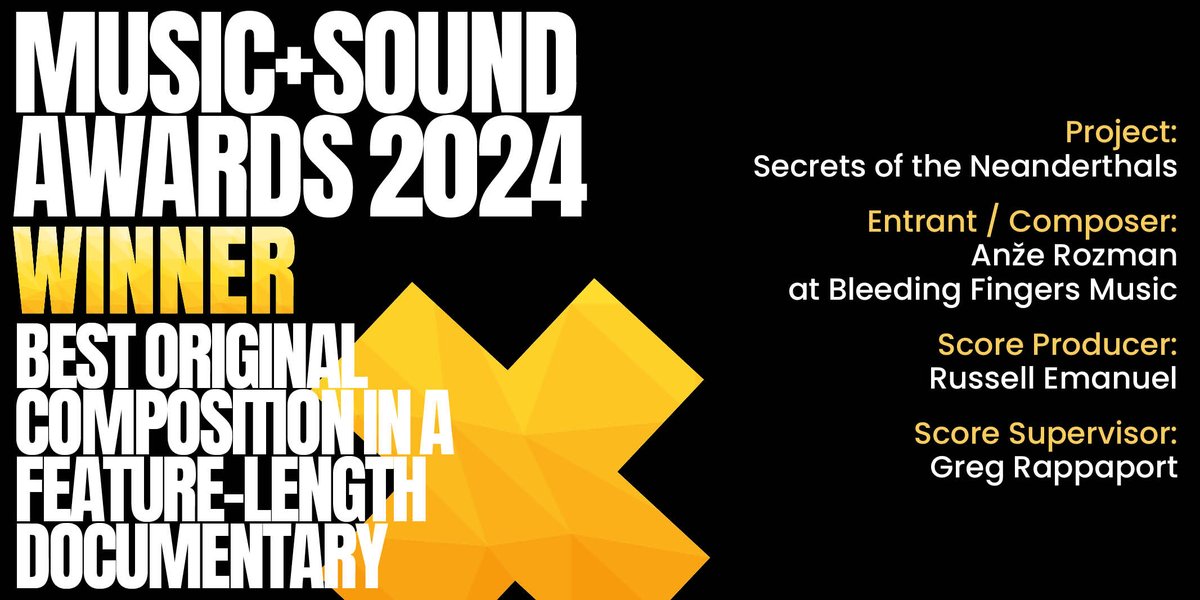
Three Cheers for Anže Rozman at Bleeding Fingers Music for the Secrets of the Neanderthals score! 🙌 A truly worthy inaugural #MASAwards BEST ORIGINAL COMPOSITION IN A FEATURE-LENGTH DOCUMENTARY win! @ARozmanComposer@BFCustomMusic@RustyMassive
An amazing team of brilliant programme makers have put together a real treat of a series. Enjoy a trip around the Solar System on BBC2 and iPlayer from Monday.
'We're living through a golden age of exploration.'🪐
Join @ProfBrianCox in brand new series Solar System where, over the course of five episodes, he takes viewers on epic journeys through the planets and beyond. Produced by BBC Studios.
Tune in Monday 7th on @BBCTwo
I don't look at this timeline much these days, but noticed increased activity with people shouting stuff. I tracked the cause down to reactions to an article promoting my new Solar System series on the BBC website - nice that it has got attention - Monday, 9pm, BBC2 if you are asking ;-) It's fun I hope, and I do some experiments with eggs in the first episode.
However, just to be clear:
1) I don't think it is 'probable' that we are the only advanced civilisation in the Milky Way. I have no way of assigning a probability to it. I can make an argument that complex life may be rare, and I think it's a good working hypothesis to assume this in the absence of other evidence, because it might make us value ourselves and our planet more. I certainly think there's a chance we may find simple life on Mars, Europa, Enceladus, Ganymede or even in possible sub-surface water on Pluto or elsewhere. I'm excited for the missions we have planned to explore these worlds. There are of course trillions of planets and moons in the Milky Way, and I'd be very surprised if they were all lifeless. But Civilisations - my guess is a handful at best. Beyond the Milky Way, in the trillions of galaxies in the observable Universe, surely there are other civilisations more advanced than us.
2) I do think that it is important for us to learn how to live and work in space - and the first steps beyond Earth orbit will be the Moon and Mars. HOWEVER (and I ALWAYS say this in interviews on this subject) there is a caveat! There is nowhere else we could go that would replace Earth, and therefore our number 1 priority must be to protect this planet. If we mess this one up, there is nowhere else we could live in large numbers - at least (in my view) for many centuries to come. It is a major error to assume that we can just up sticks and start again. In my lifetime, to paraphrase Carl Sagan, I can only hope we take our first steps into the Cosmic Ocean - the waters seem inviting.
3) I'd love to see Earth from orbit. But - as someone who was born close to Yorkshire - when asked if I'd like to go I always answer the same way. "Yes, if someone else is paying ...."
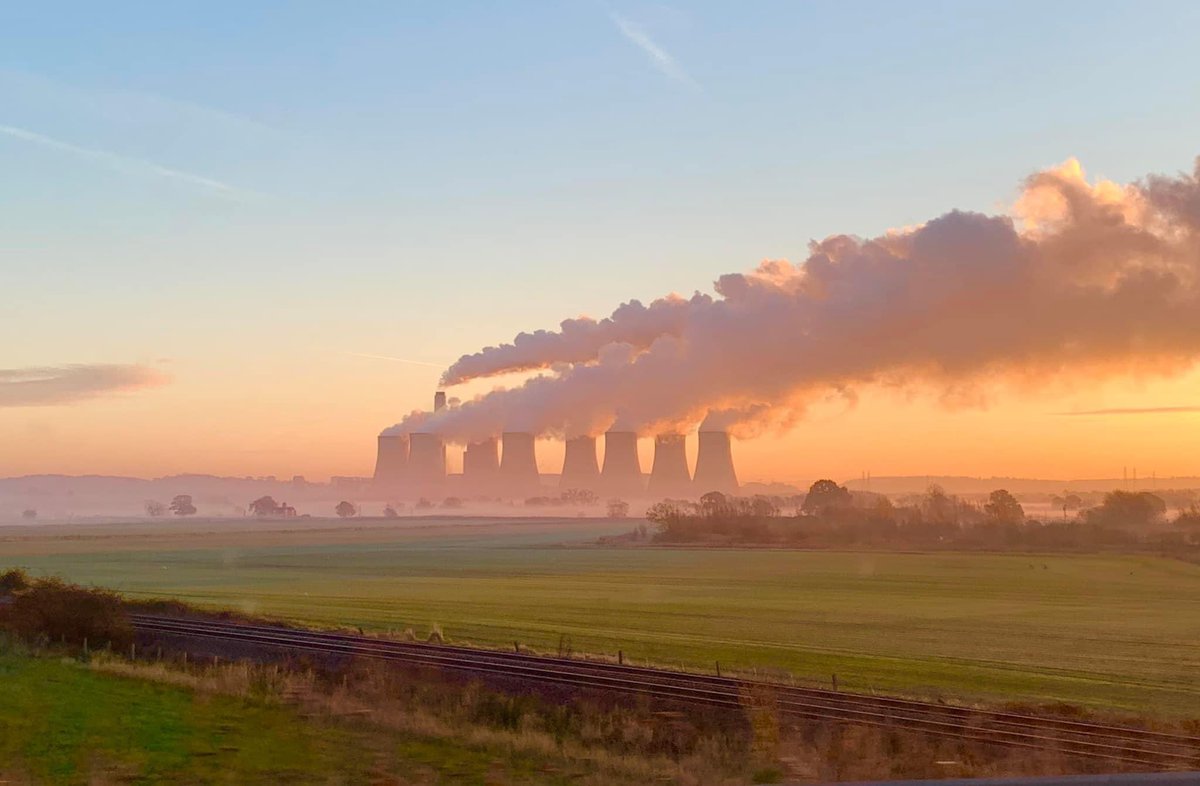
A few minutes ago, Unit 4 turbo-generator at Ratcliffe-on-Soar power station desynced from the GB grid system, marking the END of electricity generation from COAL after 142 years 🇬🇧🙏🏻 @RobBurnett92 and I present a 🪡🧵on the evolution of coal fired power from 1882 to today 1/n
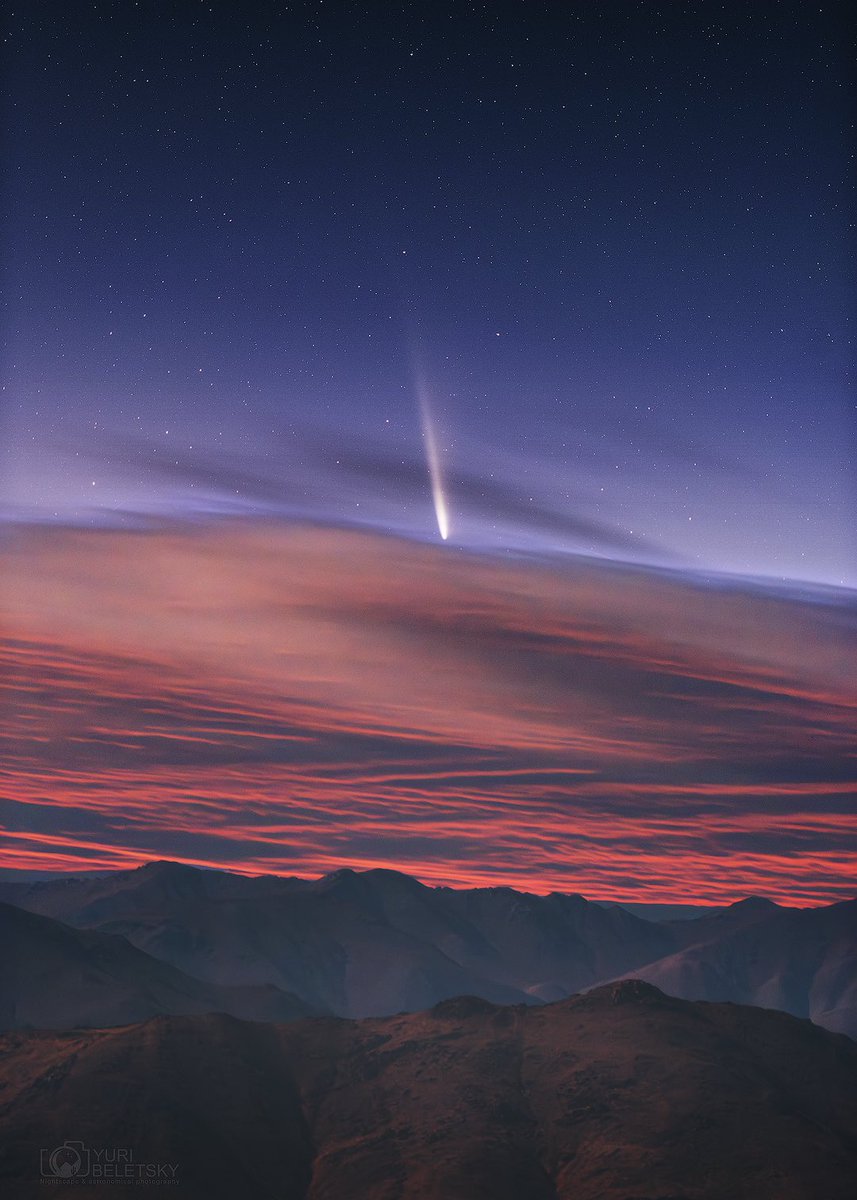
This morning, I captured another image of Comet C/2023 A3 (Tsuchinshan-ATLAS) from the @LCOAstro site in the Atacama Desert, Chile 🇨🇱✨😱. The view was absolutely stunning !!! The comet is clearly visible visually. My gear: Nikon D810a camera with a 135mm lens. Exposure: 20 x 30 seconds. #Comet #Astronomy #Atacama #chile #TsuchinshanATLAS #cometa #CometC2023A3 #Tsuchinshan #C2023A3 #FollowTheComet
Comet C/2023 A3 (Tsuchinshan-ATLAS) is finally here ! ☄️✨I captured this image this morning at 09:22 UTC from @LCOAstro in Atacama desert in Chile 🇨🇱 The view was absolutely spectacular ! The clouds were constantly moving just above the horizon, but we got really lucky when the comet suddenly appeared just above the layer of clouds. I used Nikon D810a camera + 135mm lens. #comet #astronomy #Cometobservation #atacama #chile
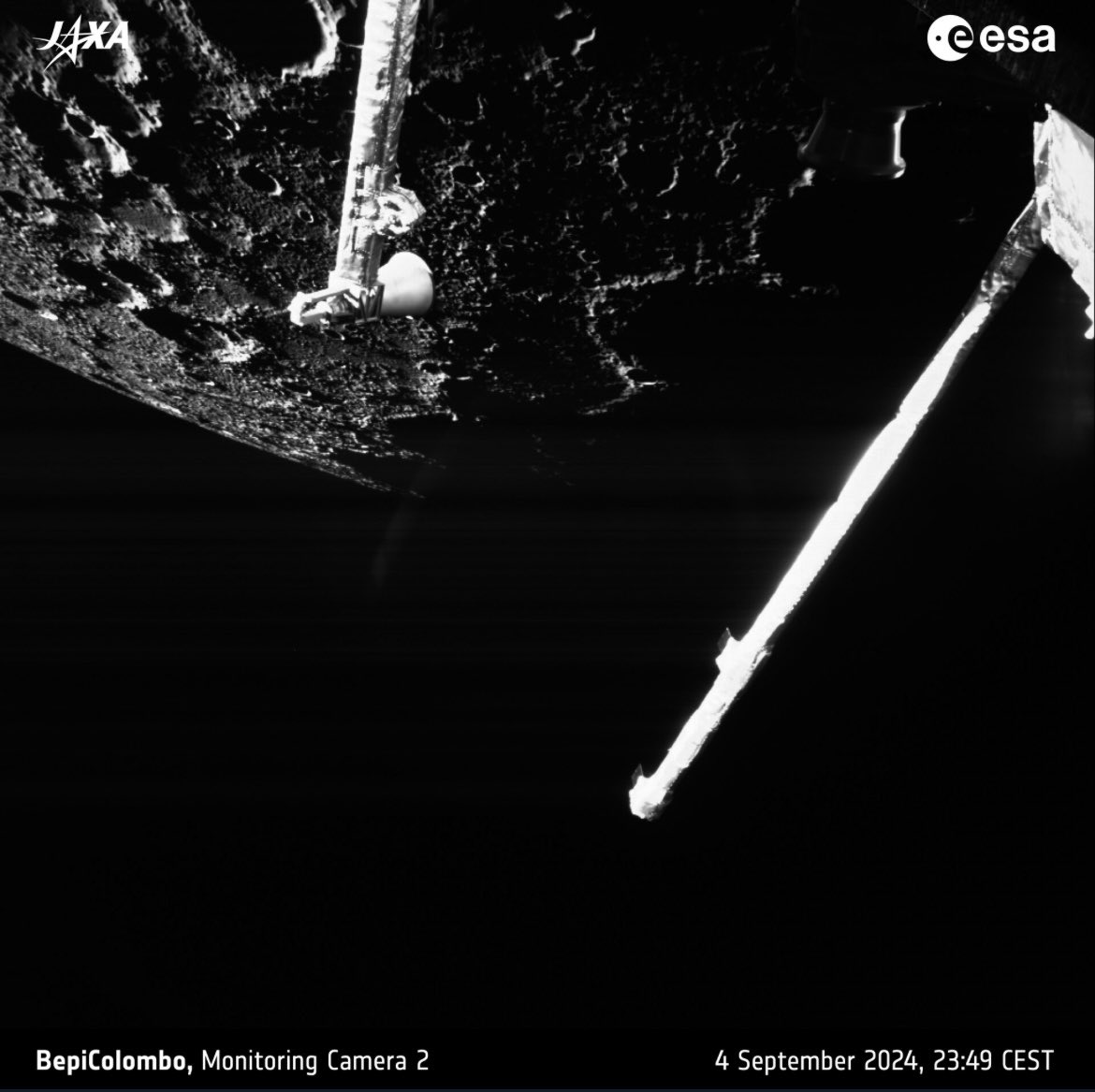
🚨🛰️: NEW MERCURY PHOTOS JUST DROPPED! The magnificent ESA/JAXA mission @BepiColombo (which ultimately aims to get into orbit around Mercury) just made another extremely close flyby of the innermost planet.
It’s an impact crater-filled paradise. Look at this weird world! 💥
Meet the new iPad Pro: the thinnest product we’ve ever created, the most advanced display we’ve ever produced, with the incredible power of the M4 chip. Just imagine all the things it’ll be used to create.