Our fair value for $/BRL remains 4.50, so the Real is 20% undervalued. Feedback ranges from polite skepticism to full-on hostility, but here are the data: Q4 2020 saw the biggest foreign investor inflows since before the commodity price collapse in 2014. Brazil will come back...
Is US fiscal stimulus good for EM? Inside the DC beltway the answer is yes, as higher US growth sucks in imports from abroad. But in global capital markets the answer is more negative. US fiscal stimulus pushes up yields everywhere & crowds out investment in much poorer countries
Parabéns aos envolvidos
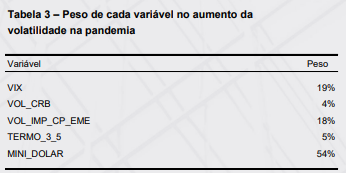
Box RTI - a maior volatilidade na taxa de câmbio desde o final do primeiro bimestre de 2020 deve-se, em grande parte, tanto a fatores domésticos (tais como o expressivo aumento de negócios de minicontratos de dólar), como também a fatores externos.
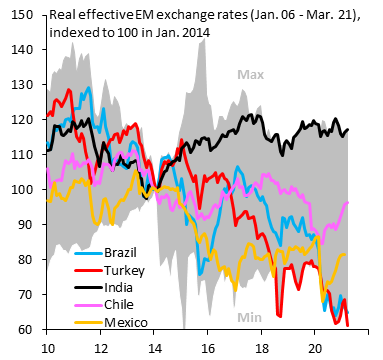
In real trade-weighted terms, i.e. on a broad basis and adjusting for Turkey's high inflation rate, Turkish Lira is back to being the weakest EM currency (red). Factoring in recent declines, it is down a cumulative 42% since the end of 2013, the year of the first taper tantrum...
$/TRY was above 8.50 as recently as Nov 6. Unfortunately, risk of another "sudden stop" in capital flows like in 2018 is now elevated. Risk of contagion is also high. Brazil is being talked about in markets as most vulnerable, given that the central bank also hiked this week...
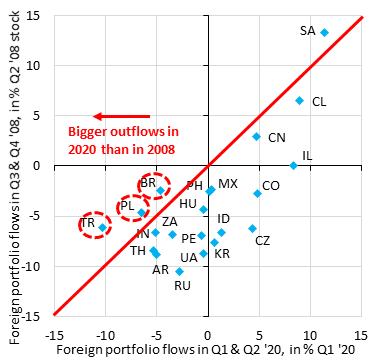
There's 3 EMs where foreign investors pulled out more cash during COVID than in the 2008 crisis: Turkey (TR), Brazil (BR) & Poland (PL). Horizontal axis is non-resident outflows (-) in Q1 & Q2 '20 in % of Q1 '20 holdings. Vertical axis is the same for Q3 & Q4 '08 in % of Q2 '08.
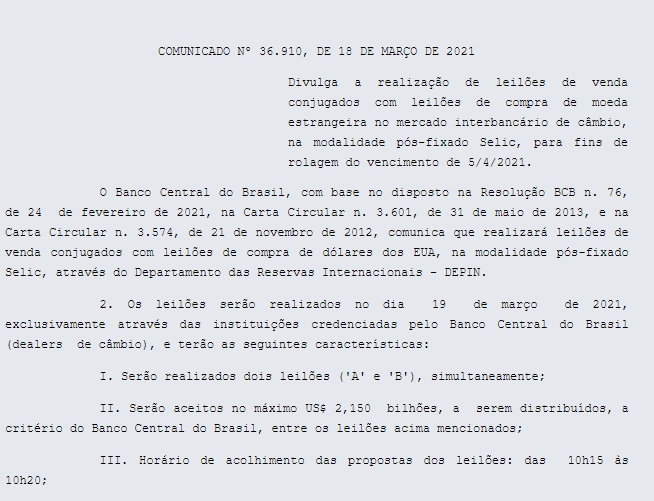
Neste dia em que o Copom surpreendeu e aumentou de largada os juros básicos para 2,75% ao ano, lembrança do tempo em que o comunicado era divulgado à imprensa assim:
Com @Gustavopaul, @biacalza, @Eotattoo, @_clarafrancoo e @ecucolo
Além disso, o amplo conjunto de informações disponíveis para o Copom sugere que essa estratégia é compatível com o cumprimento da meta em 2022, mesmo em um cenário de aumento temporário do isolamento social.
Na avaliação do Comitê, uma estratégia de ajuste mais célere do grau de estímulo tem como benefício reduzir a probabilidade de não cumprimento da meta para a inflação deste ano, assim como manter a ancoragem das expectativas para horizontes mais longos.