Senior Minister Punjab addressed a key press conference today at Climate Watch EPCCD to update the public on the ongoing anti-smog efforts across the province.
Highlighting strict enforcement across industries, agriculture, transportation and other sectors, along with expanded satellite monitoring, and enhanced AQI tracking, the minister emphasized that beating smog requires a collective public response.
#SmogLessPunjab #EPCCD #EPAPunjab
پنجاب میں فصلوں کی باقیات جلانے کے واقعات میں 21 فیصد کمی، جدید زرعی مشینری جیسے سپر سیڈر اور کبوتا ہارویسٹر کے مثبت نتائج سامنے آنے لگے۔ ناسا کے سیٹلائٹ ڈیٹا نے بھی اس کمی کی تصدیق کر دی۔
جدید ٹیکنالوجی کا فروغ، صاف فضا کا تحفظ اور اسموگ کے خاتمے کی جانب ایک مثبت پیش رفت!
#SmogFreePunjab #GreenPunjab #EnvironmentalProtection #EPCCD
New blog published under the Air Pollution theme!
“Industrial Air Monitoring: Chimney After Dark, Rethinking” by Muhammad Bilal explores the challenges of monitoring industrial emissions during nighttime operations in Faisalabad. The blog highlights how night-vision cameras, equipment sensors and continuous emissions monitoring can strengthen industrial compliance and improve air quality management.
View the full blog under the Air Pollution theme at https://t.co/qKP2xnacoC. Share your comments and views.
#EarthNotes #WriteForUs #EPCCDBlog #EnvironmentalAwareness #EPAPunjab
New blog published under the Air Pollution theme!
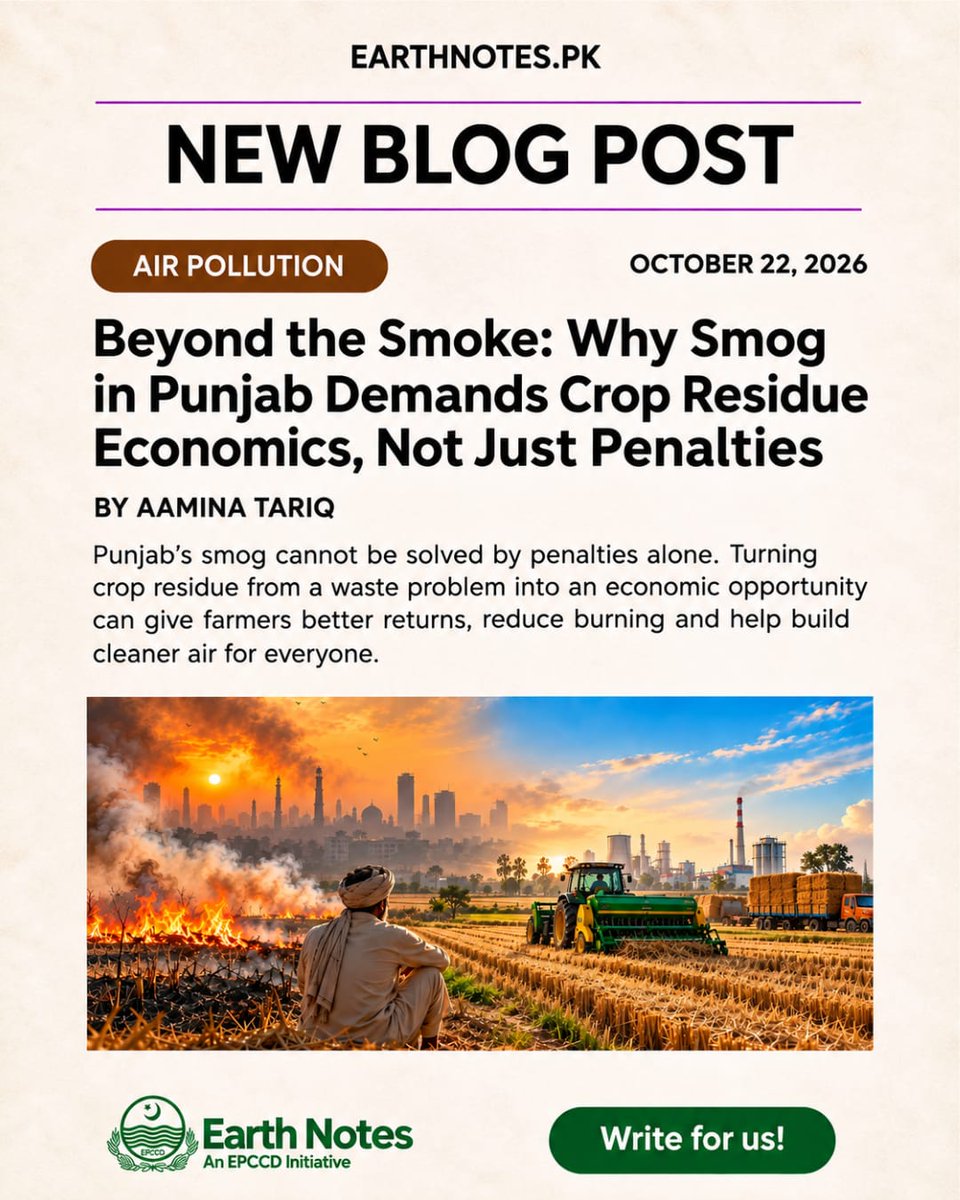
“Beyond the Smoke: Why Smog in Punjab Demands Crop Residue Economics, Not Just Penalties” by Aamina Tariq explores why penalties alone cannot address crop residue burning in Punjab and how affordable machinery, economic incentives and turning agricultural waste into valuable resources can help reduce smog while supporting farmers’ livelihoods.
View the full blog under the Air Pollution theme at https://t.co/s0kl8xjqqr. Share your comments and views.
#EarthNotes #WriteForUs #EPCCDBlog #EnvironmentalAwareness #EPAPunjab
فصلوں کی باقیات جلانا صرف دھواں نہیں، ہماری صحت اور ماحول کے لیے ایک سنگین خطرہ ہے۔ اسموگ سے بچاؤ اور صاف فضا کے لیے فصلوں کی باقیات جلانے کے بجائے ماحول دوست طریقے اپنائیں۔
آئیں! مل کر فضائی آلودگی کا خاتمہ کریں اور آنے والی نسلوں کے لیے صاف، سرسبز اور محفوظ مستقبل بنائیں۔
#SayNoToCropBurning #SmogFreePunjab #EPCCD #EPAPunjab
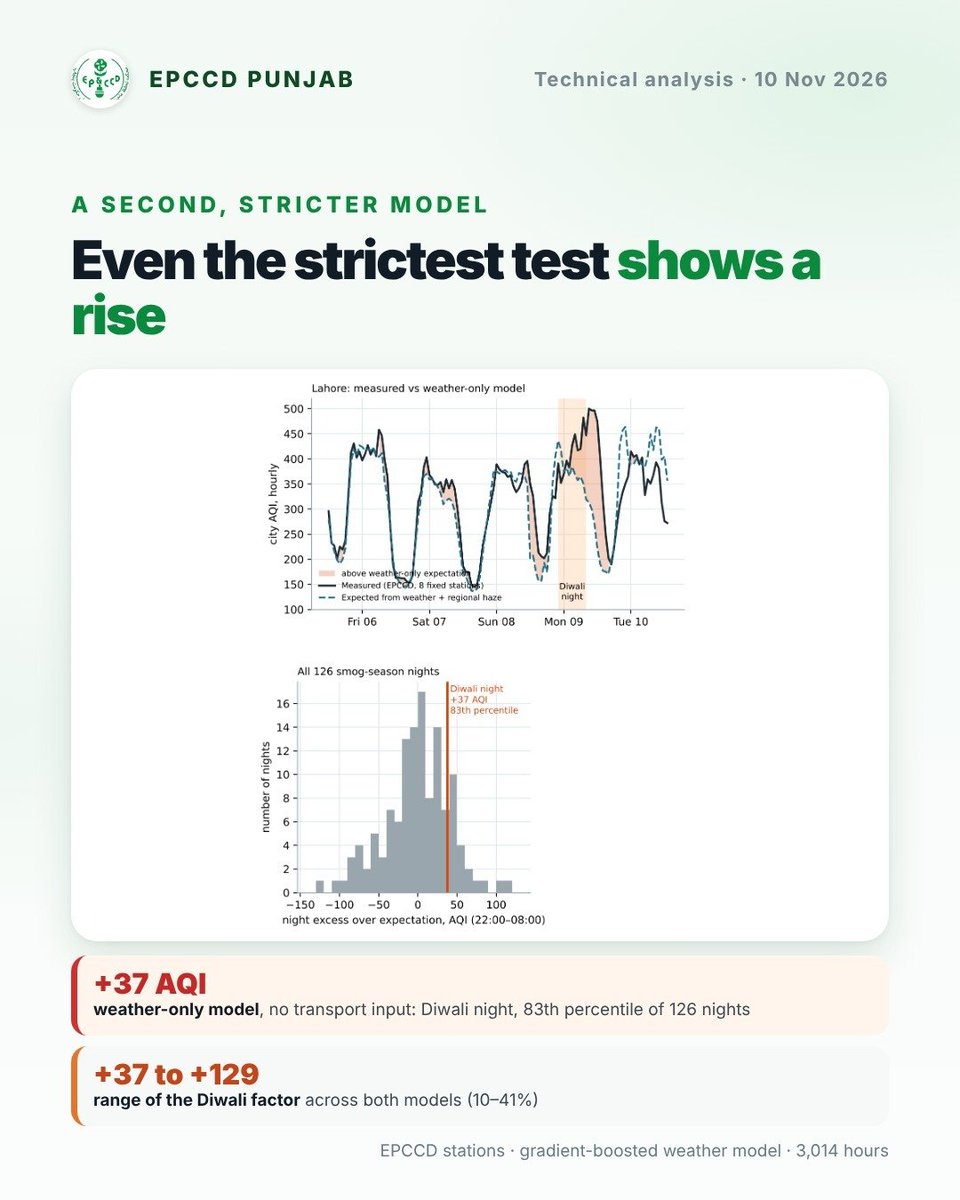
Environment Protection and Climate Change Department’s analysis for 8–10 November, which combines air-trajectory models, satellite data and station readings, point out that Diwali has done a substantial increase in AQI readings across Lahore among other districts.
Back-trajectories at 100 m for 06:00 on 9 November show that 50% of Punjab was under air that had left India within the previous 24 hours, and 39% within 12 hours. Forward trajectories released across the border on Diwali night reached Lahore from Amritsar in about 2 hours, Faisalabad in about 12 hours, and Multan in about 11 hours.
Satellite evidence. NASA VIIRS and MODIS data show a single haze belt straddling the border on 9 November. Between 7 and 9 November, aerosol optical depth rose from 0.44 to 2.63 over Amritsar and from 0.56 to 2.63 over Lahore, with the increase fading eastward into India.
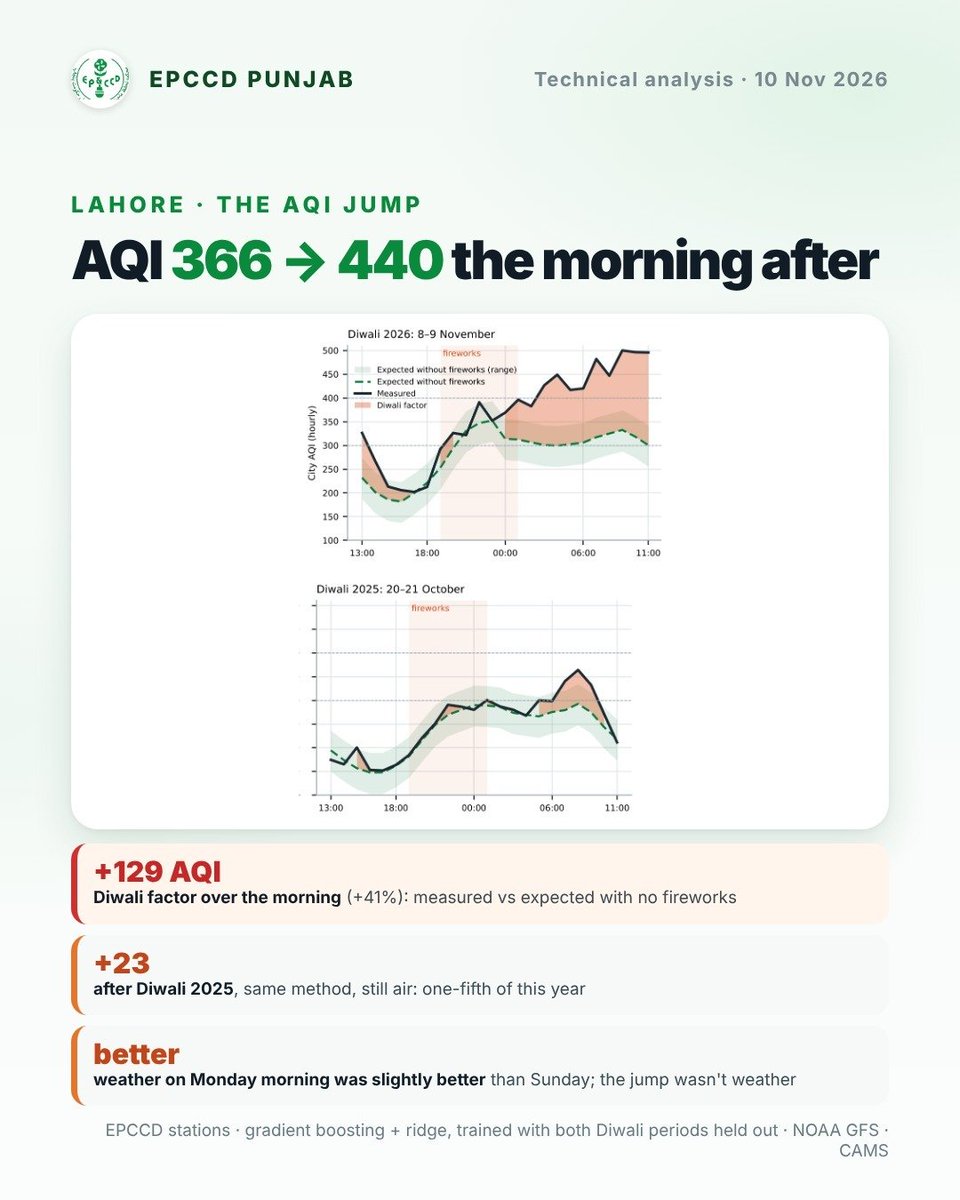
Punjab AQM Stations. Among Lahore’s monitoring stations, PM2.5 rose first and most at Wagha Border (+275%, peaking at 03:00–04:00) and least at Safari Park on the city’s western side (+15%). This east-to-west gradient is what an easterly wind carrying pollution across the border would produce. Lahore’s city AQI rose from 366 to 440 between 8 and 9 November, touching highest value at 09:00.
Taken together, the three lines of evidence indicate that cross-border air reached cities well inside Punjab, not only those near the border.
#SmogFreePunjab #EPAPunjab #EPCCD #AQILahore
Earth Notes Invites Poetry Submissions on Environmental Themes!
Earth Notes is inviting poetry submissions for its Literary Arts section!
Do you have a poem that reflects your thoughts on the environment, climate change, or a sustainable future?
This is your opportunity to express your creativity, share your perspective, and inspire others through the power of poetry.
We welcome original, unpublished poems that highlight environmental issues and our connection with nature.
Read the submission guidelines and share your poetry at:
https://t.co/5F69pLUPGT
Let your words inspire awareness and meaningful change!
#EarthNotes #WriteForUs #EPCCDBlog #ClimateAction #EnvironmentalAwareness
Thank you for sharing the report. We agree that PM2.5 rose across Punjab after Diwali. We differ on one point: that cities far from the border “received no air from India”.
Our analysis for 8–10 November, which combines air-trajectory models, satellite data and station readings, points the other way.
Air trajectories. Back-trajectories at 100 m for 06:00 on 9 November show that 50% of Punjab was under air that had left India within the previous 24 hours, and 39% within 12 hours. Forward trajectories released across the border on Diwali night reached Lahore from Amritsar in about 2 hours, Faisalabad in about 12 hours, and Multan in about 11 hours.
Satellite evidence. NASA VIIRS and MODIS data show a single haze belt straddling the border on 9 November. Between 7 and 9 November, aerosol optical depth rose from 0.44 to 2.63 over Amritsar and from 0.56 to 2.63 over Lahore, with the increase fading eastward into India.
Punjab AQM Stations. Among Lahore’s monitoring stations, PM2.5 rose first and most at Wagha Border (+275%, peaking at 03:00–04:00) and least at Safari Park on the city’s western side (+15%). This east-to-west gradient is what an easterly wind carrying pollution across the border would produce. Lahore’s city AQI rose from 366 to 440 between 8 and 9 November, touching highest value at 09:00.
Taken together, the three lines of evidence indicate that cross-border air reached cities well inside Punjab, not only those near the border.
گزشتہ روز کے مقابلے میں لاہور کے ایئر کوالٹی انڈیکس (AQI) میں 41 فیصد نمایاں کمی ریکارڈ کی گئی۔
📉 9 نومبر، دوپہر 12 بجے: AQI 454
📉 10 نومبر، دوپہر 12 بجے: AQI 267
گزشتہ 13 میں سے 11 گھنٹوں کے دوران بھی ایئر کوالٹی انڈیکس میں واضح کمی دیکھی گئی۔
#EPAPunjab#SmogFreePunjab
Lahore's reported AQI rose from 272 before Diwali to 483 during Diwali, highlighting how quickly air quality can change.
Smog knows no borders. Neither should our efforts to understand and address it.
One Airshed, Shared Responsibility.
#EPAPunjab#EPCCD#smogfreepunjab
Traffic-related pollutants declined, with NO₂ and CO both down by 14%, while morning rush-hour NO₂ fell by 23%.
However, PM2.5 remained a major concern. Fine particulate levels were 41% higher on Diwali night, rising from 212 to 300 µg/m³.
EPA Punjab’s post-Diwali air analysis shows Lahore’s city AQI was 20% lower on the morning of 10 November compared with the same hours a day earlier, falling from 447 to 357.
#EPAPunjab#SmogLessPunjab#CleanAir#AirQuality#Lahore
Lower AQI was recorded at all 11 monitoring stations, including Wagha Border (-35%), Punjab University (-33%) and DHA Phase 6 (-31%).
Traffic volume over the long weekend was also around 11% lower at Lahore’s 18 entry and exit points.