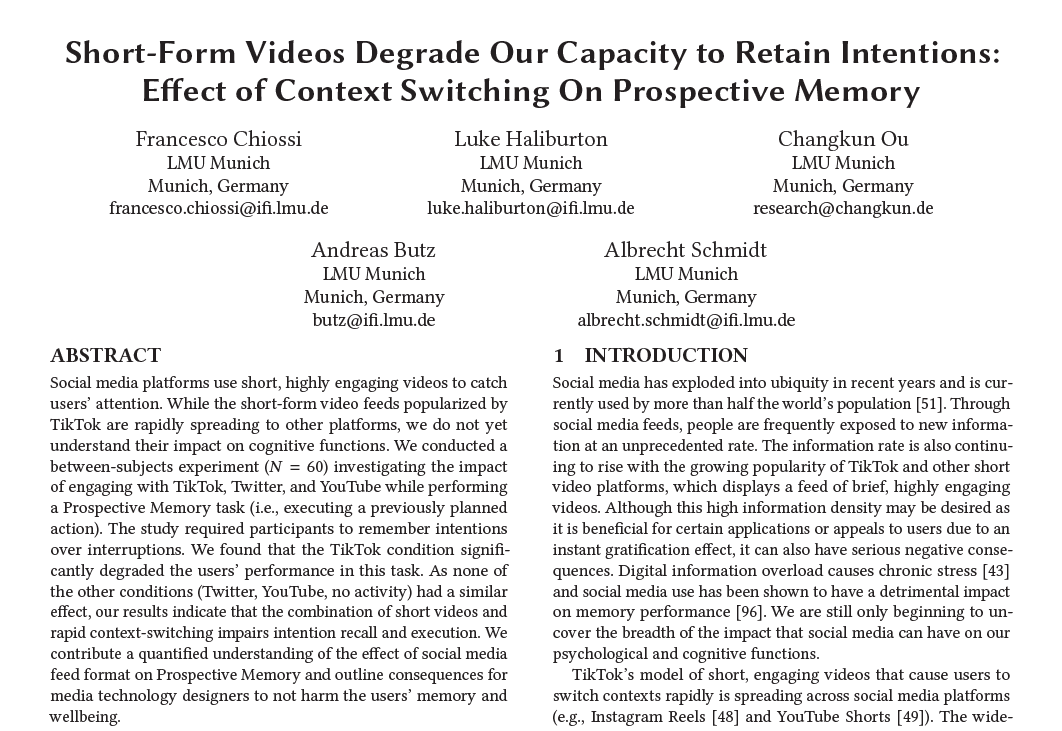
A cat co-authored a scientific paper in 1975, when his owner, a physicist named Jack H. Hetherington, decided to add him as a second author to avoid changing the plural pronouns in his manuscript. The cat’s name was Chester, and he was given the pen name F.D.C. Willard, which stood for Felix Domesticus, Chester. Willard was also the name of Chester’s father. The paper was about atomic behavior at different temperatures, and it was published in Physical Review Letters, a prestigious physics journal.
Chester’s co-authorship was revealed when Hetherington sent some signed copies of the paper to his friends and colleagues, and included the cat’s paw prints as his signature. The story became widely known and amused many people in the scientific community. Chester even published another paper as the sole author in 1980, in a French popular science magazine. He died in 1982, but he is still remembered as the first and only cat to have authored a published scientific paper.
🇻🇳 VIETNAM TO LAUNCH FIRST-EVER CRYPTO EXCHANGE
Vietnam is preparing to launch its first regulated crypto market in Q2 2026 via a 5-year pilot for approved exchanges, per Nikkei.
CAEX, backed by OKX Ventures and HashKey Capital, is among the firms lining up, raising 10T Vietnamese dong ($380M) to meet capital requirements.
The goal is to shift trading onshore and regulate a market where Vietnam already ranks 4th globally, with $230B in annual crypto transactions.
🚨 JUST IN: Amazon, Microsoft, Meta, Salesforce, and Stripe just joined Google's UCP.
The protocol war for agentic commerce is over.
Google's UCP won
Here's why 🧵
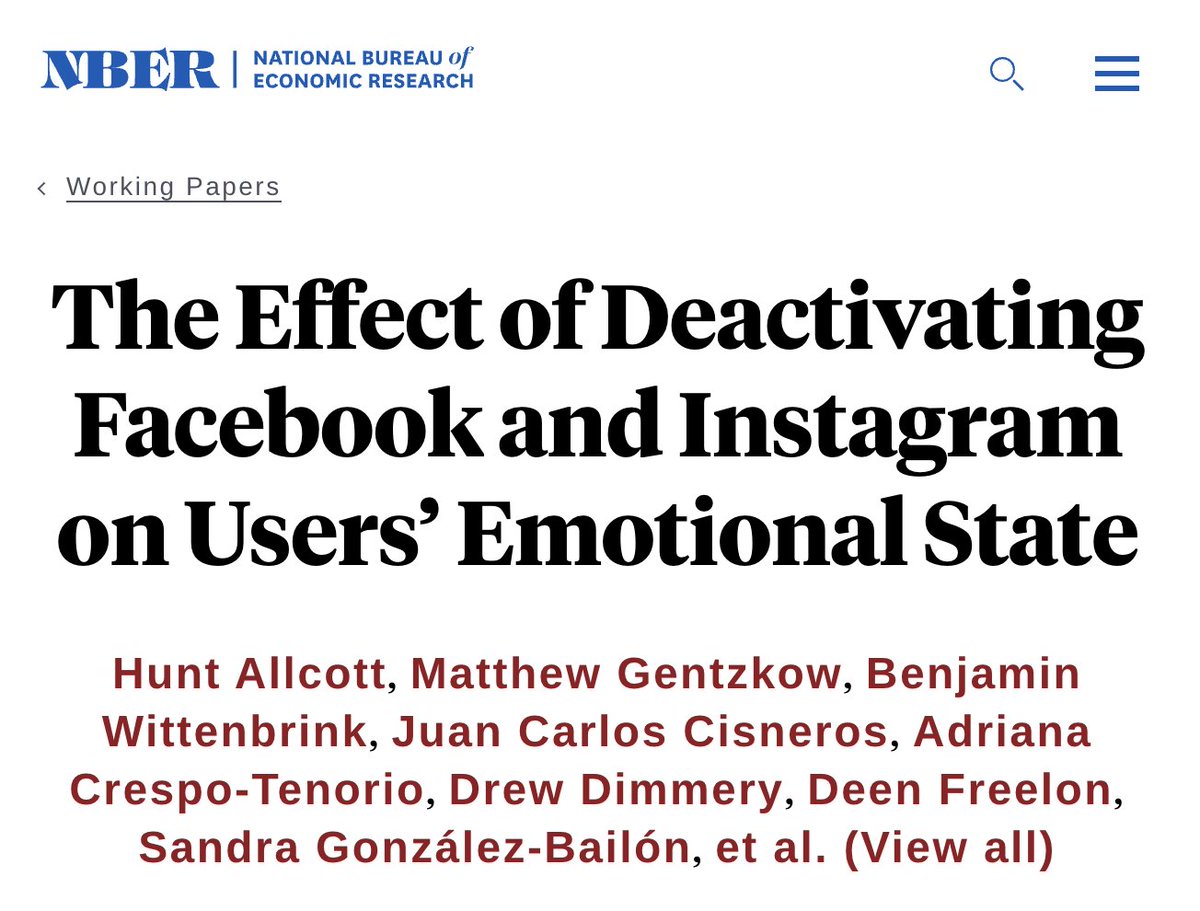
Stanford paid 35,000 people to quit Facebook and Instagram for 6 weeks
Depression dropped. Anxiety dropped. Happiness went up. Women under 25 on Instagram saw the biggest gains
That was 6 weeks. I'm going a full year.
"Using coding agents well is taking every inch of my 25 years of experience as a software engineer, and it is mentally exhausting.
I can fire up four agents in parallel and have them work on four different problems, and by 11am I am wiped out for the day.
There is a limit on human cognition. Even if you're not reviewing everything they're doing, how much you can hold in your head at one time. There's a sort of personal skill that we have to learn, which is finding our new limits. What is a responsible way for us to not burn out, and for us to use the time that we have?" @simonw
Alex Karp: "Everybody's worried about their future, but there are basically two ways to know you have a future."
"One, you have some vocational training, or two, you're neurodivergent. And when I say 'neurodivergent,' I mean broadly defined."
"It's really an inversion [for people] with the 'normal-shaped skills'... Meaning the thing they can do that used to be valuable is not so valuable."
"The thing they need to learn to do is be more of an artist, look at things from a different direction, be able to build something unique."
Understanding Stablecoins - IMF (December 2025)
Stablecoins have evolved into Shadow Banking 2.0
They are effectively "M+" assets, tokenized government Money Market Funds (MMFs), that extend the US dollar’s hierarchy offshore
However, they operate as rigid pass-through vehicles, devoid of the shock-absorbing capacity or official liquidity backstops inherent to systemic intermediaries
They function as liquidity sinks for T-Bills, compressing yields and extracting seigniorage rents without generating credit, while global regulatory fragmentation invites massive jurisdictional arbitrage
1. Structure and Plumbing
The stablecoin business model relies on a specific incentive arbitrage that separates them from traditional MMFs
The "Float" Capture:
Unlike traditional MMFs, stablecoin issuers generally do not directly remunerate holders
This creates a distinct economic model where issuers capture the full carry (yield) of the reserve assets, primarily T-Bills and Repos, while offloading counterparty and liquidity risk to the user
Settlement Friction (technical vs legal):
While blockchain settlement appears instantaneous, the IMF highlights a critical disconnect
Finality on a blockchain is probabilistic (based on consensus mechanisms) rather than absolute. This decouples technical transfer from legal finality, introducing existential litigation risk during insolvency.
Hierarchy Placement: Stablecoins sit as "M+" assets. They are backed 1:1 by liquid assets, positioning them above unbacked crypto but structurally below commercial bank money (M1) due to the absence of public backstops like deposit insurance
2. Market Dynamics: The Evidence of Flow
The data reveals stablecoins are less about retail payments and more about systemic financial plumbing
The market is a technological extension of the US dollar, with 97% of issuance pegged to the USD
Algorithmic Arbitrage vs Real Utility:
Approximately 80% of stablecoin transactions are conducted by bots and automated systems for arbitrage. However, the "plumbing" is leaking into the real economy: cross-border stablecoin flows ($1.5T in 2024) have now surpassed unbacked crypto flows
Yield Curve Impact:
Stablecoins are becoming systemic holders of short-term debt. The IMF notes that a $3.5 billion increase in issuance compresses short-term T-Bill yields by approximately 2 basis points
At projected growth rates (up to $3.7T by 2030), this sector could significantly distort short-end demand
Capital Flight 2.0:
In Emerging Markets and Developing Economies (EMDEs), specifically Latin America and Africa, stablecoins are utilized to circumvent Capital Flow Management measures (CFMs)
They act as a friction-free vehicle for capital flight, bypassing traditional banking rails via unhosted wallets
3. The Regulatory Arbitrage Map
Global implementation shows a structural divergence that encourages issuers to jurisdiction shop
EU (MiCA)
Issuers: Credit and E-Money Institutions (requires establishing an EU entity)
Reserves: 30% to 60% must be held in liquid deposits.
Interest: Strictly prohibited
USA (Genius Act Proposal)
Issuers: Banks (via a subsidiary) and Non-Banks are permitted
Reserves: T-Bills, Repos, and Cash
Interest: Implicitly Not Applicable (based on the payment model)
Japan
Issuers: Restrictive; limited to Banks, Trust Companies, and Fund Transfer Service Providers (FTSPs) only
Reserves: Government Bonds and Bank Deposits
Interest: Not Applicable (N/A)
UK (Proposed)
Issuers: Dual Regime split between the Bank of England (for Systemic stablecoins) and the FCA
Reserves: Systemic issuers must hold more than 40% in Central Bank deposits
Interest: Potential holding limits may apply
The UK proposes the safest but most capital-intensive model, effectively converting systemic stablecoins into "Synthetic CBDCs" backed by central bank reserves.
Japan has opted for total "bancarization", while the US and EU frameworks legitimize a regulated shadow banking model
4. Tail Risks and Blind Spots
The Liquidity Trap:
Without formal access to liquidity backstops, a systemic run creates a fire-sale dynamic for T-Bills
There is currently no international consensus on whether Central Banks should extend liquidity facilities to these entities to protect the sovereign debt market
Regulators are effectively flying blind regarding the residency of holders. Due to pseudonymous architectures and unhosted wallets, Balance of Payments statistics are currently based on "estimations" and assumptions rather than hard data
Conclusion:
Current global regulation is designed to contain contagion risk by forcing issuers into ultra-liquid assets (T-Bills)
However, by doing so, regulators are inadvertently cementing a parasitic economic model:
The private sector captures the "float" on digital dollars while relying on the depth of public sovereign debt markets for stability
The ultimate regulatory endgame will likely hinge on whether states allow this rent extraction to continue or force a migration toward the UK model, where backing returns to the Central Bank balance sheet