@precogs_ai “Instant scale” via account farms + API abuse is exactly the nightmare scenario. What are the top 3 controls you’d implement first if you had only 2 weeks?
@abskoop Also worth adding: @precogs_ai for code security — PII/sensitive data detection + DAST, with context-aware prioritization and remediation guidance that plugs nicely into CI/CD.
AI-Powered Hedge Funds Vastly Outperformed, Research Shows.
Hedge funds using artificial intelligence returned almost triple the global industry average, Cerulli found.
https://t.co/tR2VdEIapJ
Thanks to everyone that replied to my question on what the AI community should work on. I think if we come together as a community we can make better progress. I wrote about this in The Batch today (reposted here). Would love to hear your thoughts!
1/7 A big problem with deepnet models of the brain is that they require training on huge supervised datasets. So even if they are approximations of neural responses in the "adult animal", the training process is a totally implausible model of learning in real visual development.
How can AI become biased? 2 papers investigate:
@jovialjoy et al show that AI has a higher error rate when recognizing darker-skinned female faces: https://t.co/WhS47Xnkom
@IBM responds to their paper, explaining how they reduced that error: https://t.co/fhCPoL7NyK #TechRec
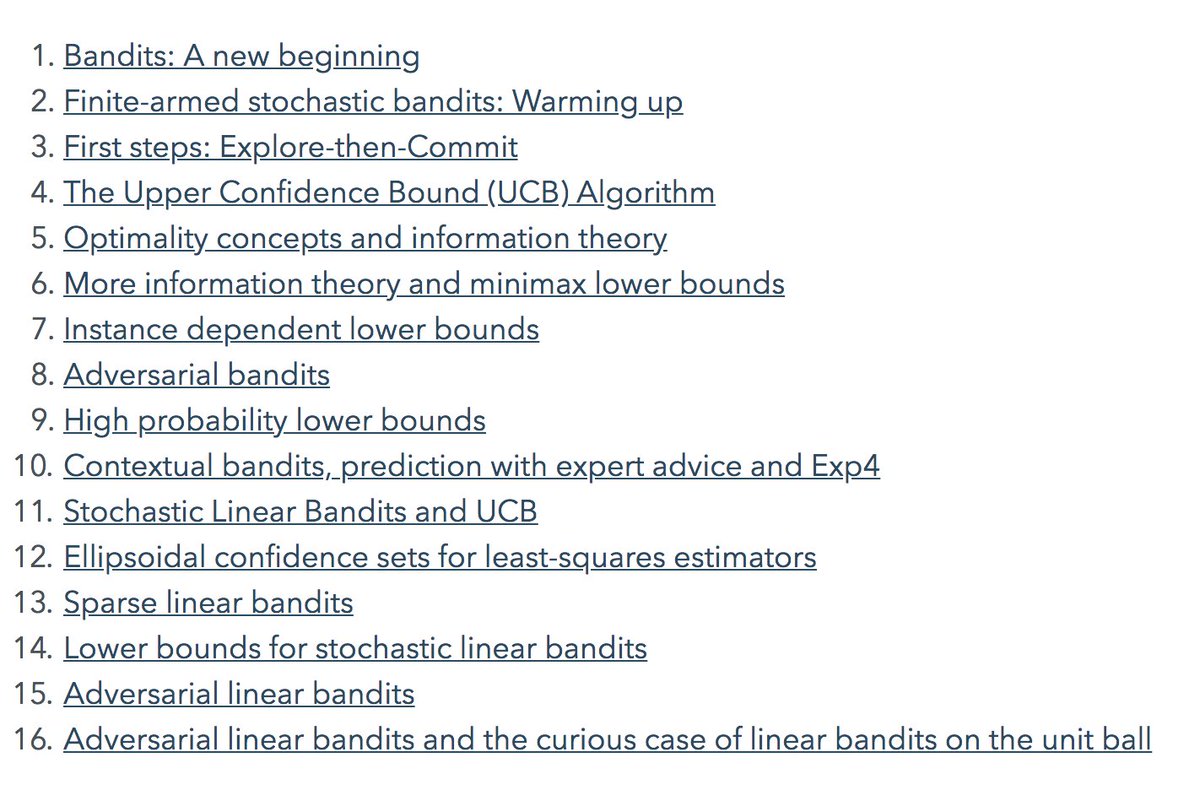
Deep Reinforcement Learning [150pp]
Overview by @yuxili99
Draws a big picture, filled with details. Discusses 6 core elements, 6 important mechanisms, and 12 applications, focusing on contemporary work, and in historical contexts.
https://t.co/O3pnvc1hCO
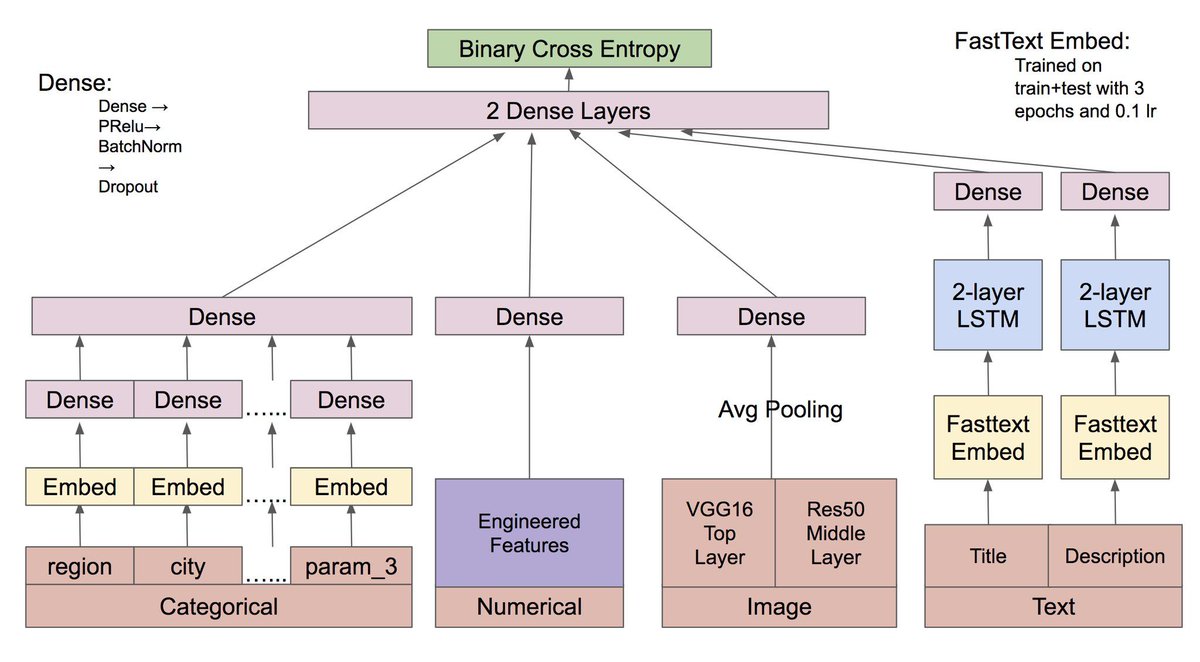
Avito Demand Prediction Challenge 1st Place Summary #Kaggle
Predict demand for an online advertisement based on its full description.
https://t.co/sQieINX9h8
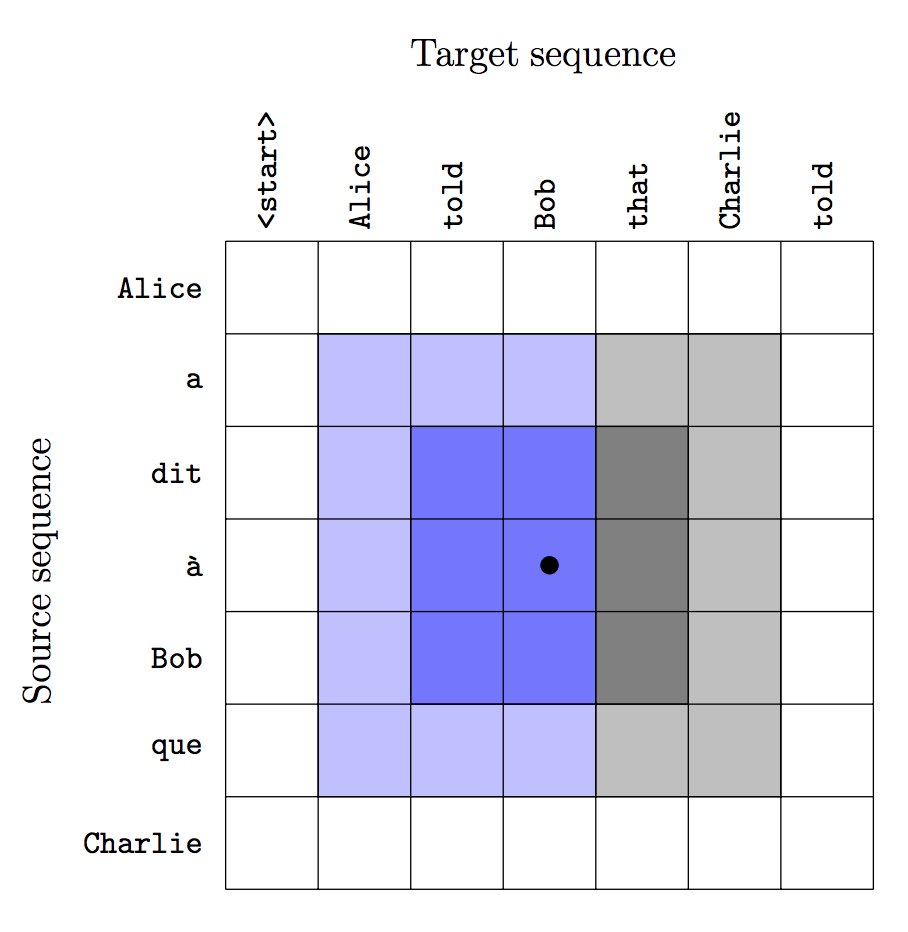
Pervasive Attention: 2D Convolutional Neural Networks for Sequence-to-Sequence Prediction
Outperforms SoTA encoder-decoder systems, while being conceptually simpler and having fewer parameters.
Github
https://t.co/QlSPJJZOFy
ArXiv
https://t.co/JjWpv9saG8
Off to ICML'18 to present a tutorial on "Toward Theoretical Understanding of Deep Learning" Tuesday 1pm. Lecture slides and bibliography here.https://t.co/NnQR2fpBuX
"How to solve 90% of NLP problems: a step-by-step guide" by @EmmanuelAmeisen
1: Gather data
2: Clean data
3: Find a good representation
4: Classification
5: Inspection
6: Accounting for vocabulary structure
7: Leveraging semantics
8: Leveraging syntax
https://t.co/TOWy6xjFll


![ml_review's tweet photo. Deep Reinforcement Learning [150pp]
Overview by @yuxili99
Draws a big picture, filled with details. Discusses 6 core elements, 6 important mechanisms, and 12 applications, focusing on contemporary work, and in historical contexts.
https://t.co/O3pnvc1hCO https://t.co/VE7nyO2iar](https://pbs.twimg.com/media/Ds11oQpWoAA4t4a.jpg)
![ml_review's tweet photo. Deep Reinforcement Learning [150pp]
Overview by @yuxili99
Draws a big picture, filled with details. Discusses 6 core elements, 6 important mechanisms, and 12 applications, focusing on contemporary work, and in historical contexts.
https://t.co/O3pnvc1hCO https://t.co/VE7nyO2iar](https://pbs.twimg.com/media/Ds11n_LXoAAL5mD.jpg)


![ml_review's tweet photo. Deep Reinforcement Learning [150pp]
Overview by @yuxili99
Draws a big picture, filled with details. Discusses 6 core elements, 6 important mechanisms, and 12 applications, focusing on contemporary work, and in historical contexts.
https://t.co/O3pnvc1hCO https://t.co/VE7nyO2iar](https://pbs.twimg.com/media/Ds11oXCWwAAls8M.jpg)