Paying the same price for routine services whether they’re delivered in a physician office or a hospital outpatient facility is a commonsense reform with strong bipartisan support. Tune in now to hear more at today’s @Paragon_Inst event. https://t.co/FBji3jp1JE
New @BudgetHawks brief: "Over the next decade (2025-2034), we estimate that the federal revenue loss from the nonprofit hospital tax exemption will total around $260 billion." https://t.co/yQssrnc5LU
Join our team! We're looking for someone to work on our Medicare and payment reform team. This is a great opportunity for someone earlier on in their career to learn more about these health policy issues and work with an amazing set of colleagues! Apply 👇https://t.co/3Ps8fbTXI8
Should be a good House Budget Committee hearing this Thursday on the budgetary effects of health care consolidation, feat. @ChapinWhite & @ben_ippolito
https://t.co/LFQzUpQeiK
Health reform efforts in the past have been largely framed around expanding insurance coverage. Whenever the next health reform debate comes, it will likely be focused on the cost burden, including for those with insurance.
@caitlinnowens@axios
https://t.co/tCy4U5MO4y
This year's @RANDCorporation data reiterates that the prices hospitals charge people with private insurance far exceed what Medicare pays (2.5x Medicare rates on average).
An important driver of high prices? The market power of large, consolidated hospitals and health systems.
New report: Prices paid to hospitals during 2022 by employers and private insurers for inpatient and outpatient services averaged 254% of what Medicare would have paid, with wide variation in prices among states. https://t.co/KoxitHjagm
Hospital systems have justified horizontal mergers for years claiming that larger scale will lower costs and raise quality. We now have the 3rd study showing that merged systems, even if in different markets, materially raise prices & don't improve quality measures.
via @statnews
"Even though we served under presidents for different parties, we both recommended that Congress adopt policies advancing site-neutral payments to save patients and taxpayers money."
- former HHS Secretaries Alex Azar and Kathleen Sebelius
https://t.co/4UxnyHyJ93
@GtownCHIR is hosting a new webinar series, "Understanding Hospital Financing." Join us for the first webinar on Friday, 4/19, and hear from experts, state policymakers & more!
Register to attend here: https://t.co/Tr5dGikfcx
New announcement from @CMSinnovates: primary care providers in select ACOs can soon receive population-based payments. While specifics on the model are forthcoming, this is an exciting step.
https://t.co/iLrQ1JPaYE
This somewhat complicated chart from the body that advises Congress on Medicare (@medicarepayment) is quite stunning when you think about it.
It costs the government $83 billion more to provide coverage through private Medicare Advantage plans than in traditional Medicare.
Happy MedPAC report day!
@medicarepayment's latest report reiterates the urgent need for Medicare Advantage reforms. Coding alone will lead to excess payments of $50B this year. And beneficiaries will pay $13B more in premiums due to overpayments to MA plans.
Couldn't agree more with @PostOpinions. Congress should act to get #siteneutral payment reform done this year. Medicare beneficiaries should not pay 2-3x more for routine services delivered in a hospital outpatient facility rather than a doctor's office.
The MA quality program "was designed to incentivize MA plans to improve quality and to help beneficiaries select high-quality plans. The program has failed to achieve either of those goals..."
More on MA's quality bonus program and potential reforms 👇
New from Bob Berenson and @LauraSkopec on the failings of the Medicare Advantage quality bonus program and pay-for-performance more generally. @UrbanInstitute https://t.co/UsQP5K1A16
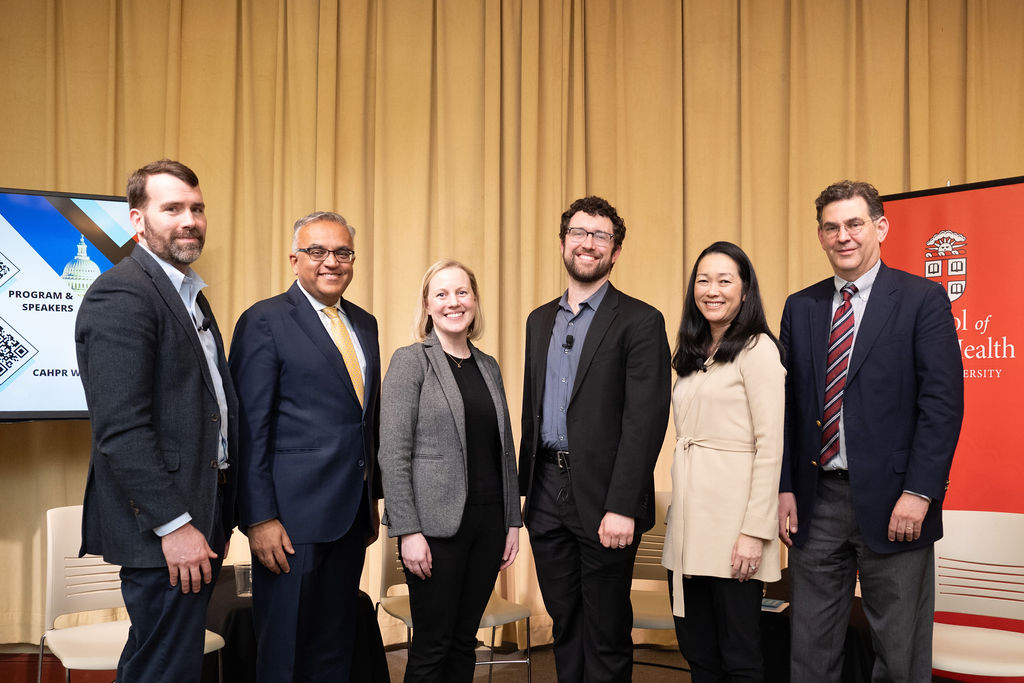
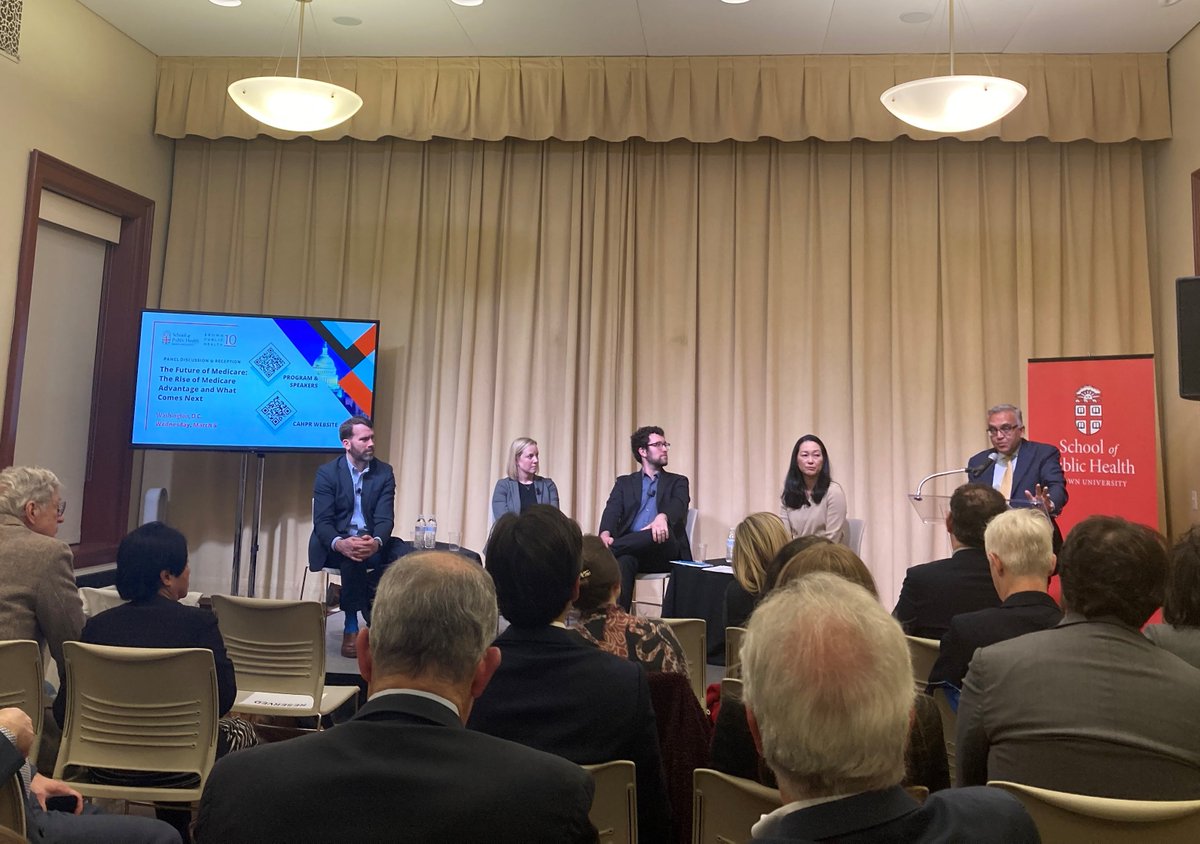
CAHPR traveled to DC last week for The Future of Medicare: The Rise of Medicare Advantage & What Comes Next! "It was great to be able to get a group of experts together," said @djmeyers2, "to discuss solutions to one of the pressing domestic policy issues." @Andy_Ryan_dydx
New from @Arnold_Ventures: Reflections on #hcvalueweek & @Acct4Health's summit earlier this year.
Learn how a shift away from fee-for-service payment can improve efficiency and provide high-quality, patient-first health care ⬇️
https://t.co/M4SBfRNHZf
States lead the way on addressing rising hospital prices. OR capped hospital prices for the state employee plan and here's what happened:
📉 outpatient facility prices decreased
💰 OR saved $107M in the 1st 2 yrs
✅ no hospitals left the network or closed
https://t.co/p8blzv4Kxp
A new @BudgetHawks brief calls for reforms to Medicare Advantage’s quality bonus program.
MedPAC has called the QBP seriously flawed. It costs $15B a year, does not improve or reflect quality well, and does not provide meaningful information to beneficiaries choosing a plan.
While patients are protected from costly surprise medical bills, new data shows repeated efforts to weaken the #NoSurprisesAct could ultimately lead to less savings for consumers, employers & taxpayers than initially projected.