"Tened, pues, valor y mostraros ejemplar. Dejad que se oiga la
fantasía con todos sus coros, razón, inteligencia, sentimiento
y pasión; mas, advertidlo bien: no olvidéis la locura."
J. W. Goethe, Fausto
"Mathematical Introduction to Deep Learning: Methods, Implementations, and Theory" is a freely available textbook for anyone interested in understanding the mathematics behind deep learning algorithms.
The book covers fully connected feedforward neural networks, convolutional and recurrent neural networks, residual networks, batch normalization, stochastic gradient descent, accelerated and adaptive optimization methods, approximation theory, generalization errors, and applications of deep learning to partial differential equations, including physics-informed neural networks and Deep Galerkin methods.
This is not an introductory textbook and requires a solid understanding of prerequisites such as calculus and linear algebra. However, it is a useful resource for exploring the mathematical foundations of deep learning in greater depth.
https://t.co/zTxKTakAgY
New book to be released in 2 months…
“An Illustrated Guide to AI Agents — Concepts and Code for Building Agents with LLMs, Tools, and Memory”
Pre-order now with Amazon price guarantee: https://t.co/1TEWYPG0vk
[475 pages]
Amazon Summary: “With visual storytelling and accessible explanations (hundreds of clear graphic illustrations), this book explains how AI agents are built, how they think, and where they're heading. Designed for professionals, students, and curious learners alike, this guide goes beyond the buzz to reveal what's actually happening inside these systems, why it matters, and how to apply the knowledge in real-world contexts.”
Fifteen years ago, @Coursera and online courses changed education. It worked better than almost anyone expected, expanding access by opening up where you can learn. But how you learn remains largely the same as it has for centuries: it is still one-size-fits-all, taught the same way to each person who shows up.
We now have an opportunity to change how learning happens. With advances in AI, we can now build a custom learning guide for each person. We will turn learning from one‑to‑many to one‑to‑one. I'm starting LearnVector to invent this next generation of learning. We are starting with a $100M investment from Coursera, and plan to collaborate closely with Coursera and Udemy.
Good learning needs much more than just a chatbot. Research shows that chatbots without guardrails harm learning. They help complete tasks and enable students to do better on homework. But cognitive offloading to a chatbot results in them being less skilled. And, you cannot always trust what a chatbot tells you.
In contrast, LearnVector will plan a path with you, adapt to how you learn, and patiently stay with you until you’ve mastered new skills.
One thing has not changed in all this time. People want learning they can trust: material that is accurate, relevant, and worth the effort you put into it. Anything less wastes the most valuable thing a learner has: time. Coursera has a trusted library of materials from authoritative sources. LearnVector plans to work with Coursera to bring this trustworthy learning to everyone. I'm grateful to Greg Hart and the entire Coursera team for supporting LearnVector.
I look forward to working with our talented team to change how we learn, and accelerate human development.
https://t.co/TqFUDFd1hb
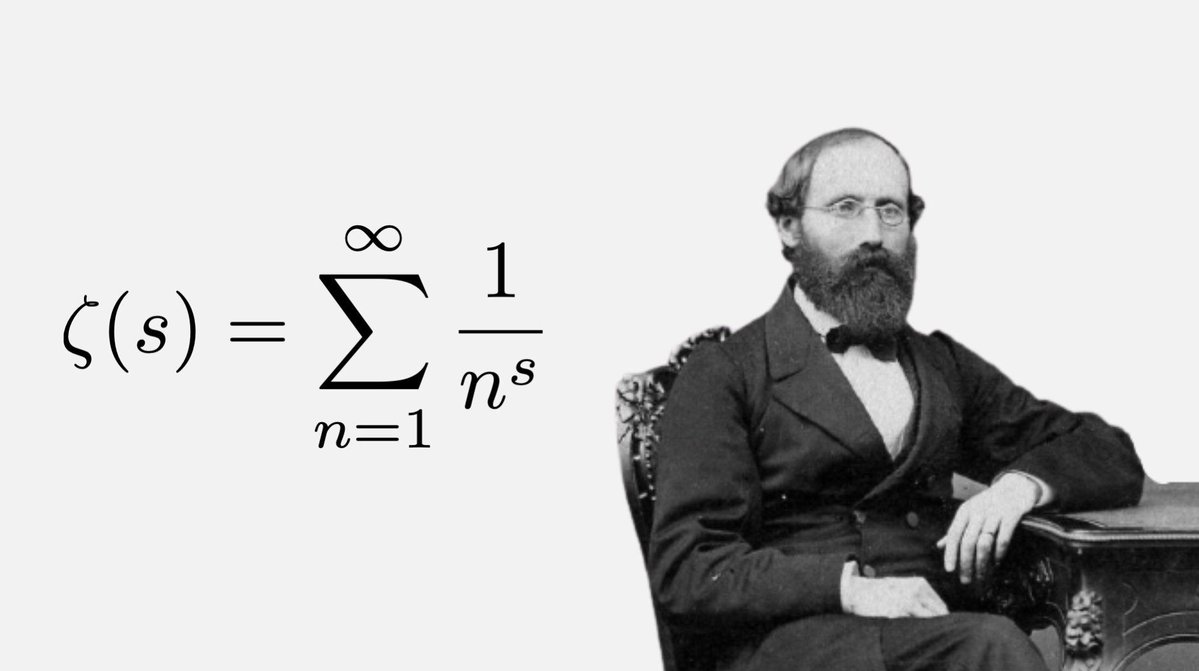
Bernhard Riemann died in 1866 at the age of 39. Here is a list of things named after him.
Riemann bilinear relations
Riemann conditions
Riemann form
Riemann function
Riemann–Hurwitz formula
Riemann matrix
Riemann operator
Riemann singularity theorem
Riemann surface
Compact Riemann surface
The tangential Cauchy–Riemann complex
Zariski–Riemann space
Cauchy–Riemann equations
Riemann integral
Generalized Riemann integral
Riemann multiple integral
Riemann invariant
Riemann mapping theorem
Measurable Riemann mapping theorem
Riemann problem
Riemann solver
Riemann sphere
Riemann–Hilbert correspondence
Riemann–Hilbert problem
Riemann–Lebesgue lemma
Riemann–Liouville integral
Riemann–Roch theorem
Arithmetic Riemann–Roch theorem
Riemann–Roch theorem for smooth manifolds
Grothendieck–Hirzebruch–Riemann–Roch theorem
Hirzebruch–Riemann–Roch theorem
Riemann–Stieltjes integral
Riemann series theorem
Riemann sum
Riemann–von Mangoldt formula
Riemann hypothesis
Generalized Riemann hypothesis
Grand Riemann hypothesis
Riemann hypothesis for curves over finite fields
Riemann theta function
Riemann Xi function
Riemann zeta function
Riemann–Siegel formula
Riemann–Siegel theta function
Free Riemann gas
Riemann invariant
Riemann–Cartan geometry
Riemann–Silberstein vector
Riemann-Lebovitz formulation
Riemann curvature tensor
Riemann tensor
Riemannian graph
Riemannian group
Riemannian holonomy
Riemannian manifold also called Riemannian space
Riemannian metric tensor
Riemannian Penrose inequality
Riemannian polyhedron
Riemannian singular value decomposition
Riemannian submanifold
Riemannian submersion
Riemannian volume form
Riemannian wavefield extrapolation
Sub-Riemannian manifold
Riemannian symmetric space
Riemann's differential equation
Riemann's existence theorem
Riemann's explicit formula
Riemann's minimal surface
Riemann's theorem on removable singularities
Y ocurrió en 1977, cuando Mark Knopfler vio actuar en un garito vacío de Londres, a una banda de Jazz que se llamaban “Sultans of Swing”.
Y de ahí, sacó una canción para alabar a los músicos que tocan por amor a la música y no a la fama.
El resto ya es historia de la música…
@DiazLsd1990 La impresión que tengo, es que la baja tasa de alfabetismo en la antigüedad obedeció más a la actividad económica. Si la mayor parte de la economía dependía de la agricultura y todavía no existia la máquina de vapor, quizá leer y escribir no era una actividad útil en el día a dia








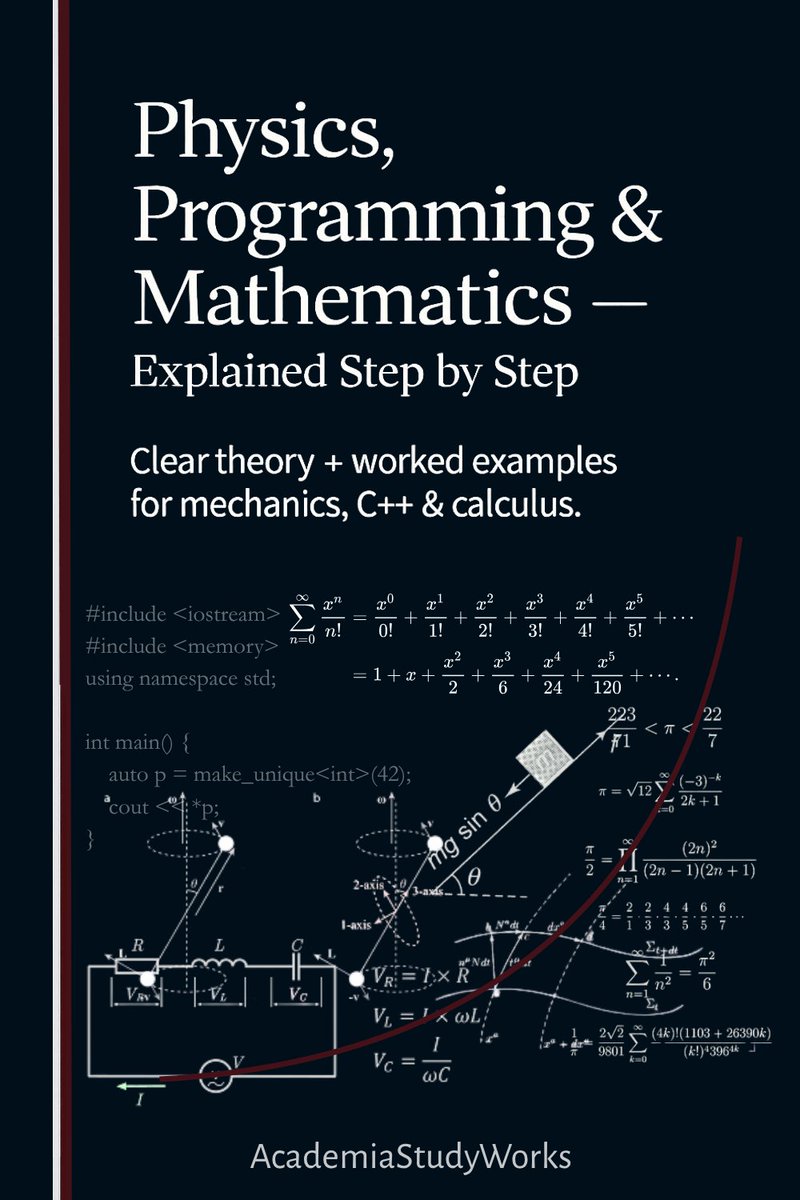


![KirkDBorne's tweet photo. New book to be released in 2 months…
“An Illustrated Guide to AI Agents — Concepts and Code for Building Agents with LLMs, Tools, and Memory”
Pre-order now with Amazon price guarantee: https://t.co/1TEWYPG0vk
[475 pages]
Amazon Summary: “With visual storytelling and accessible explanations (hundreds of clear graphic illustrations), this book explains how AI agents are built, how they think, and where they're heading. Designed for professionals, students, and curious learners alike, this guide goes beyond the buzz to reveal what's actually happening inside these systems, why it matters, and how to apply the knowledge in real-world contexts.”](https://pbs.twimg.com/media/HQkcLUAXMAEkfUY.jpg)

![KirkDBorne's tweet photo. Python for Engineering and Scientific Computing — Practical Applications with NumPy, SciPy, Matplotlib, and more: https://t.co/Zh9vSeCF1r
[511 pages] https://t.co/lN8zFaNqKo](https://pbs.twimg.com/media/HN9hFspWgAENiHq.jpg)