Seagrasses are a foundational element for coastal ecosystems worldwide, removing nutrients, CO2, pathogens, and even heavy metals from the water column to support abundant marine life. Roughly a fifth of the world's seagrass has been lost since the late 1800s, making restoration central to ocean stewardship.
A major constraint on scaling seagrass restoration is access to planting material.
Traditionally, divers collect plants from the seabed or gather seeds by hand. It is slow, labor-intensive work that cannot scale with conventional methods. Harvesting plants from donor meadows can even damage the healthy habitats that restoration is meant to protect.
Ulysses is developing minimally invasive, species-specific payloads that collect fruits and seeds at scale from key seagrass species, including Posidonia australis, Zostera marina, and more. Automating collection cuts cost and reduces disturbance to donor meadows, so we can restore larger areas while protecting existing habitat.
Pictured: Posidonia australis fruits collected in Cockburn Sound, Western Australia, by a Ulysses Mako equipped with our Gen 2 harvesting payload, November 2025.
@DHH is 🎯. Recycling plastic is a scam on all of us by the industry. The fastest way to wake everyone up from this hallucination is to ban plastic recycling. For first timers to this topic, start here:
https://t.co/bhnBSdJUWE
https://t.co/pBkRZ6ISUO
Every game is being decompiled
Every math problem is being solved
Everything is happening all at once
Think about the progress in the past year
Now imagine another year
And another year
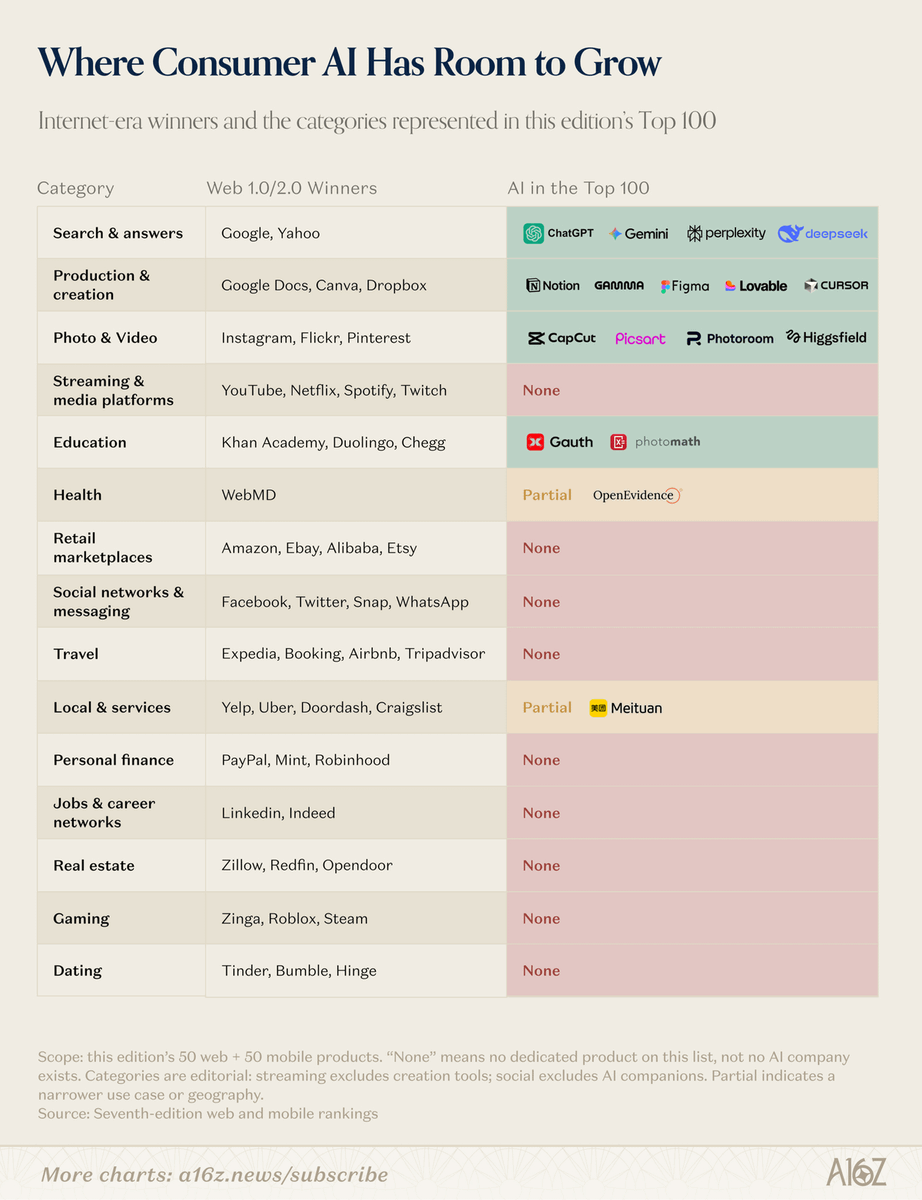
4/ "Everyone else" is the part I care about. I've spent my whole career on products trying to make that jump - the ones that go from "I tried it" to "wait, I use this every day." And the most exciting part is how many categories are still left to build in.
If you’re a semiconductor investor / equity analyst, you need to look at what these guys are building
They’re targeting inference for LLMs at 10,000 tokens/second/user. More than any human needs, but great for agentic work. Basically making them work at light speed
Imagine an army of junior bankers who can read every 10-K, transcript, research report and data-room document all at once, and get you any answer you need in seconds
We’re in the middle of the biggest technological revolution of our lifetimes
Truly insane to see and meanwhile I’m just here trying to figure out how to capitalize on it all
The @BostonCollege Investment Committee (an LP and my beloved alma mater) asked for a few thoughts on what's happening in AI. I recorded a test run yesterday morning and then shared it with my partners, who encouraged me to share it more broadly... so here you go!
This is not a sales pitch, it's just a reflection on what we're seeing. And it wasn't intended to be shared, so please pardon the rough edges.
https://t.co/AuZqHMSSxD
Many of the most vocal politicians now calling for government regulation of AI companies are also among those receiving the most money from the AI companies themselves.
What an intriguing coincidence.
imagine being a menswear writer and having to go back to writing about this fall’s best socks after reading anthropic employees say AI might destroy humanity in a few years
I’ve spent well over 10,000 hours studying math in my life, yet I can’t understand these proofs, at least not without weeks of digging deep into each topic. What’s more, none of my math PhD friends know much about these problems either, and they can’t verify most of them without working directly in the field (yes, math is VERY diverse).
LLMs are getting smarter than the experts themselves, and I’m not sure we have enough bright human minds to verify everything that will come out of them in the coming years.
Remember when we compared AI intelligence to PhD students? I think we’re past that.
Who’s Afraid of Chinese Models?
Everyone is worried about Chinese models, but the frontier labs will be fine; we need to enable open U.S. alternatives.
https://t.co/Q5cbH229jj
I sat down with @samdblond, founder of Monaco, to talk about to talk about the future of sales and GTM in the AI era.
He's an incredible GTM leader and founder and I get new ideas every time I talk to him. Hope you enjoy.
Timestamps:
(0:00) Intro
(1:26) Sam's sales journey
(3:11) EchoSign learnings
(5:28) Building Zenefits GTM
(7:02) Parker's 0 to $10M thought exercise
(9:51) Creating a demand-rich environment
(14:20) People, brand, and revenue ops
(21:19) Why Sam went to Founders Fund
(28:00) Starting Monaco
(29:40) Salesforce’s innovator's dilemma
(31:40) Going straight for the system of record
(34:30) Disrupting labor
(41:10) Pricing in an AI-native environment
(44:28) The Monaco GTM playbook
(50:06) The $60,000 plane experiment
(54:21) Creative campaigns vs. paid advertising
(1:00:06) Monaco’s product approach
(1:03:13) Advice for founders just starting to sell
(1:07:58) Abundant pipeline and the right to say no
“Imagine in 1750, you're like, well, 98% of us work in farming, and then you come back from the future and you're like, you guys, 2% of people in the 1990s work in farming. It'd be like, so everyone's starving to death? Like, no, no, we're super fat, actually.”