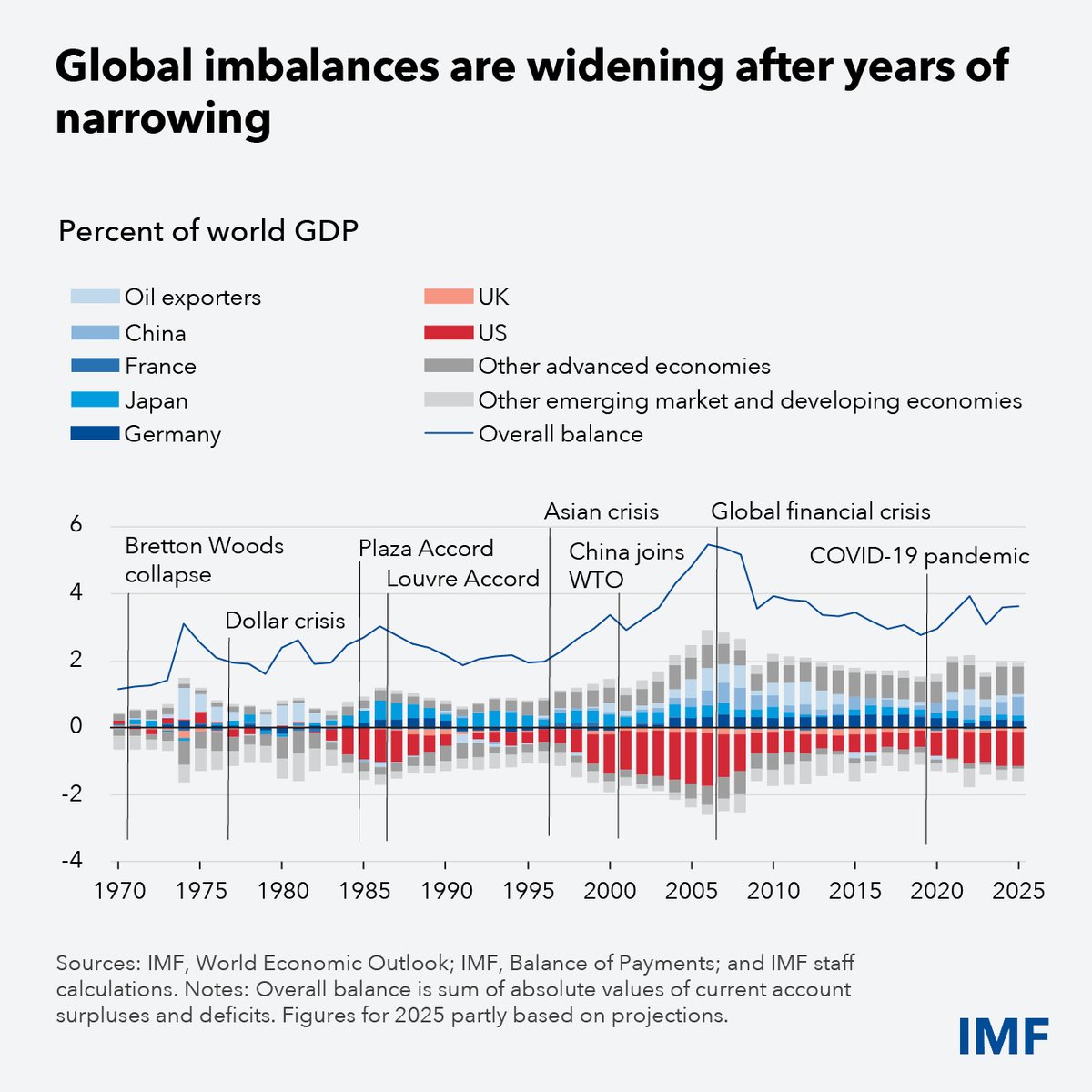
Quick explainer: the world produces a certain amount of goods, countries with trade deficits consume more of the world’s production. That’s because they’re being ripped off.
@HannoLustig Why would expectations about anything change when a new model comes out? We know new models will come out. And we’ve no real idea what the productivity effects are. And the link between productivity growth and real rates is v weak. This is noise.
Dario is wrong.
He knows absolutely nothing about the effects of technological revolutions on the labor market.
Don't listen to him, Sam, Yoshua, Geoff, or me on this topic.
Listen to economists who have spent their career studying this, like @Ph_Aghion , @erikbryn , @DAcemogluMIT , @amcafee , @davidautor
Dario is wrong.
He knows absolutely nothing about the effects of technological revolutions on the labor market.
Don't listen to him, Sam, Yoshua, Geoff, or me on this topic.
Listen to economists who have spent their career studying this, like @Ph_Aghion , @erikbryn , @DAcemogluMIT , @amcafee , @davidautor
Global current account imbalances are widening again. History shows widening imbalances can cause sectoral dislocation, often come before financial crises or abrupt reversals of capital flows. A disorderly adjustment could be exceptionally costly. 1/7
If anyone is around Providence Friday April the 10th this is going to be a great talk.
Cornelia Woll, director of the Hertie School of Public Policy in Berlin, will give the 5th annual Ethics of Capitalism lecture Friday April 10th at noon in the Jukowsky Forum, Watson Institute. She will talk about the issue of Corporate Crime and Punishment. Specifically the rise of negotiated settlements in international corporate crime and what this means for both ethics and geopolitics. I hope to see you there.
Some reflections in the New York Times today, in a good tour-de-force on the global macroeconomic ripple effects of Trump’s Iran war.
Can Europe afford deploying fiscal measures to buttress the Hormuz energy shock?
It’s painful but by and large yes.
1/
Just in case anyone is around London tomorrow and has nothing to do on the second nice day of 2026 weather-wise you can always come see me do this: https://t.co/xS7kUw7E2Q
Spoiler alert. Despite everything, it does.
The @nytimes piece today by @ByrneEdsal13590 highlights a concern I share:
“If we stay on the current path, the risk of extreme concentration — both economic and political — is very real.”
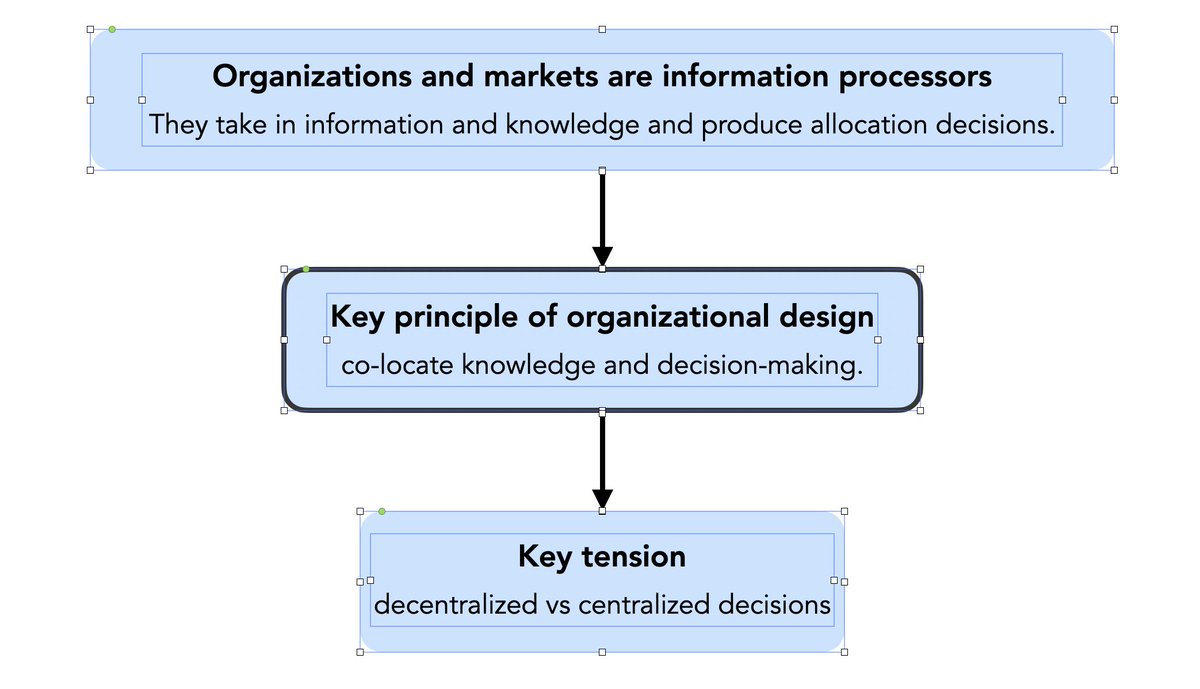
In work with @zhitzig, we ask why AI may shift the balance between dispersed knowledge and centralized control.
@M_C_Klein@EconBerger@Citrini7 Checks in the post already on pre-mid term to do list. And housing top of the list. Zirp and DJ helicopters will happen in AI-topia before you can say LLM.
@M_C_Klein@EconBerger@Citrini7 Checks in the post already on pre-mid term to do list. And housing top of the list. Zirp and DJ helicopters will happen in AI-topia before you can say LLM.
Wonderfully circular and self-contradictory. If this constitutes ‘research’, AI has definitively made it redundant. And yet, it is apparently market moving.
I spent 100 hours over the past week researching, writing and editing the piece we just put out.
It’s a scenario, not a prediction like most of our work. But it was rigorously constructed, dismissing it outright requires the kind of intellectual laziness that tends to get expensive.
And we’ve released it for free. Hopefully you enjoy it.
https://t.co/YK8E11GcDU
Since my op-ed in the @FT was published on Monday (https://t.co/3gotWePS7d), there’s been a growing debate about whether we’re beginning to see evidence that AI is boosting productivity.
First, let me be clear that the aggregate productivity data by itself is far from definitive. Even with the new revisions, there is certainly a lot of noise in US productivity numbers. No doubt lots of other factors are at work.
That said, my growing confidence that AI is powering higher productivity draws on evidence from a variety of sources:
1. The stunning capabilities of AI. If anything, I think the past decade of impressive improvements in machine learning and generative AI are still underrated. We are in the early stages of a massive economic transformation: https://t.co/HzUTZqWjNi
2. A growing number of micro studies document double-digit productivity gains in specific applications. @alexolegimas has a great catalog in his blog post: https://t.co/U1OqbpKfi4
3. My discussions with power users who use AI for coding, customer service, research and other applications, as well as more and more business executives, convince me that the facts on the ground are (finally) changing.
4. Data from our Canaries in the Coal Mine paper show employment changes in occupations most affected by AI: https://t.co/EkgB2VPyEL
5. And now, inklings in the aggregate productivity data are also telling the same story.
These are all consistent with the hypothesis that AI is beginning to have a positive impact on productivity.
The FT put a more definitive headline on my recent piece than I would have liked, but my bet (https://t.co/5m1oMbuxPj) is that we're likely to see more and more evidence as time goes on, barring some other shocks (e.g. macro mismanagement, trade wars, etc).
As each quarter goes by and we see more data, I continue to update my views.
No doubt, I'm currently out of sync with a lot of mainstream economists on this topic, but that’s ok by me.
I spent 100 hours over the past week researching, writing and editing the piece we just put out.
It’s a scenario, not a prediction like most of our work. But it was rigorously constructed, dismissing it outright requires the kind of intellectual laziness that tends to get expensive.
And we’ve released it for free. Hopefully you enjoy it.
https://t.co/YK8E11GcDU
Ironica how all these prognostications about the effects of AI on labour markets are not based on data. There’s lots now from across the globe and the picture, so far, is reasonably uniform and clear.
Since my op-ed in the @FT was published on Monday (https://t.co/3gotWePS7d), there’s been a growing debate about whether we’re beginning to see evidence that AI is boosting productivity.
First, let me be clear that the aggregate productivity data by itself is far from definitive. Even with the new revisions, there is certainly a lot of noise in US productivity numbers. No doubt lots of other factors are at work.
That said, my growing confidence that AI is powering higher productivity draws on evidence from a variety of sources:
1. The stunning capabilities of AI. If anything, I think the past decade of impressive improvements in machine learning and generative AI are still underrated. We are in the early stages of a massive economic transformation: https://t.co/HzUTZqWjNi
2. A growing number of micro studies document double-digit productivity gains in specific applications. @alexolegimas has a great catalog in his blog post: https://t.co/U1OqbpKfi4
3. My discussions with power users who use AI for coding, customer service, research and other applications, as well as more and more business executives, convince me that the facts on the ground are (finally) changing.
4. Data from our Canaries in the Coal Mine paper show employment changes in occupations most affected by AI: https://t.co/EkgB2VPyEL
5. And now, inklings in the aggregate productivity data are also telling the same story.
These are all consistent with the hypothesis that AI is beginning to have a positive impact on productivity.
The FT put a more definitive headline on my recent piece than I would have liked, but my bet (https://t.co/5m1oMbuxPj) is that we're likely to see more and more evidence as time goes on, barring some other shocks (e.g. macro mismanagement, trade wars, etc).
As each quarter goes by and we see more data, I continue to update my views.
No doubt, I'm currently out of sync with a lot of mainstream economists on this topic, but that’s ok by me.