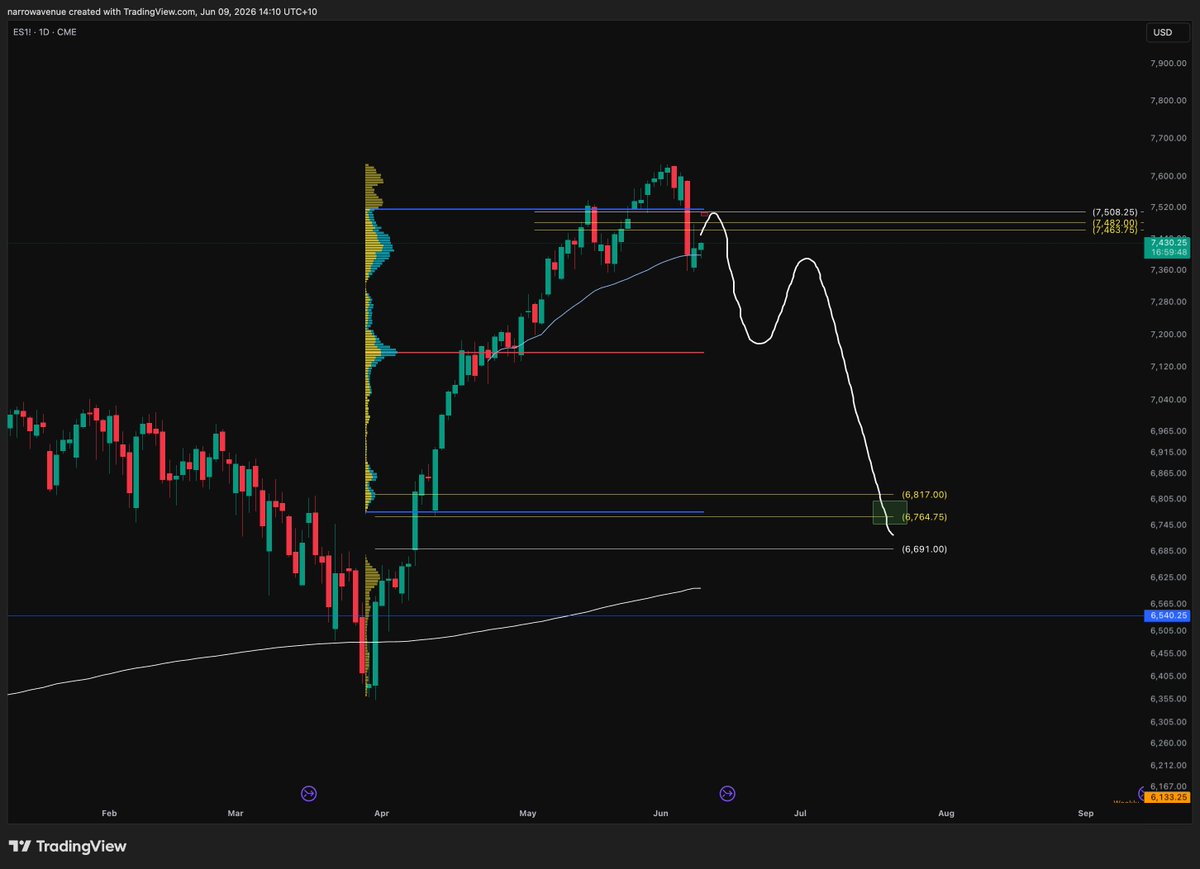
2026 is the all-in phase. It’s the year that will emotionally distort your illusion of the market and make you feel like you missed out. Stay wise and stick to your plan. Your job over the next couple of years is to preserve capital, hedge, and avoid debt—in the safest way possible.
A fearful market is a bullish setup; a euphoric market is a bearish setup. I still see plenty of fear.
What people are missing about this new tax reform is that profits are still profits. So if you get taxed more, humanity will suggest it’s time to speculate more.
Looks like a few hedgy's tanked price yesterday on the news with retail following. But TA don't lie, as we hold the level as mentioned. Value area low is now the naked point of control. Trading above suggest a higher probability of hitting $177 again but trading below will test local lows $CBA
You’ll understand why house prices may still remain elevated, even with this new federal budget, if you understand Georgist theory. As long as credit remains available, we’ll likely continue to see higher prices.
Speculation will always find a way to generate rewards, and when a strategy has worked before, history suggests it will likely happen again. Time and time again, under almost every new reform, markets still go through boom-and-bust cycles. Unless the issue of land is fundamentally addressed, the cycle tends to repeat itself.
@TomWright165389@DrCameronMurray But why would supply help decrease cost? When the developer has the ability to restrict supply to keep house prices elevated. The only way to decrease cost is to lower prices collectively. I know it's not an answering anyone is willing to hear. But that's just how it works.
Here we go again — the bypass for this is simply raising rents even higher. Set your 12-month lease, then increase it further on the renewal. Demand is still higher than supply in the mainstream mindset, correct? Why would this put off cashed-up investors? Stop getting fooled by experts who don’t understand how land works.
https://t.co/ri85uG01Ca
If developers see a downturn, as many are suggesting here, the well-funded ones likely won’t release their stock into the market. That would simply restrict supply.
So are we still talking about basic supply and demand here, or is something fundamentally different now because of interest rates?
The real issue would be if a proper crisis hits. Then all that withheld supply could suddenly hit the market at the same time, right when buyers can no longer afford it. That’s when you go from an undersupplied market to a forced-seller market very quickly.