October is the month for harvesting grapes (f. 10-11)
Ms. II 158 @kbrbe, Hennessy Book of Hours, Latin, Bruges, c. 1530, illuminated by Simon Bening, 37 miniatures
https://t.co/wDlHaFQNGT
Researchers from Chalmers University of Technology and NASA have made a surprising discovery about Titan, Saturn’s largest moon, that challenges conventional chemistry and offers fresh perspective on prebiotic processes.
In the frigid conditions of Titan’s surface, where methane and ethane exist alongside hydrogen cyanide at temperatures near 90 K, the team found that hydrogen cyanide crystals can incorporate nonpolar molecules like methane and ethane into their lattice, forming stable co-crystals.
This is unexpected because, under normal conditions, polar and nonpolar substances resist mixing, think oil and water, yet here they blend in a solid structure.
This finding matters for several reasons. First, it suggests chemical behavior in extreme environments can defy textbook rules, revealing more flexible foundations for molecular interactions under cold conditions. Second, because hydrogen cyanide is a key precursor in theories of abiogenesis (it’s involved in forming amino acids and nucleobases), the discovery hints at new pathways through which life’s building blocks might assemble even in very harsh settings.
Finally, the result has implications for interpreting data from Titan’s landscape and atmosphere, and it may also guide preparations for NASA’s upcoming Dragonfly mission, slated to reach Titan in 2034.
👉 https://t.co/ReZDWs4Jnn
@SimonWijckmans@BSidesSF Super! Nu weet ik waar je mee bezig bent. Goede talk om geïnteresseerden nieuwsgierig te maken. Maar vooral: je hebt een fenomenaal goed inzicht. You made my day!
The Tasmanian pencil pine (#Athrotaxis cupressoides) is an endemic conifer to Tasmania's alpine and subalpine regions, where it survives in damp areas, for it is a highly fire-sensitive species. It is slow-growing and threatened by grazing animals and a warming climate.
My profession is sometimes more epic and exciting than you might think. Next year, I hope to write a monograph around the Nottingham codex -- stay tuned for more details (2/2).
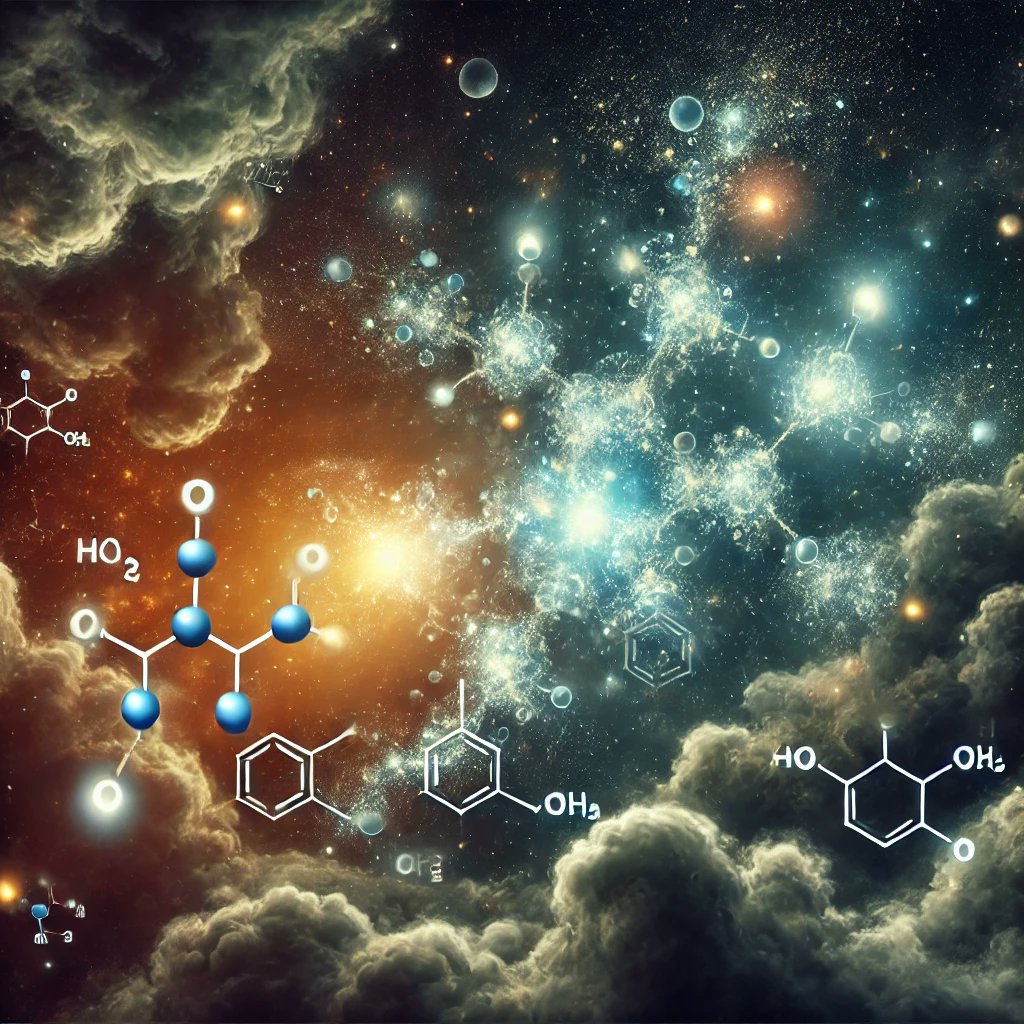
Scientists found that gamma radiation can convert interstellar methane into complex organic molecules, including amino acids like glycine, under mild conditions. This reaction may explain how life-building molecules form in space, as simple molecules react on interstellar dust.
The findings also suggest a new industrial method for methane conversion, potentially yielding high-value products with low energy input. This research highlights the significance of gamma radiation in cosmic chemical evolution.
👉 https://t.co/rVHiEMZAQM
Now with Bloovi, I shared part of a concerning story coming up. How Chinese/North Korean candidates posted as Americans to try and infiltrate our company. More on that soon. https://t.co/rkKEnL4itA
Even on the cloudiest days, nature's quiet embrace can offer a respite. Wandering through the woods is like stepping into a sanctuary of tranquility, where the rhythm of life slows and the soul finds its peace.
#Nature#Peace
#MondayMemories
You're looking at the first image of another solar system.
This image, captured by the SPHERE instrument on @ESO_Chile Very Large Telescope, shows the star TYC 8998-760-1 accompanied.
The two planets are visible as two bright dots in the centre (TYC 8998-760-1b) and bottom right (TYC 8998-760-1c) of the frame.
Other bright dots, which are background stars, are visible in the image as well. By taking different images at different times, the team were able to distinguish these planets from the background stars.
The image was captured by blocking the light from the young, Sun-like star (top-left of centre) using a coronagraph, which allows for the fainter planets to be detected. The bright and dark rings we see on the star’s image are optical artefacts.
👉 https://t.co/Q3npqs9J65
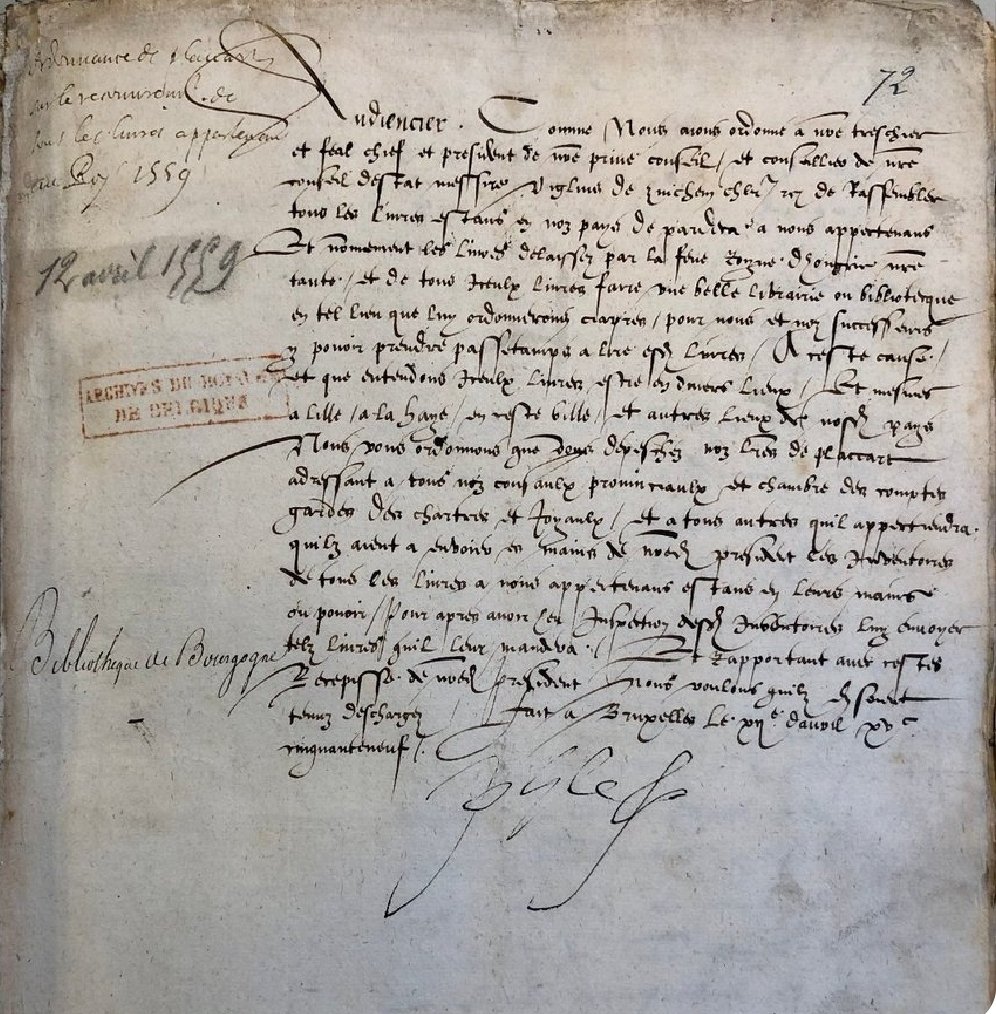
The foundation act of the Royal Library of Brussels. Signed by King Philip II in 1559 who decreed the countless manuscripts gathered by his predecessors should be centralised at the Coudenberg Palace in Brussels. The collection is still one of the finest in Europe.
Possibly the most incredible Beethoven Ode to Joy flashmob by the Philharmonic Orchestra of Nuremberg and the Hans-Sachs-Choir in front of the St. Lorenz Church in Nuremberg, Germany.
[📹 Evenord-Bank eG-KG]
"De opwarming van de aarde lijkt in een versnelling te komen, volgens een groeiende stapel onderzoeken."
De stralingsbalans is verstoord (meer zonnestraling in dan warmtestraling uit). Circa helft van extra energie is onverklaard
https://t.co/IGhPvKgl38
of https://t.co/9IyjGbiljy