@janetweets@cshabsin It's about gifting books rather than lending. If you find something you love, keep and cherish it. If you can, gift other books so the next person may be similarly inspired. #LFL circulation is constantly changing, and every day gives us something new.
.@researchinfo speaks to EBSCO Senior Agile Product Owner Gloria Gonzalez on the topic of moving library systems to the cloud. https://t.co/yiEriLtNsH #openaccess#interoperability
I'm rereading "In Patagonia" by Bruce Chatwin on my first trip in quite some time. I first enjoyed this book in the early 90's when I started traveling for Web work. My wife reminded me I'm also wearing the same travel sports jacket. I don't think she meant it as a compliment.
If you're a Library interested in reaching new patrons where they search (Google), or just interested in practical applications of what Bibframe, a Web of Linked Library data and https://t.co/ko7JA5UwPK BorrowActions can do, reach out to my colleagues at @NoveListRA to learn more
Expand your library's visibility 💻👀
🔗https://t.co/EKWGdOFMD1
The #SummerReading extravaganzas #libraries create provide an opportunity to showcase various areas of your collection for patrons to explore. Linked Library Service and Enrichment can help increase the visibility!
🚨 #JobAlert 🚨
We’re hiring a Software Engineer II! Interested in writing software to help public libraries connect with patrons? Have experience as a .NET full stack developer? Want to work with AWS to move applications to the cloud? Learn more: https://t.co/JxFmNaeEWM
Hockey, Poutine, Libraries! Canadian readers 🇨🇦 📚, check this out: you can now use Google Books "Borrow Actions" to find a book at a library near you! Simply search for any book, then scroll down to see the "Borrow" menu. @googlecanada
Announcing new ways to reach Canadian readers in Google! 📣 Google’s borrow actions connect users directly to your library catalog, making sure that patrons (and potential patrons!) see your library as an option for the books they want to read. 💻🇨🇦https://t.co/NKK5GQS1JI
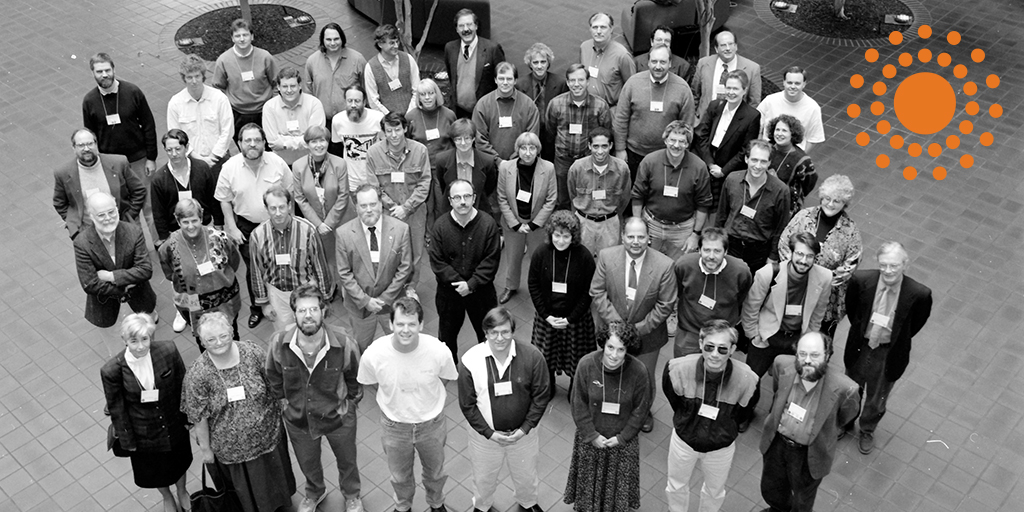
March 1-3 is the 25th anniversary of "OCLC/NCSA Metadata Workshop: The Essential Elements of Network Object Description" hosted by OCLC in Dublin, OH. There @dublincore was born & has over time become a key part of the widely adopted https://t.co/oBlI9A9Ttu metadata standard.
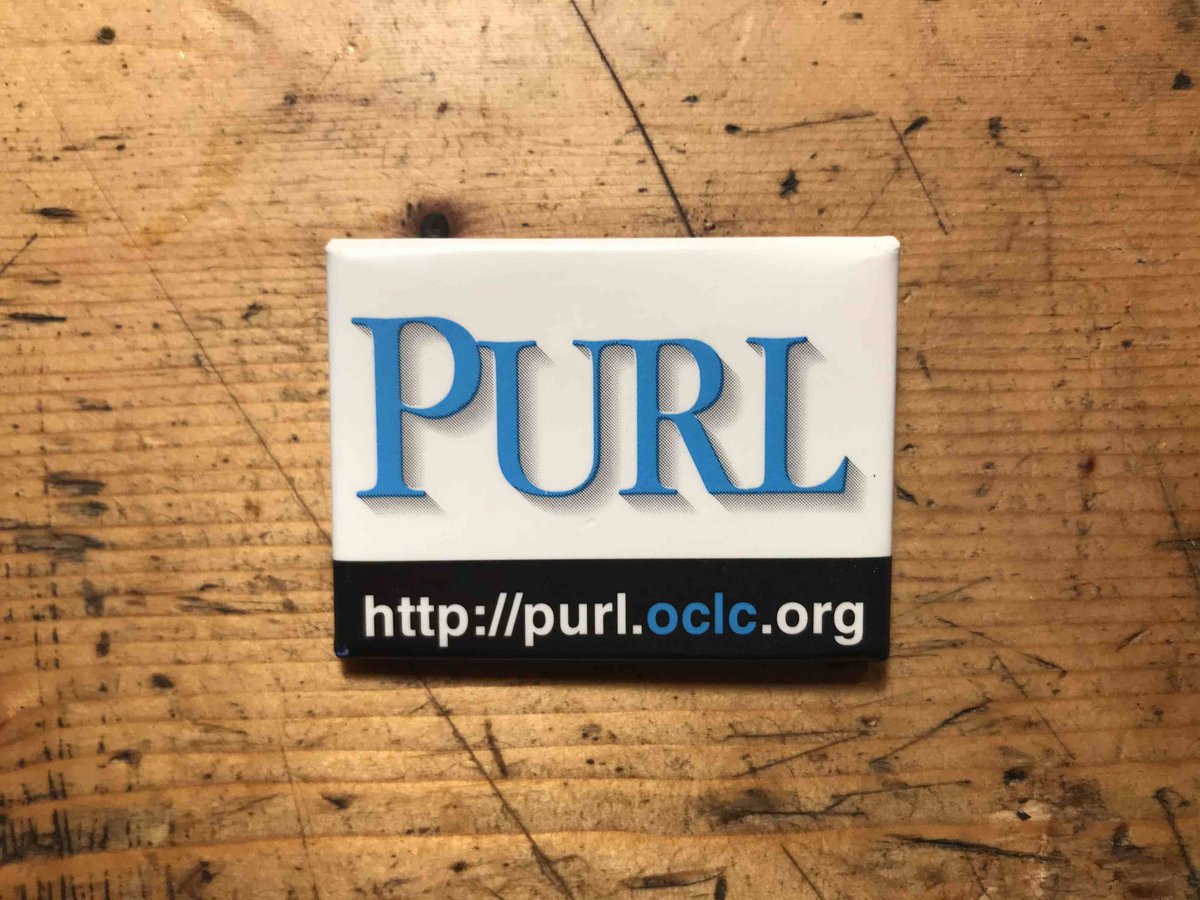
Prepping for #PIDapalooza2020 I stumbled on some old PURL swag ... hard to believe we launched this 25? years ago. Looking forward to comparing lessons learned along the way ;)
@ktfre Thanks for pulling this collection together @ktfre ! Now any https://t.co/mnVmhgE17p library can benefit / build from this. Here is your list but seen through the eyes of my library - https://t.co/x16XOO1XYV
@danbri@karencoyle@GerardMeijssen Just a quick comment @dan@karencoyle is absolutely correct. And that issue is just one of the reasons why we've built the https://t.co/38AAKrruZe network.
@AnnieTheObscure@danbri RDF originally had key schema components to it. But as we were maturing, XML schema started and we put RDF schema parts on hold to build on other key standards work. Model was stable so shipped. RDFS then followed to round out Web DM scaffolding. Plus, all the crazy mentioned ;)
In (1994), at the 2nd Int'l WWW Conf., a hallway conversation (Y. Rubinsky @stuartweibel@erimille T. Noreault, J. Hardin) on the difficulty of finding Web reources lead to a 1995 meeting at @oclc where @dublincore was invented. #Web30#ForTheWeb https://t.co/0IlOI5In0i
@danbri And as far back as Extreme Markup 2000 -
https://t.co/mbYN8erJWp . I recall at the time C. M. Sperberg-McQueen suggest we (RDF / TopicMap) be locked in a room and not let out until a single specification. May be a #W3CGraphWorkshop approach still worth considering? ;)
Today was the first day, 24 years ago: Day 1 of the "OCLC/NCSA Metadata Workshop" in Dublin, Ohio. 50 invited experts ("The Geeks, the Freaks, and the People with Sensible Shoes") decided the Web could self index so they invented #dublincore (see: https://t.co/0IlOI5In0i)