Six years ago, @richziade had a great software idea: TinySheet, a ten-line spreadsheet that ran in the browser and kept all the data in its URL.
Today, @ftrain writes, they've expanded on that idea with https://t.co/YLYMieOz9m: https://t.co/XRPqMNqpCn
How can we get politicians and Silicon Valley on the same AI page?
On this week’s Aboard Podcast, @ftrain and @richziade welcome on @goldman of the Center for Shared AI Prosperity.
Listen now: https://t.co/qMVV7vuBpk
@jamescham HBD! The family supports and works at an ad-hoc food/clothes/school supplies distribution on Fridays in Flatbush in Brooklyn so this one can be for your birthday.
"My prediction is that, via PostgreSQL, many more people will start to anchor their AI work in structured, semantically linked data," writes @ftrain. "We need to start using our computers again, instead of just talking to them." https://t.co/LQp5CU6Mcu
"What would it sound like to be a ghost walking around the empty mall in an abandoned alien space station while vaporwave-style...music...blurs together in the background, layered in with random voices and sound effects?" https://t.co/CKSDaPmJrA
"Software development in the future will be less and less about coding and deploying software," writes @ftrain. "Instead, it’ll be more and more about cataloging and identifying good loops between generative systems and verification systems." https://t.co/raYXEpFkxE
“The blind vibe-coding revolution is upon us.”
On the Aboard Podcast, @ftrain and @richziade are joined by @quailty5 to discuss how blind and low-vision people are using AI tools to create and adapt software to suit their accessibility needs: https://t.co/CUH16nZiCn
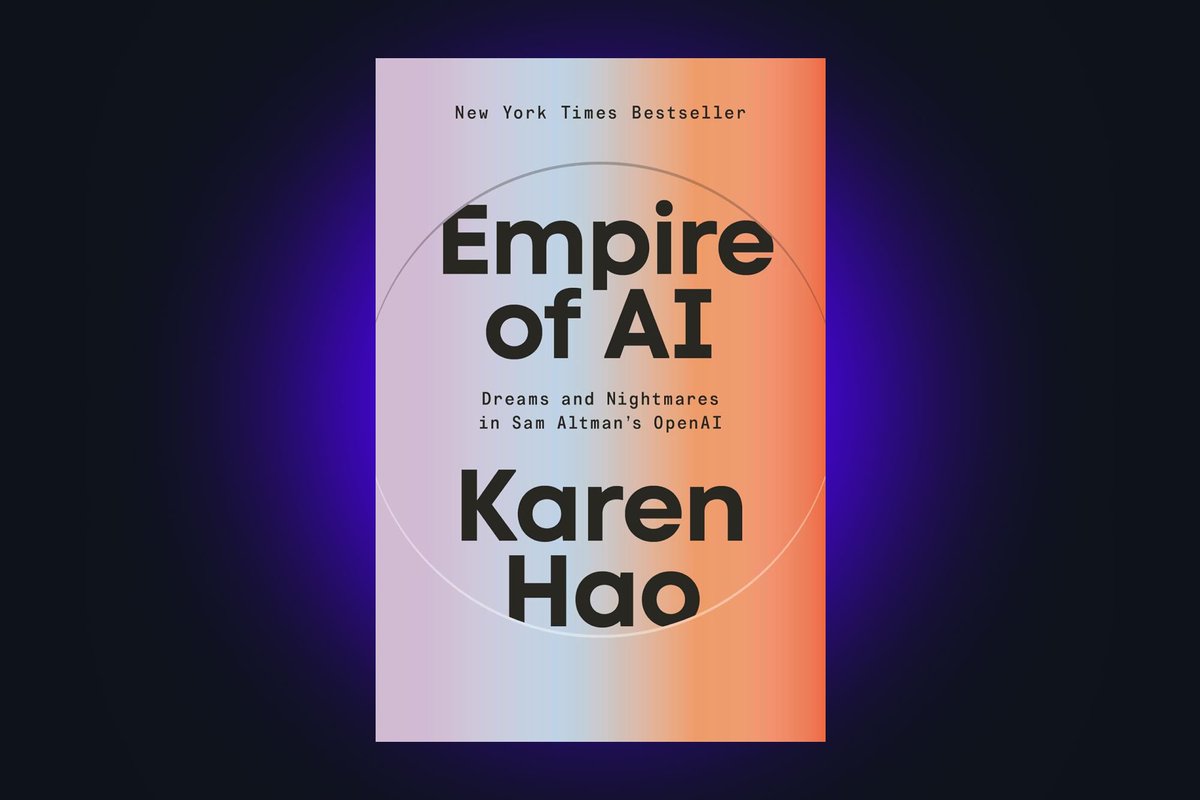
Karen Hao's "Empire of AI," @ftrain writes, is "less about computers becoming human, and more about humans being very human."
In this week's newsletter, Paul reviews Hao's sweeping chronicle of the emerging AI era: https://t.co/Wh0EePKlyq