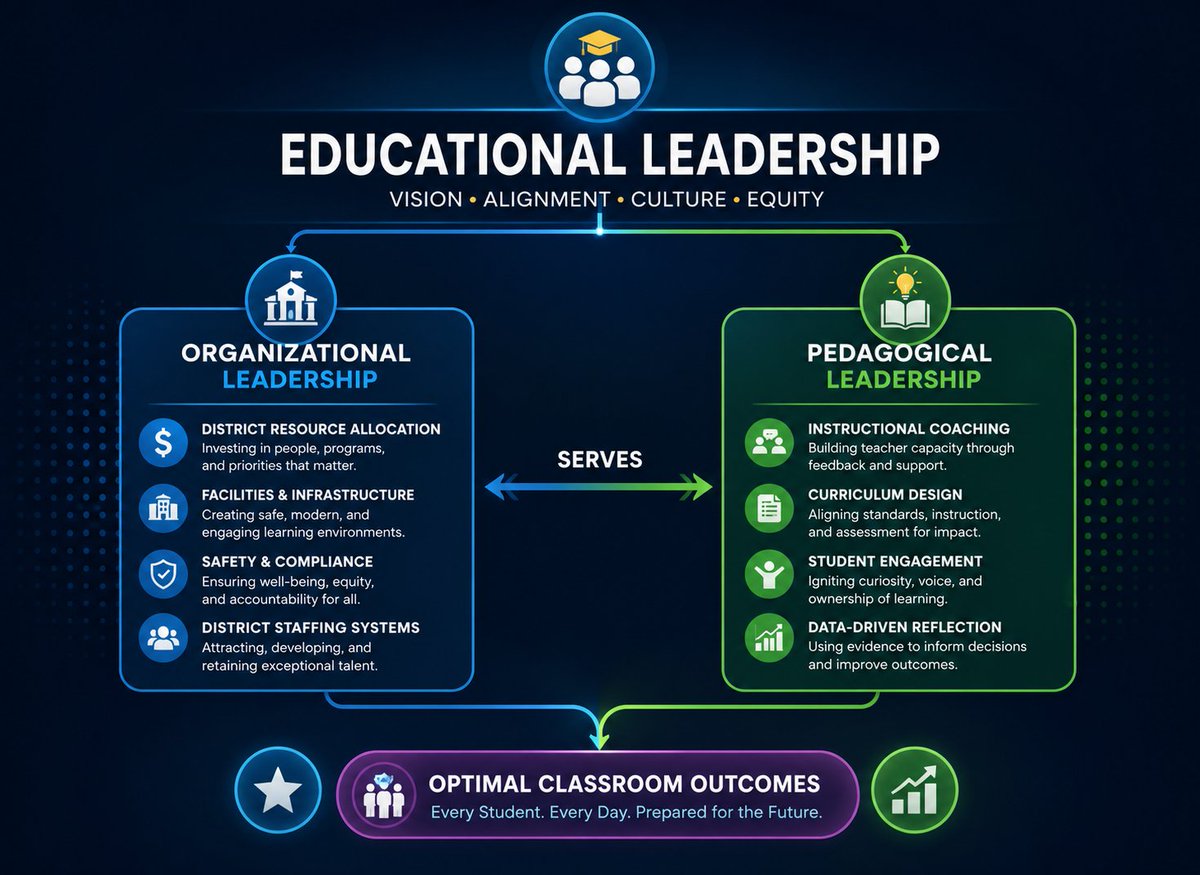
I’ve spent more time writing this year than ever before. Getting my book in the mail feels awesome! I hope my leadership tips can help others! Thanks @CorwinPress@LRobbTeacher#TheTenMinutePrincipal
🎥 Just shared on YouTube 👉 The moment you put a grade on it, it stops being formative. Starr Sackstein explains what formative assessment actually is — and what to do with the data you're already collecting.
📌 Full show notes, links, and the complete transcript: https://t.co/aUCgQaE80g
Starr Sackstein has spent more than two decades helping teachers move from traditional grading to feedback that actually drives learning. In her fourth appearance on the 10 Minute Teacher, she and Vicki Davis get practical about assessment at the start, middle, and end of a lesson — including the four corners strategy that gets every student out of their seat and thinking.
🎯 WHAT YOU'LL LEARN
✅ The one-word difference between assessment OF learning and assessment FOR learning
✅ Why a grade on a formative task cancels the formative part
✅ How four corners works — and the Post-it note trick that gives quiet students the floor
✅ The most common assessment mistake: assessments that don't match what you're actually assessing
✅ Why observational data is as valid as test data
⏱️ CHAPTERS
00:00 Introduction
00:49 Meet Starr Sackstein
01:38 What Actionable Assessment Really Means
02:29 Formative vs. Summative, Defined Clearly
05:03 Priming the Pump at the Start of Class
06:57 How Four Corners Actually Works
08:30 Post-it Notes and Equity of Voice
10:22 The Biggest Mistake Teachers Make
11:56 Reflection, Metacognition, and Hard Classes
12:54 Be Intentional and Ask Your Kids
13:45 Closing Thoughts
👩🏫 ABOUT STARR SACKSTEIN
Starr Sackstein is an educator, author, and speaker known for her leadership in rethinking grading and assessment practices. With over two decades in education she has served as a teacher, instructional coach, and administrator, and she consults with schools and districts around the world. Her newest book, Actionable Assessment, is co-authored with Michael McDowell. Find the book and all her resources on the episode page above.
💬 Which of these would you try first — four corners or the Post-it note round? Tell me in the comments.
🔔 Subscribe for a new episode every weekday: https://t.co/5sFjfwPhGI
#FormativeAssessment #AssessmentForLearning #TeachingStrategies #Gradeless #StarrSackstein #10MinuteTeacher #CoolCatTeacher #EdChat #TeacherPD #ClassroomStrategies #StudentFeedback #K12Education #ThoughtLeaderThursday https://t.co/bc5czk0iwr
NEW: Collaborate to Reclaim Your Teacher Agency.
Teacher collaboration is a powerful lever to reclaim instructional decision making & ensure all students make progress, writes literacy leader Laura Robb. #edutwitter@LRobbTeacher@ERobbPrincipal
https://t.co/hxbEJMC97S
Morphology Monday!
August is International Peace Month! Do we ever need it now! What better way to study peace than with a word root lesson on the Latin root for peace- "pax/pac."
Please share with other educators & parents who may want to use this lesson with students.
Years from now, students won't remember every lesson.
They'll remember:
• the teacher who believed in them
• the principal who knew their name
• the adult who refused to let them give up
Relationships are the foundation of learning.
#education
The best leaders don't begin with answers, they begin with questions.
“What do you need?”
“What's getting in your way?”
“How can I help?”
Listening builds trust. Trust builds schools.
#edleadership#schoolleaders
As schools create goals for the upcoming year-give pause to overly scripted programs or a belief that everyone should be on the same page each day. Both can be tempting-my experience- neither work.
New Blog Article - Teaching Prosody Part 2 Here's a link to my July blog article on Teaching the elusive fluency component - prosody. Enjoy! 5 min read.
https://t.co/eYnfv5MirK
Teachers don't expect perfection.
They expect honesty.
Consistency.
Support.
Respect.
The schools that retain great educators aren't always the ones with the biggest budgets.
They're the ones where teachers know their principal has their back.
NEW: How to Maximize Games in Your Math Classroom.
By making small adaptations in their use of math games and puzzles, teachers can stimulate student interest & deepen conceptual learning. Nine tips from the authors of Well Played (6-8). #mathed#mtbos
https://t.co/sNwi6mCdeD
The teacher shortage is not only a recruitment problem.
Schools can hire more educators, but that will not solve much if experienced teachers continue leaving because the workload is unsustainable, the compensation is uncompetitive, and the profession is treated as an easy target.
Promoting teaching requires more than encouraging people to enter the classroom. It requires creating conditions that make talented educators want to remain there.
That means respecting the expertise, time, and education the work demands.
What would have the greatest effect on teacher retention in your community?
Link in first comment.
The most important leadership strategy doesn't cost a dollar.
Be visible.
Visit classrooms.
Learn students' names.
Ask teachers what they need.
Celebrate small victories.
People rarely remember every decision you made.
They always remember how you made them feel.
The best investment I made as an incoming principal was meeting 1-on-1 with every staff member. Meetings were casual, optional: Tell me about yourself as a person. What do I need to know about you as an educator. Relationships came first, and everything else was built from there.
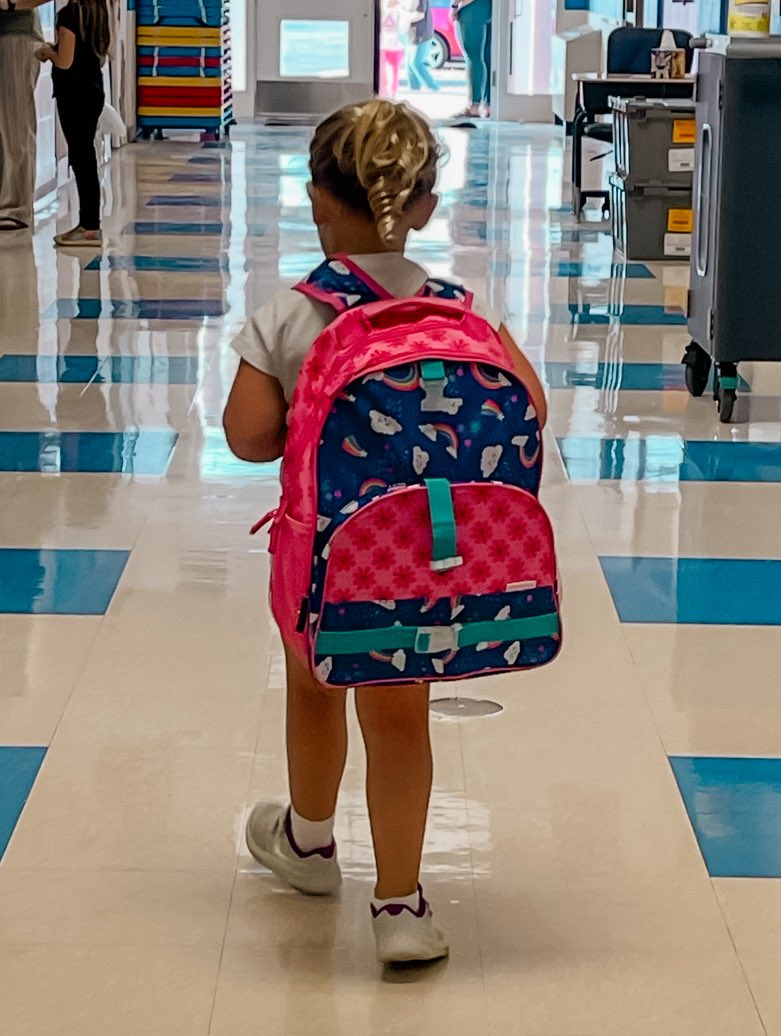
Each year, I am asked by parents, “What do I need to do to prepare my kid for kindergarten?” Typically, they anticipate my response to be centered around what they need to know academically, but I think there are skills more important than that. It isn’t about knowing all of their letters and sounds to be kindergarten ready. If they do, GREAT. They are ahead of the game. But the more important thing is that they learn social and independent skills that will help them be successful in the classroom.
🔺Help them learn to say their full name when someone asks them (not their nickname).
🔹Help them learn to ask for help.
🔺Help them become comfortable talking to trusted adults who aren’t family members.
🔹 Eat dinner together. At a table. With the tv off. ➡️ They will learn about table manners, how to stay in their seat an entire meal, develop vocabulary through conversation, and benefit from quality time.
🔺Help them learn how to complete a task and work all the way through until they complete it.
🔹Help them learn how to wait patiently. 🤪 Maybe they are waiting in line while friends go to the bathroom, or maybe someone is needing to talk to their teacher. Waiting is a hard thing for littles!
🔺 Read books every night. ➡️ Their world will be enlarged, they will develop new vocabulary, and they will benefit from quality time.
🔹 Help them learn to share.
🔺 Help them practice taking care of their basic needs by themselves - using the bathroom, washing their hands, blowing their nose.
🔹Don’t be afraid to tell them no. And teach them how to respond when they are told no.
🔺Teach them nursery rhymes. There is so much research behind this and how it supports brain development.
🔹Help them understand it is ok to make mistakes.
🔺Help them practice putting things in and taking things out of their backpack. Their teacher will thank you! 🤪
🔹Help them learn to follow two step directions. For example, “Take off your shoes and hang up your jacket.”
🔺 Help them practice opening their own lunch items, snack bags, juice boxes, and water bottles.
🔹Help them learn to sit and wait without having to be entertained. Can they sit and wait without having to be handed a device?
There is so much more than academics that goes into helping a kid be “kindergarten ready”. Social and independent skills are life skills!
If you aren’t practicing some of these things regularly, give yourself some grace. And if your child is older than kindergarten age and cannot do some of these things yet, it isn’t too late. I am still working on these in my home too! We are about 5 weeks away from the start of school. The more children are able to do independently, the more confident and successful they’ll be when they walk through those school doors.
Giving children the opportunity to develop emotional regulation, compassion, independence, and strong social skills is one of the greatest gifts we can give them — not just for kindergarten, but for life.
Let’s go!
There is a leadership question schools should take more seriously:
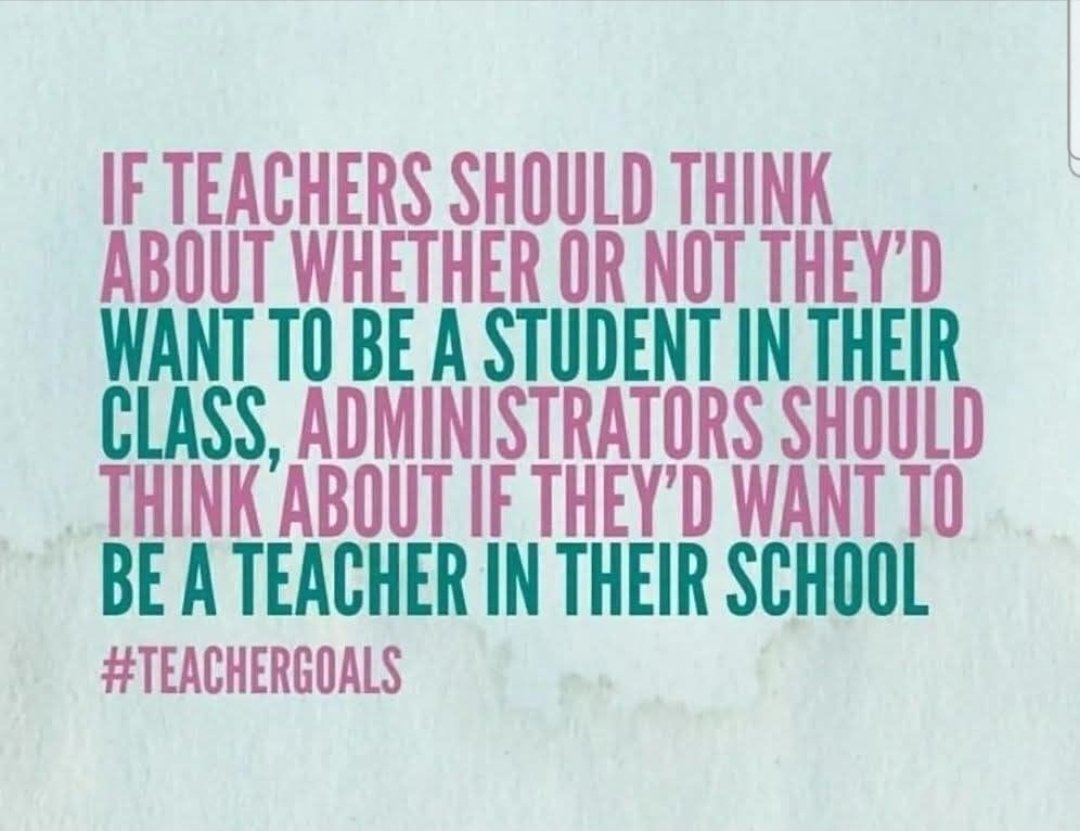
Would I want to be a teacher here?
Not as a thought experiment for one carefully planned day.
For the whole year.
With the meetings.
The coverage issues.
The behavior calls.
The parent communication.
The initiative fatigue.
The unclear priorities.
The moments when support is promised but not felt.
Teacher retention is often discussed like a recruitment problem. It is also a workplace conditions problem.
Teachers do not only decide whether to stay based on their love for students. They also decide based on whether the job is sustainable, whether leadership listens, whether expectations are clear, whether feedback is safe, and whether their time is respected.
School culture is not what leaders say they value. It is what teachers experience repeatedly.
If we want strong classrooms, we have to build schools where strong teachers can keep doing the work without being worn down by the system around them.
That is not just a teacher issue. That is a leadership issue.
Schools spend a lot of time responding to what has already happened.
The disruption. The conflict. The refusal. The escalation. The consequence.
That response matters, but it cannot be the whole plan. When the same behaviors keep showing up, we have to look upstream at the patterns, conditions, skills, relationships, routines, and unmet needs that may be feeding them.
This is not about excusing behavior. It is about making our response more accurate.
Students still need boundaries. They still need repair. They still need accountability. But if adults only respond at the point of crisis, the system stays reactive.
Better discipline asks a harder question: What keeps putting students in the river?